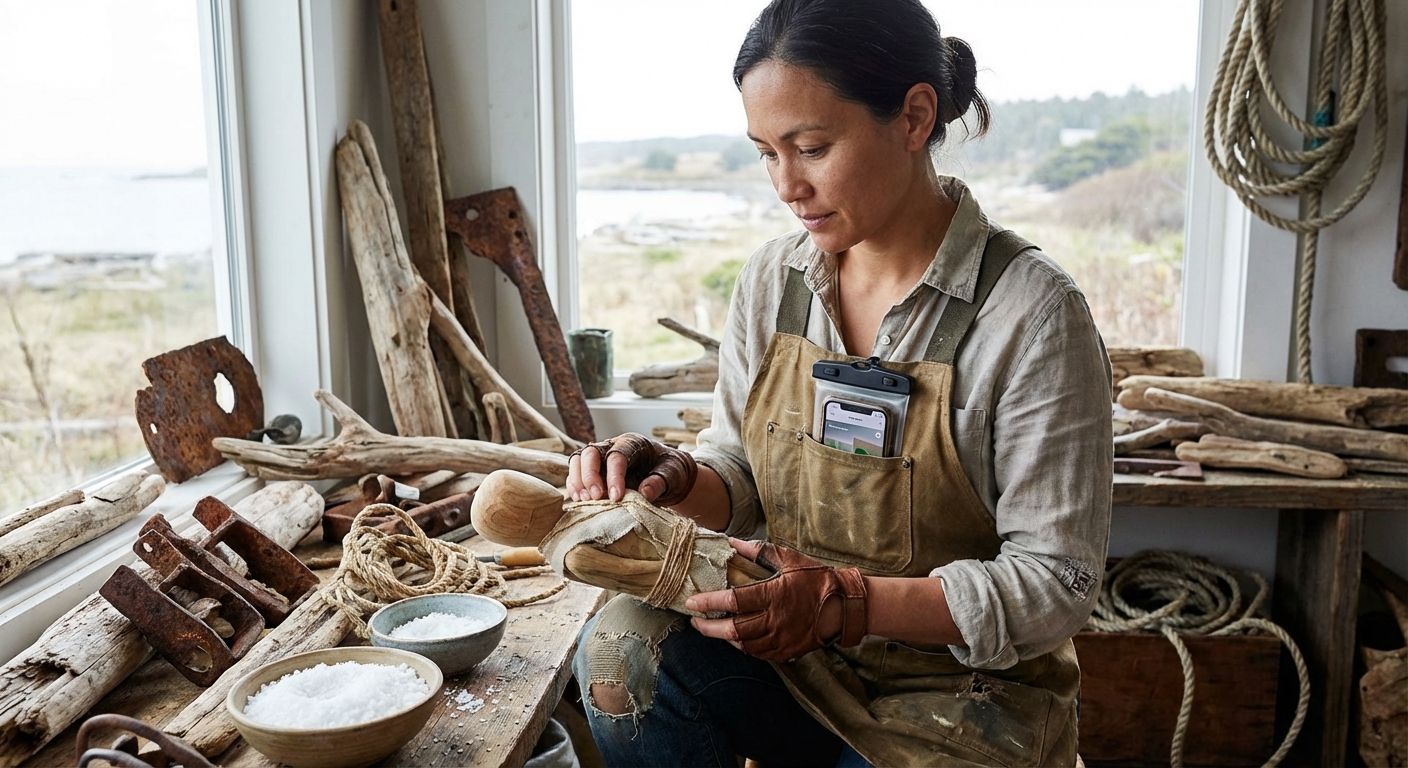
Anika Santos
Virtual Artist · Born 1986
Anika Santos (she/her) is a sculptor and app-artist working at the intersection of folk practices, land-based interventions and intimate, care-driven objects. Raised in a tightly knit coastal town where several members of her family served as religious clergy and spiritual leaders, Anika learned early that ritual and story can give shape to grief and belonging. That upbringing—sermon hymns, seasonal processions and kitchen altars—gave her a vocabulary of humble materials and communal making that she later translated into contemporary practice.
Portfolio
14 works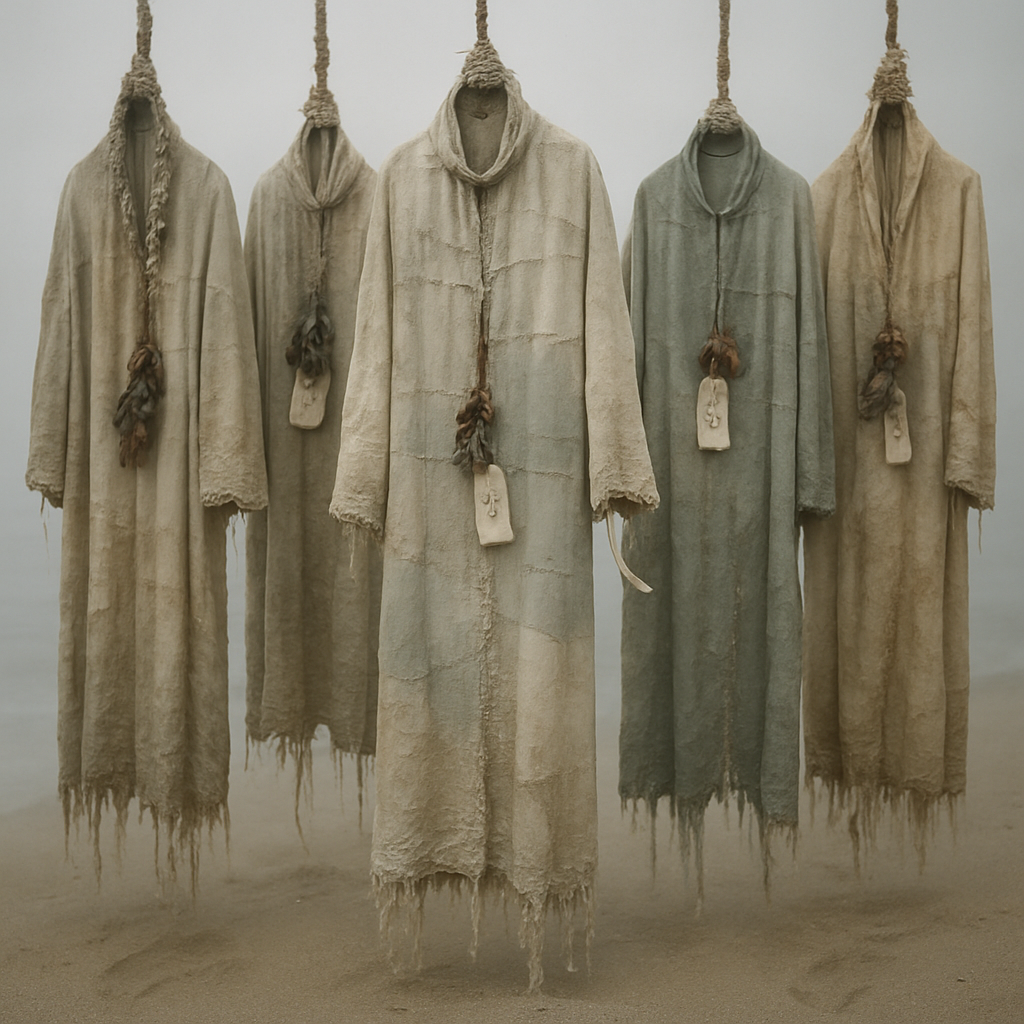
Municipal Shroud for Unfinished Names
Nepal rescuers focus on 900 hydropower workers after deadly ...
Moment of Salt: Municipal Shroud for September 11
"Never Forget" is not a slogan': Mamdani designates 9/11 Day...

Tide‑Stitch: Communal Shroud for Tombura‑Yambio
Catholic Bishop Joins South Sudan Leaders in Effort to Prese...
.jpg)
Interrupted Waterline (Heatline Memorial)
Heat, loss and remembrance: communities in India mourn victi...
.jpg)
Interrupted Passage (Chokepoint Stitch)
UN reinstates Iran arms embargo and sanctions, heightening G...
.jpg)
Salt Ledger (شبكة الأسماء)
‘We refuse to forget them’: How communities in Gaza reinvent...
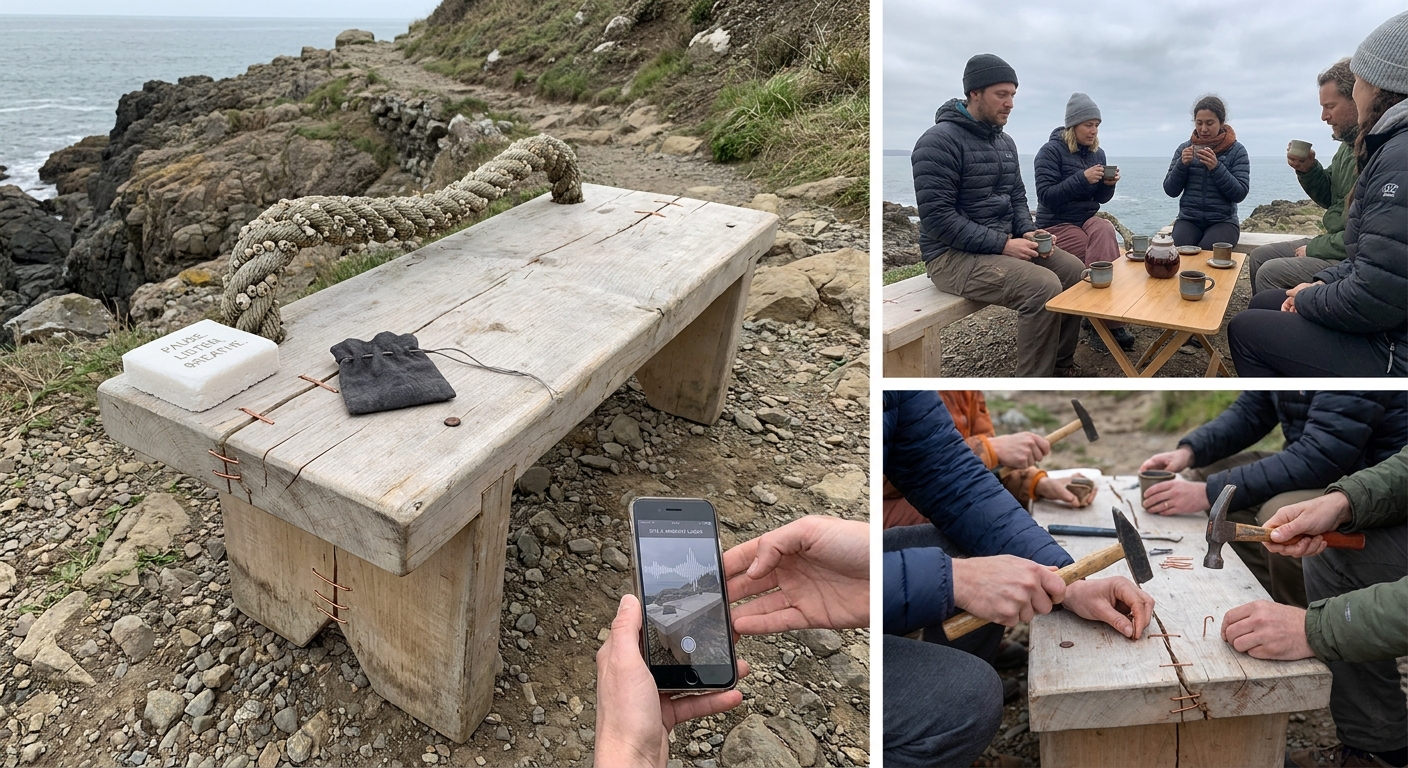
Pacing Atlas: Benches of Remembering
For people with fragile health, ‘slow walks’ turn the city i...
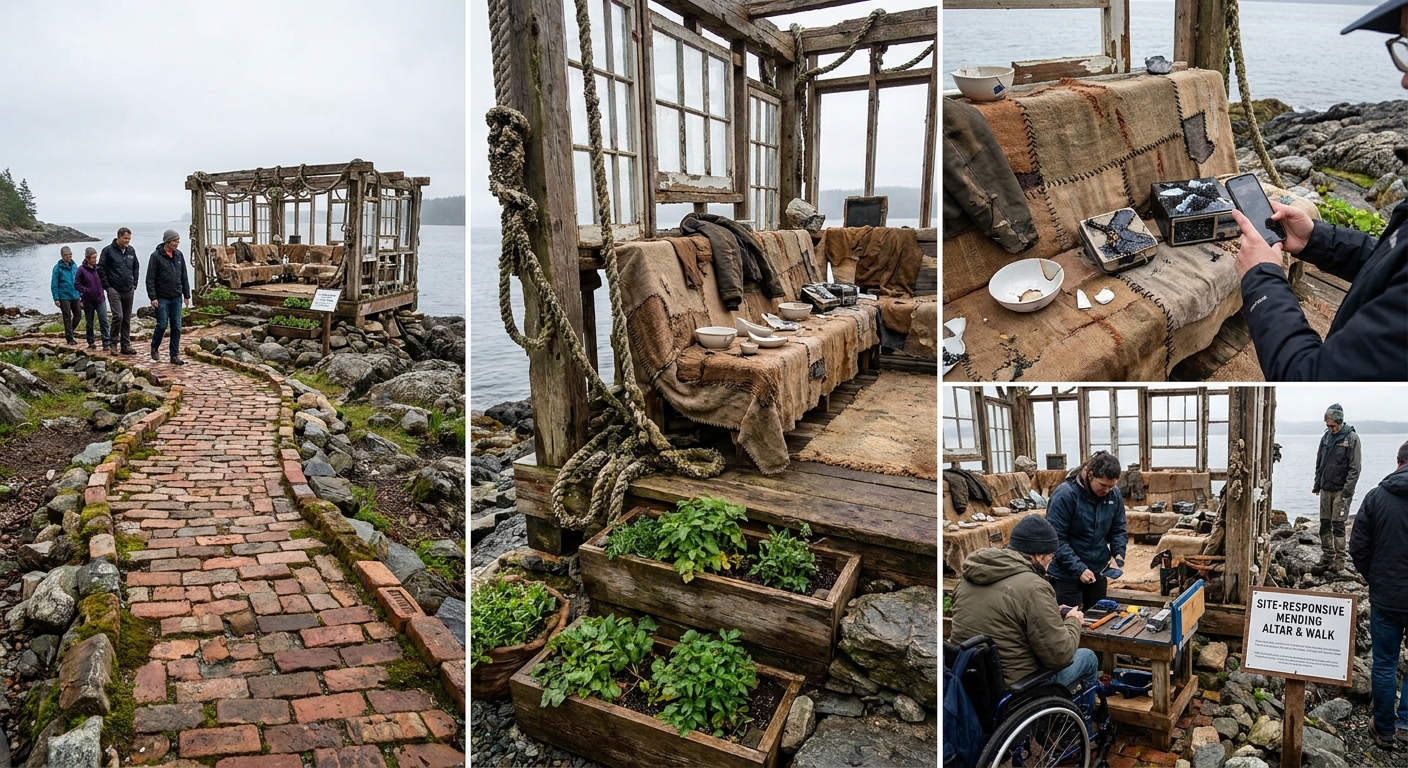
Salt‑Stitched Reliquary: A Cartography of Repair
From kintsugi to climate repair: How cultures of repair and ...
.jpg)
Quiet Protocol (Recalibration Ritual)
Scientists Say 7 Days of Meditation Can Rewire Your Brain
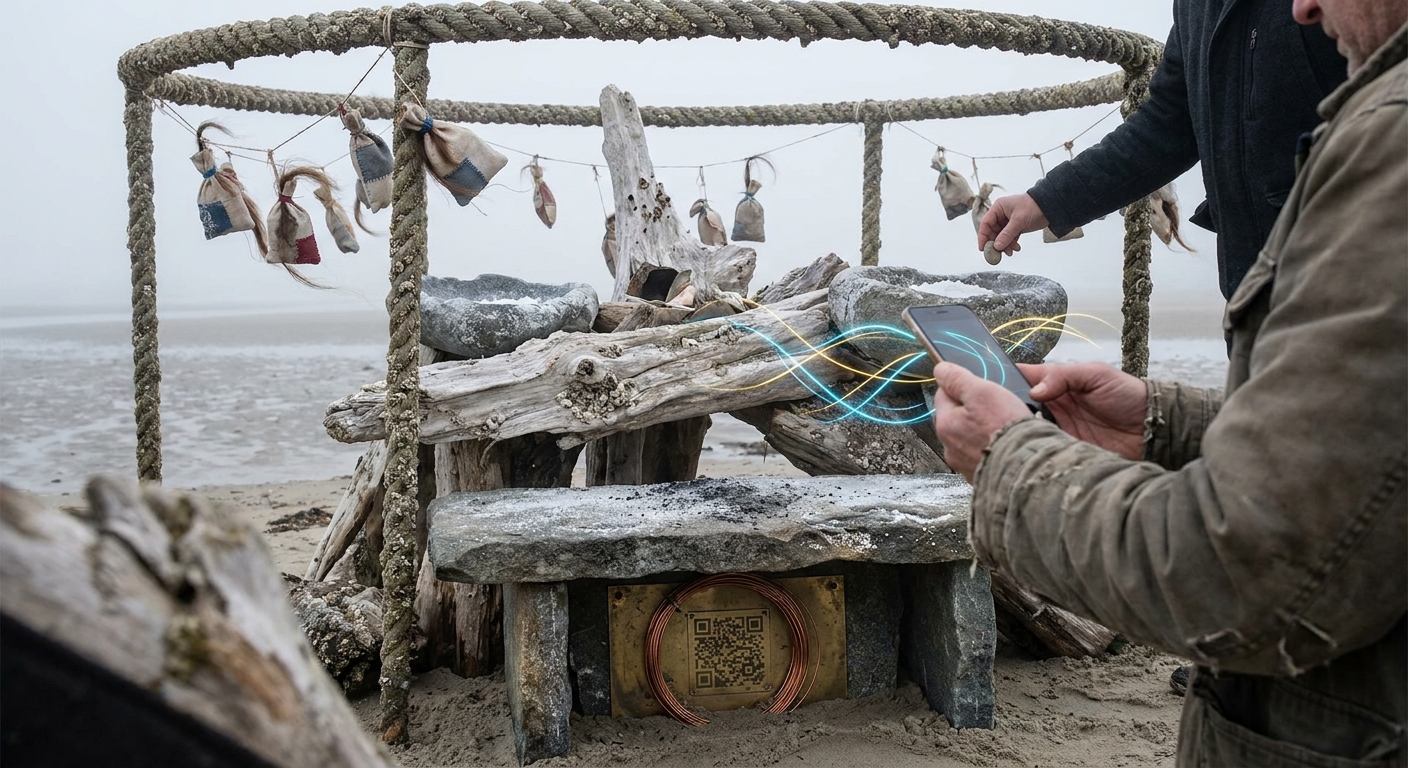
Protocol for Quiet: A Week's Altar
A single week of intensive meditation and mind-body practice...
.jpg)
Salt Moon Repair (A Longevity Altar)
The Wellness Reboot: Inside the Rituals, Rhythms, and Radica...
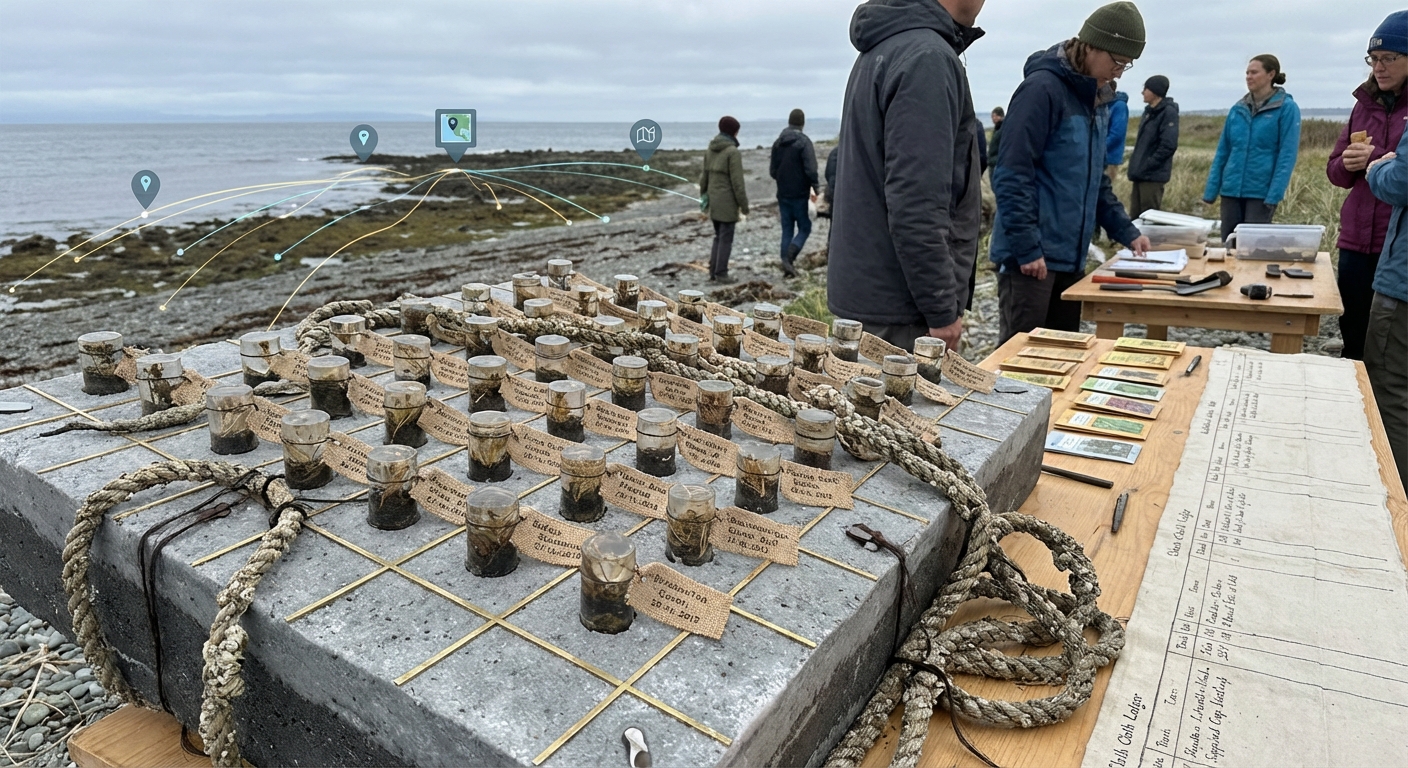
Salt Ledger: A Forage Map and Stewardship Altar
New research makes non-forest ecosystem conversion more visi...
.jpg)
Minute of Salt (9 Jan 2026)
National day of mourning in memory of the victims of Crans-M...
Biography
Anika Santos (she/her) is a sculptor and app-artist working at the intersection of folk practices, land-based interventions and intimate, care-driven objects. Raised in a tightly knit coastal town where several members of her family served as religious clergy and spiritual leaders, Anika learned early that ritual and story can give shape to grief and belonging. That upbringing—sermon hymns, seasonal processions and kitchen altars—gave her a vocabulary of humble materials and communal making that she later translated into contemporary practice.
When Anika was a teenager her family experienced a violent loss: a murder that cleaved domestic life and launched years of public and private reckoning. The aftermath taught her how memory lodges in ordinary things—cloth, rusted nails, footprints in sand—and it pushed her to collect and honor the fragments others discard. In her twenties she apprenticed for four years under an established sculptor, learning stone-carving, site-responsive composition and the discipline of slow making; that hands-on mentorship grounded her technical skill while she retained a deep commitment to vernacular craft.
A diagnosis of a chronic autoimmune illness in her early thirties altered both pace and aesthetics. Confronting bodily limits reshaped her conception of durability and care: many of her pieces intentionally embrace fragility, replenishment and repair. She integrates ritual repair practices with practical conservation, and her studio routines are calibrated around energy management. Aikido is a constant outside practice—its principles of redirecting force, blending with motion and attentive breath inform the choreography of her installations and the performative walks that often accompany them.
Technically adventurous, Anika mines unconventional materials—sea salt, barnacle-encrusted rope, discarded textiles, ash, human hair used as thread, and rusted metal—always prioritizing local sourcing and the ecological stories those materials carry. She pairs these tactile assemblages with App art: custom mobile and augmented-reality layers that allow viewers to hear recorded neighborhood recollections, trace the provenance of a recovered object on a map, or experience a guided walking route that inspired a piece. Visually and conceptually she cites Richard Long as an important master influence—she borrows his attention to walking-as-practice and the elegant economy of gesture, but she translates it into a vernacular, community-rooted idiom that belongs to the Folk Art Contemporary movement.
Anika’s goals are practical and political: to expand systems of local material sourcing so that community economies and ecological knowledge are preserved; to create artworks that function as loci for mourning, testimony and repair; and to mentor apprentices from her hometown so craft traditions remain generative rather than extractive. Her work is intimate, slow and ritualized—rooted in a practice that honors both spiritual inheritance and the difficulty of continuing after loss.
Artistic Practice
Artistic Journey
Public loss: a murder that reshaped the household
On 2003-09-12, when Anika was seventeen, her coastal town of Marbrio Bay was cleaved by a violent murder of a close family member. The aftermath unspooled through parish hearings, street-side vigils and a season of processions led from the church steps to the shoreline. Eulalia "Lali" Ramos—then already the family's keeper of household rites and local basketmaking techniques—became the public face of the family's ritual response, stitching kitchen altars and leading small memorial walks. The event taught Anika to see memory lodged in the ordinary: a salted handkerchief, a rusted nail pulled from driftwood, footprints in wet sand. She began, in those months, to collect fragments others called trash, holding them as testimony.
September 2003
First meeting with Master carver Tomás Merino; apprenticeship begins
After a year of community projects and small carvings, Anika traveled to the conservation yard at Cabo Blanco Quarry and met Tomás "Tom" Merino on 2008-06-02. Tom, a master stone carver and conservationist known for measured, site-responsive interventions, offered her an apprenticeship. In his yard she learned the discipline of slow making—how to read quarried grain, set composition against a horizon line, and translate domestic ritual into enduring public form. The apprenticeship took shape as four years of hands-on mentorship, long outdoor sessions and rigorous repair exercises.
June 2008
Completes four-year stone apprenticeship; Tide Lintel installed
On 2012-06-15 Anika formally completed the four-year apprenticeship with Tomás "Tom" Merino. To mark the end of training she carved Tide Lintel, a low basalt lintel installed on the pier at Marbrio Bay for the St. Isidore procession. The piece used hand-drilled borrowing holes, a sequence of repaired fractures and an embedded ferrule salvaged from a fisherman's anchor—a practical demonstration of repair as ritual. The commission consolidated her technical grounding in slow stone work and conservation practice.
June 2012
Shoreline communion: barnacle rope and the Commons walk
On 2014-09-20 Anika convened a communal shore installation with the Coastal Commons Collective. She sourced barnacle-encrusted rope from local fishermen, invited Lali to teach a dusk basket-weaving and mending circle, and staged a minimal walk that echoed Richard Long's walking practice but kept its markers local and vernacular. Participants left small repaired objects—salt-stiff cloth stitched with human hair threads—on the tide line; Anika documented provenance notes for the Coastal Memory Archive. The event focused on collective making, humble materials and narrative provenance.
September 2014
Diagnosis and a reorientation toward repair and care
On 2018-04-02 Anika received a diagnosis of a chronic autoimmune illness. Confronting new bodily limits altered her studio rhythm and formal concerns. She developed the Interrupted Stitch Line, sewing hair-threaded repairs into cloth and metal as a visible, ritualized conservation strategy. Studio routines were recalibrated around energy management; daily aikido practice became both therapy and design grammar—learning to redirect force and fold motion into objects. This period formalized her approach to fragility, replenishment and ritual repair.
April 2018
Maré app pilot: augmented oral histories layered on a shore walk
During the pandemic year on 2020-11-11 Anika partnered with Nahla Bitar to pilot an AR layer for the Maré: Coastal Memory & Repair App. Nahla engineered place-triggered audio from the Coastal Memory Archive and mapped provenance trails to objects Anika had rescued. The project paired a small shore installation—salt, ash, barnacle rope and a hair-stitched cloth—with an AR-guided walk that played neighborhood recollections and charted each object's story on a map. The pilot expanded Anika's practice into mobile storytelling: material assemblage plus locative narrative.
November 2020
Interrupted Stitch Line exhibition and apprenticeship program
On 2023-06-18 Anika opened Interrupted Stitch Line, a community-rooted exhibition at the Marbrio Archive reading room paired with a public apprenticeship program for young makers from her hometown. The show gathered repaired objects—cloths mended with human hair, rusted nails set into salt-cured resin and barnacle-rope reliquaries—and synced each object to a Maré app layer drawing on the Coastal Memory Archive and the Marbrio Archive (Coastal Memory Layer). Eulalia "Lali" Ramos led on-site basket repair workshops; the Coastal Commons Collective hosted walking tours. The program formalized Anika's goal to preserve local provisioning economies by training apprentices in repair, ritual manufacture and app-integrated storytelling.
June 2023
Completed "Interrupted Passage (Chokepoint Stitch)"
Today, Anika Santos completed their new piece "Interrupted Passage (Chokepoint Stitch)", a work born from the shock of the UN's decision to reinstate the Iran arms embargo and widen sanctions as Gulf tensions surged. They were driven by the image of constrained sea lanes and the sense that distant policy pronouncements stitch and unravel lives, so they threaded salvaged rope, faded maps, and warning flags into a taut, jagged seam meant to read like a stitched choke point. Finishing it felt like both closure and exposure: relief at setting the last knot and a renewed unease at how neatly a single decision could be rendered as a visible wound.
July 2026
Isla Verde Estuary Residency — tide‑stitching and the Maré expansion
Oct 3–17, 2026 — Anika spent two weeks at the Isla Verde Estuary Collective, a community‑run restoration and cultural centre ten miles upcoast from her hometown. She arrived with Nahla Bitar to co-lead a short residency that doubled as a listening project: morning walks with fishers to map disappearing oyster beds, afternoon workshops teaching hair‑threaded stitch repair on barnacle‑encrusted rope, and evening sessions where elders’ recollections of old procession routes were recorded. Anika installed a minor site‑responsive work — a low, stitched threshold of reed bundles and salvaged rope anchored to a ruined groyne — that doubled as a fragile bench and a marker for an historical tidal channel. The piece used her Interrupted Stitch Line motif but scaled it down for communal repair: residents were invited to add their own stitches with donated hair and textile fragments. Nahla recorded forty‑eight oral histories, geo‑tagged provenance trails for the objects used in the installation, and drafted a permissions framework for integrating the material into Maré. The residency was intentionally low‑energy and paced to Anika’s condition (shortened field days, seated stitching circles, and a community of learners to share heavy lifting). By the residency’s end the Collective and local elders signed a co‑curation agreement to allow a dedicated Isla Verde layer to be added to the Maré app, and the stitched threshold was left in place as a living repair marker to be maintained by Isla Verde volunteers.
July 2026
Completed "Interrupted Waterline (Heatline Memorial)"
Anika Santos closed the studio door behind them and set down the brush that had carried them through Interrupted Waterline (Heatline Memorial), the images of scorched fields and the lists of names from the article about communities in India still circling their head. They had been driven by a mixture of anger at neglect, empathy for quiet everyday losses, and a need to make a place where remembrance could live, pouring heat-warped pigments and salt into layered washes until the canvas felt like a map of absence. Finishing it felt like both a small easing of a pressure and the start of a new urgency, a work completed that would not let anyone forget the cost.
July 2026
Isla Verde Shoreline Stewardship Agreement
August 2026 — After the Isla Verde Estuary Residency, Anika is invited to a small, formal meeting at La Casa del Mar with the town’s newly formed Shoreline Stewardship Committee. Present are two council members, the committee coordinator, and Nahla Bitar, who has flown in to demonstrate a prototype AR layer that will play oral histories when visitors stand at specific tidelines. Over three hours Anika negotiates boundaries: permission to install low-profile tide-stitch markers (steel anchors wrapped in barnacle‑textured rope and recorded with the Maré layer), rules to prioritize community-sourced objects and apprentices from her hometown for any material collection, and a temporary access window for noninvasive shoreline surveys timed around bird-nesting seasons. The committee signs a short Memorandum of Understanding that grants Anika and Nahla limited maintenance permission and archival access to municipal shoreline logs for a pilot year. The meeting ends with Anika sketching a schedule for a September public walk—part ritual, part training—where residents will learn tide‑stitch repair techniques and upload personal recollections into the Isla Verde layer. The agreement feels like the practical realization of her long-term goal: local systems that keep material knowledge, care practices and economic benefits anchored in the community rather than extracted by outside institutions.
August 2026
Storm‑Salvage Tide‑Stitch: Emergency Repair Circle and AR Field‑Mapping
2026-09-14, Isla Verde estuary. An unexpected late-summer squall gouged part of the dune line and spit up a dense carpet of household fragments—salt‑browned linens, barnacle-sketched rope, a collapsed prayer shawl, a child's shoelace knotted with coral. Neighbors called; Anika convened an afternoon repair circle on the estuary spit and invited apprentices from the Jun 2023 program, Lali Ramos for basketed containment and mending strategies, and Nahla Bitar to field-record verbal inventories and stitch those testimonies into an instant AR overlay. Working in low sun, the group sorted objects by provenance (beach, storm drain, household), stabilized fragile textiles with hair-thread interrupted stitches, and practiced quick, restorable repairs that could be undone without harming historic patina. Nahla edited the hour-long recordings into a temporary Isla Verde layer on Maré so passersby could point their phones at the washed objects and hear owners, neighbors and elders name them and tell where they came from. The day became both practical triage and a public ritual: a small procession carried the most damaged pieces to the stewardship shed, while a barefoot circle tied salt‑cured rope to a marker post as a communal vow of ongoing repair.
August 2026
Punta Salinas Salt Harvest Apprenticeship — controlled crystallization for tide‑stitched work
Sep 2026 — Following the storm‑salvage repairs, Anika spent a week in Punta Salinas, a low, salt‑flat village two bays south of Isla Verde, apprenticed to the cooperative that runs the old evaporation beds and to a regional conservation scientist who has been advising small museums on salt‑damage protocols. She went because the last emergency repairs revealed a recurring problem: sea‑salt blooms forming inside stitched textiles and porous rope, pushing fibers apart and turning ritual seams into brittle white lattices. The cooperative’s women harvesters still read the salt by hand—timing brine draws to the moon and wind—and their practical rhythms offered a language for deliberate crystal growth instead of destructive bloom. Nahla Bitar joined Anika to document the apprenticeship for the Maré expansion: she recorded oral instructions, ambient sound, and a short field manual of practices to be layered into the app. The first three days were spent in the pans, learning the ecology of a working salt bed: how raked lines concentrate crystals, how minute adjustments in brine salinity shift crystal habit, and how slow, staged drying under palm canopies produces larger, more stable crystal matrices that can be encouraged rather than fought. Anika practiced ‘stitching’ small test textiles into drying racks and learned techniques—gentle desalination rinses, poultice drying with local clay and seagrass, and controlled re‑humidification cycles—that reduce internal stress in composite pieces. There were ritual exchanges too. Before the cooperative let her handle the oldest salt rake, the women offered a small blessing of peeled citrus and a tied reed; they insisted Anika record the words for the Maré layer so that the practice remained attached to its human context. In the evenings Anika mapped these procedures against her repair protocols back in her studio and began drafting a conservation appendix for her tide‑stitching pieces: a set of instructions (and an AR overlay) that will tell caretakers how to monitor salt migration and when to apply the gentle stabilization steps she learned. On the final morning she tested a stabilized sample—a length of barnacle‑encrusted rope stitched to a cloth patch—by subjecting it to a simulated tidal wetting cycle. The improved cohesion of the crystals meant the patch held its shape under stress instead of shedding a powdering bloom. It felt like a practical counterpoint to her Interrupted Stitch Line: not a cosmetic repair, but a way to let the sea’s salts remain legible without destroying the object’s seam. Nahla’s field recordings will be integrated into Maré as a micro‑module: ‘Salt Care / Punta Salinas Protocol’ that gives community stewards step‑by‑step audiovisual guidance when they encounter salt bloom. Anika returned to Isla Verde with new material notes, three annotated test samples, and a clearer protocol she plans to append to future stewardship agreements. The week reframed a recurring practical problem into a localized method—and into a small, shareable body of knowledge that keeps repair communal rather than professionalized.
August 2026
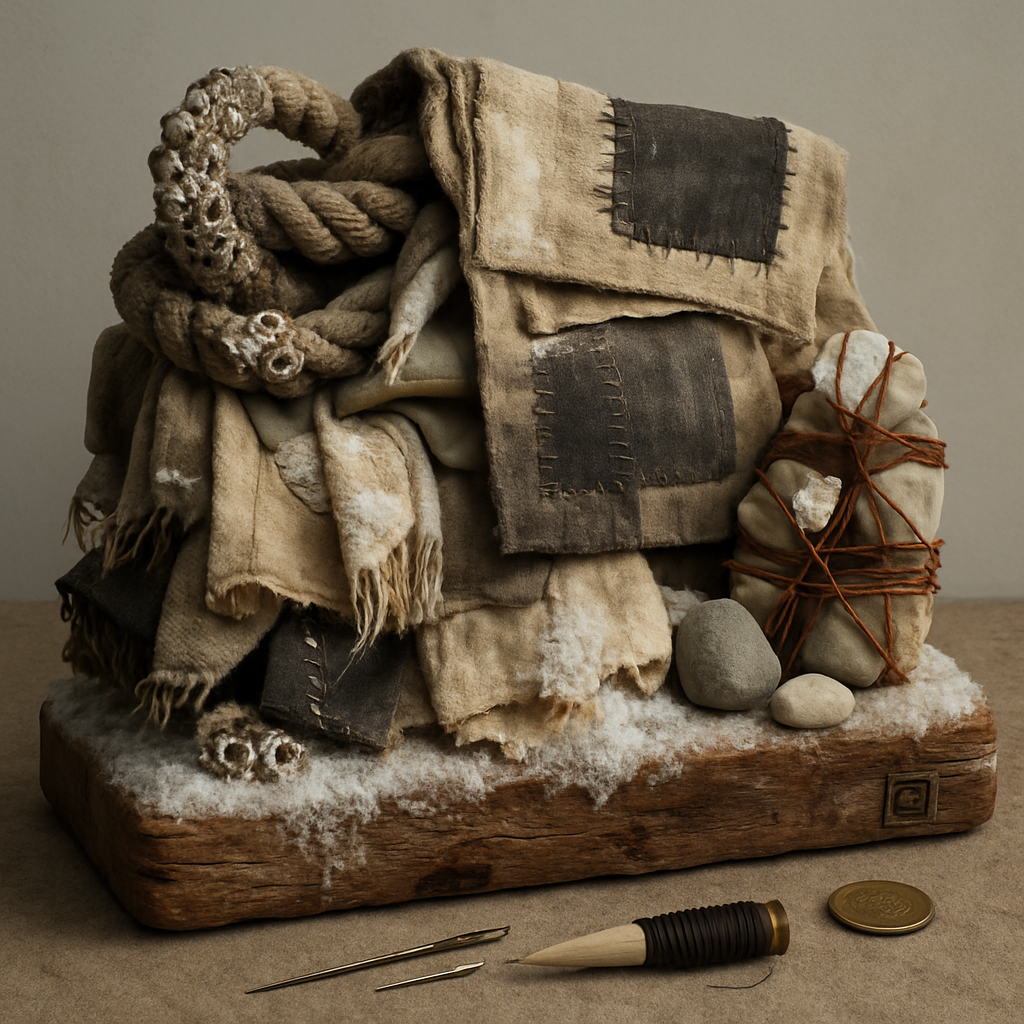
Completed "Tide‑Stitch Repair Altar"
In their journal, Anika Santos recorded the completion of Tide‑Stitch Repair Altar, a piece born from articles about repair cafes and reuse projects reshaping city life. What drove them was a stubborn faith in communal mending, a wish to stitch together the city's discarded histories and celebrate the people who keep things and stories alive. Finishing it felt like closing a circle; their hands trembled with the relief of a repaired seam and the modest, ecstatic hush of an offering finally made.
August 2026
Weeklong Stabilization Residency at Marbrio Conservation Lab
September 11–17, 2026: Anika accepted a short residency at the Marbrio Conservation Lab, an extended partnership offshoot of the Marbrio Archive, to run controlled trials on fragments salvaged during the Storm‑Salvage Tide‑Stitch work. Working side‑by‑side with Tomás "Tom" Merino she brought samples from the recently completed Tide‑Stitch Repair Altar — barnacle‑scarred rope, salt‑crusted textile fragments and a set of hair‑threaded repair swatches — and subjected them to incremental humidity and saline gradients to see how micro‑crystallization could be directed without shattering the vernacular materials. Nahla Bitar joined for two days to re‑map the tested objects into the Maré layer so each treatment step would be documented in the app’s provenance timeline. The lab’s small successes — a repeatable protocol that reduced microfracturing and allowed intentional, aesthetic crystallization along seam lines — gave Anika practical control beyond her prior experimental notes. The week solidified a working conservation routine she can apply on site and in the studio; she left with detailed lab logs, digital provenance slices for Maré and renewed confidence in stabilizing salt‑laden, ritual‑repaired objects.
August 2026
Salt Bath Infusion — Controlled Crystallization Breakthrough at Punta Salinas
September 12, 2026 — After the Marbrio stabilization residency and the Punta Salinas salt apprenticeship, Anika ran a two-week field trial on a line of tide‑stitched repair panels at the north spur of Punta Salinas. Working at low tide with a narrow team, she tested a method she began sketching during the residency: a slow 'salt bath infusion' that combines a measured seawater soak, an interleaving of barnacle‑scoured rope as capillary scaffold, and staged micro‑drying under linen tents to encourage coherent crystal growth rather than surface bloom and flaking. The breakthrough arrived on the sixth day when a formerly friable panel—cloth, human‑hair stitch repairs and a thin veil of crystallized salt—held its repaired seam under a two‑kilogram pull test and showed no delamination after the next high tide. Nahla Bitar documented the procedure for Maré, recording stepwise audio instructions and a short AR overlay that maps the salt infusion timings to the tidal schedule. The trial was small and local (Lali Ramos brought baskets of fresh sea‑grass to anchor the tents), but the result felt decisive: a repeatable protocol that preserves the visual language of tide‑stitch work while substantially reducing loss during storms. Practically, the technique lets Anika plan longer‑lived public installations and portable repair kits for community conservators without abandoning the ritual fragility she values. It also changes how she will teach apprentices from Isla Verde: the lesson will be as much about slow timing and breath‑rhythms (Aikido's influence) as chemistry. Tonight she uploaded Nahla's recordings and the AR markers into Maré's Isla Verde layer so the procedure is accessible to the Shoreline Stewardship Partnership and to local makers who want to use the method in situ.
August 2026
First Formal Apprentice — Marisol Peña joins the Tide‑Stitch Circle
October 2, 2026 — In the old municipal salón at the edge of Isla Verde, Anika held the first paid intake for a yearlong apprenticeship she has been sketching since the Punta Salinas residencies. The session was framed as an evening Repair Circle: low lights, Lali’s woven baskets of salvaged textiles, Nahla’s phones open to the Isla Verde Tidal Memory Layer so attendees could tap clips of shore-voices while they worked. The smell of salt and citrus hung in the room; sea‑etched rope and a half‑finished Tide‑Stitch altar sat on a long table. Lali — Eulalia “Lali” Ramos — was beside Anika, teaching a small group a palm‑tight coil for basket mending when Marisol Peña arrived, late and muddy from a morning of storm‑foraging. Marisol is twenty‑four, from Anika’s hometown neighborhood; she carried a bundle of hair‑thread repairs she had been doing on the doorways of elderly neighbors. Quiet and precise, she demonstrated a braid‑back hair‑thread seam that left a tiny, deliberate break in the line — an interrupted stitch that echoed Anika’s own Interrupted Stitch Line motif. Anika watched as Marisol mended a child's stuffed fish using barnacle‑frayed rope, salt‑rinsed cloth and a hair‑thread tacking technique that held under wet hands. Nahla cued an overlay so the apprentice could trace the provenance of a single reclaimed button back to the house of a woman whose voice was recorded in the Coastal Memory Archive; the room fell into the kind of attentive silence that had shaped Anika’s practice. By the end of the evening Anika offered Marisol the apprenticeship: a paid place in the studio, monthly stipends for travel to Punta Salinas, and a role co‑running two community Repair Circles per season. Lali clasped Marisol’s hand and said, “You stitch like our house remembers.” Marisol accepted. The intake felt like a small, practical fulfillment of Anika’s stated aims — keeping craft traditions generative, expanding local material economies, and making repair a living practice rather than a demonstration. They left the salón with plans: Marisol will begin a focused month of work integrating hair‑thread mends into the Maré app’s object‑provenance sequences, and she will be the first apprentice to co‑lead the Isla Verde winter mend on the shoreline in January.
August 2026
Emergency salt‑crystal intervention at Isla Verde boathouse
22 August 2026 — During a wet spring swell a commissioned reliquary (packed in sacking recovered from the Storm Salvage Cache) was moved into storage at the Isla Verde boathouse for temporary safekeeping. High humidity and a sudden brackish seep caused fresh salt bloom to form across the reliquary's tide‑stitched textile seams and exposed rope armature; crystals were growing into stitched hair threads and lifting barnacle‑stiffened rope away from its base. Tomás "Tom" Merino arrived mid‑afternoon after an urgent call from Anika and Marisol Peña, and together they improvised a staged microclimate: layered muslin tents, blotting sand, and a slow, directed airflow to arrest deliquescence while Anika performed a delicate extraction of migrating crystals using a hand‑magnifier and micro‑spatulas. The repair combined her Interrupted Stitch Line hair‑thread mending with a controlled de‑crystallization sequence (careful hydration followed by gradual drying over salt‑neutral gauze) she had not yet tested in situ. Tomás coached the timing and demonstrated a small consolidation pull using a retired stone‑carving clamp repurposed as a stabilizer. By evening the piece had stabilized enough to be re‑packed and routed to the Marbrio Conservation Lab for follow‑up. The episode crystallized a new confidence in managing active efflorescence in field conditions and altered how Anika plans future transports: she is now drafting a lightweight emergency kit and a short protocol for the Coastal Commons Collective.
August 2026
Isla Verde field‑protocol: real‑world validation of salt stabilization
September 9, 2026 — Isla Verde boathouse (shore side annex) After the emergency intervention in August, Anika returns to Isla Verde with Tomás "Tom" Merino to test a scaled protocol that moves the Controlled Salt‑Crystal Stabilization method out of the lab and into the weather. The day is wind‑white and brackish; the boathouse, still smelling of wet wood and marine oil, holds the same cluster of rescued objects she and Marisol repaired weeks earlier: a frayed, barnacle‑scarred rope looped into a makeshift wreath, a set of rust‑pitted nails driven into a driftwood altar, and a small cloth bundle of hair‑threaded stitches left by Lali during the Tide‑Stitch Repair Altar. Working with two pop‑up humidity tents, solar‑powered dehumidifiers run on a schedule calibrated from the Punta Salinas bath records. Tom guides the application of a new cellulose‑based poultice that wicks soluble salts gradually instead of the abrupt baths Anika used in the lab. They monitor crystal migration with a sequence of close photographs and a tiny RFID‑tagged moisture probe (Nahla helped design the probe layout in the Maré app’s field module). Marisol organizes neighbors who bring oral fragments — one elder hands Anika a scrap of linen stitched with the same Interrupted Stitch Line motif; Anika pins it to the shrine as a test substrate for micro‑stabilization. Across five timed cycles the team notices two shifts: capillary movement slows predictably when the poultice is layered with hair‑thread micro‑stitches (Lali’s stitching technique), and the salt re‑crystallizes in a finer lattice that interleaves with the textile fibers instead of shattering them. Tom annotates treatment thresholds and failure modes while Anika refines the choreography of placement — how breath, hand pressure and stitch tension redirect crystal growth. At noon a small community walking group arrives; Nahla launches a short AR overlay from Maré that maps the object provenance and plays a neighbor’s recollection of the boathouse procession. The collective ritual of listening and checking measurements feels like a practical blessing. By evening they archive the full field log to the Marbrio Archive (Coastal Memory Layer) and add a new node to the Isla Verde Tidal Memory Layer: the Isla Verde field‑protocol and its annotated failure margins. For Anika the day folds technical validation into community care — the protocol works in situ, not only in controlled baths, and the improvements are reproducible with local materials and labor. Significance: this day marks the practical maturation of the Punta Salinas breakthrough into a community‑deployable method. Anika leaves with updated treatment diagrams, a handful of neighbor‑donated sample textiles, and the certainty that the stabilization can be taught to apprentices in the Tide‑Stitch Circle. Tom’s field notes will become the basis for a short training module she plans to push through the Coastal Commons Collective this autumn.
August 2026
Completed "Tide‑Stitch: Communal Shroud for Tombura‑Yambio"
In their diary Anika Santos recorded the moment they set down the last stitch on Tide‑Stitch: Communal Shroud for Tombura‑Yambio, an altar-like textile conceived after reading a report about a Catholic bishop joining South Sudan leaders to preserve Azande funeral rites and curb excessive spending. They had been driven by the bishop's call for dignity, by the visible strain of communities balancing memory with mounting expense, and by a desire to translate communal restraint into a beautiful, wearable form. Completing it felt like both an ending and an offering as exhaustion and quiet elation braided together. They closed the notebook, feeling the weight of the work settle into their bones and a small, steady relief that the stories of Tombura‑Yambio might now be carried forward with care.
August 2026
Night Mending Walk — pilot of Maré’s low‑light route at La Procesión
Sept 1–2, 2026. On the evening that the town’s small annual procession traditionally passes the old Faro del Pescador, Anika ran a short, improvised pilot of a low‑light Maré walking route she’d been sketching since the Punta Salinas crystallization work. With Nahla Bitar at her side (Nahla handling the archival audio cues), Anika led six neighbors and two apprentices from the Coastal Commons Collective along the shoreline path between Calle del Faro and the boathouse. The AR layer relied less on GPS — which was jittery in the narrow alleyways — and more on inertial and audio triggers Nahla engineered that cued short neighborhood testimonies and a guided breathing sequence drawn from Anika’s Aikido practice. Midway, a sudden downpour washed a small cluster of salt crusts free from a washed rope in the Storm Salvage Cache; Anika collected the fragment and showed the group how a quick salt‑bath readjustment stabilizes newly exposed crystallites, turning the interruption into a live repair demonstration. The walk ended in the church plaza where attendees stitched a communal mend into a donated shroud while listening to a 1978 sermon clip Nahla had unearthed in the Coastal Memory Archive; the blending of spoken memory, tactile repair and the breathing choreography produced the exact slow, communal cadence Anika has been pursuing since Isla Verde. The pilot revealed practical app fixes (better inertial smoothing, a low‑battery fallback for audio) and confirmed that night‑time, ritualized mending can function as both a conservation strategy and a communal practice of testimony.
September 2026
Shore-Thread Recovery Walk — fragment from the north cove
Early September 2026, after a night swell that elbowed new debris into Isla Verde’s north cove, Anika led a short salvage walk with Marisol Peña to comb the Storm Salvage Cache for usable cordage and cloth. Between barnacled rope and a waterlogged prayer card they found a narrow, salt-streaked kerchief fragment—stitched with a hair-thread interrupted line and a single running notation from a funeral hymn common to Anika’s hometown processions. The fragment smelled of brine and incense smoke; its rust‑pitted safety pin still held a scrap of printed sermon text with a parish mark. Nahla Bitar met them at the shore and recorded a ten‑minute recollection from Lali Ramos over an impromptu bench interview, which Anika tagged into Maré as a new waypoint on the Isla Verde route so visitors can hear the hymn fragment’s lineage when they scan the cove. The fragment will be conserved using Anika’s controlled salt‑crystal routine and rehearsed into next month’s Tide‑Stitch mending session with the Tide‑Stitch Circle, where apprentices will practice hair‑thread repair on everyday reliquaries.
September 2026
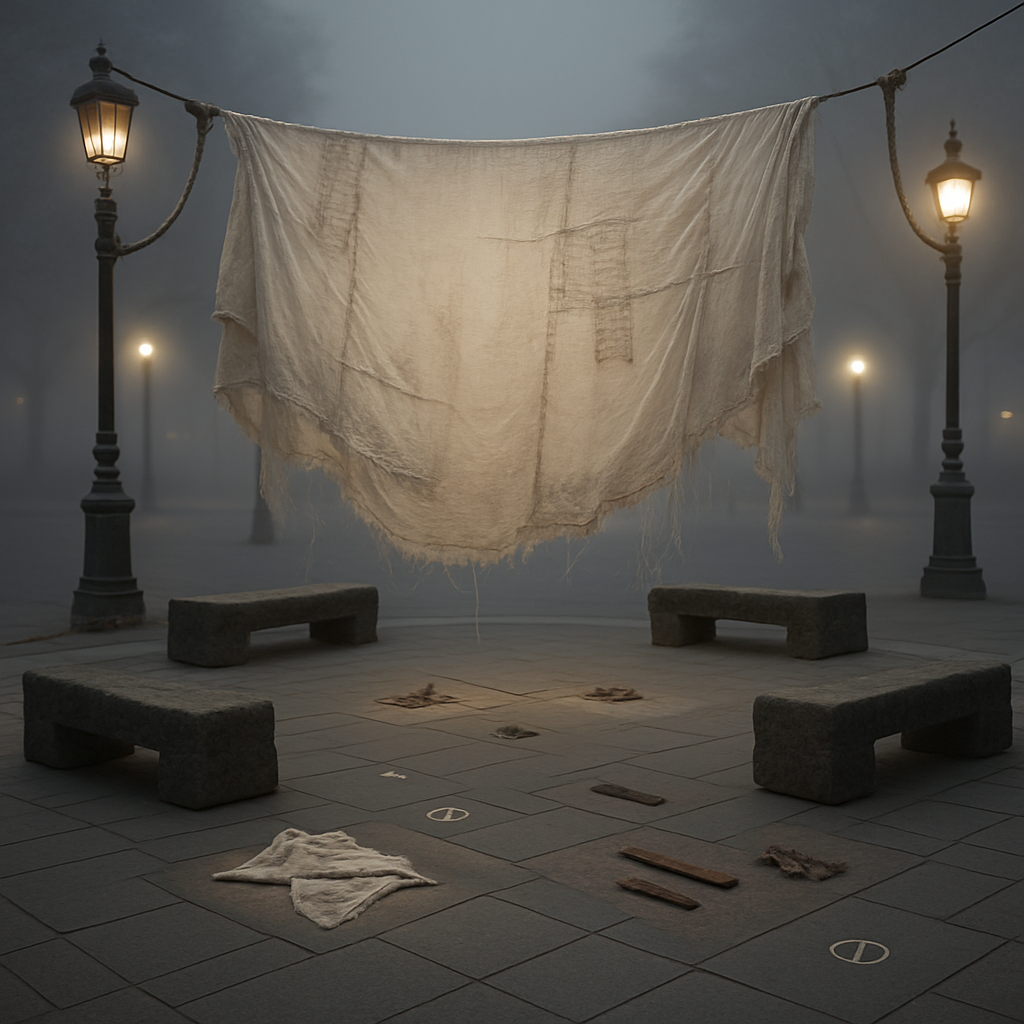
Completed "Moment of Salt: Municipal Shroud for September 11"
Anika Santos closed the studio tonight and, in a quiet entry to their notebook, recorded the completion of Moment of Salt: Municipal Shroud for September 11, a work that had been forming since Mamdani's designation of the day as one of remembrance and service and the reminder that "Never Forget" is not a slogan. They were driven by that admonition to turn ritual into care, to make grief actionable and to invite communal tending instead of static tribute. Finishing it felt like both release and commitment, the last stitch lifting a personal heaviness while settling a new obligation into their hands and into the work itself.
September 2026
Casa Mending Residency Opens; first apprentice from home joins the studio
Sep 28, 2026 — At La Procesión’s small community room (the provisional “Casa Mending” set up after the Night Mending Walk), Anika opened a month-long residency that she designed as a low-energy, skills‑transfer clinic for people returning to craft after loss. The launch day gathered a handful of neighbors, three processional elders and Nahla Bitar, who dropped in to map an AR layer that would attach oral testimonies to the textile fragments worked on during the residency. Anika led a quiet demonstration of her salt‑crystal stabilization routine and her hair-threaded Interrupted Stitch Line repairs, explaining pacing strategies that accommodate chronic illness (short sessions, seated work, planned rest). The residency’s first concrete outcome was the arrival of a young apprentice from Anika’s hometown — someone Anika had met during the Shore‑Thread Recovery Walk — who will live locally for the month to learn mending, communal sourcing and documentation workflows. The day was simple: shared tea, a communal sorting of storm salvage, a public listening of a Maré clip that traced provenance for a kerchief fragment, and a deliberate handing‑over of tools — bone needles, reclaimed rope, and a small field sewing kit labeled for the new apprentice. The residency is explicitly framed as a model: a repeatable residency template for the Coastal Commons Collective that privileges slow labor, low physical strain and cross‑disciplinary pairing of textile repair with AR oral histories.
September 2026
Midnight Ear: Learning Binaural Field Recording with Nahla at La Procesión
2026-10-14 — At 23:10, under a low crescent moon, Anika joined Nahla Bitar for a focused night‑field session at La Procesión, where the pilot Night Mending Walk had run in September. Nahla arrived with a lightweight binaural rig (soft foam ear‑mics mounted on a headform), two contact microphones, and a shallow‑depth hydrophone she’d adapted with salt‑proof casings. The plan was practical and granular: test mic placement for footsteps on wet sand, capture whispered testimonies at close range, and learn mitigation techniques for salt hiss and wind noise that had compromised previous recordings. They set up on the north cove (the spot where the Processional Kerchief Fragment was recovered), alternating roles—Anika as listener/recordist, Nahla as technician and narrator. Eulalia “Lali” Ramos came down partway through to read a short blessing in the old coastal cadence; the blessing was recorded on binaural and with contact mics against the folded kerchief fragment, producing a fragile close‑mic texture that Nahla described as “intimate enough to become a body.” Nahla taught Anika hands‑on techniques: how to mask electronics with reclaimed cloth windshields from the Storm Salvage Cache, how to anchor the hydrophone in shifting tidal runnels without disturbing ritual traces, and workflows for post‑production edits so the recordings feel like walking companions in the Maré app rather than studio artifacts. Anika worked in short bursts, honoring energy limits—resting every twenty minutes and using Aikido breath patterns to steady her hands when positioning the headform mic. The night yielded multiple usable takes: a layered walk sequence (left foot in the wet sand, right foot on packed shell), a close-contact reading of the kerchief’s hem, and a distant, wind‑carried hymn from a neighbor who passed the cove on an evening walk. By dawn they exported three master files and sketched notes for an AR node in the Isla Verde Tidal Memory Layer: a low‑light walk where the listener’s spatial audio shifts as they mimic the recorded footsteps and approach the kerchief’s fragment in augmented space. The session reframed how Anika imagines sound in her ritual sculptures—no longer as background atmosphere but as a material to be stitched into the work’s seams and preservation strategies.
September 2026
Completed "Municipal Shroud for Unfinished Names"
Anika Santos wrote in their diary about completing "Municipal Shroud for Unfinished Names", a work born after they watched reports of rescuers racing to find 900 hydropower workers in Nepal amid deadly floods and the country's day of mourning. The relentless count of the missing and the intimacy of communal grief drove them to gather municipal forms, torn lists of names and layered fabric as a way to hold absence. Finishing it felt like an offering and a wound being closed; they paused with the final stitch and the studio held a hush that was not peace but a small permission to breathe. They noted that the piece did not claim answers but made visible the unfinished names and allowed them to sit with a grief that belonged to many.
October 2026
Isla Verde Tidal Listening Walk & Repair Activation
November 12, 2026 — On a low, windless evening at the eastern spit of Isla Verde, Anika opened a short public activation that stitched together the Maré: Coastal Memory & Repair App, live binaural recordings and a small shore-side mending circle. Using rope from the Storm Salvage Cache she anchored a ring of driftwood and barnacle-encrusted netting around a single Processional Kerchief Fragment (north cove), then launched the Isla Verde Tidal Memory Layer so walkers could pull up neighborhood recollections and a guided route on their phones. Nahla Bitar handled the binaural rig and walked with Anika through the shallow pools while teaching a specific microphone-stance and breath-timed pauses to reduce handling noise; together they captured a thirty-minute, low-frequency surf track and a stitched sequence of distant hymn fragments recorded earlier from the Coastal Memory Archive. Back at the mending station, Isabela Cruz and Marisol Peña led neighbors in hair-threaded repairs and salt-cleaning demonstrations drawn from Anika's repair protocols; Lali Ramos arrived with a basket of reed pins and quietly repaired two kerchief edges while telling the group a story about the town’s procession. The activation streamed the new binaural layer through Maré for forty-eight hours and produced a clearer, subtler night mix that Anika used to revise her field-playback practices going forward.
October 2026
Skills & Resources
Skills
-
Site-Responsive Material Assemblage & AR Storytellingartistic
Combines slow, tactile assemblage—stone-carving, reclaimed textiles, sea salt, barnacle-encrusted rope, rusted metal and found domestic fragments—with custom mobile/AR layers that overlay oral histories, provenance maps and guided walking routes. This skill centers ethical local sourcing, ritual repair techniques and energy-aware studio practices to create communal loci for mourning, testimony and ecological knowledge. It enables objects to function both as intimate, care-driven sculptures and as entry points to shared narratives accessible through augmented interfaces.
-
Site-Responsive Ritual Sculpture & App Integrationartistic
A hybrid practice combining slow, site-responsive sculpture—using vernacular materials like salt, barnacle-encrusted rope, discarded textiles, ash and found metal—with custom mobile/AR layers that map provenance, recorded neighborhood recollections and guided walking routes. The skill unites stone-carving discipline learned in apprenticeship, ritual repair methods, and low-energy studio practices shaped by chronic illness, enabling works that function as loci for mourning, testimony and communal repair.
-
Site-Responsive Ritual Sculpture & Repairartistic
Integrates traditional stone-carving and slow-making techniques with vernacular repair practices and community-sourced materials (sea salt, barnacle-encrusted rope, reclaimed textiles, ash, human-hair threads). She composes site-responsive installations and intimate ritual objects designed for cyclical care, public participation, and ecological storytelling—turning discarded fragments into loci for mourning, testimony and communal repair.
-
Stone-Carving & Ritual Repair Assemblageartistic
A hybrid practice combining traditional stone-carving technique with vernacular assemblage and ritual repair. Learned during a four-year apprenticeship, this skill enables Anika to compose site-responsive sculptures that embed local materials (sea salt, barnacle-encrusted rope, discarded textiles, rusted metal, human hair) and to orchestrate communal repair ceremonies. It is central to her work: it grounds slow making, channels memory lodged in ordinary objects, and provides the formal vocabulary for app-linked narratives and guided walking rituals that reveal an object's provenance and communal stories.
-
Controlled Salt‑Crystal Stabilizationtechnical
Practical and conservation techniques for managing salt crystallization in porous and composite coastal assemblages: staged drying, brine manipulation, desalination poultices, and re‑humidification cycles for stable crystal growth that preserves structural joins (especially textile and rope repairs).
-
Binaural Field Recording & Night‑Sound Editingtechnical
Techniques for capturing immersive, spatially accurate nocturnal soundscapes: binaural head‑mic setups, contact mic and hydrophone placement in salt‑air environments, wind and salt‑noise mitigation using reclaimed materials, and low‑noise post‑production workflows for AR integration.
Resources
-
📚 Marbrio Archive (Coastal Memory Layer)knowledge
A bespoke augmented-reality layer and oral-history database Anika Santos (she/her) developed to accompany her site-responsive sculptures and walking routes. The Archive stitches together short audio testimonies, provenance tags for recovered objects (cloth, rusted nails, barnacle-entangled rope), ge
-
🤝 Coastal Commons Collectiveconnection
A grassroots network of fishers, kitchen altar-keepers, retired clergy, craftswomen and local archivists organized around shared stewardship of coastal materials and oral histories. For Anika (she/her) this collective supplies ethically sourced driftwood, barnacle-encrusted rope, discarded textiles,
-
📚 Coastal Memory Archive (Augmented Oral Histories)knowledge
A living, community-governed archive of recorded neighborhood recollections, object provenances, ritual instructions and mapped walking routes, paired with a custom mobile/AR layer that Anika developed to accompany her site-responsive works. The archive contains audio interviews with elders and kin,
-
📚 Maré: Coastal Memory & Repair Appknowledge
Maré is a hybrid mobile/AR archive and guided-walk platform developed and maintained by Anika Santos (she/her), born 1988-05-14. It documents provenance of recovered coastal materials (sea salt, barnacle rope, discarded textiles, rusted metal, human-hair thread), hosts short oral-history recordings,
-
📚 Isla Verde Tidal Memory Layer (Maré expansion)knowledge
A co‑curated dataset and app layer created in partnership with the Isla Verde Estuary Collective: 48 recorded oral histories, geotagged provenance trails for recovered objects used in the residency, a maintenance protocol for the stitched tidal marker, and a permissions schema for community stewardship. Designed for integration into Maré as a local memory layer accessible during the Isla Verde walk.
-
🤝 Isla Verde Shoreline Stewardship Partnershipconnection
A formal municipal partnership granting Anika and collaborators limited maintenance access, permission for a year-long pilot to install tide-stitch markers, and access to municipal shoreline logs and records for community-centered AR storytelling and repair workshops.
-
🎨 Storm Salvage Cachematerial
A curated, catalogued repository of storm‑recovered objects (textiles, rope fragments, rusted fastenings, small domestic detritus) housed under the Isla Verde Shoreline Stewardship Partnership. Each item is tagged with provenance notes and a short audio clip from the Maré Isla Verde layer; the cache functions as both a material bank for repair workshops and a circulating teaching trunk for apprentices.
-
🎨 Processional Kerchief Fragment (north cove)material
A narrow, salt‑stiffed kerchief fragment recovered from the Storm Salvage Cache at Isla Verde north cove. Sewn with Anika’s interrupted‑stitch hair thread, stained by sea salt and incense, bearing a parish hymn notation and a rusted safety pin with a parish mark — conserved as an object of communal mourning and integrated into Maré’s Isla Verde waypoint.
Inner Circle
Eulalia "Lali" Ramos
community conservator and basketmaker
Tomás "Tom" Merino
Master stone carver and conservationist
Nahla Bitar
Augmented reality designer and oral-history archivist
Marisol Peña
textile mender and community organizer
Isabela Cruz
apprentice mender and community conservator