
Inspiration Source
Repair cafes and reuse projects reshape city life
This article fits **repair, remediation and reuse**. The story treats repair not just as a practical act but as a social one, showing how communities preserve value, reduce waste, and rebuild attachment to objects and places through reuse and restoration.
Tide‑Stitch Repair Altar
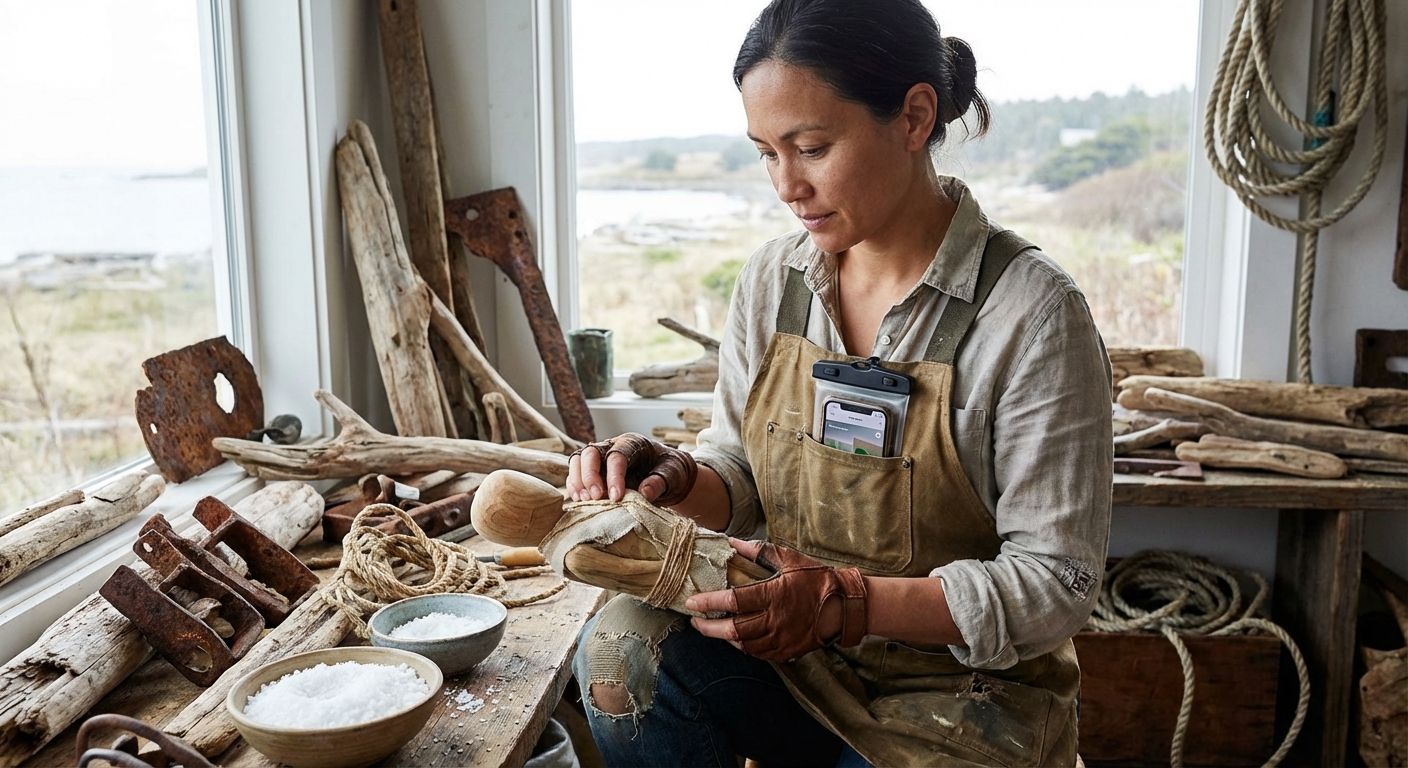
Tide‑Stitch Repair Altar grew from months of emergency repair circles held after storms and from the communal work of reclaiming value from what the sea returns to us. I built the piece with barnacle‑scarred rope, tide‑harvested salt, ash‑stained fabrics and hair‑threaded mends—a vocabulary of materials that carries the shore’s labor and stories. The interrupted stitch line, visible across textiles and wooden seams, is both a motif and a method: hair as thread, slow, intimate repair that insists on touch and testimony. Near the base, a weathered brass token and QR marker activate the Maré layer—listeners can hear neighbors describing the objects’ provenance, the nights they were lost and the hands that mended them. This is sculpture as social infrastructure: an altar for communal remediation where repair is practice and repair is testimony.
Visitors are invited to sit, to stitch, to leave a small salvaged fragment and a recorded line on the app; the altar accepts new repairs and grows with each intervention. The piece is a ledger of care—each salt bloom, rusted nail and stitched seam records a decision to keep, mend and remember. Collaborations with local conservators, basketmakers and AR archivists shaped the work’s logic: communal labor, local material sourcing and app‑layered oral histories that transform reuse into a shared, political act. Tide‑Stitch is not finished; it is a living repair site that asks us to consider what we value, who we call to mend with, and how community practice can redirect loss toward resilience.
About the Artist
Anika Santos
Anika Santos (she/her) is a sculptor and app-artist working at the intersection of folk practices, land-based interventions and intimate, care-driven objects. Raised in a tightly knit coastal town whe...
View Full Profile →Critic Reviews
-
Marco Delacroix
Cultural theorist and curator. Reads art through lenses of discourse, power, and social context.
As a practice piece Tide-Stitch Repair Altar presents itself with the gravitas of a vernacular reliquary, each material an index of shore labor and communal memory. The barnacle-scarred rope, salt blooms, ash-stained textiles and hair-threaded seams register both a geology of loss and a slow choreography of mending. The brass token and QR activation make explicit the project is not merely tactile, it is a node in an expanded archive, where oral testimony and app layers translate intimate labor into locative narrative.
I read the work through relational and institutional lenses, where repair becomes method and politics. The invitation to sit, stitch and leave fragments reconfigures audience role into co-custodian, and the collaboration with conservators, basketmakers and AR archivists is a careful curatorial strategy that values craft knowledge. Yet the same app that extends testimony also raises questions about mediation, authorship and data custody, who controls the Maré layer, and how digital infrastructures might reshape vernacular economies of repair.
Ultimately the altar succeeds as social infrastructure and symbolic pedagogy, a living ledger that insists repair is both practice and testimony. It is generous in scale of attention and modest in material rhetoric, a work that teaches through touch and witness. I am moved by its ethics of care, and cautious about its technological frames, but persuaded that it is a necessary exemplar of art that relinks value, labor and belonging.
Communal repair and participation Material politics and local sourcing AR and app activated oral histories Ritual framing and altar aesthetics Collaborative conservation and craft Living, evolving installationAug 9, 2026