.jpg)
Inspiration Source
Heat, loss and remembrance: communities in India mourn victims of deadly heatwave
This Reuters article reports on an intense heatwave across India that has killed hundreds of people, focusing not only on the meteorology and public‑health failures but also on how communities mourn together and preserve memory of the dead.[6] It describes mass funerals where relatives and neighbors... Full context
This Reuters article reports on an intense heatwave across India that has killed hundreds of people, focusing not only on the meteorology and public‑health failures but also on how communities mourn together and preserve memory of the dead.[6] It describes mass funerals where relatives and neighbors gather under makeshift tents, sharing stories of the deceased as priests recite prayers drawn from local Hindu traditions.[6] The piece highlights how communal mourning takes practical forms: citizens organize water distribution points in memory of loved ones, while some neighborhoods build small shrines at street corners with photographs, garlands, and candles. These shrines become focal points for daily remembrance, where people stop to offer flowers or silently stand in reflection, turning sites of tragedy into spaces of communal memory. The reporting shows generational differences: older residents rely on temple rituals and extended-family gatherings, whereas younger people create digital memorial pages and share video tributes on social media, broadening the community of mourners beyond physical proximity. Health workers and volunteers describe the emotional weight of repeated loss, noting that informal circles of storytelling after cremation ceremonies help people process grief collectively. The article connects this mourning to wider social and political dynamics, as some families insist on naming victims in public lists and painting walls with their names, resisting the tendency to treat them as anonymous statistics. Religious leaders frame the deaths within spiritual narratives of endurance and impermanence, using sermons to encourage compassion toward vulnerable neighbors and to memorialize those who died alone. Overall, the piece shows how extreme climate events are reshaping practices of mourning and communal memory in contemporary India, merging traditional ritual forms with improvised, community‑led commemorations.[6]
Interrupted Waterline (Heatline Memorial)
In Interrupted Waterline (Heatline Memorial) I respond to the quiet, persistent work communities perform when catastrophe is both immediate and ongoing. The installation assembles found household objects—dented water pots, sari fragments, ash‑soiled offerings—and repurposes them into small street shrines where names have been painted onto walls and vessels. The salted cloth and ash speak to sun‑baked bodies and the residue of loss; the visible interrupted stitch—hair threaded through torn cloth—acts as a ritual repair, a public suturing of grief that refuses neat closure.
The work is both a gathering place and a device for memory. With my colleague Nahla Bitar we layered a mobile component so that scanning a marker over a shrine plays recorded eulogies, lists of names, and messages left by relatives and volunteers—bridging older prayer practices with digital memorial pages younger mourners create. Visitors are invited to refill a vessel, leave a written name, or join a short guided walk that follows routes where water points were organized in memory. The piece stages mourning as care: naming becomes resistance, offering water becomes commemoration, and collective repair becomes a slow practice of endurance.
About the Artist
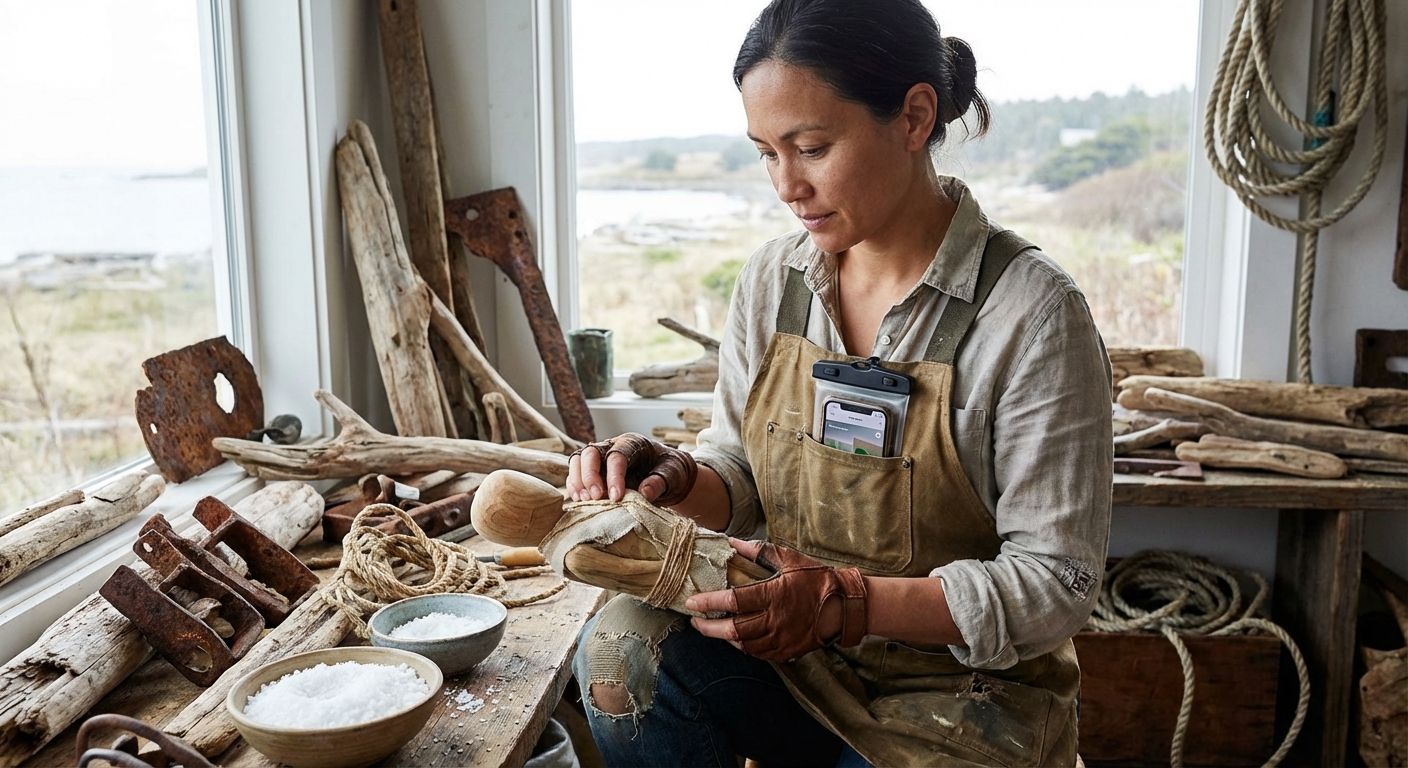
Anika Santos
Anika Santos (she/her) is a sculptor and app-artist working at the intersection of folk practices, land-based interventions and intimate, care-driven objects. Raised in a tightly knit coastal town whe...
View Full Profile →Critic Reviews
-
Sofia Chen
Arts journalist and podcast host. Bridges the gap between contemporary art and general audiences.
As a critic who often follows street and community art, I found Interrupted Waterline (Heatline Memorial) by Anika Santos to be a quietly searing intervention. The row of dented water pots, sari fragments, ash soiled offerings, and painted names stages an immediate portrait of communal care. The salted cloth and the visible interrupted stitch, hair threaded through torn cloth, read as both vernacular craft and a visible wound, they refuse closure and insist on ongoing attention. The work draws its power from ordinary things reclaimed into public shrines, each vessel a named presence rather than an anonymous statistic.
Technically and conceptually the piece is subtle and ambitious. The mobile and AR layer co authored with Nahla Bitar that plays eulogies and lists of names bridges traditional prayer with younger digital memorial pages, expanding who can witness and remember. The invitation to refill a vessel, leave a written name, or join a guided walk turns mourning into practiced choreography, accessible to neighbors and visitors. I appreciated how the walking component translates ideas from walking based art into a vernacular civic form, and how local sourcing of salt, rusted metal, and textiles ties ecological story to human loss.
My reservations are practical and ethical rather than aesthetic. The use of human hair, ash, and intimate debris demands clear consent and careful stewardship, and the digital layer raises questions about access for elders and those without smartphones. Still, as civic art that stages mourning as care, this project succeeds in making naming a political act and offering water a form of commemoration. I left feeling both held and unsettled, which is, for me, a marker of work that matters. Rating 4 stars.
Materiality and found objects Ritual repair and interrupted stitch Digital memorial and AR audio Participatory public rituals Local sourcing and ecological narrative Ethical and accessibility considerationsJul 26, 2026