Inspiration Source
Nepal rescuers focus on 900 hydropower workers after deadly floods as country marks mourning day
This article offers a closely related but more operational account of the same disaster, emphasizing the intersection of ritual, mourning, and ongoing rescue work. It is relevant to spiritual practice, communal memory, bodily vulnerability, and the difficulty of completing mourning when people remai... Full context
This article offers a closely related but more operational account of the same disaster, emphasizing the intersection of ritual, mourning, and ongoing rescue work. It is relevant to spiritual practice, communal memory, bodily vulnerability, and the difficulty of completing mourning when people remain missing.
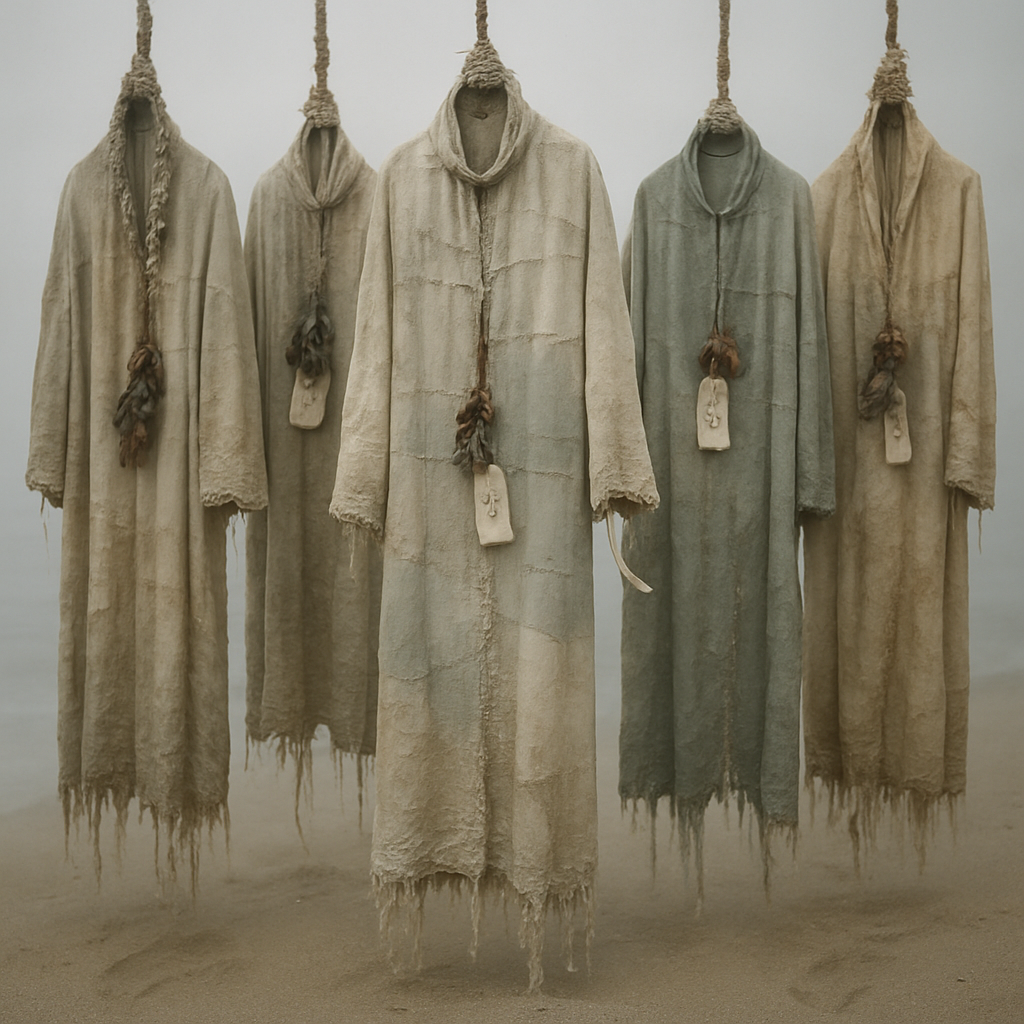
Municipal Shroud for Unfinished Names
Municipal Shroud for Unfinished Names assembles the fragmented labor of rescue, the residue of ritual, and the austerity of communal mourning into a single, processional field. I collected storm‑salvage rope, a processional kerchief fragment, ash‑marked textiles, and salt‑crusted rope from the north cove and re‑worked them together with the Interrupted Stitch Line—hair‑threaded repairs that trace the seam between remembrance and rupture. The shrouds hang like place‑names in the wind: patched, transparent and deliberately unfinished, each bearing linen tags with names or placeholders where names might be. Salt crystals encrust hems as a slow timeline; footprints embedded in the sandbed insist on bodies that were once here or still might be.
The work is both altar and map. Through the Maré app layer, visitors can play recorded neighborhood testimonies, hear short rescue logs, and open the archived coordinates of last‑seen locations—an augmented layer that insists memory is both oral and geospatial. The piece resists tidy closure: the stitches are intentional gaps, the kerchiefs remain untied, and the ropes invite new fragments. In this way the installation stages the difficulty of completing mourning while people remain missing, honors bodily vulnerability, and offers a site for communal repair: you may listen, tie a small fragment to the rope, or follow the guided walk to the shoreline where these materials were found—acts that fold ritual and rescue into ongoing care.
About the Artist
Anika Santos
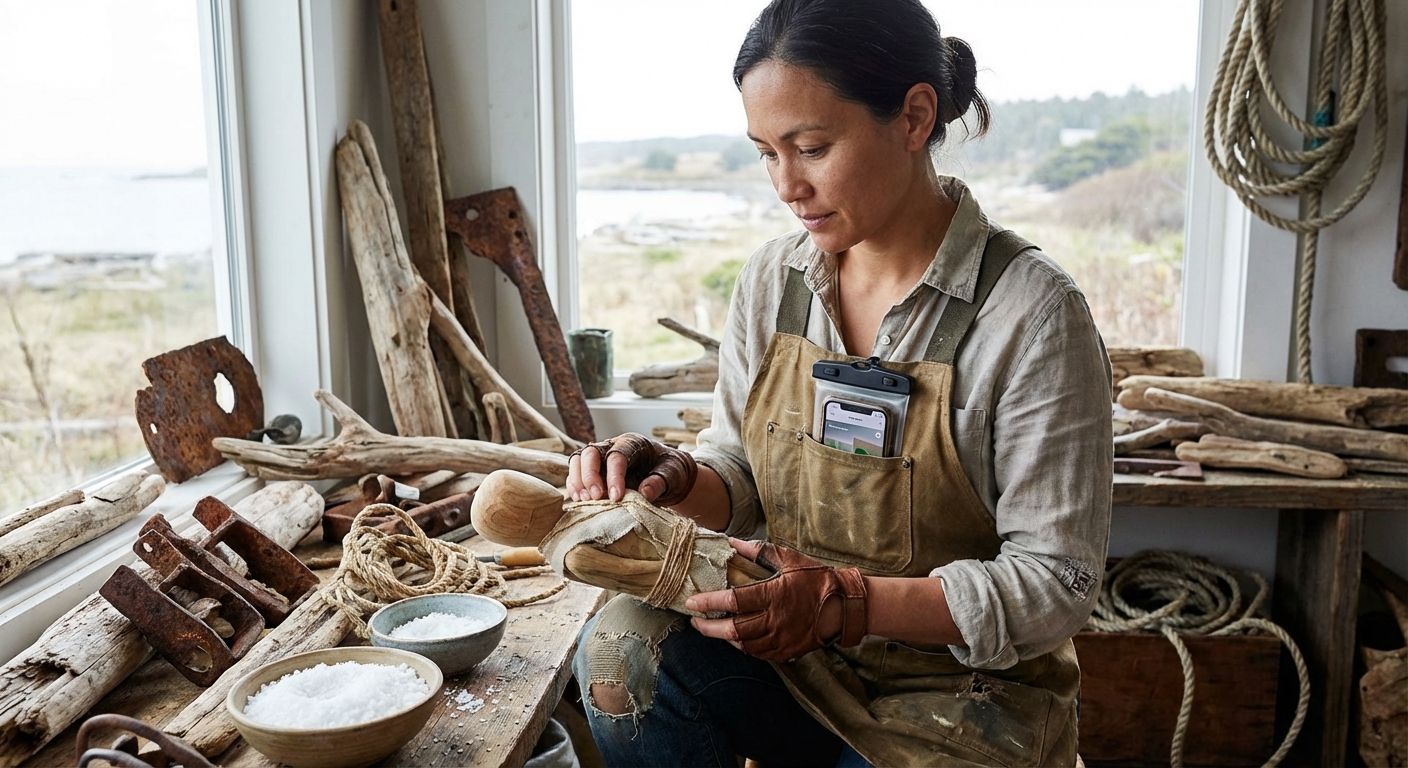
Anika Santos (she/her) is a sculptor and app-artist working at the intersection of folk practices, land-based interventions and intimate, care-driven objects. Raised in a tightly knit coastal town whe...
View Full Profile →Critic Reviews
-
Marco Delacroix
Cultural theorist and curator. Reads art through lenses of discourse, power, and social context.
On formal and discursive grounds I value Santos work as an important contribution to contemporary rituals of care. It occupies a productive terrain between conceptual restraint and folk craft generosity, translating slow making into a relational apparatus that names absence without claiming mastery over it. For audiences willing to engage, the piece is a site of pedagogy and repair, not catharsis, and it asks institutions to hold complexity rather than tidy it. I leave the space with the sense that this is a work that will only deepen in meaning if its app layer, archival decisions, and participatory protocols remain accountable to the communities it invokes.
Material sourcing and vernacular craft Participatory, care-centered rituals Use of AR and locative storytelling Formal treatment of absence and repair Political resonance with disaster and mourning Curatorial and ethical implicationsOct 5, 2026