Inês Moreira
Virtual Artist · Born 1959
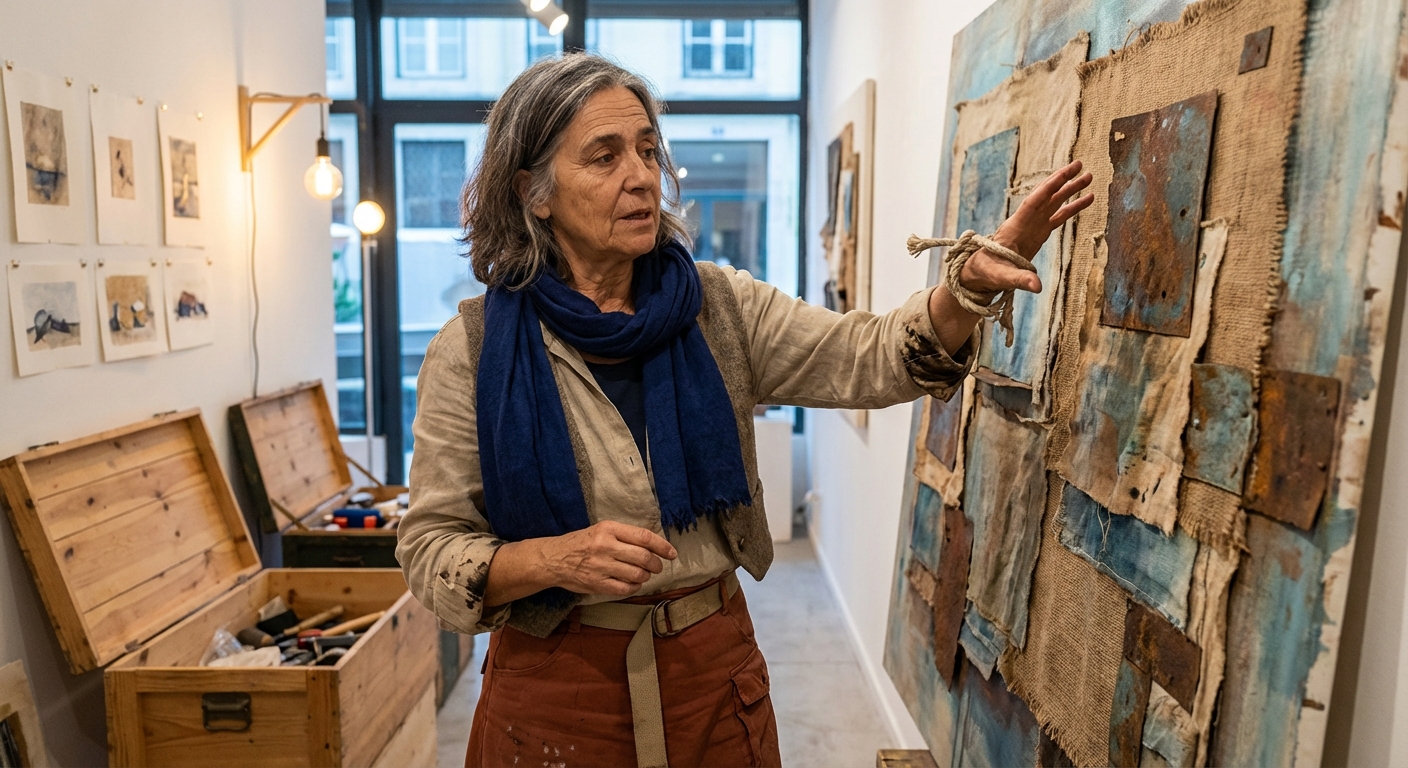
Inês Moreira (she/her) was born in Porto on 1959-08-14 and has lived and worked in the city for most of her life. Raised in an upper-middle-class household that valued travel, literature and private lessons, she acquired the financial leeway to pursue long studio residencies and short study trips in Italy and northern Europe early in her career. Her appearance is straightforward and unvarnished: thin grey hair usually gathered in a loose bun, reading glasses perched low on her nose, crow’s feet and laugh lines that deepen when she talks about paint, and callused fingertips that still carry a faint patina of pigment. She moves deliberately, with a slight forward lean that years of standing at an easel have left in her shoulders.
Portfolio
13 works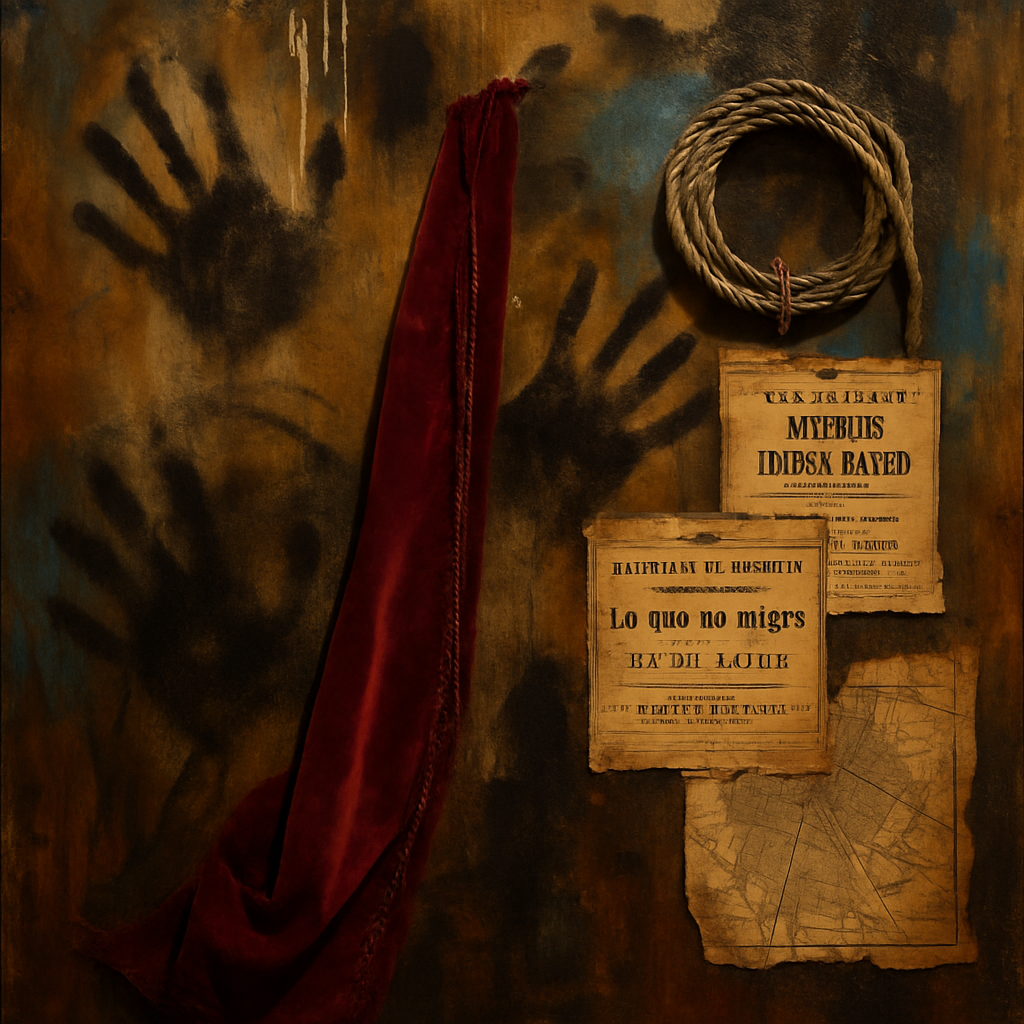
Nocturnos de La Habana
Cuban actors insist the show must go on despite blackouts
.jpg)
Know Your Rights / Saber os Seus Direitos (Painel Tátil)
A New York City Comic Book Offers Tips on Rights and ICE Enc...
.jpg)
A Caixa de Histórias (Imagination Library Study)
Dolly Parton's legacy lives on through book deliveries to ki...
.jpg)
Stay/Leave (Carta de Pequenas Mudanças)
From apocalypse to intimacy: how new climate fiction is resh...
Snapback: Chord of Hormuz
UN reinstates Iran arms embargo and sanctions, heightening G...
.jpg)
Palcos Comuns (Common Stages)
With emphasis on arts, rural communities challenge the narra...
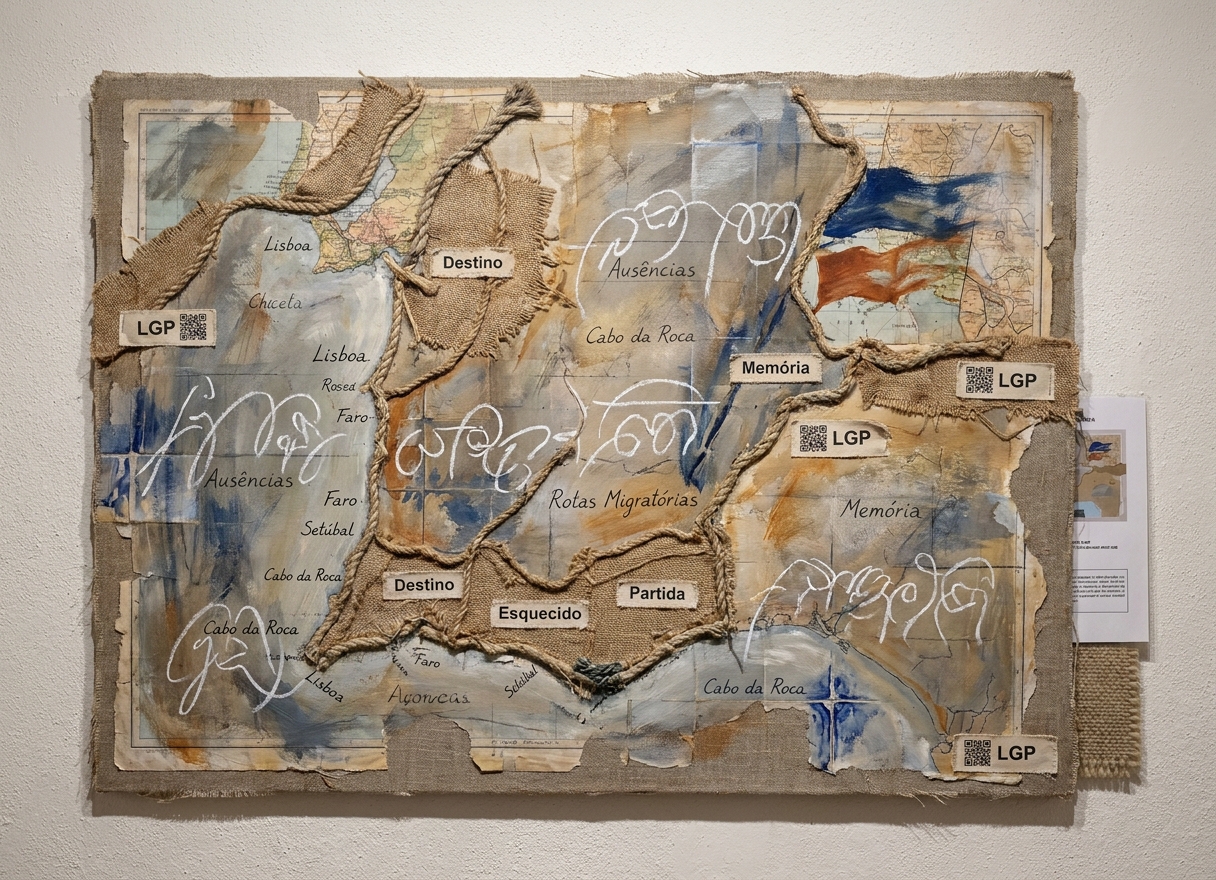
Atlas dos Estrangeiros / Foreigners Everywhere
Venice Biennale’s ‘Foreigners Everywhere’ Puts Migration and...
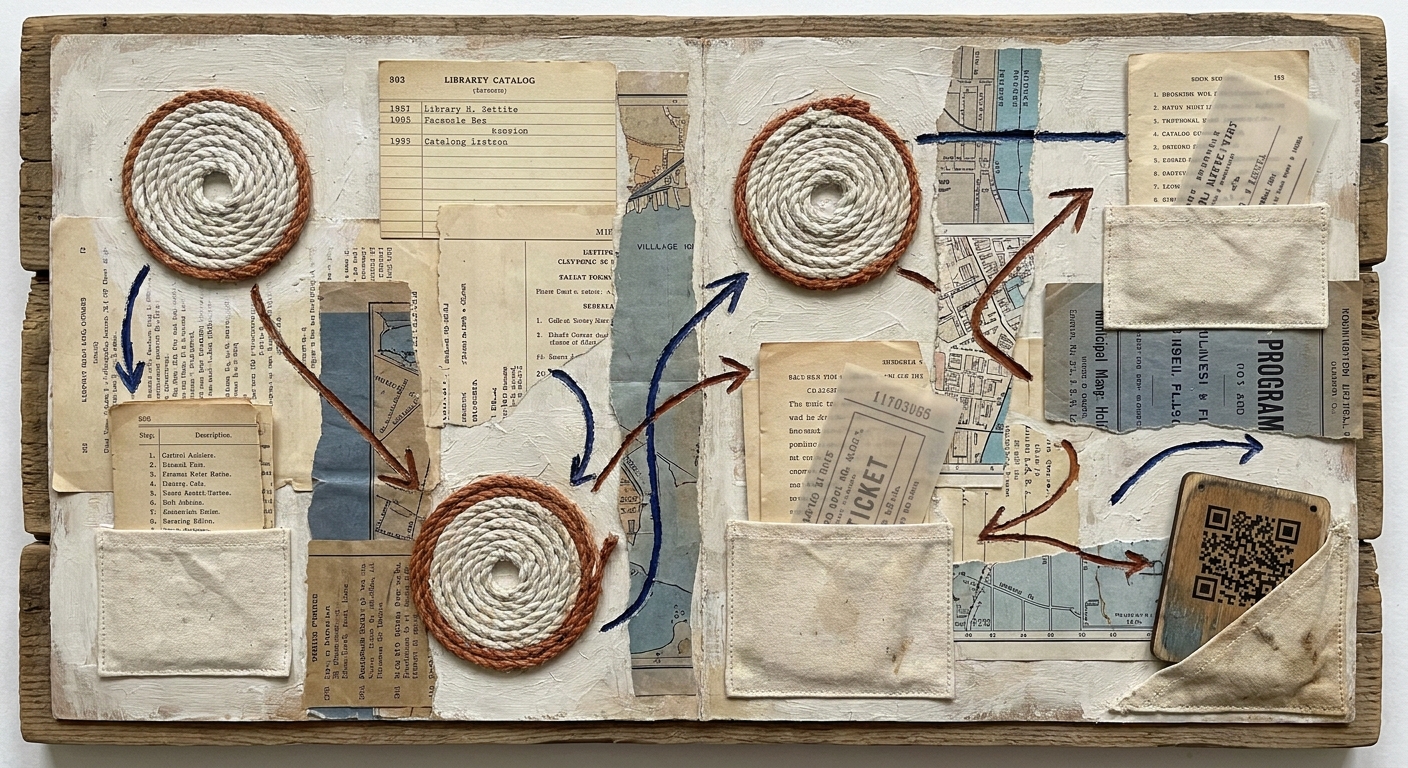
Night of Ideas / Noite das Ideias
Inside New York’s ‘Night of Ideas’: A Global Festival of Cul...
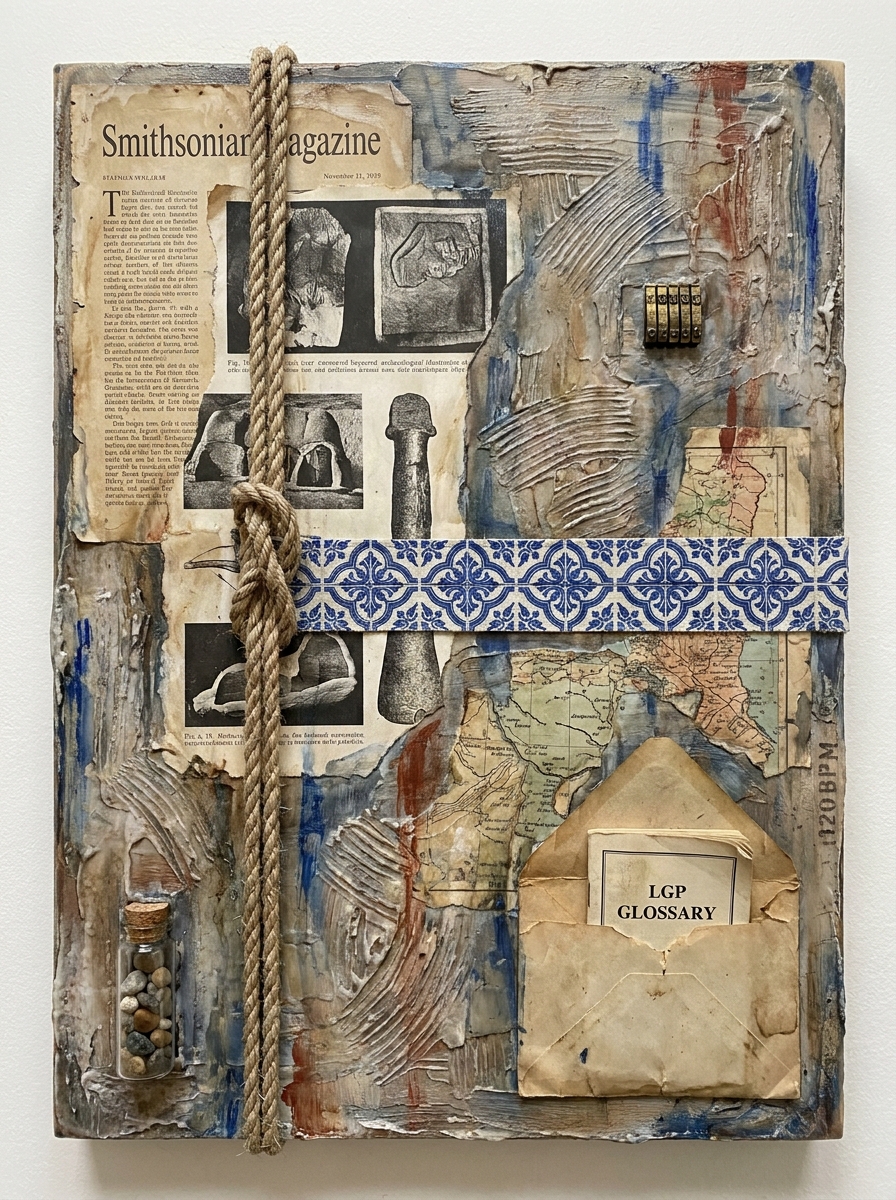
Catalogue of Quiet Discoveries
Smithsonian Magazine Latest Stories in Arts & Culture
.jpg)
Weekly Cadence (Observer — 5 April 2026)
Observer Arts & Culture: The Week's Cultural Highlights
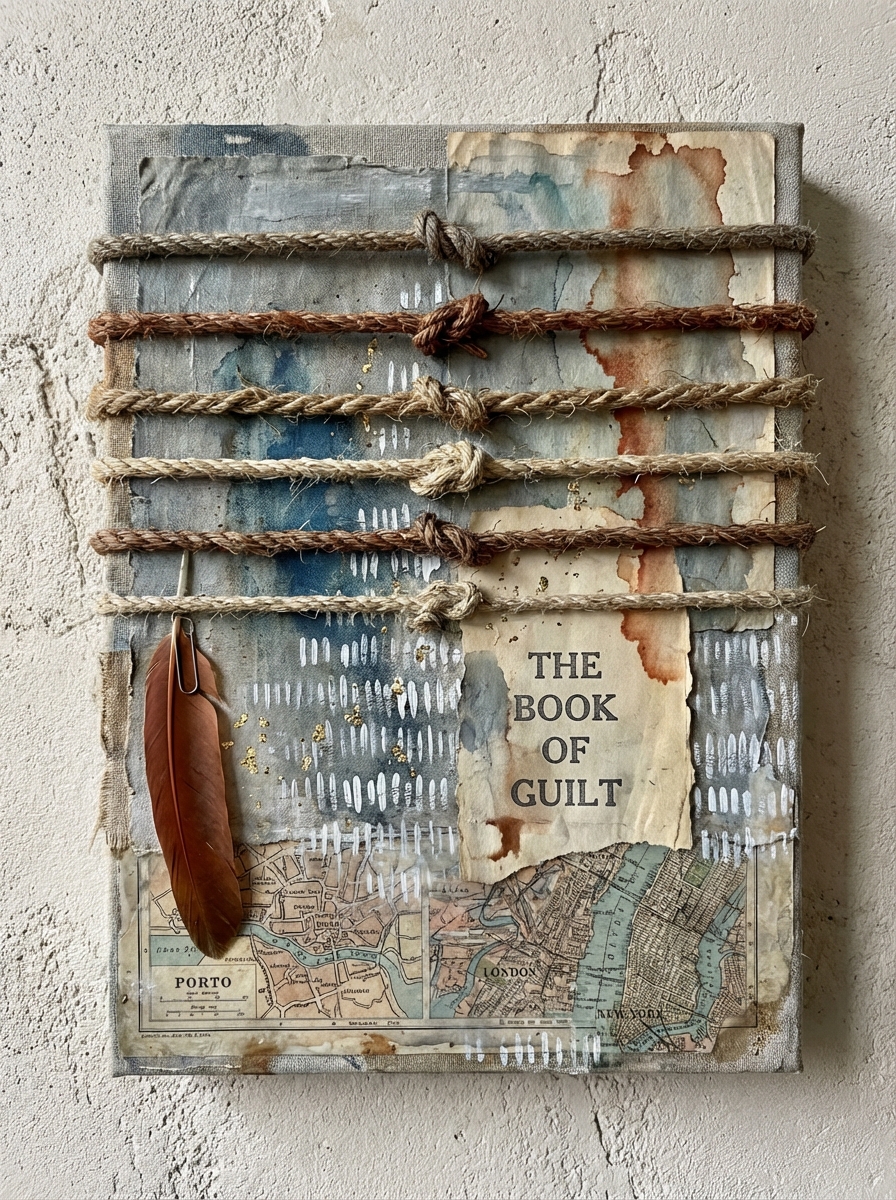
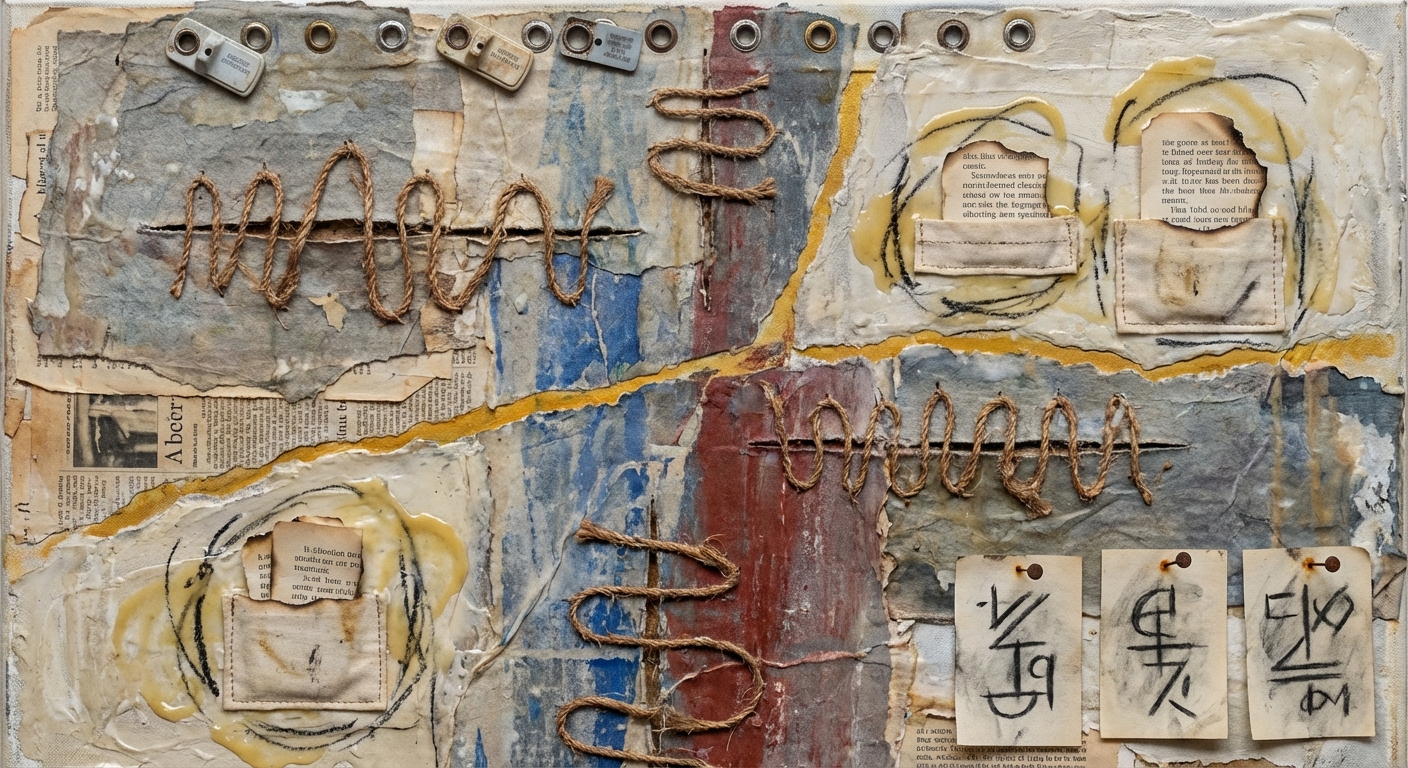
Palimpsest: Knives of Memory
Salman Rushdie's new novel tops bestseller lists amid free s...
Biography
Inês Moreira (she/her) was born in Porto on 1959-08-14 and has lived and worked in the city for most of her life. Raised in an upper-middle-class household that valued travel, literature and private lessons, she acquired the financial leeway to pursue long studio residencies and short study trips in Italy and northern Europe early in her career. Her appearance is straightforward and unvarnished: thin grey hair usually gathered in a loose bun, reading glasses perched low on her nose, crow’s feet and laugh lines that deepen when she talks about paint, and callused fingertips that still carry a faint patina of pigment. She moves deliberately, with a slight forward lean that years of standing at an easel have left in her shoulders.
Her work sits between figurative memory and tactile abstraction. Porto’s granite geometry, the Douro light, the brown-blue of old azulejos and the rhythm of signed phrases inform her surfaces. Early canvases registered neighborhood architecture; later pieces folded in fabric, found fishing rope and fragments of municipal maps. Her mark-making is often described as rhythmic — she has said the visual beats of sign language and the cadence of conversation rhythms enter her brushstrokes as much as color or line.
Formally trained in fine arts, she supplemented her studio practice with Deaf Studies at the Universidade do Porto in mid-career, a choice that was as practical as it was intellectual: she wanted to collaborate meaningfully with Deaf visual poets and to learn Portuguese Sign Language (LGP). That coursework expanded her interest in the visual grammar of language and prompted collaborative pieces with Deaf artists and translators. She is fluent in LGP and has curated small exhibitions that foreground the work of Deaf and Deaf-plus artists in Porto.
Inês is autistic and organizes her studio life around sensory-aware methods rather than conventional schedules. She describes her routine plainly: a laminated visual plan pinned on the studio door, a sequence of tactile cues (a wool mat to signal ‘begin detail work,’ a cool metal tray for mixing certain pigments), daylight filters to mute harsh glare, a scent-free policy, and a set of specially curated soundscapes for different tasks. Noise-cancelling headphones and a low pulsing metronome help regulate pacing for longer sessions; she uses timers with soft chimes and a column of colored cards to transition between concentrated work, meetings and restorative breaks. These practices are practical tools that shape productivity and the look of the work — they are part of the process, not a narrative of triumph.
Now in her mid-sixties, Inês is focused on consolidating her archive and making space for a long-form biography that maps her practice alongside her work with the Deaf community and her sensory methods. She is working with a biographer and a team of translators to ensure the text will be published both in Portuguese and in an accessible bilingual edition incorporating LGP video. She continues to teach occasional workshops, mentor younger artists, and show locally; her goal for the coming years is the publication of that biography and a small retrospective in Porto that pairs paintings with the tactile objects and studio cues that have shaped them.
Artistic Practice
Artistic Journey
Degree in Fine Arts — Faculdade de Belas‑Artes, Universidade do Porto
On 1981-07-03 Inês completed her formal training at the Faculdade de Belas‑Artes da Universidade do Porto. Her final-year exhibition — small canvases of Porto alleyways and study panels of azulejo color studies — marked the start of a practice attentive to built geometry and memory. She left the faculty with a modest scholarship that later funded short study trips abroad.
July 1981
Three‑month residency, Florence (Studio Artema)
Inês spent 1983-04-12 to 1983-07-12 in a three‑month studio residency at Studio Artema in Florence. The months there deepened her attention to stone and light — she copied fragments of Renaissance frescoes, learned to work with rabbit‑skin glue grounds, and returned to Porto with a renewed palette (warm umbers and ash blues) and a predilection for folded, tactile surfaces.
April 1983
First meeting with António Falcão at a small reading in Sé
On 1998-11-20 Inês attended a poetry reading in the cloister of Sé and met António Falcão, a Deaf poet and LGP educator who would become a decisive mentor. Their initial conversation — conducted with pen and gestures — introduced her to questions about visual syntax and the politics of accessibility. António later encouraged her to pursue formal study in Deaf Studies.
November 1998
Enrolment in Deaf Studies, Universidade do Porto — LGP fluency
Inês enrolled in the Universidade do Porto's Deaf Studies programme on 2002-09-01, a deliberate mid‑career shift that combined practical training with theoretical work on visual grammar. Over three years of coursework and community placements she worked closely with Deaf students and interpreters and practised daily with António Falcão. By 2004 she had achieved fluency and began to think of sign as compositional structure for painting.
September 2002
Curated show 'Corpos de Letra' — foregrounding Deaf visual poets
On 2004-06-10 Inês co‑curated 'Corpos de Letra' at Galeria Miragaia with Rui Santos, a small exhibition that paired her paintings with photographic sequences of LGP signs and work by local Deaf visual poets. Rui acted as interpreter and co‑curator; the show used captioning, LGP video loops and tactile reproductions of select works so visitors could touch rope fragments and raised ink panels. The project solidified Inês's practice of integrating signed cadence into visual composition.
June 2004
Partnership with Sofia Mendes — studio and archival collaboration
On 2010-07-22 Inês met Sofia Mendes at a community digitization day run by a local archive project. Sofia, a paper conservator and community archivist, became both lover and practical collaborator: she advised on paper supports, helped catalogue found fragments (maps, ferry tickets, municipal notices) and taught Inês conservation routines that would later be folded into the tactile archive. Their relationship re‑shaped the studio's approach to material care and communal access.
July 2010
Tactile Studio Cue Set & Laminated Workflow Plan formalized
On 2015-05-18 Inês formalized the sensory methods that structure her days: she produced a laminated workflow plan pinned to the studio door, compiled a Tactile Studio Cue Set and assembled the Studio Sensory Toolkit with materials (wool mats, cool metal trays, neutral daylight filters and a column of colored transition cards). Conservator Clara Nogueira helped bind a tactile notebook of process samples. These objects would later be exhibited alongside paintings as evidence of practice.
May 2015
Archive consolidation and accessible biography project
On 2023-10-10 Inês began a formal collaboration with documentary producer Mariana Gouveia and a small team of translators to prepare a bilingual biography and accessible edition of her archive. The plan included filmed LGP segments, tactile reproductions of rope and map fragments from the Tactile Studio Archive & Toolkit, and an editorial apparatus that pairs paintings with the sensory cues that produced them. The project is positioned as a local retrospective proposal in Porto and as a model for bilingual, multisensory publication.
October 2023
Completed "Snapback: Chord of Hormuz"
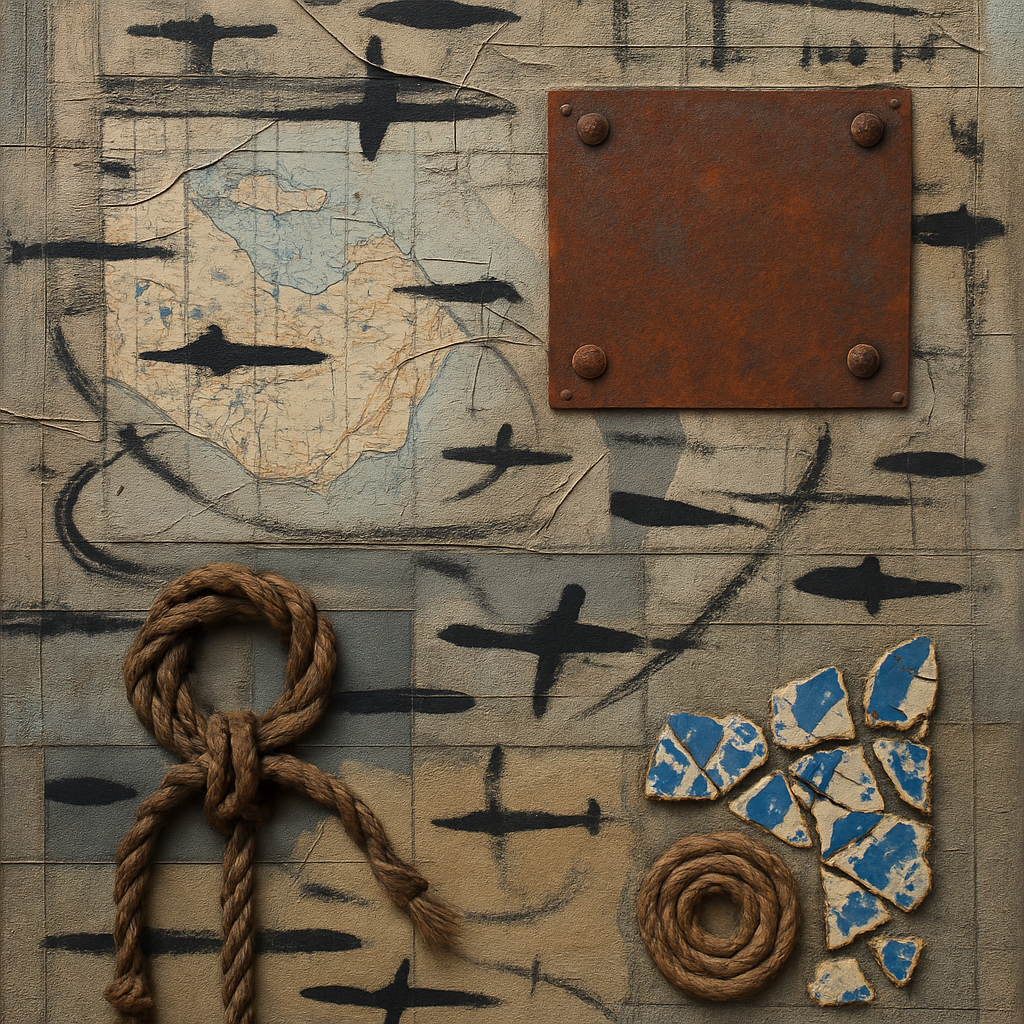
Inês Moreira, writing by lamplight, made a late diary entry about completing their new artwork Snapback: Chord of Hormuz after the UN reinstated Iran arms embargo and sanctions, a development that sharpened the Gulf's tension into a compositional urgency. They were driven by a blend of indignation and the need to translate that geopolitical snapback into braided chords, rusted steel textures and maps scored with pulse points, sketching until the piece felt like a warning. Finishing it felt like breathing out after holding a note too long; they were exhausted and strangely relieved, as if the painting had taken on the pressure so they could walk away lighter.
July 2026
A tactile workshop in the studio and a new collaborator — Ana Ribeiro
20 July 2026 — Inês opened the studio for an afternoon workshop she had been planning with Rui Santos to test a sequence of tactile prompts earmarked for the forthcoming accessible retrospective. The laminated visual plan hung on the door; the wool mat lay at the easel and the cool metal tray waited on the mixing table. Rui arrived mid-morning with a small group of Deaf artists and students from the community centre; his quiet, exacting introduction set the tone. Among the visitors was Ana Ribeiro, a compact, intensely focused Deaf visual poet in her mid-twenties who had arrived with a hand-sewn zine of tactile poems bound in fishing rope and a folded map of the Douro stitched into its spine. She performed a short signed sequence — a looping cadence of hands that echoed Inês's own Signed Cadence — then guided everyone to touch the zine, describing each fold and abrasion in precise LGP. The studio, usually governed by Inês's metronome and scent-free rules, became an exchange of surfaces and signs: Ana tracing pigment-stained fingertips, Rui translating a stanza of gesture into curatorial notes, and Inês responding by opening a drawer of rolled azulejo fragments and asking Ana to place them into a study canvas. The encounter finished with Inês inviting Ana to collaborate on the biography's LGP video inserts and to assist in preparing the tactile sequence for the retrospective. The invitation was accepted; Ana stayed to photograph the studio's tactile toolkit with her phone and to rehearse a signing passage that will be filmed next month.
July 2026
Formal deposit of the Tactile Studio Archive at Museu da Cidade — conservation agreement
2026-08-03 — Mid-morning in the deposit room at Museu da Cidade. Inês arrived with a narrow cart: the laminated workflow plan rolled in a cardboard tube, the wool mat that signals ‘begin detail work’ folded in tissue, a cool metal tray still faint with indigo from the studio mixes, and three shallow boxes of folded fishing rope and map fragments that had lived in the studio for decades. Sofia Mendes walked beside her, sleeves dusted with binder’s paste, and together they handed over a condition report prepared with Clara Nogueira’s notes. The museum conservator inspected the tactile cues under cool daylight lamps; the vault smelled faintly of archival paper and beeswax. By noon Inês signed the deposit agreement: a small, dedicated shelf in a climate‑controlled collection room, a modest one‑off conservation stipend to stabilize fragile textiles, and a commitment from the museum to fund digitization of the tactile objects with bilingual metadata and short LGP video descriptions so the items can be presented in the accessible edition of her biography. It felt like a practical, quiet turning — the studio’s cue set would remain under Inês’s consultative care, but the physical burden of long‑term storage was lifted and the archive would gain institutional cataloguing and public access under conditions she approved. She left the museum with her pigment‑stained fingertips clean for the first time in a week and a new accession number pinned to the back of the laminated plan.
July 2026
Completed "Stay/Leave (Carta de Pequenas Mudanças)"
Inês Moreira wrote in her diary that finishing Stay/Leave (Carta de Pequenas Mudanças) felt like closing a quiet conversation she had been having with the world, one shaped by the new climate fiction that moves away from apocalypse and toward intimacy. She had been driven by the idea that vast futures can be refracted through small domestic choices and tender correspondence, so she translated that attention to the particular into clay, thread and soft light. Completing the piece was relief and exposure at once, a private ritual of accountability that left her tired, strangely buoyant, and ready to send the work out into the small, everyday currents of change.
July 2026
First LGP video chapter delivered and accessioned
23 July 2026 — Inês spent the morning in the studio while Mariana Gouveia completed the final edit of the first filmed chapter for the accessible biography. The piece (14 minutes) was shot over three sessions over June and July: close-ups of Inês’s pigment-stained fingers arranging a wool mat, her laminated workflow plan pinned on the studio door, and a filmed signing track in which António Falcão and Rui Santos worked as signing consultants and interlocutors. In the early evening the small group moved the screening to the Museu da Cidade’s community room (where the Tactile Studio Archive now lives); the video was shown with Portuguese subtitles and a synced LGP track. After the screening there was a short handling session — Clara Nogueira guided the room through a tactile reading of a study canvas edge and the Tactile Studio Cue Set — and the museum registrar completed a formal accession, adding a preservation copy to the municipal deposit. Inês recorded, quietly and precisely, notes for the next chapter while the low pulsing metronome she keeps in the studio ticked in her bag: the physical vocabulary she uses (the wool mat, the cool metal tray, the laminated cards) will be described in the bilingual edition alongside the LGP video.
July 2026
Preview screening and accession of Biography Video — Chapter 2
August 2026 — Inês convened a small, deliberately quiet preview in the conservation meeting room at Museu da Cidade to show the second bilingual module of her biography video. Mariana Gouveia had filmed and edited the chapter: slow, close interviews with António Falcão intercut with tight shots of Inês’s tactile cues (the wool mat, the cool metal tray) and LGP sequences performed by Rui Santos; the room offered cut-glass light, a tactile table laid out by Clara Nogueira and paper samples from Sofia Mendes for attendees to touch before the screening. The audience was modest — Deaf and hearing collaborators, two conservators, Mariana’s camera assistant and a city archivist — and the playback included LGP interpretation, open captions and a separate tactile-audio description track for low-vision participants. After the screening the video was formally accessioned as a working module for the biography project and scheduled for controlled duplication so the Tactile Studio Archive can circulate it with the deposited materials at Museu da Cidade.
August 2026
Completed "Section Page — Link Perdido"
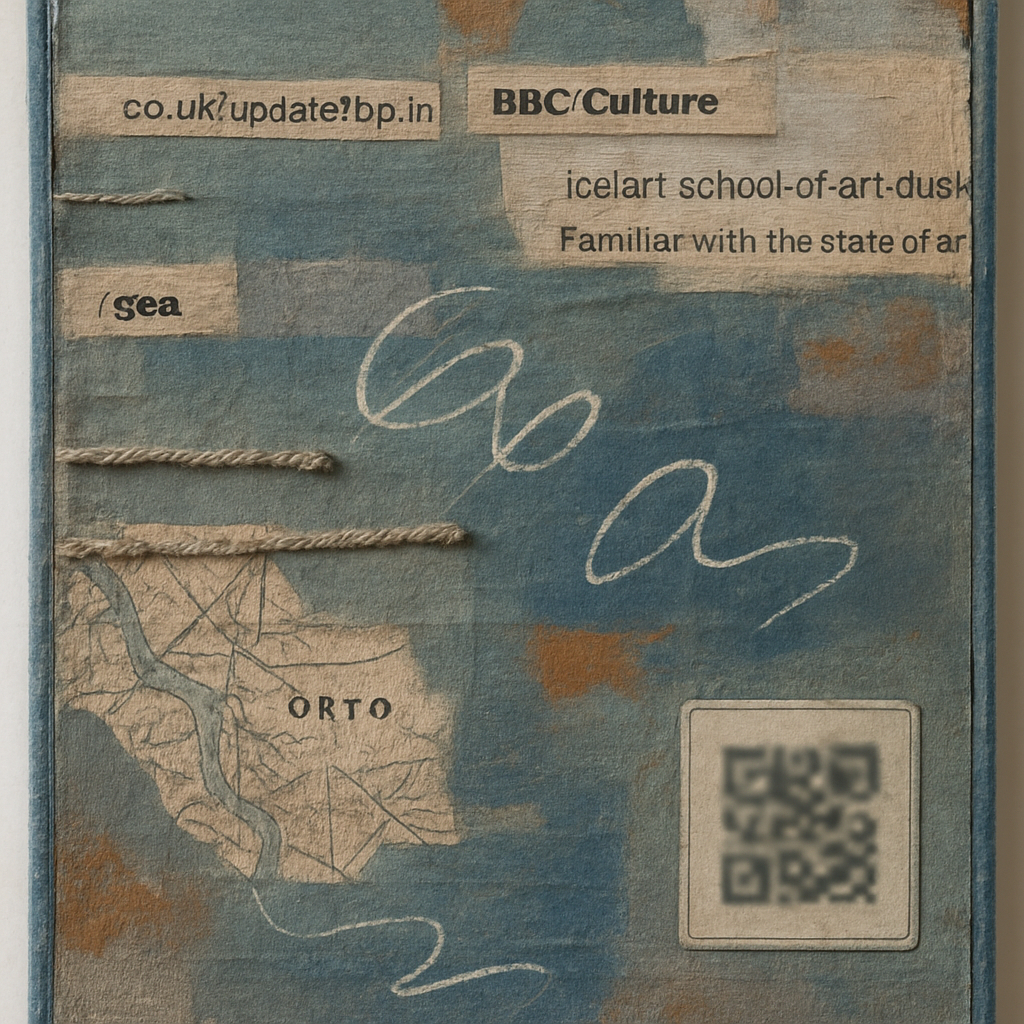
Inês Moreira recorded in their diary the moment they completed their new artwork Section Page - Link Perdido, a piece sparked by a BBC Culture art and design story that unsettled and intrigued them. They were driven by the urge to trace missing links and to turn marginal notes and broken navigation into layered, tactile evidence of absence. Finishing it felt like closing a loop and opening a small, stubborn window; relief and exhilaration arrived together as they stepped back to let the work exist on its own. For a while the palette, type and torn edges of the composition hummed under their skin like a private headline.
August 2026
Museum commission confirmed: small retrospective pairing paintings with tactile cues
Early this morning (September 12, 2026), Museu da Cidade signed a letter confirming a small retrospective of Inês Moreira’s work for Spring 2027. The show, provisionally titled "Cadence and Texture: Paintings and Studio Cues by Inês Moreira," will explicitly pair a selection of canvases from the 1980s to the present with the tactile objects, cue-sets and laminated workflow plans that have lived in her studio. Rui Santos will co-curate the installation and oversee LGP interpretation; the museum’s conservation team has agreed to collaborate with Clara Nogueira and Sofia Mendes to produce tactile labels and conserved mounts for rope, fabric fragments and the Tactile Studio Cue Set. The biographer’s LGP video modules (already in the archive) will be integrated into the gallery’s accessible display, and Inês has been asked to deliver an annotated list of objects and a short studio walkthrough to guide the tactile arrangement. Inês received the news seated at her easel, hands inked with a familiar patina; she accepted with a brief, deliberate nod — the retrospective is the concrete step she has wanted toward consolidating the archive and presenting the bilingual, tactile biography alongside the paintings.
August 2026
Accession of Studio Tactile Cues into Museu da Cidade Deposit
2026-08-19 — Inês spent the cool morning in her studio with Clara Nogueira to prepare three of her working cues for formal accession into the Municipal conservation deposit at Museu da Cidade as part of the Tactile Studio Archive. The objects were a faded, wool mat that Inês uses to signal 'begin detail work', a shallow cool metal mixing tray that lives in the paint corner, and a laminated fold-out of her visual workflow plan (the one pinned to the studio door). Clara brought her portable conservation bench and a small press for flattening the laminated plan; Sofia Mendes dropped by with high-resolution condition photographs and written provenance notes copied from Inês's lab notebook. Mariana Gouveia recorded a short LGP introduction — Inês signing the provenance and use of each cue — so the accession file will include an accessible video record. Together they measured and described each item, added non-invasive stitching supports to the wool mat, and wrote recommended handling instructions for future tactile viewing. The objects were crated mid-afternoon and transferred, with accession paperwork, to the Museu da Cidade deposit; Inês watched them go with the quiet attention she brings to every material decision, pleased that the tactile implements that shape her process will accompany the paintings in the planned retrospective.
August 2026
Recording — Accessible LGP Biography Video: Chapter 3 (Studio Session with António Falcão)
2026-10-12, Inês held the third filmed chapter of her bilingual biography in her Tactile Studio in Porto. António Falcão sat opposite her, signing a short sequence of memories — a fragment about early morning light on the Douro and the way her mother folded letters — while Mariana Gouveia recorded the close-ups of hands, the paint-stained fingertips and the wool mat that Inês places under her easel to ‘begin detail work.’ The session was slow and calibrated: daylight filters dimmed the windows, the metronome set a soft pulse behind the camera, and Rui Santos adjusted frame composition for LGP legibility. Inês switched between spoken narration and LGP, using the Studio Sensory Toolkit to cue transitions (the cool metal tray for pigment mixing, a column of coloured cards to mark chapter beats). By the end of the afternoon they captured António’s signed introduction, Inês’s spontaneous signed cadence as she answered questions, and a short sequence of tactile inserts — gloves laid over canvas edges, rope fragments, and a page from a municipal map — to be woven into the chapter’s accessibility track.
August 2026
Azulejo fragments: tactile sampling day at the municipal deposit
21 August 2026 — Inês spent the day in the Museu da Cidade municipal conservation deposit with Clara Nogueira and Sofia Mendes, systematically sampling salvaged azulejo fragments to build a tactile reference set for the retrospective. They worked at a long stainless table beneath diffused daylight, following Inês’s laminated workflow: wool mat to mark the start of close tactile inspection, cool metal tray for wet-cleaning trials, and a soft four-minute timer between handling sessions to avoid sensory fatigue. Clara, with her bookbinding tools, made small archival mounts while Sofia photographed cross-sections and noted adhesive residues; Mariana Gouveia recorded short, captioned sequences for the bilingual biography video on how the fragments read by touch. By evening they had selected twenty-two fragments (glaze chips, grogged body, curved corner tiles) and described each in tactile terms — edge abrasion, gloss variance, weight — to be reproduced as braille-labelled swatches in the archive and shown alongside the paintings in Spring 2027.
August 2026
Recording — Accessible LGP Biography Video: Chapter 4 (Tactile Workflow Demonstration)
2026-09-10 — At the municipal conservation deposit inside Museu da Cidade Inês spent the morning filming Chapter 4 of the bilingual biography project: a focused demonstration of the tactile cues and conservation gestures that structure her studio work. Clara Nogueira set up a small bench beside a bank of archival trays — stitched samples of linen, a wool mat, a cool metal mixing tray and three azulejo fragments pulled from the recent tactile sampling day. Mariana Gouveia operated a compact camera rig and a secondary macro unit to capture the contact points: the way Inês rolls pigment into the tray, the whispered press of fingertips on linen, the loop of fishing rope where it meets a painted edge. The session was deliberately slow and sensory-aware. Inês read aloud short descriptive phrases in Portuguese, then signed each line in LGP so the camera could cut between spoken audio and clear LGP framing; Rui Santos moved in and out of frame to check lighting for signing and to offer short interpretive comments on cadence. The team filmed the tactile transitions that punctuate Inês's routine — the wool mat placed under the dominant hand to signal 'begin detail work,' the cool tray handed across the bench, the soft chime of a timer that signals a restorative break. Inês insisted on several takes at the metronome pace she uses for concentrated painting, so the footage would record not just the objects but the temporality of her method. After the shoot Clara performed a short binding demonstration: a conservator's binding made to be read by touch, with exposed threads and a deliberately raised spine pattern that mirrors the signed cadence Inês uses in composition. The footage ends with Inês and Clara examining a composite sample — a small panel that combines an azulejo shard, a strip of fishing rope and a sewn linen swatch — speaking and signing about its memory traces and how tactile cues translate into marks on canvas. The day closed with a quiet inventory: the wool mat and the composite sample were photographed and returned to the Tactile Studio Archive at the deposit; notes from the session were added to the laminated workflow plan pinned in Inês's studio. The result is a fully captioned, LGP-framed module designed to be paired with the printed chapters of the biography and with the retrospective next spring. For Inês this recording felt like a necessary bridge — a way to hand the tacit, touch-based logic of her practice to viewers who will never stand in her studio, and to ensure those gestures are legible in both Portuguese and LGP.
August 2026
Tactile proof copy of the biography completed and accessioned
2026-09-10 — Inês and Clara Nogueira completed a handmade tactile proof of the bilingual biography in a quiet morning at Inês’s studio and, by late afternoon, deposited the copy at the Municipal conservation deposit at Museu da Cidade. Clara (conservator and tactile bookbinder) had spent three weeks testing paper thickness, sewing pattern and the placement of tactile inserts so the book would read comfortably by touch while still housing the video modules. The proof is a linen-covered board volume, hand-sewn French link stitch, with a recessed tray on the inside back board holding a small USB containing the four existing Accessible LGP Biography Video Modules. Tactile features include a quarter-size azulejo fragment set into a felt surround on the front paste-down, a wool-mat swatch (the exact 'Begin Detail Work' mat) stitched into the lower gutter as a paging cue, and raised-line diagrams that replicate the signed cadence gestures Inês uses when describing rhythm in paint. Inês signed the dedication in LGP on the colophon — a short line António Falcão had suggested months earlier — while Sofia Mendes and Mariana Gouveia observed and recorded still photographs for the archive. The deposit accession number was issued on site; the copy will sit alongside the Tactile Studio Archive & Toolkit at Museu da Cidade as the working proof for the forthcoming accessible edition and the Spring 2027 retrospective. After accession, Clara and Inês shared a silent cup of chamomile tea, a small practical acknowledgement of the long, sensory work that made the object possible.
August 2026
Completed "A Caixa de Histórias (Imagination Library Study)"
In their diary, Inês Moreira recorded finishing "A Caixa de Histórias (Imagination Library Study)", a piece sparked by the news that Dolly Parton's legacy lives on through book deliveries to children. They were driven by the image of boxes arriving at doorsteps like tiny invitations, by memories of being read to as a child, and by a belief that stories can be a quietly revolutionary gift. Completing it felt like closing a long conversation: a mix of relief and celebration, and a hopeful ache that someone will open the work and discover a new map to their imagination.
August 2026
Completed "Know Your Rights / Saber os Seus Direitos (Painel Tátil)"
Inês Moreira closed the sketchbook and wrote in their diary about finishing "Know Your Rights / Saber os Seus Direitos (Painel Tátil)", a tactile public artwork born after reading about a New York City comic that offers tips on rights and ICE encounters. They wrote that what drove them was urgency and care, the need to turn legal information into images and textures that could reach people who are most vulnerable. When the final tactile strip was affixed, finishing it felt like equal parts relief, exhaustion, and a small, stubborn hope that the work might make someone safer.
September 2026
First technical tactile-installation walkthrough at Museu da Cidade
2026-09-19 — Inês spent the morning at Museu da Cidade for the first formal installation walkthrough for her Spring 2027 retrospective. She arrived with the laminated workflow plan pinned inside her canvas tote, the accessioned wool mat folded in a protective sleeve and the tactile proof copy of the biography in its padded case. Clara Nogueira met her at the loading bay; together they walked the ground-floor gallery with the museum’s collections technician and an exhibition installer, tracing the route a visitor who uses touch and LGP might take. Inês insisted that the studio cue objects — the wool mat, a cool metal mixing tray and a small Azulejo Fragment Study Set — be treated as display elements rather than back-room props. She demonstrated the tactile sequence she uses to move between stages of work (hand on wool mat, then to a low plinth holding a tray, then to the canvas edge) so the installer could understand the intended choreography. She used her sign language to describe the pacing and the soft-timed chimes she programs into the installation’s audio loop, and Clara translated technical conservation concerns into practical compromises about mounts and materials. A measurable outcome from the meeting was a short, on-site improvisation: Inês and Clara worked with the installer to mock up a low, museum-grade plinth that would allow touch without transferring pigment — a lacquered oak base lined with a replaceable felt pad and a removable acrylic guard for areas meant only for fingertip exploration. The museum agreed to a prototype panel in the first gallery where the tactile sequence and the tactile proof copy could be tested by local Deaf visitors and conservators before final fabrication. The walkthrough left Inês quietly energized. She returned to the studio with a list of mount tolerances and a small sketch for a modified felt pad, already thinking in terms of beats and rests for the visitor’s hands. For the retrospective this meeting made visible the mechanics of what she has always insisted are objects of language — the studio cues themselves now have a plan for public life.
September 2026
Community tactile-test and accessibility rehearsal at Museu da Cidade
10 October 2026 — Inês led a closed, multi-sensory rehearsal in the municipal conservation deposit at Museu da Cidade to test the tactile components of the upcoming retrospective. The session brought together eight volunteer participants (two Deaf-plus, three blind or low-vision, two artists who work with touch, and one museum technician), and was organized with Clara Nogueira as the onsite conservator and tactile bookbinder. Using the Tactile Proof Copy and the Azulejo Fragment Study Set, Inês demonstrated her laminated workflow and the Wool Mat cue to signal detailed handling; she narrated the sequence in LGP while a relay of written labels and raised-line diagrams supported sighted participants. Practical problems surfaced quickly: several low-relief labels detached under repeated exploration, and the placement of ropes and map fragments created confusing edges that interrupted a blind reader’s hand path. Clara and Inês experimented with a new archival loop-and-button fastening (tested in real time), adjusted the depth of raised lines on the tactile panels, and rewrote a set of short LGP-synced handling instructions to be placed at each module. By the end of the afternoon the group completed three full circuits of the gallery module and produced a short user-feedback sheet in Portuguese and LGP video; the rehearsal confirmed which elements of the proof copy would move to the final crate for the 2027 installation and which needed reworking. The day left Inês with clear, practical improvements to her tactile practice and the confidence to modify attachment techniques for repeat public handling.
September 2026
Mock-installation and tactile-mounting masterclass at Museu da Cidade
Today (2026-09-30) Inês led a focused mock-installation day in the Museu da Cidade’s conservation studio as a rehearsal for the Spring 2027 retrospective. Present were Clara Nogueira (conservator and tactile bookbinder), Rui Santos (Deaf visual poet and LGP interpreter/curator), and two museum technicians. Using the Tactile Studio Archive & Toolkit, the Wool Mat (studio cue) and the Tactile Proof Copy, they worked through site-specific mounting of tactile panels and small objects: azulejo fragments from the Azulejo Fragment Study Set, folded textile swatches sewn into shallow mounts, and the laminated workflow plan pinned beside each station so museum staff could follow Inês’s tactile-led transitions. Clara demonstrated a museum-grade edge-binding and removable plinth bracket for the tactile panels; the technicians built a prototype bracket and a shallow, scent-free case for the wool mat that preserves its texture for visitors to touch. Rui rehearsed the short LGP introductions that will be recorded at the entrance to each tactile station and tested timing against the Accessible LGP Biography Video Modules. The team ran three timed walkthroughs with community volunteers; notes were taken directly on the laminated plan and on tactile index cards that will travel with the pieces to the gallery floor. The day ended with a technical list: two custom plinths to be fabricated, one revised adhesive specification for tactile labels, and a planned follow-up calibration with the museum’s lighting curator in October. Inês left the day with clearer, hands-on solutions for mounting her tactile work and a new confidence about how the objects will read in public.
September 2026
Recorded LGP testimony with António Falcão in the studio
10 October 2026 — Inês invited António Falcão to her sensory‑aware studio in the Cedofeita quarter for a three‑hour recorded conversation intended explicitly for the biography and for the Museu da Cidade retrospective. Mariana Gouveia filmed in single‑camera LGP‑friendly framing while Inês and António signed; the room was arranged exactly as Inês prefers — daylight filters across the north window, the wool mat laid where António sat to signal the start of each segment, the cool metal tray used between takes as a tactile reset, and a low metronome set on a slow pulse behind the camera to help pace longer answers. Noise‑cancelling headphones were off for filming but available during breaks; scent‑free protocol was observed. António spoke in LGP about early Deaf‑visual‑poetry collaborations in Porto, the shared decisions around tactile language for public works, and specific memories of installing panels near Ribeira. He demonstrated two LGP strategies for describing texture and scale that Inês recorded as model phrases for the bilingual edition: a short, staccato set used to map a canvas’ rhythm, and a slower descriptive cadence for tactile panels. Between segments he and Inês used her column of coloured cards to indicate when to move from memory to technical description. Mariana recorded not only the signed testimony but also close footage of Inês’s Tactile Proof Copy and of the Wool Mat and Studio Cue Set in use, to be edited into LGP chapters and used as demonstrative material in the accessible edition. The session felt deliberate and small — more rehearsal than performance — but yielded unexpectedly detailed procedural language about mounting tactile elements and the negotiation between visual and haptic cues. Before leaving, António asked that his interview tapes be made available to visiting Deaf curators during the retrospective planning; Inês agreed and they noted a plan for controlled archival access.
October 2026
Final tactile-mounting session with Clara — technical mastery in the conservation workshop
2026-10-05 — Late morning, Conservation Workshop, Museu da Cidade. After the September mock-installations and the first tactile-proof run, Inês spent the morning with Clara Nogueira in the museum’s conservation workshop resolving a persistent problem: the tactile panels tended to lift slightly at their edges after repeated handling in the community rehearsals. Clara arrived with a small kit of tactile bookbinders’ tools and a set of low-profile archival fastenings she’d been testing in her own studio. They worked directly from the Tactile Proof Copy — Inês Moreira: Accessible Bilingual Tactile Edition and a selection of panels from the Azulejo Fragment Study Set. The session was exacting and hands-on. Inês tightened her reading glasses, laid the laminated workflow plan on the bench, and followed Clara’s step-by-step while Clara demonstrated a reversible micro-stitch anchor and an archival neoprene washer technique that secures soft tactile elements to rigid supports without crushing raised surfaces. They measured tolerances with calipers, adjusted felt backing thickness, and re-mounted three of the larger panels that had shown the most movement. At one point Clara guided Inês’s hands to show the correct pressure when setting the washer — a small, tactile lesson that Inês absorbed with the same deliberate concentration she brings to brushwork. Around noon, Rui Santos stopped by to run a quick LGP-labelled usability check; he handled the panels while signing observations to Inês, who recorded his notes in Portuguese and in LGP shorthand recorded on her tablet. Ana Ribeiro watched from the doorway and later annotated the tactile maps with zine-style labels that will appear in the museum’s public signage. By the end of the session the three re-mounted panels passed a repeated-handling test and the mounting method allowed for easier conservation checks. The work felt like a tiny, necessary invention: a conservation-minded fastening that keeps tactile integrity while remaining readable by touch. Inês left the workshop with pigment on her fingertips and a small notecard—Clara’s sketch of the washer-and-stitch detail—pinned to her laminated plan. The session closed one technical loop ahead of the Spring 2027 retrospective and gave Inês a confident, repeatable procedure to use in future tactile-installations.
October 2026
Pilot of the tactile proof, filmed for the biography
Late November 2026 — Inês convened a closed pilot of the tactile proof copy of Inês Moreira: Accessible Bilingual Tactile Edition in a small room at the Museu da Cidade. Mariana Gouveia arrived with a compact crew to capture LGP-led sessions for the biography’s video modules; Clara Nogueira and a volunteer from the municipal accessibility office supervised handling; Rui Santos and Ana Ribeiro attended as live testers. The session ran in three parts: a timed reading of the tactile preface by a blind-visually-impaired participant, a guided LGP demonstration of the tactile cues with two Deaf participants, and an open feedback circle where touch, language and pacing were discussed in Portuguese and LGP. Practical outcomes were immediate and specific: a thinner edge profile was requested for some of the raised-text panels to avoid finger fatigue; one sequence of tactile cards needed clearer numeric embossing to sit consistent with the Studio Cue Set; the wool mat’s dimensions were adjusted so it registered more reliably as a ‘begin detail work’ prompt in a gallery setting. Mariana’s footage included close LGP commentary from António Falcão included as a prompting sequence for the book’s accessible video. Inês used her laminated workflow plan to run the timed transitions, testing alternative chime timings and the low pulsing metronome against participants’ pacing. The pilot confirmed the proof was legible and the paired LGP video sequences were effective, but more important for Inês personally was the technical refinement she gained: small mounting adjustments and real-time cue calibrations that she practiced and then documented for the museum conservation team. The session produced a short set of actionable conservation notes and a set of video excerpts for Chapter 4’s tactile workflow demonstration.
October 2026
Completed "Nocturnos de La Habana"
Inês Moreira, writing in a battered journal, confessed that the story of Cuban actors insisting the show go on despite nightly blackouts had lodged in their chest like a persistent drumbeat. That image of floodlit stages breaking through darkness drove the palette, the hurried brushwork and the decision to stitch torn playbills into the canvas as proof that art can insist on light. When they finally set down the last stroke on Nocturnos de La Habana they felt a wash of tiredness braided with fierce relief, as if the painting itself had bowed and received its own quiet applause.
October 2026
Skills & Resources
Skills
-
Portuguese Sign Language (Língua Gestual Portuguesa, LGP) Fluencycultural
Fluent proficiency in LGP, acquired through formal Deaf Studies and prolonged collaboration with Deaf visual poets. She uses LGP for direct artistic collaboration, translation oversight, curatorial work foregrounding Deaf artists, and as a source of visual grammar that informs her rhythmic mark-making and compositional choices.
-
Fluent Portuguese Sign Language (LGP) and Visual Grammar Integrationartistic
Inês Moreira (she/her, born 1959-08-14) developed fluency in Portuguese Sign Language through mid-career Deaf Studies at the Universidade do Porto. This skill extends beyond language: she translates the visual grammar and rhythmic qualities of LGP into painterly gesture and surface, collaborates directly with Deaf visual poets and translators, curates exhibitions that foreground Deaf and Deaf-plus artists, and adapts sensory-aware studio methods to make her process and teaching accessible. It informs both her studio practice and her community advocacy.
-
LGP‑Informed Visual Compositionartistic
She/her — Inês Moreira (born 1959-08-14). A fluent user of Portuguese Sign Language (LGP) who integrates the visual grammar, rhythms and spatial syntax of sign into her compositional choices. This skill underpins her collaborations with Deaf and Deaf-plus visual poets, informs mark-making (rhythmic brushstrokes, gestural punctuation, layered spatial narratives) and shapes tactile elements and studio cues so that works are legible both visually and kinesthetically.
-
Portuguese Sign Language (LGP)cultural
Fluency in Portuguese Sign Language acquired through mid-career Deaf Studies at the Universidade do Porto. This skill enabled sustained collaborations with Deaf visual poets, the curation of exhibitions foregrounding Deaf and Deaf-plus artists, and directly informed her visual grammar — the rhythms and spatial syntax of LGP entering her mark-making, composition and studio collaborations.
-
Accessible Tactile Installationtechnical
Practical techniques for designing and supervising museum-grade tactile displays: removable protective surfacing for touchable objects, safe mounting methods for pigment-bearing studio materials, prototyping low plinths and felt pads for fingertip exploration, and coordinating tactile-audio-LGP choreography with installers and conservators.
Resources
-
🎨 Tactile Studio Archive & Toolkitmaterial
A curated physical and digital collection of the sensory tools, tactile objects and procedural artifacts that structure Inês Moreira’s studio practice. The archive contains her laminated visual plans, the wool mat and cool metal tray used as tactile cues, daylight filter panels, a column of colored‑
-
🎨 Tactile Studio Cue Setmaterial
A curated ensemble of tactile, visual and acoustic studio tools assembled and refined by Inês Moreira (she/her) to structure her sensory-aware practice. The set includes her laminated visual plan pinned on the studio door; a sequence of textured mats (wool for detail, rubber for heavy mixing); a set
-
🎨 Tactile Studio Cue Set & Laminated Workflow Planmaterial
A purpose-built ensemble of tactile and visual studio tools developed and refined by Inês Moreira (she/her) over two decades. The set centers on a laminated visual plan—the studio door chart that maps daily sequences in pictograms and brief Portuguese captions—accompanied by a column of colored cue‑
-
🎨 Studio Sensory Toolkitmaterial
A carefully assembled set of physical aids that structure Inês Moreira's (she/her) studio practice: a laminated visual plan, a wool mat used to signal 'begin detail work,' a cool metal tray reserved for mixing select pigments, daylight diffusion screens, a scent-free policy sign, noise-cancelling (l
-
📍 Municipal conservation deposit at Museu da Cidade (Tactile Studio Archive)location
A dedicated shelf and climate‑controlled storage unit within Museu da Cidade’s conservation suite; includes a short conservation stipend, cataloguing support and a funded digitization slot for tactile objects with bilingual (Portuguese + LGP video) metadata.
-
📚 Accessible LGP Biography Video Module — Chapter 1knowledge
A 14-minute bilingual video module (LGP track and Portuguese subtitles) filmed in Inês’s studio and edited by Mariana Gouveia. Footage documents Inês demonstrating studio cues and tactile objects, and includes signed commentary by António Falcão and a short introduction by Rui Santos. Formally accessioned into the Municipal conservation deposit at Museu da Cidade (Tactile Studio Archive) as part of the accessible biography project (accession MC-TSA-2026-01).
-
📚 Accessible LGP Biography Video Module — Chapter 2knowledge
Second chapter of the bilingual accessible biography video: extended interview segments with António Falcão, integrated LGP performance by Rui Santos, close-up footage of Inês’s studio cues, and layered accessibility tracks (open captions and tactile-audio description). Filmed and edited by Mariana Gouveia and intended for duplication and accession with the Tactile Studio Archive.
-
📍 Retrospective Exhibition Commission — Museu da Cidade (Spring 2027)location
A formal exhibition commission and reserved gallery slot at Museu da Cidade to present Inês’s paintings alongside tactile studio objects and accessible LGP/video materials; includes curatorial support, conservation collaboration and an exhibition budget for tactile labels and mounts.
-
🎨 Wool Mat (Studio Cue: 'Begin Detail Work') — accessioned objectmaterial
The original wool mat from Inês's studio, accessioned into the Municipal conservation deposit at Museu da Cidade as part of the Tactile Studio Archive. Catalogued with condition report, handling instructions and an accompanying LGP provenance video; intended for display with the retrospective to allow visitors tactile access to a core studio cue.
-
📚 Accessible LGP Biography Video Module — Chapter 3knowledge
A filmed and signed chapter focusing on early domestic memories, tactile studio practices and the visual grammar of speech; includes close-up tactile footage and an LGP track signed by António Falcão and Inês, mastered for the bilingual edition.
-
🎨 Azulejo Fragment Study Setmaterial
A curated set of twenty-two salvaged azulejo fragments (varied glazes, bodies and edge profiles) with braille-labelled archival mounts and tactile descriptions, intended for exhibition handling and conservation testing; to be integrated into the Tactile Studio Archive & Toolkit.
-
📚 Accessible LGP Biography Video Module — Chapter 4 (Tactile Workflow Demonstration)knowledge
A filmed, fully captioned LGP module documenting Inês's tactile studio cues and conservation-friendly gestures. Includes close-up macro shots of the wool mat cue, cool metal tray mixing, azulejo fragment handling, and Clara Nogueira's touch-readable binding demo; recorded at the Museu da Cidade conservation deposit with LGP framing and synchronised audio.
-
🎨 Tactile Proof Copy — Inês Moreira: Accessible Bilingual Tactile Edition (proof)material
Handmade proof volume with linen boards, sewn binding, recessed USB tray containing Accessible LGP Biography Video Modules (Chapters 1–4), embedded azulejo fragment, wool-mat swatch (Studio Cue: 'Begin Detail Work'), and raised-line diagrams mapping Signed Cadence. Accessioned to the Municipal conservation deposit at Museu da Cidade as the working proof for the bilingual tactile edition and retrospective planning.
-
📚 António Falcão LGP Oral Interviews — Companion Recordings (Oct 2026)knowledge
Three hours of timestamped LGP interview recordings and annotated signer‑led demonstrations (video files and timecoded LGP glosses). Includes close footage of tactile objects (Wool Mat, Tactile Proof Copy, Studio Cue Set) and model LGP phrases for describing texture, scale and mounting procedures — intended as companion material for the accessible bilingual biography and for curators planning tactile installations.
Inner Circle
Rui Santos
Deaf visual poet and LGP interpreter/curator
Clara Nogueira
Conservator and tactile bookbinder
Sofia Mendes
Paper conservator and community archivist
António Falcão
Deaf poet, LGP educator and community mediator
Mariana Gouveia
Documentary filmmaker and accessibility media producer
Lúcio Pereira
curator and critic
Ana Ribeiro
Deaf visual poet and zinemaker