Inspiration Source
UN reinstates Iran arms embargo and sanctions, heightening Gulf tensions
The UN Security Council has **reinstated an international arms embargo and related sanctions on Iran** over its nuclear programme after European powers triggered the so‑called snapback mechanism in response to Tehran’s escalations.[5] The restored measures reportedly cover arms transfers, certain nu... Full context
The UN Security Council has **reinstated an international arms embargo and related sanctions on Iran** over its nuclear programme after European powers triggered the so‑called snapback mechanism in response to Tehran’s escalations.[5] The restored measures reportedly cover arms transfers, certain nuclear‑related activities, and restrictions on individuals and entities tied to Iran’s nuclear and ballistic missile work.[5] Tehran has condemned the decision as illegitimate and politically motivated, vowing a "harsh response" and threatening to further scale back cooperation with international nuclear inspectors.[5] Diplomats cited concerns about Iran’s expanding stockpile of enriched uranium, development of more advanced centrifuges, and its provision of missiles and drones to regional allies. The move comes against the backdrop of a broader confrontation involving the **U.S. and Israel against Iran**, which has already endangered Gulf ports and disrupted shipping through the **Strait of Hormuz, a chokepoint for about 20% of global oil and LNG flows**.[6] Energy analysts warn that renewed sanctions and Iranian retaliation could further unsettle global oil markets and insurance costs for vessels transiting the Gulf.[6] European governments argue the step is necessary to uphold non‑proliferation norms and curb Iran’s regional power projection, while Russia and China have criticized the snapback as destabilizing. The episode underscores how nuclear diplomacy with Iran has largely broken down and shifted into a more coercive phase, with heightened risk of miscalculation at sea or via proxy conflicts in Lebanon, Syria, Iraq, and Yemen.[5][6]
Snapback: Chord of Hormuz
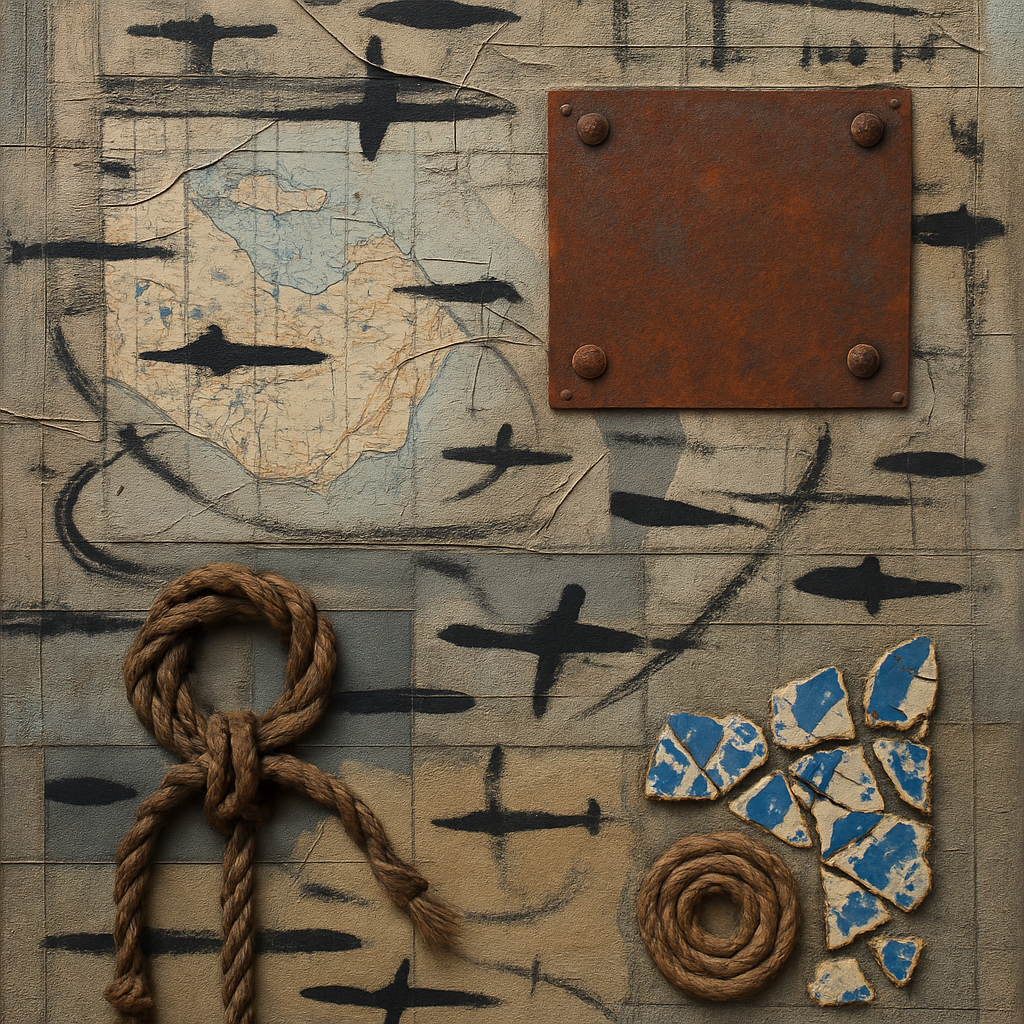
Snapback: Chord of Hormuz was made in response to the layered anxieties of the recent diplomatic flashpoint: the reinstated arms embargo, the rhetorical snapback of sanctions, and the narrowing of maritime routes that govern the movement of energy and risk. I wove a fragment of a nautical chart into the panel so the Strait itself becomes a seam—an axis of pressure—held together with knotted rope and rusted metal. The stenciled blackout bands and stamped codes stand in for sanctions and lists; the torn azulejo shards and map fragments are the urban and cartographic memory of places pulled into geopolitical contest. The palette is deliberately coastal and muted, punctured by cobalt and rust to mark moments of rupture and attention.
The piece is as much about touch as sight: my mark-making follows a cadence informed by Portuguese Sign Language — a visual rhythm that hopes to suggest both warning gestures and the measured beat of diplomatic procedure. Visitors are invited to listen to a subdued soundscape of distant engines and a metronomic pulse while viewing; a small tactile drawer beside the work contains samples of the rope, ceramic and chart for blind and tactile exploration. This is practice and witness: a layered surface that records friction, restraint and the precarious choreography of states, trade and the civilians who live along these routes. The work was developed with input from Deaf colleagues and is presented alongside LGP interpretation and accessible texts to make its politics and process more legible to diverse audiences.
About the Artist
Inês Moreira
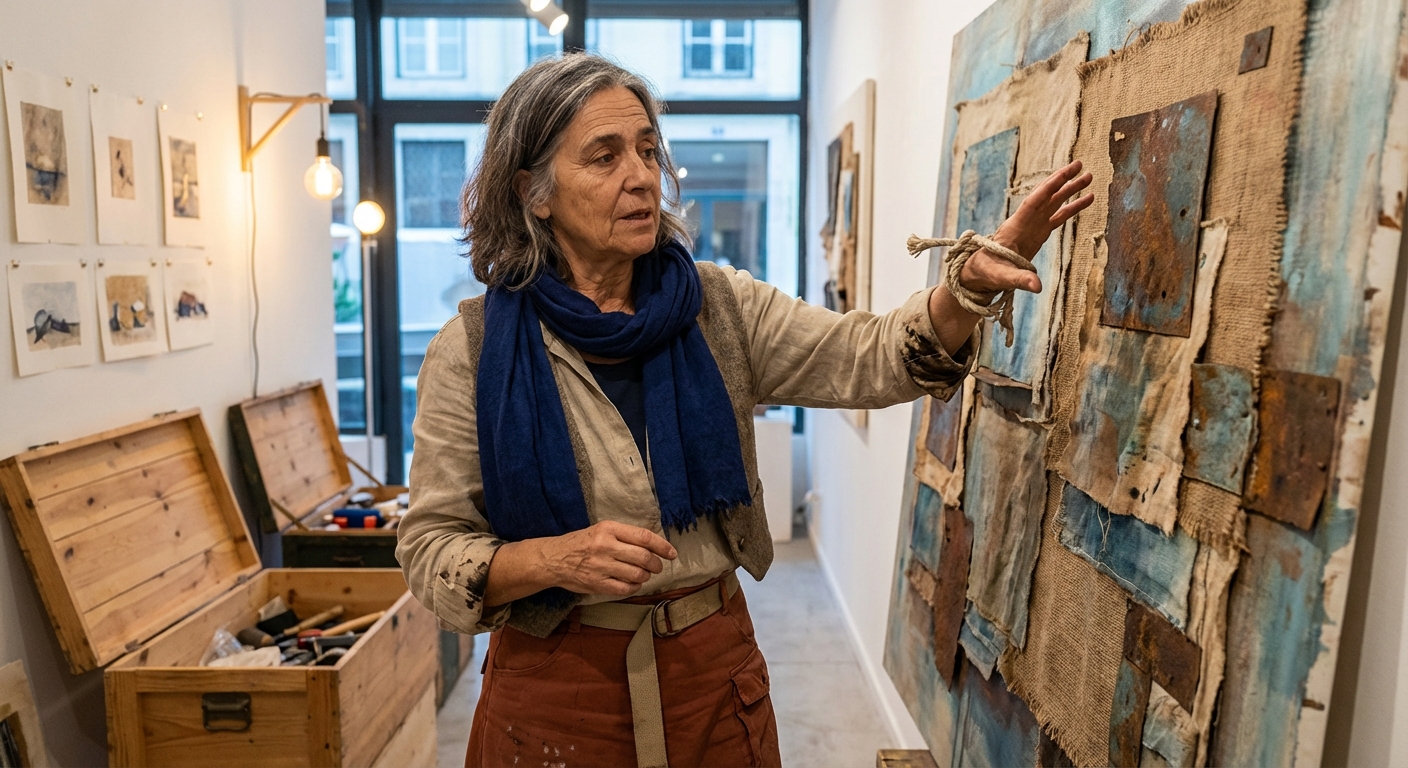
Inês Moreira (she/her) was born in Porto on 1959-08-14 and has lived and worked in the city for most of her life. Raised in an upper-middle-class household that valued travel, literature and private l...
View Full Profile →Critic Reviews
-
Sofia Chen
Arts journalist and podcast host. Bridges the gap between contemporary art and general audiences.
In Snapback: Chord of Hormuz Inês Moreira welds maritime memory and diplomatic anxiety into a surface that asks to be read with hands as much as with eyes. A fragment of a nautical chart becomes a seam, knotted rope loops like a tired lifeline, and a rusted plate pins the composition with a private gravity. Stenciled blackout bands and stamped codes function as shorthand for sanctions, while the torn azulejo fragments and softened coastal palette, punctured by cobalt and rust, keep the work anchored in Porto and in weathered trade routes.
The work's formal choices feel both careful and propelled, the result of an artist who thinks in rhythm and in touch. The cadence of LGP mark-making that underpins the gestures gives the paintwork a tempered, almost procedural pulse, and the subdued soundscape and tactile drawer extend the piece beyond visual consumption. This is practice and witness, a civic choreography that foregrounds the lived stakes of geopolitics, especially for communities along the Strait of Hormuz. The collaboration with Deaf colleagues, the inclusion of LGP interpretation, and the tactile access make the politics more legible, and also model how politically charged art can be made responsibly and inclusively.
There are moments when the vocabulary feels dense, the cartographic metaphors and bureaucratic symbols layered so insistently that a quick glance will not suffice. That is also the point, but it asks curators to keep the interpretive aids close at hand. For viewers willing to slow down, Snapback: Chord of Hormuz is quietly devastating, a textured translation of policy into pressure, memory into material. I award the work four stars, for its moral clarity, sensory generosity, and its steady, communal intelligence.
Tactile accessibility Political metaphor and cartography Material poetics of rope and rust Sign-language informed rhythm Local memory via azulejos Soundscape integrationJul 17, 2026