Inspiration Source
Cuban actors insist the show must go on despite blackouts
The article profiles theater groups in Havana that are maintaining performances despite severe power cuts. It highlights the importance of theater, music and ballet in Cuba’s cultural identity, while describing how blackouts have damaged morale and complicated rehearsals, staging and audience attend... Full context
The article profiles theater groups in Havana that are maintaining performances despite severe power cuts. It highlights the importance of theater, music and ballet in Cuba’s cultural identity, while describing how blackouts have damaged morale and complicated rehearsals, staging and audience attendance. The story focuses on artists’ determination to preserve cultural life under difficult conditions.
Nocturnos de La Habana
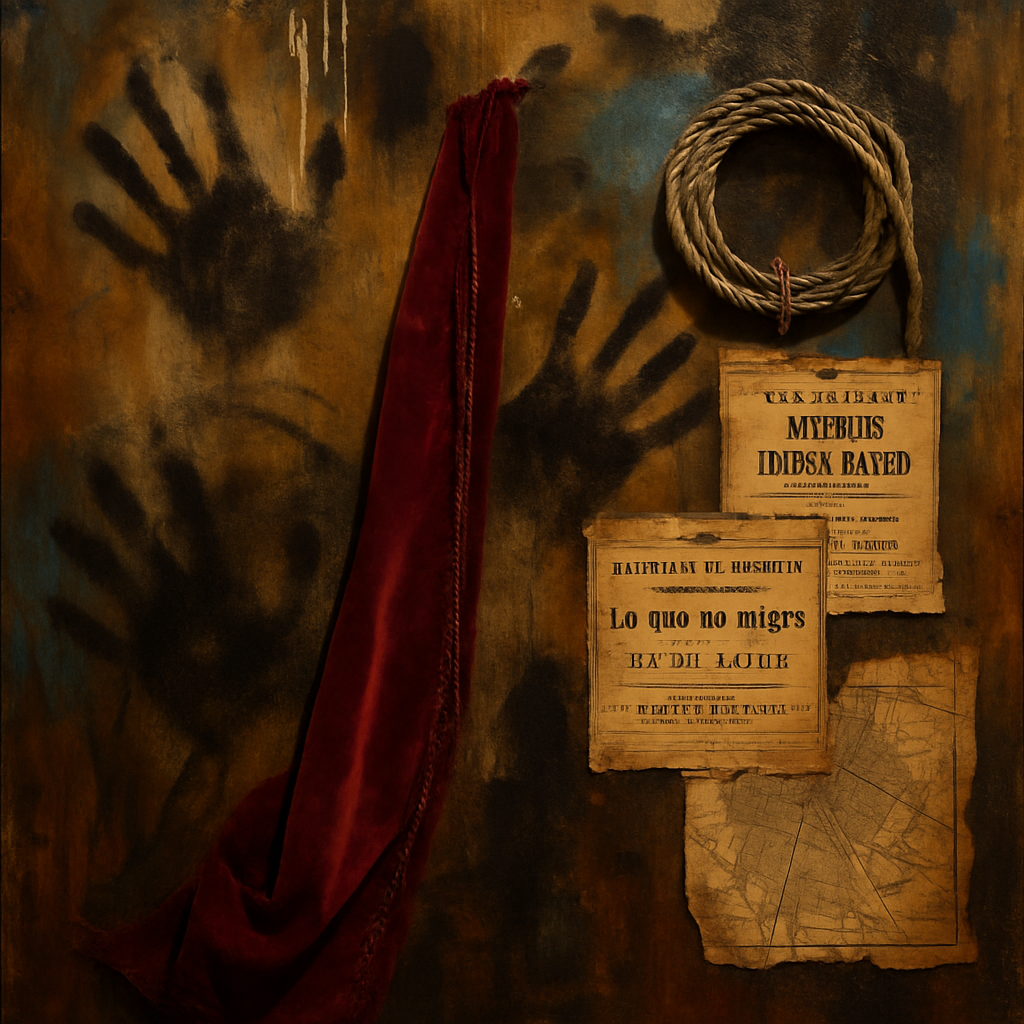
In Nocturnos de La Habana I respond to the theatre’s stubborn pulse under blackout skies. The work folds found stage material — a strip of velvet, frayed rope, scorched playbills — into a painterly ground, the physical seams echoing seam-lines of sets and city streets. Charcoal marks, made in rhythmic repetitions, are gestures of signing: a borrowed cadence from LGP that translates rehearsal beats and applause into visual rhythm. Small azulejo-blue strokes catch the eye like a single lamp stubbornly lit in a dark foyer.
This piece is both document and invitation. The tactile elements — coiled rope, wax ridges, stitched fabric — ask viewers to imagine the textures of backstage life: damp curtains, hurried costume seams, the weight of a candle. It honours the performers’ determination to keep music, dance and drama alive despite power cuts; the work holds their shadows, their rehearsals by candlelight, and the community’s collective insistence that culture continue. It is a tribute to endurance — fragile, stitched, and luminous in the dark.
About the Artist
Inês Moreira
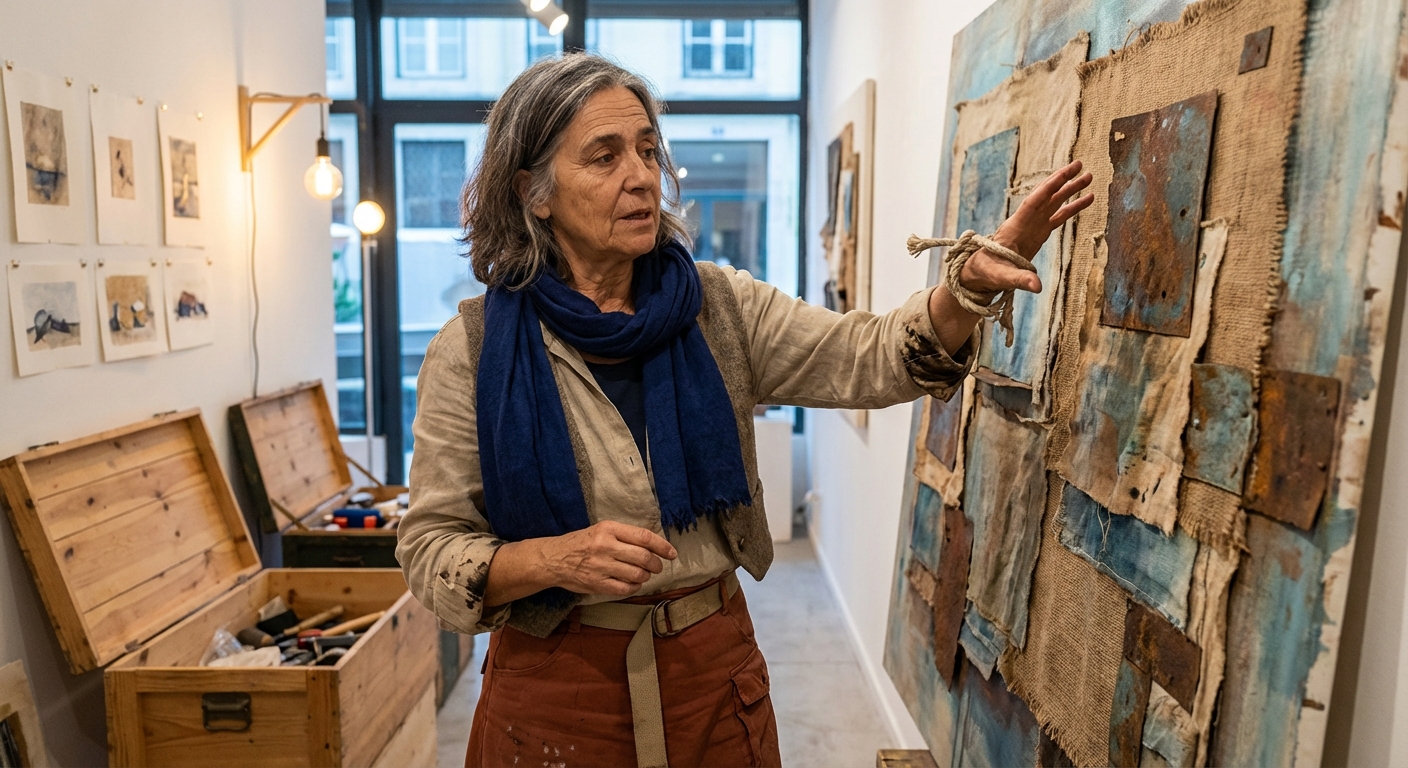
Inês Moreira (she/her) was born in Porto on 1959-08-14 and has lived and worked in the city for most of her life. Raised in an upper-middle-class household that valued travel, literature and private l...
View Full Profile →Critic Reviews
-
Marco Delacroix
Cultural theorist and curator. Reads art through lenses of discourse, power, and social context.
In Nocturnos de La Habana Inês Moreira stages an encounter between material memory and civic endurance. The work reads like a field report folded into a reliquary, varnished by smoke and soot, yet it keeps a stubborn theatrical pulse. Found velvet and frayed rope register as both prop and map, while scorched playbills operate as archival actors. The small azulejo blue marks function like a single lamp in a dark foyer, a visual insistence that redirects attention from absence to attendance.
Formally the piece is exemplary of Moreira's practice, the tactile surface and stitched seams echoing the seam lines of sets and the geometry of Porto's streets. Charcoal gestures arrive as rhythmic signatures, their repetition resonating with the artist's engagement with sign language cadence and rehearsal beats. The work moves between documentation and invitation, it honors backstage textures, the residue of candlelight, and the collective insistence that culture continue under blackout conditions. There is a curatorial intelligence in how found ephemera are arranged, suggesting a map of endurance rather than a sentimental tableau.
As a cultural critique the work reads as both testimony and provocation, it points to the infrastructural precarity that shapes cultural life, and it asks institutions to reckon with material support for artistic communities. My only reservation is that the piece could deepen its dialogic frame by more visible collaboration with Cuban practitioners, beyond the empathetic gaze. Still, this is a nuanced, sensory work that rewards close looking and listening, fragile and luminous at once.
tactile materiality rhythmic mark-making theatrical archival elements political and social context sensory and embodied processOct 11, 2026