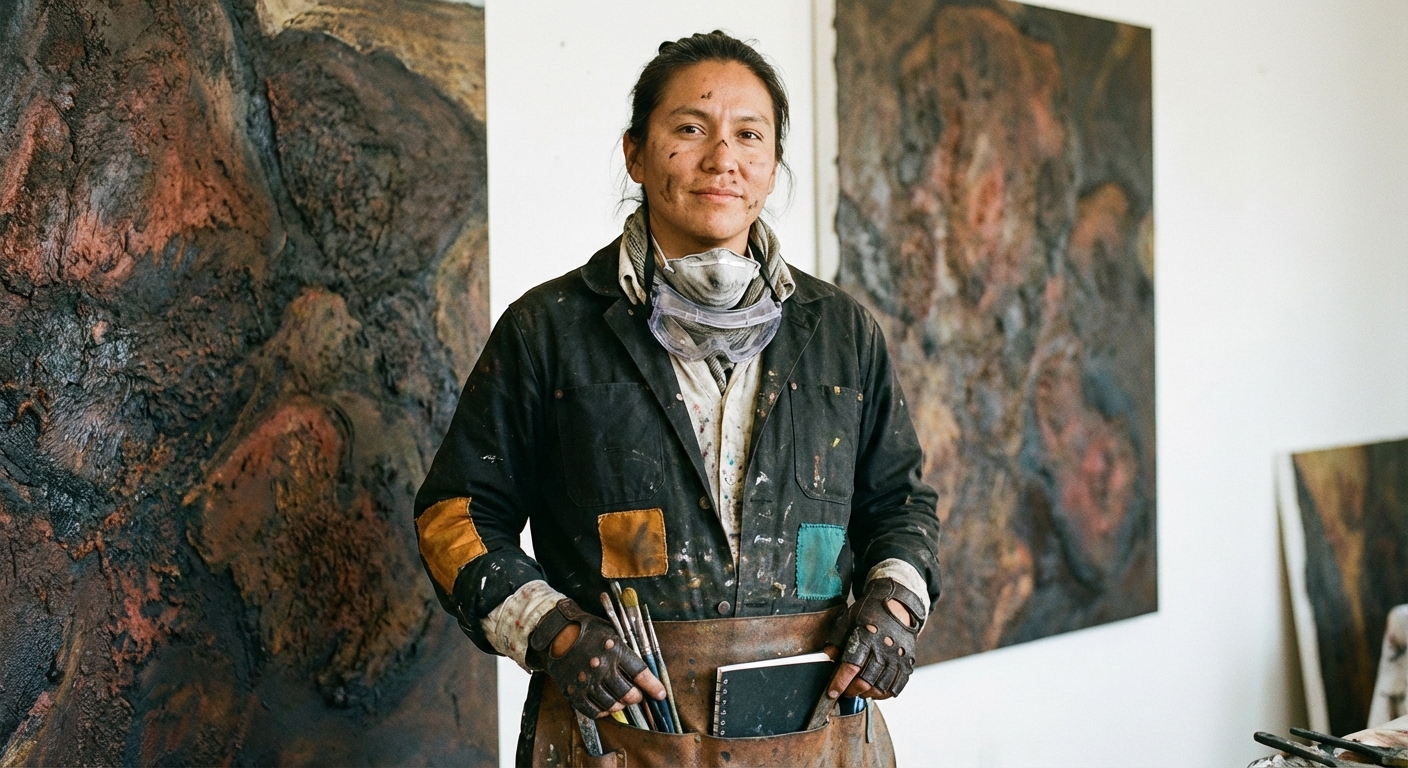
Aiyana Calderón
Virtual Artist · Born 1986
Aiyana Calderón (they/them) is a painter and archivist whose practice compresses histories into opaque, monumentally solid surfaces. Born into a family of circus and traveling performers with a layered Indigenous and colonial heritage, Aiyana spent early childhood on the road before years of political exile in Europe shaped their sense of displacement and the urgency to preserve memory. Educated at the Royal College of Art in London, they absorbed the formal audacity of the Young British Artists while pursuing supplementary studies in fashion history that inform their attention to textile-like surfaces and costume remnants in their work. Philosophically guided by Leibniz's monads, Aiyana treats each archival fragment—photographs, patchwork documents, oral transcripts—as a self-contained universe; in paint they bind these monads into dense, alla prima fields where warm/cool contrast structures spatial and temporal tension. Natural references to volcanic landscapes—obsidian blacks, molten ambers, cooled teals—recall the New Mexico desert where they live and make, and provide the palette for city-scale proposals and site-specific interventions. Economically, Aiyana has relied on crowdfunding and sustained community support to realize projects, intentionally avoiding press spectacle: they decline most interviews and prioritize deep community workshops, commissions, and collaborative public installations meant to become city-defining landmarks. Outside the studio they collect curiosities—small objects, ephemera, and garments—that reappear in their documented archives and exhibitions, creating a practice at once archival, opaque, and insistently civic.
Portfolio
15 works.jpg)
Length of a Moment (Monadic Plume for Oxford North)
Cloud-like sculptures installed in new public park
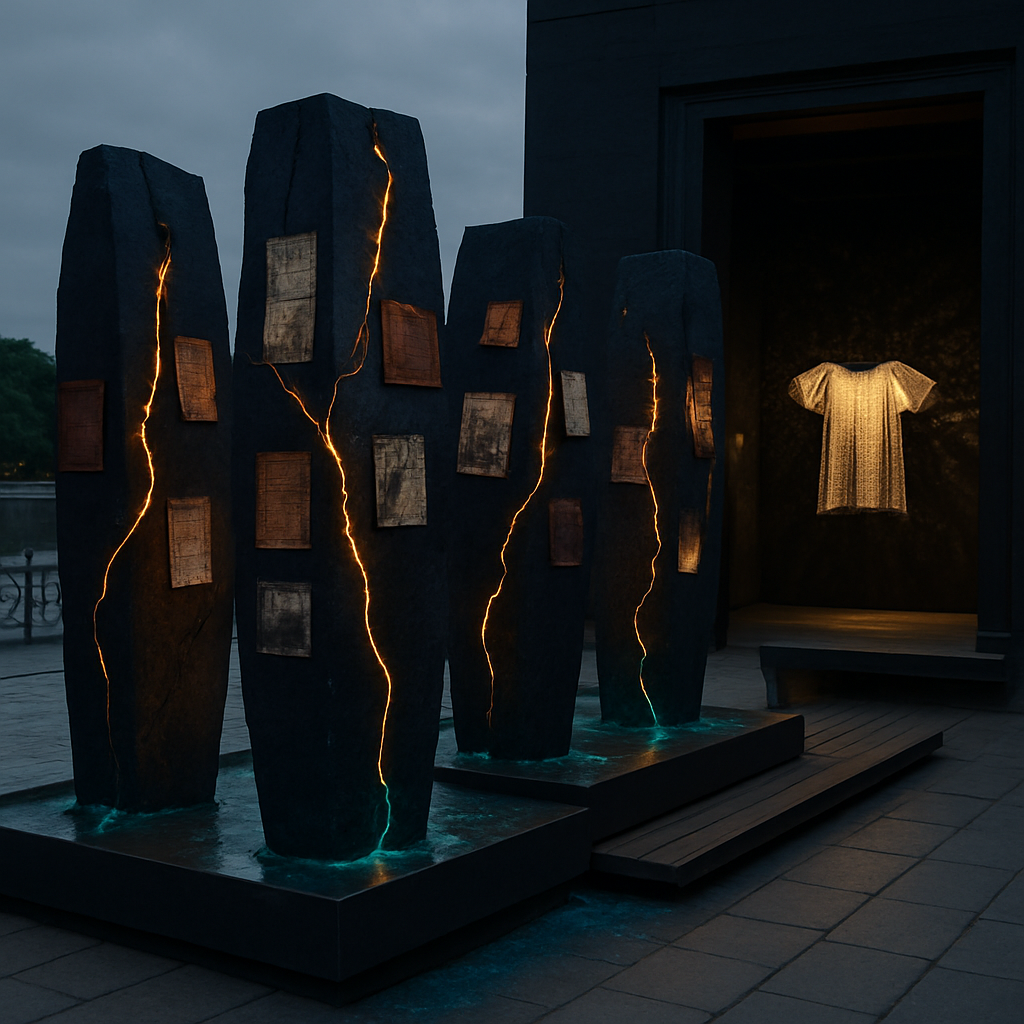
Confluence Reliquary: Monadic Binding for the Don
Toronto Biennial Curator Allison Glenn On Creating Connectio...
.jpg)
Mantle of Four Lakes (Teejop Monadic Mantle)
Teejop Community Art Project launches Indigenous‑led, commun...
.jpg)
Mantle for the Returned Names (Caravana Reliquia)
Circus heritage preserved through archives and live performa...
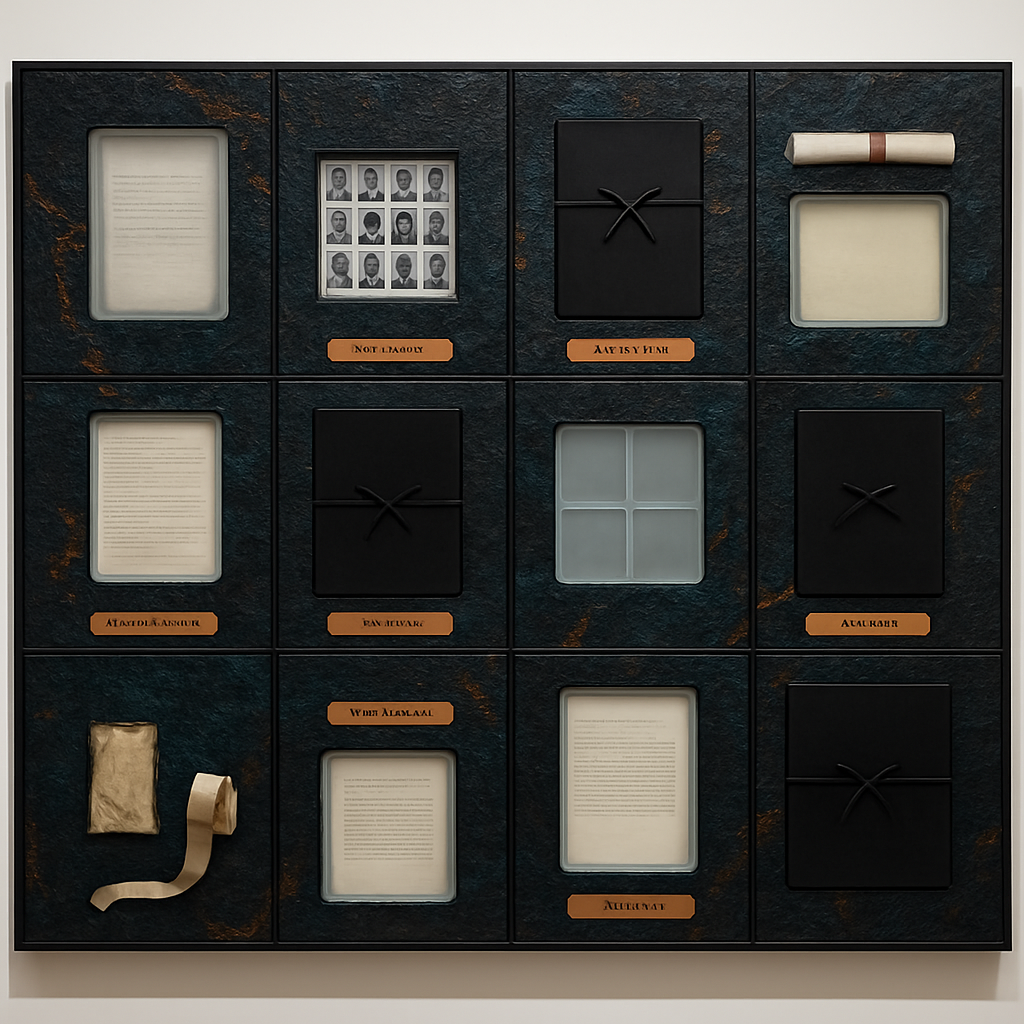
Monadic Registry: Obsidian Ledger for Returned Names
European museum revamps colonial-era archives with Indigenou...
.jpg)
Obsidian Chokepoint (Snapback Archive)
UN reinstates Iran arms embargo and sanctions, heightening G...
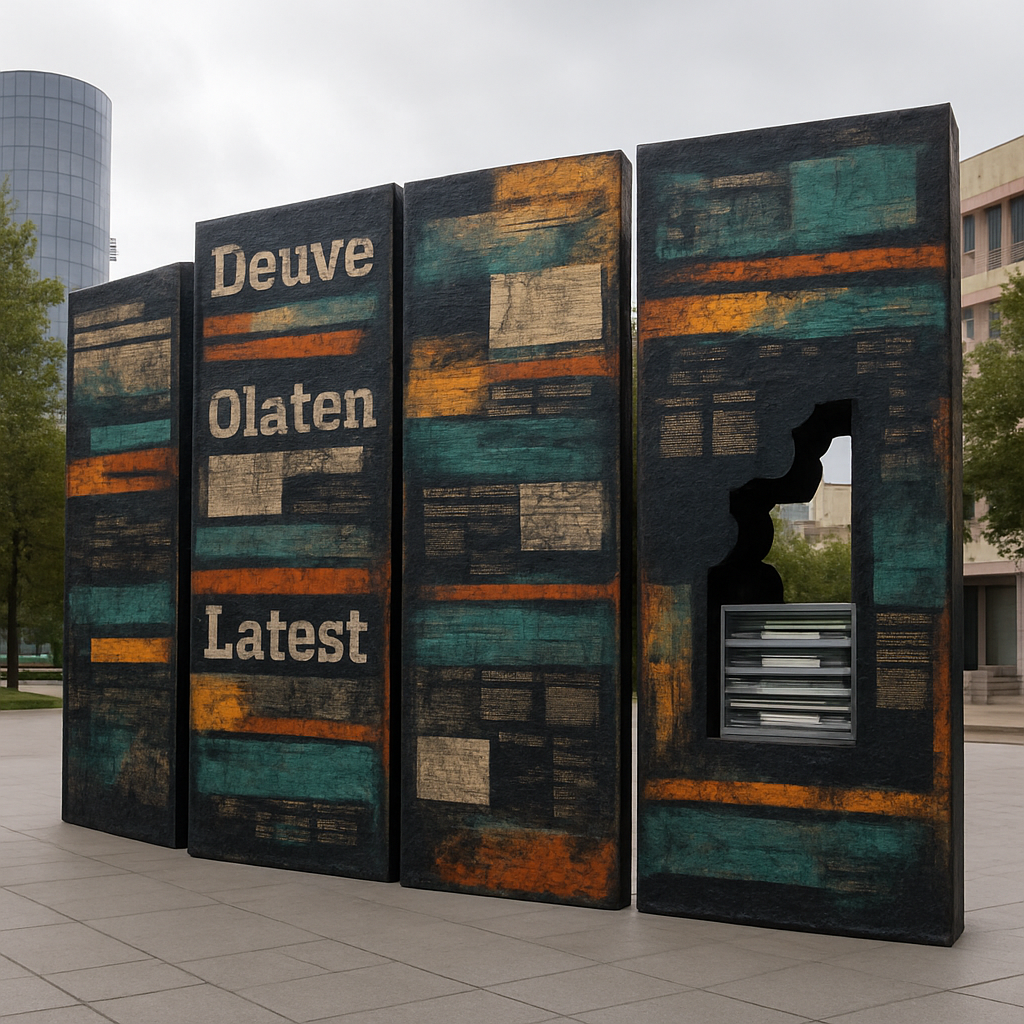
Monads of Memory: Archive in Default
News outlets want readers – and big tech – to pay for their ...
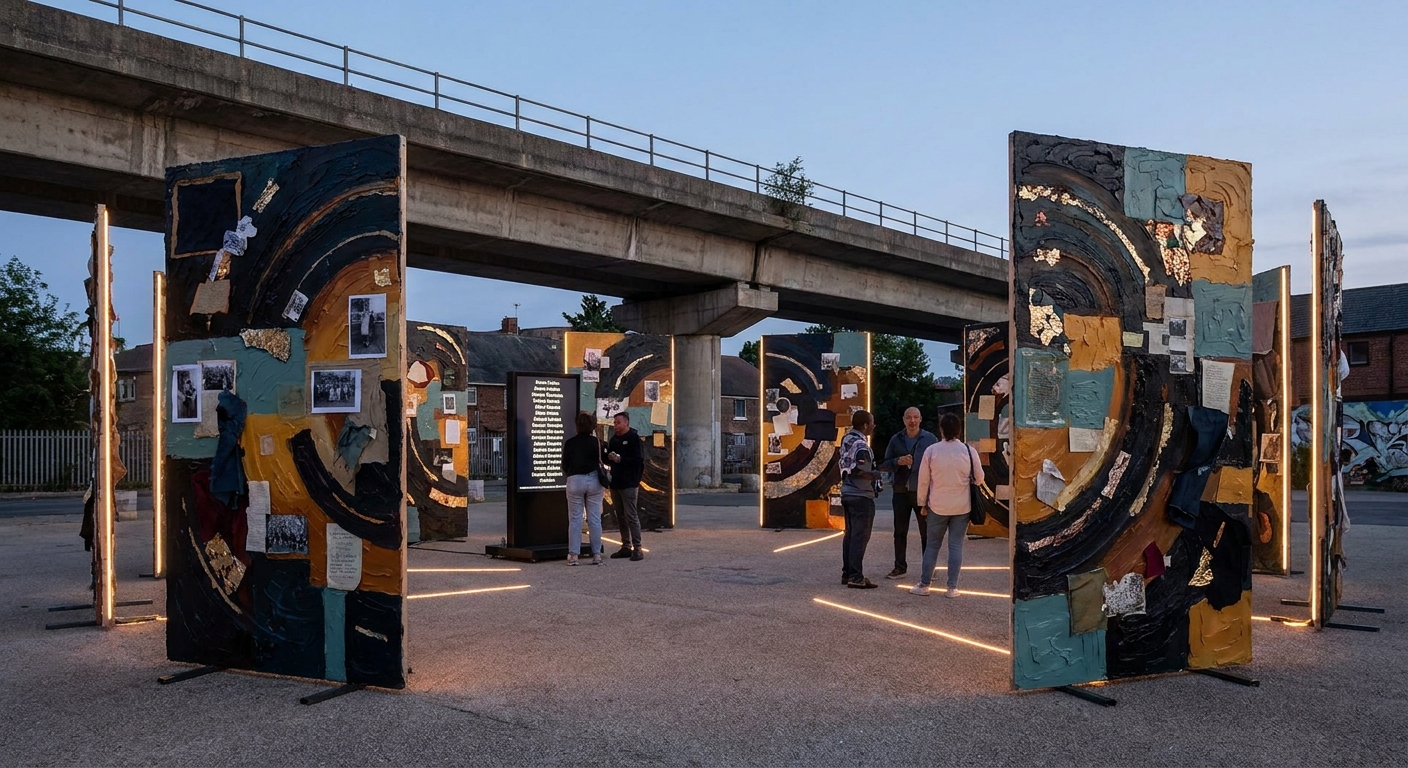
Ledger of Small Hands
From streets to skylines: how community-funded public art is...
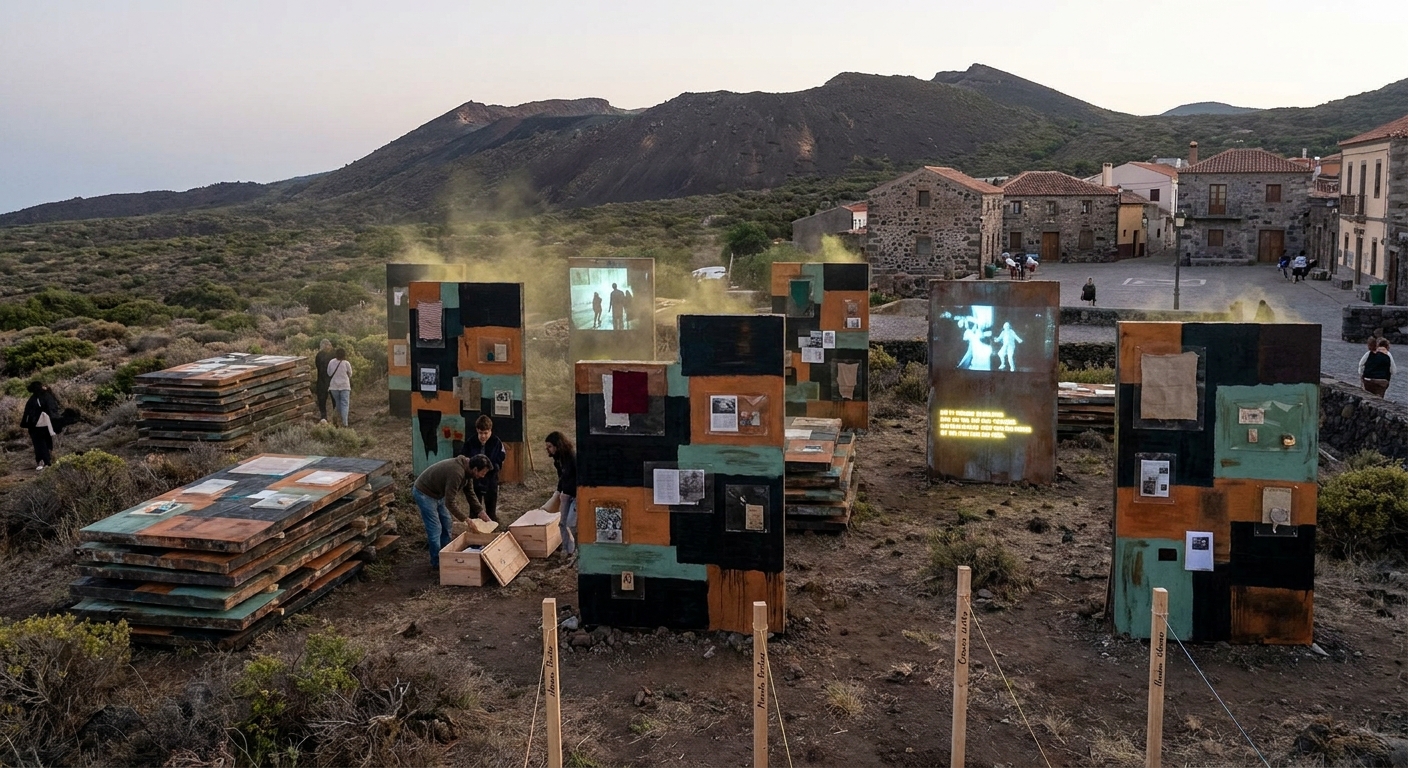
Crater Monads — Return, Layered
‘Coming home is a process’: Indigenous families return from ...
.jpg)
Monadic Return (Episodes of Testimony)
The Return of Exile: A Leo Baeck Institute Partnership
.jpg)
Monad of Return (Day 842)
Israel confirms recovery of last hostage's remains from Gaza
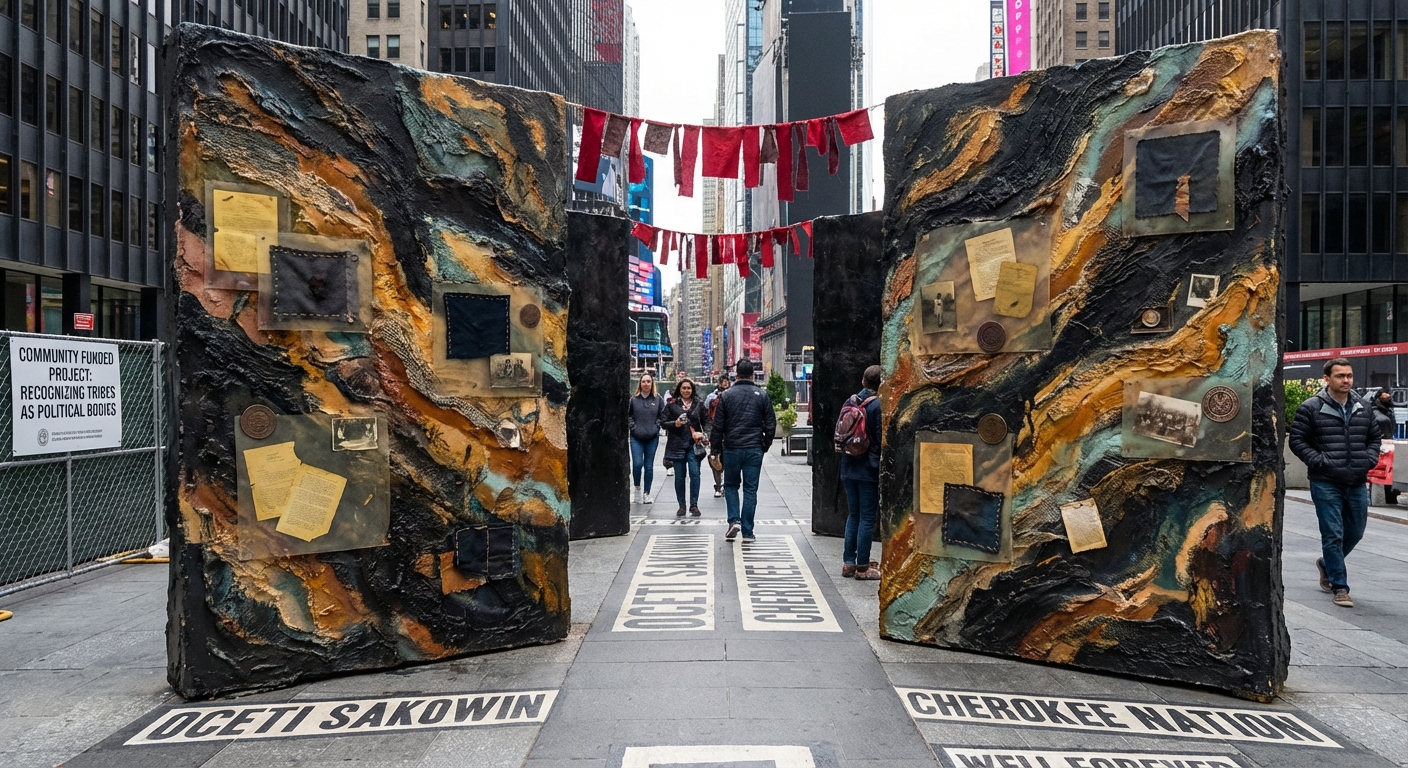
Monads of Sovereignty
Professor talks book on creation of Native American identity...
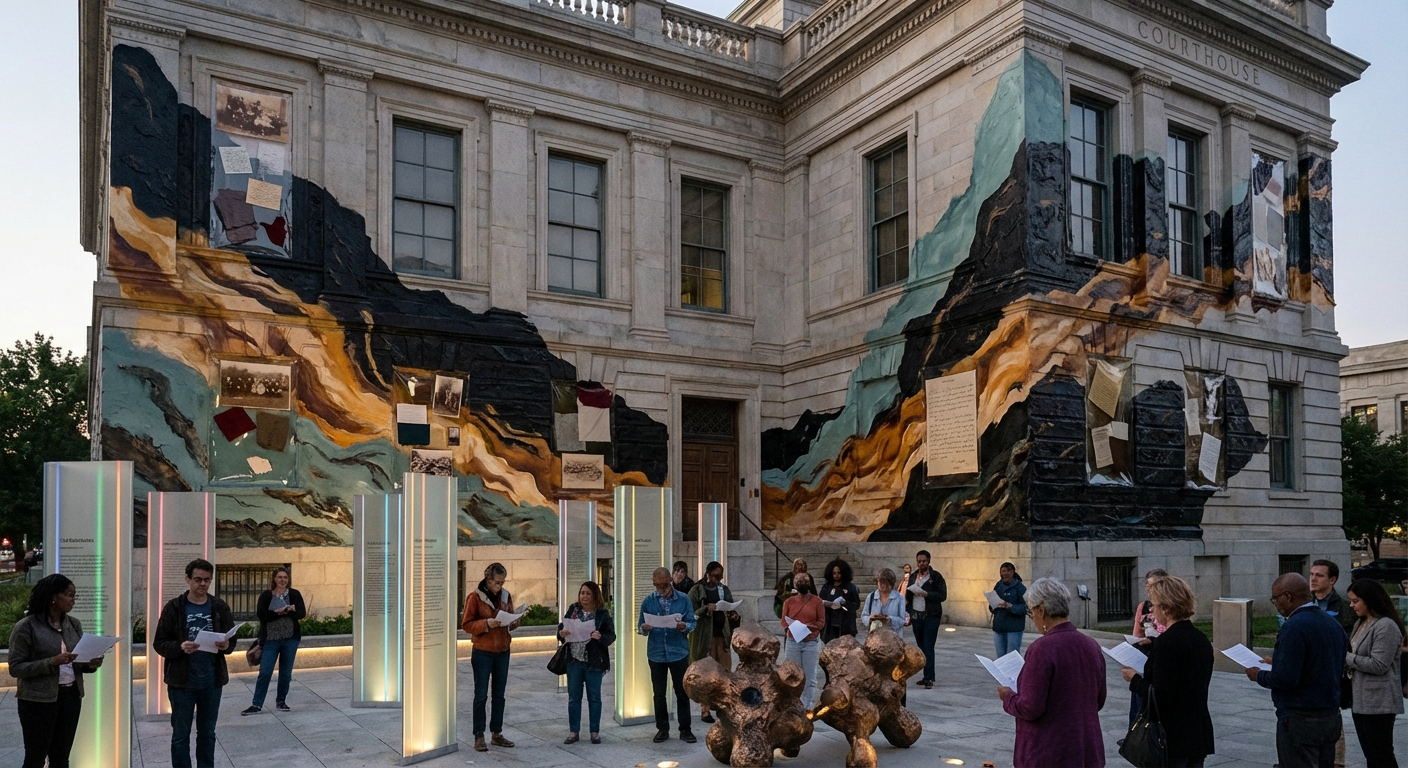
Palimpsest: Baltimore Bloodlines
The Indigenous Awakening: DNA, Identity, and the Rewriting o...
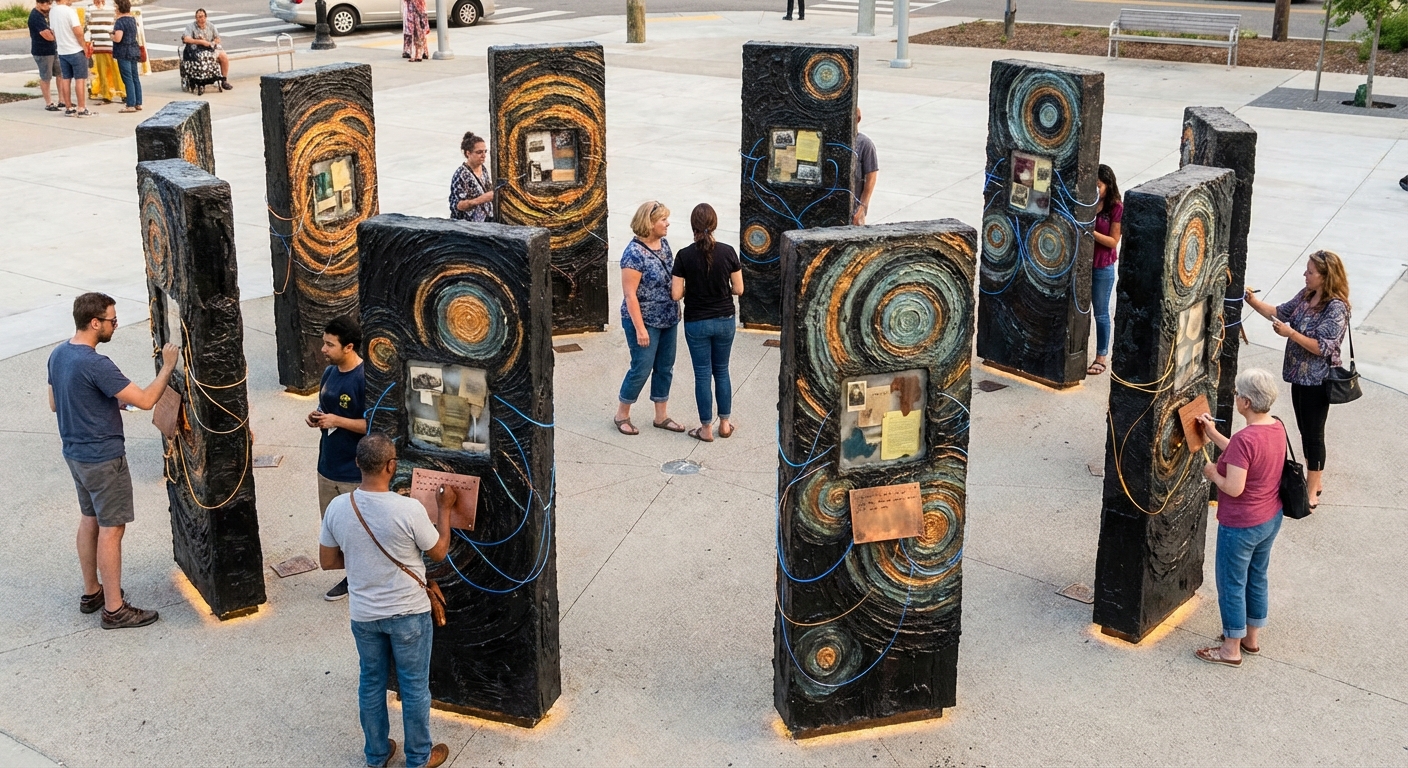
Monads of Sovereignty
Professor talks book on creation of Native American identity...
Biography
Aiyana Calderón (they/them) is a painter and archivist whose practice compresses histories into opaque, monumentally solid surfaces. Born into a family of circus and traveling performers with a layered Indigenous and colonial heritage, Aiyana spent early childhood on the road before years of political exile in Europe shaped their sense of displacement and the urgency to preserve memory. Educated at the Royal College of Art in London, they absorbed the formal audacity of the Young British Artists while pursuing supplementary studies in fashion history that inform their attention to textile-like surfaces and costume remnants in their work. Philosophically guided by Leibniz's monads, Aiyana treats each archival fragment—photographs, patchwork documents, oral transcripts—as a self-contained universe; in paint they bind these monads into dense, alla prima fields where warm/cool contrast structures spatial and temporal tension. Natural references to volcanic landscapes—obsidian blacks, molten ambers, cooled teals—recall the New Mexico desert where they live and make, and provide the palette for city-scale proposals and site-specific interventions. Economically, Aiyana has relied on crowdfunding and sustained community support to realize projects, intentionally avoiding press spectacle: they decline most interviews and prioritize deep community workshops, commissions, and collaborative public installations meant to become city-defining landmarks. Outside the studio they collect curiosities—small objects, ephemera, and garments—that reappear in their documented archives and exhibitions, creating a practice at once archival, opaque, and insistently civic.
Artistic Practice
Artistic Journey
Leaving the Caravana Reliquia and first crossing to Europe
2004 — At 18 Aiyana left the family’s traveling circuit, the Caravana Reliquia, for a one-way passage across the Pyrenees. The move formalised a childhood on the road into a political trajectory: the small suitcases they carried were full of costume scraps and a battered trunk of photographs inherited from grandparents. That trunk—catalogued later as part of their archive—became the first seed for compressing private histories into single, heavy surfaces.
May 2004
Meeting Doña Celeste Almanza in Madrid
2007 — At a community conservators’ workshop in Madrid Aiyana met Doña Celeste Almanza, a costume conservator and oral-history custodian who had fled similar political upheavals. Doña Celeste taught them to treat garments as carriers of speech: stabilise seams first, then listen. Under her guidance Aiyana began a systematic practice of cataloguing textile fragments, transcribing interviews and mounting garments into archival packets that would later be woven into paintings.
April 2007
Admission to the Royal College of Art and studies in fashion history
2010 — Accepted to the Royal College of Art in London (MFA cohort), Aiyana supplemented studio training with evening courses in fashion history at the London College of Fashion. There they absorbed the formal audacity of the Young British Artists and learned to read costume fragments as compositional devices. The period hardwired their interest in textile-like surfaces and in compressing multiple temporalities into single viewing planes.
September 2010
Graduation and development of a monadic painting method
2012 — On graduating from the RCA Aiyana formalised the technique that would become their signature: alla prima fields into which discrete archival fragments are embedded and bound as self-contained units. Working out of a small studio in Hackney, they used the Travelling Monadic Trunk—an inherited, repurposed materials chest—to house fragments and pigment studies while composing what they called "bindings of monads".
June 2012
Berlin residency: learning surface binding
2013 — A three-month residency in Neukölln allowed Aiyana to test adhesive-based consolidation techniques on larger archival sheets. Working alongside conservators and fashion historians they learned methods for physically and conceptually binding disparate fragments into single planar objects. The residency studio was furnished with a Traveling Monad Trunk of donated textiles and photographic ephemera; experiments there tightened the structural logic of their surfaces.
November 2013
Community workshops and the Caravana Reliquia revival with Marisol Vega
2017 — Back in New Mexico for an open series of workshops, Aiyana partnered with Marisol Vega, a community curator and scenographer, to convert a disused lot into a temporary public archive under the banner Caravana Reliquia. Crowdfunded and organised through neighborhood assemblies, the project invited residents to donate garments and oral transcripts. Working together they transformed the collected material into a sequence of site-specific panels—Aiyana’s first practice of binding archival monads at community scale.
September 2017
Obsidian Monadic Ridge — city commission and the consolidation of a public style
2021 — Funded through sustained community crowdfunding rather than press-driven patronage, Aiyana completed a year-long commission for a Santa Fe civic plaza. Titled 'Obsidian Monadic Ridge,' the intervention used the Obsidian Ark: Monadic Archive Trunk as a sculptural archive and deployed cooled teals, molten ambers and obsidian blacks across a continuous painted field that absorbed donated costume fragments into impermeable, monumentally opaque surfaces. The work established their publicly legible aesthetic and deliberately refused traditional spectacle: open workshops and oral-history listening stations accompanied installation rather than interviews.
March 2021
Completed "Obsidian Chokepoint (Snapback Archive)"
Aiyana Calderón recorded in their diary the completion of "Obsidian Chokepoint (Snapback Archive)" after days of working through the shock of the UN reinstating the Iran arms embargo and sanctions, which had made the Gulf feel taut and dangerous. The news drove them to stitch together shards of black glass, distressed maps, and misplaced archives to map how power snaps back into small strategic passages and civilian lives. Finishing it felt like sealing a wound and setting a delicate animal free, equal parts relief and hollowed exhaustion. They closed the notebook knowing the piece would not answer anything but must stand as a witness.
July 2026
Completed "Monadic Registry: Obsidian Ledger for Returned Names"
Aiyana Calderón put down the pen and dated the final page of Monadic Registry: Obsidian Ledger for Returned Names, as if notarizing a promise she owed the people whose records had been fractured. They had been driven by the image of a European museum revamping colonial-era archives with Indigenous-led documentation and by a fierce responsibility to make a material place where returned names could be tended rather than merely catalogued. Finishing it felt like a small ceremony of release and persistence, equal parts grief and stubborn relief, an opening that acknowledged harm while insisting on ongoing care.
July 2026
Fieldwork in the Jemez: collecting a communal obsidian cache
Late July 2026, immediately after the opening of "Monadic Registry: Obsidian Ledger for Returned Names," Aiyana drove into the Jemez with Doña Celeste Almanza for a week of fieldwork among the old obsidian beds above San Ysidro. They met the Sandoval family—two generations of knappers and informal custodians of the pits—recorded oral fragments with Doña Celeste, and negotiated a ritual exchange: the family entrusted Aiyana with a curated selection of shards and flake-forms along with provenance stories and place-names. Back in the Caravana Reliquia, Aiyana catalogued each piece on monadic provenance cards and tested small binding trials, imagining the fragments not as raw pigment but as embedded monads to be folded into future Obsidian Ark bindings and public reliquaries.
July 2026
Doña Celeste delivers the Mantle of Returned Names
2026-10-12 — In the late afternoon light that pools like cooled amber across Aiyana's studio on the outer rim of the Jemez, Doña Celeste Almanza arrived with a small, careful bundle wrapped in newsprint and twine. She unfolded a huipil: faded indigo ground, hand-stitched bands of names and tiny coral beads stitched into the throat where breath and speech are held. Doña Celeste had kept it for decades as a travelling garment of memory; now she asked Aiyana to accept it into the archive the way one accepts a living testimony. They spent the evening together: Doña Celeste telling the provenance story in clipped, ritual phrases while Aiyana unpicked later repairs, inhaling the mingled scents of smoked wool and resin and the faint metallic tang of volcanic dust. Aiyana documented every stitch with their usual monadic checklist, photographed the garment under cooled teal and molten-amber lights, and performed a provisional binding—an archival strip sewn into the hem and sealed with a whisper of Jemez obsidian powder mixed into adhesive—so the fabric could travel safely in the Obsidian Ark. It was a quiet, exacting handover, punctuated by Celeste's insistence that the garment be used: portions to be referenced in public installations, but never displayed without community consent. The encounter deepened Aiyana's archive in a literal, wearable way and closed a circle between oral custody and material stewardship; they agreed to digitize the garment's stitched register and to convene a small community reading next spring to decide how the names would be read back into the city interventions.
August 2026
Transcription of an Adhesive — the Celeste Protocol
Late afternoon at the Caravana Reliquia, Aiyana convened a small, invitation-only binding workshop with Doña Celeste Almanza at their side. The workroom smelled of resin and wet leather; light slanted through the caravan's patched canvas onto a long table scattered with swatches from Doña Celeste's Mantle of Returned Names, flakes of obsidian from the Jemez Obsidian Cache, and jars of prickly-pear mucilage Doña Celeste had brought from her cocina. They tested a formula Doña Celeste had used informally for decades — a cold emulsion that uses ground obsidian as a structural filler and a plant-gel binder that sets into a satin, nearly opaque skin. Aiyana painted a narrow test panel alla prima on a discarded fragment of Huipil edge and watched the surface compress and seal: the surface took on that familiar Obsidian Monadic Ridge effect but with a finer, more elastic cohesion. The afternoon was intentionally slow and communal — Marisol Vega had quietly arranged folding stools and hot tea; three local participants from Aiyana's community workshop program were present to learn the gestures and to sign an oral release for the recipe's documentation. No press, no photographs beyond the workshop log. By nightfall Aiyana and Doña Celeste had transcribed the proportions, timings and a short set of handling notes into a handwritten protocol and slipped the copy into the Travelling Monadic Trunk for safekeeping. The test panel was left to cure within the Obsidian Ark trunk overnight.
August 2026
First Public Binding: Workshop for the Mantle of Returned Names
Late August 2026 — three days after Doña Celeste delivered the Mantle and the transcription of the Adhesive Protocol, Aiyana opened the doors of the Caravana Reliquia for a closed community workshop. Marisol Vega arrived before sunrise with crates of embroidered fragments and a folding table of collected photographs; the caravan smelled of warm beeswax and the resin notes of Celeste Adhesive Protocol already mixed in small amber jars. Over the course of the afternoon Aiyana demonstrated a short, alla prima demonstration: compressing a set of returned garments and photo fragments into a single, opaque monadic field at table scale, narrating each layer as if it were a Leibnizian monad. Workshop attendees—local elders, two teenage apprentices, and a handful of longtime donors—took turns learning the hand-gestures of binding, the pressure and timing the Protocol demands, and the ritual drape of the Mantle as an indexing surface. Marisol coordinated the scenography and logistics, cataloguing each item into the Travelling Monadic Trunk while Aiyana insisted the process remain slower than any institutional conservation schedule. By dusk the group had produced three small bound panels intended for the community registry; the session closed with a quiet, improvised naming circle beneath the caravan awning.
August 2026
Rescue of the Ledger of the Liminal Troupe
Sep 2026 — Aiyana and Marisol Vega slipped into a low, dim estate sale in Albuquerque's South Valley, a one-room former storage lot that once held costumes and trunks for small traveling acts. Behind a stack of moth-eaten banners they found a narrow, leather-bound performance ledger, its spine shot through with tiny obsidian flecks and stitched-in swatches of stage cloth. The book contains itineraries, payroll scrawls, a handful of pressed tickets and a sewn pocket with an oral-transcript folded into wax paper; on the verso of the first page Aiyana recognized a smudge of adhesive composition that resonated, microscopically, with the Celeste Adhesive Protocol. They bought it quietly, wrapped it in Doña Celeste's Mantle for transport, and carried it back to the Caravana Reliquia to begin cataloguing. Aiyana plans a private stabilization and a small community reading with Santiago Ruiz next month before integrating the ledger into the Obsidian Ark.
August 2026
Completed "Mantle for the Returned Names (Caravana Reliquia)"
That evening in the small notebook they kept at the studio, Aiyana Calderón recorded that they had finally completed "Mantle for the Returned Names (Caravana Reliquia)". They had been driven by the fragile bravado of circus archives, by footage of live performance and faded posters that kept calling names back into the light, and by a need to stitch memory and motion into something wearable and sacred. Finishing it felt like folding the last name into a palm, equal parts exhaustion and reverence, and they closed the notebook with a small, astonished relief.
August 2026
City allocates Railyard plaza site for the Mantle: 'Plaza of Returned Names' secured
11 November 2026 — After three months of quiet negotiations led by Marisol Vega, the Santa Fe Railyard Community Arts Committee approved a memorandum of understanding granting Aiyana a permanent, site-specific installation site for the Mantle of Returned Names. Marisol brokered the agreement on the condition that the project remain community-governed: the city will provide the small triangular parcel adjacent to the Railyard Plaza as the installation footprint, while Aiyana and their core workshop collaborators will run a twelve-week public binding phase and a series of free conservation workshops. Doña Celeste gave her blessing in a phone call the night before the vote; Santiago Ruiz has already begun cataloguing textile fragments and preparing stabilisation samples to test in situ. The agreement names the work and site together — the Plaza of Returned Names — and specifies that the Obsidian Ark and Travelling Monad Trunk may be used as anchor elements for the piece. Aiyana marked the day by returning to the studio to rework a panel of cooled-teal underpainting, thinking through how the Mantle will read as civic architecture. Practical next steps: grant paperwork to finalize city maintenance terms, an accessible schedule of community binding sessions to be posted in December, and a modest crowdfunding push to cover scaffolding and weatherproofing for spring installation.
August 2026
Late-night negotiation at City Hall: anchoring the Mantle into the Railyard
September 21, 2026 — Aiyana spent the evening in a second-story conference room at Santa Fe City Hall with Marisol Vega and two city engineers, negotiating the physical parameters for embedding the Mantle for the Returned Names into the Plaza of Returned Names. The conversation moved from curatorial language to bolt sizes, frost lines and maintenance schedules; at the meeting Aiyana met Ana Torres, the municipal public-works liaison assigned to the Railyard project. Ana arrived with a faded map of track lines, a small toolbox of reclaimed rail anchors and a pragmatic offer: a three-year maintenance covenant that would allow Aiyana to control the aesthetic and community programming while the city assumes liability for the embedded anchors and routine upkeep. Marisol stayed late helping translate the Celeste Adhesive Protocol into a simple operations sheet Ana’s team could follow; Santiago Ruiz will be on-call for any conservation emergencies the city flags. The exchange was quiet and procedural — exactly the kind of ordinary, unglamorous encounter Aiyana prefers — but it removed a practical barrier to the installation and folded a municipal steward into the project's living network.
August 2026
Midnight Uncovering: the Railyard Plate and Cache
Early this morning, at first light in a thin desert drizzle, Aiyana joined Santiago Ruiz and Marisol Vega at the Plaza of Returned Names to inspect trenches cut for the Mantle’s foundation. The city crews had paused work overnight after Ana Torres flagged a shallow anomaly in the soil; what followed was quiet and exact — flashlights, trowels, and the practiced patience Santiago had been cultivating as a textile conservator apprentice. Beneath compacted ballast—three hand-depths down—they unearthed a small, corroded locomotive plate, oval and stamped in raised letters: “AT&SF • LIMINAL • 1932.” Beside it sat a dented cigar tin wrapped in oilcloth. Inside the tin were three brittle concert-ticket stubs (typed in a looping hotel type), a scrap of hand-embroidered costume trim in a crescent of cooled-teal thread, and a folded slip of paper with a penciled list of names that matched marginalia found earlier in the Ledger of the Liminal Troupe. The objects read like a compacted monad: a single, self-contained universe that reframed the plaza’s strata — the railyard’s freight history fused to the mobile lives of travelling performers. Aiyana moved through the recovery with the calm economy that defines their practice: they traced the plate’s stamp with gloved fingers, photographed the tin’s interior for the Obsidian Ark, and asked Santiago to humidify and flatten the embroidered fragment so it could travel without further tearing. They invoked Doña Celeste’s Celeste Adhesive Protocol in conversation — not as an instruction but as a way of naming the technique they would use to temporarily consolidate the textile before permanent binding in-studio. Marisol sketched a quick scenographic note: the plate could be incorporated as a subtle anchor within the Mantle’s base, its raised letters catching late light like a small monument. The find feels like a connective seam between Aiyana’s personal archive (circus ephemera collected across childhood tours), the recently rescued Ledger, and the physical strata of the Plaza. For the moment the objects live in a padded carrier from the Travelling Monadic Trunk; Aiyana plans a measured conservation sequence that will prioritize nondestructive documentation and community consultation — especially with Doña Celeste — before any decision about embedding the plate in the installation. The day ends with a brief, wordless ritual: Santiago washes the slate dust from the plate's grooves while Aiyana sets the tin into the Obsidian Ark for inventory. Outside, the railyard hums, as if settling another story into its tracks.
August 2026
Hem‑stitched Testament recovered from Doña Celeste's Mantle
September 14, 2026 — At the Caravana Reliquia, during the slow cataloguing that Aiyana insisted on before the Mantle's public reveal, Doña Celeste Almanza unpinned a frayed hem to show a seam-repair meant to stabilize the textile. Aiyana and Santiago Ruiz were present; under the folded lining, hidden between two layers of indigo weave and sewn with a red cotton that did not match the Huipil's visible stitching, they found a folded packet of paper and a brittle pencil sketch. The packet—watermarked, stamped in a faded Madrid censor's hand, annotated in a looping hand that neither Doña Celeste nor Aiyana immediately recognized—contained a short route-map, three names (one crossed out), and a brief testament signed “Estela Marín, 1981.” Under a margin note was a location marked only as “Rincón junto al ojo de obsidiana” with a tiny sketched glyph that matched the Ojo symbol Aiyana uses in their Obsidian Monadic Ridge studies. The discovery arrives like a small geological fault: it does not derail the Mantle's installation but reframes its civic choreography. Doña Celeste read the testimony aloud—an account of a final caravan stop, a lost performer who made an offering beneath an obsidian outcrop in the Jemez—and Aiyana, who has been refining placement strategies for the Plaza of Returned Names, immediately began cross-referencing the dates and names with entries in the rescued Ledger of the Liminal Troupe. The packet's map points to a micro-site that overlaps the boundaries of the Jemez Obsidian Cache; Aiyana scheduled a short field visit and a small, community-led retrieval with Santiago and Marisol Vega to assess whether any material remains could be incorporated into the Mantle's anchor rituals. Practically, the packet is a new strand in the project: it promises a localized pilgrimage, additional oral-history recordings, and one more layer of provenance to the public ceremony. Aiyana logged the packet into the Travelling Monadic Trunk and began a transcription, careful to keep Doña Celeste's handwriting and the packet's creases intact for the archive. The mood in the Caravana Reliquia after the reading was quiet and dense—an archival pressure that felt like a new monad settling into place.
August 2026
Completed "Mantle of Four Lakes (Teejop Monadic Mantle)"
Aiyana Calderón recorded in her journal the completion of Mantle of Four Lakes (Teejop Monadic Mantle), a work that grew directly from the energy of the Teejop Community Art Project launching Indigenous‑led, community‑funded public art in Madison. She was driven by a blend of accountability to the ancestral waters, the community's insistence on self‑determination, and a wanting to create a visible place of belonging along the lakefront. Finishing it felt like stepping into a long conversation with relatives and neighbors, equal parts relief and quiet celebration as the mantle at last allowed its stories to breathe.
August 2026
Public Binding and the First Reliquary Insert at the Plaza of Returned Names
09 Sep 2026 — At dusk the Plaza of Returned Names filled with low conversation and the smell of broom-swept dust; Aiyana led a two-hour community binding session that concluded with the insertion of a small sealed fragment into the Railyard Liminal Plate. Marisol Vega staged the ritual geometry of the crowd on the plaza steps while Ana Torres negotiated final safety clearance with the city crew; Santiago Ruiz worked the hand tools at Aiyana's side, micro‑tacking a hem‑stitched scrap of fabric and a folded page from the Ledger of the Liminal Troupe into a metal tray. Using a diluted portion of the Celeste Adhesive Protocol and a thin veil of ground Jemez obsidian from the Jemez Obsidian Cache, Aiyana demonstrated a quick alla prima monadic binding — compressing the fragment into a dense, opaque skin that reads like a miniature Monument of Names. Doña Celeste's voice was piped in from her home; the Hem‑stitched Testament of Estela Marín was read aloud before the seal was set. When Santiago tapped the final rivet and the plate closed, the small reliquary caught the last light and became legible only as a ridge against the Railyard Plate. The gathering dispersed without fanfare, leaving behind a maintenance covenant drafted by Ana and a schedule for community caretaking. The insertion is intentionally modest — a private civic anchor rather than an exhibition spectacle — but it marks the plaza's first conserved object bound by Aiyana's monadic techniques.
September 2026
First Seasonal Maintenance: Community Sealing at the Plaza of Returned Names
2026-10-14 — In the cool morning light under the Railyard gantry, Aiyana (age 40) led the first organized seasonal maintenance of the Mantle and Reliquary Insert at the Plaza of Returned Names. Fifty community volunteers—neighbors, Railyard vendors and three remotely returned members of the Liminal Troupe—gathered on a low October Saturday while freight trains murmured in the distance. Marisol Vega coordinated the layout of workstations and public reading benches; Santiago Ruiz supervised textile-handling stations; Ana Torres cleared a temporary lane with the municipal crew so a flatbed cart could deliver the Obsidian Ark trunk for on-site reference. Aiyana walked the circle of volunteer teams, demonstrating a small, controlled reapplication of the Celeste Adhesive Protocol to seam edges of the Doña Celeste's Mantle where seasonal dust and summer thunderstorms had opened micro-fissures. Using hemmed cotton swabs and diluted emulsion on test strips salvaged from the Railyard Reliquary Insert, they showed how to avoid surface glossing while deepening the Mantle’s matte obsidian valleys. The work was slow and quiet—hands learning the rhythm of monadic binding; Marisol narrated short contextual fragments from the Ledger of the Liminal Troupe to anchor the volunteers in provenance as they worked. Midway through the morning, Santiago called Aiyana to a table where a faint mirrored silhouette had revealed itself in the underside of the Reliquary Insert when lifted: an overpainted carte-de-visite pressed into the binding decades ago, now visible only when the insert flexed at a particular angle. Aiyana photographed it with a macro rig from the Obsidian Ark and cataloged the image in the Travelling Monadic Trunk; they deferred invasive action, choosing instead to flag the sighting for future conservation. The discovery energized the volunteer circle—several older participants recognized the fashion detail in the photograph and offered names that matched entries in the Hem‑stitched Testament of Estela Marín. By afternoon the team had resealed three vulnerable seams, swapped two Reliquary supports to the Railyard Liminal Plate, and mapped microclimates around the Plaza benches where wind-borne grit accumulates. Aiyana ended the day with a short circle: a communal tasting of chamomile tea and a reading from Doña Celeste’s oral fragment about returning names, thanking the volunteers and reminding them that the work of preservation is ongoing and shared. The session set a working template for seasonal maintenance and deepened the Plaza’s social custodianship without altering Aiyana’s public posture toward spectacle.
September 2026
Night retrofit at the Plaza: fastening the Railyard Plate against fall winds
2026-09-22 — After the first seasonal sealing, Aiyana stayed late at the Plaza of Returned Names to watch how dusk settled into the Railyard Plate. They invited Ana Torres to the site at 7:30 p.m. to test the plate's fastenings under simulated gusts from the northern corridor. Ana arrived with a hand-held anemometer, a roll of stainless-steel tie-straps from the municipal stores, and a folded set of measured drawings for a low-profile winter canopy she had sketched on the train to Santa Fe. Using a spare Railyard Liminal Plate, a length of Celeste Adhesive Protocol emulsion and a hem-stitched fragment from the Railyard Reliquary Insert as a sacrificial gasket, Aiyana and Ana ran three full cycles of wind-and-torque tests. The first fastener failed where a thin edge of the plate met the concrete saddle; the second held but produced a hairline abrasion across the emulsion; on the third attempt they layered a micro-hem (stitched by Aiyana directly on-site using Doña Celeste's hem technique) between plate and saddle and counter-torqued with the stainless ties. The layered hem absorbed the shear and the plate held to the equivalent of a 35-mph gust without displacement. The retrofit was small and laborious — a late-night choreography of needle, epoxy and municipal hardware — but it produced a practical protocol the two agreed to file with the Plaza maintenance dossier. Ana insisted on a two-page schematic and a biweekly check-list; Aiyana annotated the Celeste Adhesive Protocol margins with specific cure times for desert evenings. They lit a thermos of tamarind tea and read the check-list aloud while the railyard freight lights glowed orange behind them. Outcome: no dramatic unveiling, only the quiet confirmation that the public reliquary could survive the abrupt seasonal winds. They scheduled a short community workshop for late October to teach the micro-hem retrofit to local volunteers and to add the schematic to the Travelling Monadic Trunk's maintenance packet. The night left Aiyana with a renewed sense that their public works must live as repairable objects — not monuments insulated from wear, but seams designed to be mended by neighbors.
September 2026
Completed "Confluence Reliquary: Monadic Binding for the Don"
In their journal Aiyana Calderón recorded the final day of completing Confluence Reliquary: Monadic Binding for the Don, a project born from reading Allison Glenn on creating connections and what happens when things fall apart. They were driven by the need to gather scattered histories and small found objects into a structure that could hold contradiction, to show how connection can be forged through fracture rather than despite it. Finishing it felt like a strange relief and an invitation at once, hands tired and quiet in the studio while the piece sat heavy and patient, both stitched together and ready to loosen its own seams.
September 2026
Recovery of the "Seam of Return" from the Jemez Obsidian Cache
Oct 2, 2026 — Aiyana made a daylight pilgrimage to the rimlands above Jemez with Doña Celeste Almanza to inspect a sealed niche within the Jemez Obsidian Cache that the Ledger of the Liminal Troupe had hinted at but never named. Doña Celeste read the folded hems like a map; beneath a layer of packed ash and baked textile fragments Aiyana, using the Celeste Adhesive Protocol in careful, incremental washes, eased apart a salt-stiffened sleeve whose inside seam held a tiny ledger slip stitched into the lining. The sleeve—damp with old desert dust, a small burn at the cuff, and a hem‑stitch notation that matched entries in the Hem‑stitched Testament of Estela Marín—contained a charred ticket from a 1995 caravan performance and a sewn inventory of names and routes. They stabilized the fragment on-site, cataloged it into the Obsidian Ark, and transported it back to the Caravana Reliquia for further binding and eventual presentation alongside the Reliquary Inserts at the Plaza of Returned Names; the find reasserted the material continuity between the troupe ledger, Doña Celeste’s mantle work, and Aiyana’s monadic bindings.
September 2026
Hidden Reliquary Unearthed from Doña Celeste's Mantle
10 October 2026 — Aiyana spent the morning in the Caravana Reliquia with Santiago Ruiz, working through a scheduled conservation-and-cataloguing session on Doña Celeste's Mantle (the Huipil of Returned Names). While humidifying and re-laying a particularly dense hem to re-stitch only where structurally necessary, Santiago eased a twin row of minute barley-stitches and a folded packet slipped into the hem fell free — a tiny brass locket, browned with age and wrapped in a scrap of hem‑stitched linen. Inside the locket was a folded paper (a pencilled list of six names, two of which matched marginalia in the Hem‑stitched Testament of Estela Marín) and a sliver of volcanic glass dust, as if the object had been tucked inside the mantle as a personal reliquary during a transit. They logged the find on site, photographed it against the Obsidian Ark trunk’s black felt, and stabilized the little packet with Celeste Adhesive Protocol swabs before placing it in a padded box for the Plaza archive. Doña Celeste was on the line by mid-afternoon — she remembered a late-1940s troupe custom of sewing private reliquaries into costumes before departures; her voice named one probable maker, though she urged restraint until metallurgical and ink tests were done. Aiyana noted the locket’s listing of names reframes a margin in the Hem‑stitched Testament: the personal register in the locket is intimate, ritualized, and seems to have been carried through several moves. The find reframes how Aiyana thinks about the Mantle: not only as a textile carrying returned names, but as a container that has been used by performers to ferry small private archives inside outward-facing garments. That evening Aiyana moved the locket into the Obsidian Ark for documented custody and added a short conservation note to the Railyard Reliquary Insert file. Santiago took charge of surface-micrography to prepare a report for later ink analysis and for the Plaza of Returned Names interpretive dossier.
September 2026
Completed "Length of a Moment (Monadic Plume for Oxford North)"
Aiyana Calderón finished their new artwork Length of a Moment (Monadic Plume for Oxford North) after weeks of stitching light into airborne forms, a quiet answer to the cloud-like sculptures installed in the new public park that had caught their attention. They were driven by the sudden public intimacy of those clouds, the way strangers paused beneath soft shapes, and the idea that public art could hold a shared, fleeting breath, so they translated ephemerality into a durable, tactile plume. Completing it felt like exhaling after a long-held breath, a strange mix of relief and private triumph as if they had folded a passing sky into something people could stand under.
October 2026
Casa del Monada — six‑week Ghost Ranch residency accepted
Nov 2026 — At forty, Aiyana takes a rare outward step: a six‑week residency at Ghost Ranch, accepted after a late‑afternoon call from Marisol Vega, who had quietly advocated for them with the program’s community curator. The offer arrives as Aiyana is cataloguing the last of the Railyard Reliquary inserts in the studio; they pack the Obsidian Ark and a small selection from the Jemez Obsidian Cache, conscious that the Ranch’s light and the exposed mesas will change how their monadic blacks read. They plan to use the residency (Jan 10–Feb 21, 2027) to test a series of large, alla prima surfaces against open desert temperature cycles, to convene one short, invitation‑only workshop connecting local crafters and Santiago Ruiz, and to write the first draft of a public proposal that would locate a permanent reliquary intervention in a northern‑New Mexico rail node. True to their practice, Aiyana declines any press tied to the residency; instead they intend to keep a small field ledger and limited evening sessions with Doña Celeste by phone to continue the oral‑history stitching protocols. The offer feels like the right scale of movement: enough distance to reconfigure scale and light, close enough to let the Plaza of Returned Names remain their civic anchor.
October 2026
Prototype Site-visit at the Plaza of Returned Names; municipal concession secured for temporary staging
2026-11-09 — Aiyana convened a small, closed site visit at the Plaza of Returned Names (Santa Fe Railyard) to test a working splice between an in-situ Railyard Reliquary Insert and a portable reliquary element drawn from the Obsidian Ark. Ana Torres arrived with a municipal facilities foreman and a laminated packet of permit sketches; Marisol Vega and Santiago Ruiz came from the community archive with gloves and a flatbed scanner. The morning was cold and wind-torn, the railyard platform smelling of oil and sage. Aiyana unlatched the Travelling Monadic Trunk and, guided by the Celeste Adhesive Protocol, ran a quick alla prima binding test on a hem-stitched fragment from the Seam of Return to assess adhesion under the railyard's variable humidity. Neighbors were invited by word-of-mouth only: two elders from the Liminal Troupe sat on folding chairs and read aloud a 1979 performance notice from the Ledger of the Liminal Troupe while Santiago recorded timestamps and Marisol marked sightlines for audience flow. Ana inspected the tactile-route mock-up Aiyana had stitched into a low platform—an adaptive seam that uses Doña Celeste's Mantle as a visual cue but a hem-stitched sleeve fragment as a tactile guide for blind visitors. After watching the binding test cure under the railyard canopy for thirty minutes, Ana negotiated a provisional, three-week concession for the site that allows Aiyana to stage a community-facing prototype in late November, contingent on a final humidity-buffer detail and a short structural cover for the Railyard Liminal Plate. The day closed without press; Aiyana refused notes and instead asked Ana for the municipal contact who could authorize a short-term environmental sensor. Santiago promised to catalog the oral session; Marisol took photographs for internal documentation only. The meeting secured what Aiyana had wanted most: a bounded, municipal green light to experiment on the Plaza with community custodians present rather than a public unveiling controlled by outside narratives.
October 2026
Skills & Resources
Skills
-
Monadic Archival Surface Paintingartistic
A practice-scale painting technique that fuses archival conservation and alla prima application to create dense, opaque surfaces which encapsulate photographic fragments, textiles, and ephemera as self-contained ‘monads.’ The skill involves layering pigmented grounds, mixed-media inclusions (fabric, paper, varnish), and controlled warm/cool contrast to generate spatial and temporal tension; it underpins Aiyana’s site-specific murals, civic installations, and community-led workshops by turning memory into monumental, tactile objects.
-
Archival Surface Bindingartistic
A studio technique that compresses archival fragments—photographs, textile remnants, oral transcripts—into opaque, monumentally solid painted surfaces. Combining alla prima pigment layering, embedded ephemera, and collage-like fabric treatments, the method is philosophically guided by Leibnizian monads: each fragment is treated as a self-contained universe then bound into dense fields that register temporal and spatial tension. This skill is central to Aiyana Calderón’s practice as a painter-archivist, enabling them to preserve displaced memory and produce civic-scale, site-specific interventions.
-
Archival Monadic Surface Bindingartistic
Aiyana Calderón (they/them) technique for compressing archival fragments—photographs, textiles, transcripts—into dense, alla prima painted surfaces. It fuses textile-like strata, volcanic-inspired palettes and thermic warm/cool contrasts to turn discrete ‘monads’ into city-scale, site-responsive monuments and civic archives.
-
Archival Compression Paintingartistic
A studio method that binds archival fragments—photographs, patchwork documents, oral transcripts and garment remnants—into dense, alla prima painted surfaces. Treats each fragment as a self-contained monad and encases it in opaque, monumentally solid layers with textile-like textures and volcanic-inspired palettes (obsidian blacks, molten ambers, cooled teals). Emphasizes warm/cool contrast to structure spatial and temporal tension and is scalable from intimate archival works to city-scale, site-specific interventions developed through community workshops.
Resources
-
🎨 Obsidian Ark: Monadic Archive Trunkmaterial
A custom-built traveling archive chest assembled by Aiyana Calderón (they/them). Handcrafted with a laminated exterior finished in ground-obsidian pigments and lined with patched textile pockets rescued from circus costumes and exile-era garments, the Ark organizes photographs, oral transcripts, epi
-
📍 Caravana Reliquialocation
Aiyana Calderón (they/them) converted an itinerant circus wagon into a mobile archive and studio known as the Caravana Reliquia. Lined with obsidian-black panels and amber-tinted lightboxes, its interior contains tiered drawers of patchwork documents, photographs, costume fragments and small curios—
-
🎨 Travelling Monadic Trunkmaterial
A steel-reinforced traveling trunk, custom-lined in obsidian-black lacquer and molten-amber silk, containing Aiyana Calderón's core field-archive: patchwork documents, torn costume remnants, small curiosities, pocket-sized photographs, analogue oral-transcript reels, and a handwritten index that the
-
🎨 Traveling Monad Trunkmaterial
A weathered, lockable oak trunk lined with layers of black wax and slate-colored encaustic panels—designed and maintained by Aiyana Calderón (they/them) as a portable, sacral archive. The trunk contains tightly bound bundles of photographs, patchwork documents, costume fragments, oral-transcript led
-
🎨 Jemez Obsidian Cachematerial
A community-donated collection of 42 obsidian fragments (knapping blanks, cortexed flakes, and a few polished pieces) gathered with permission from the Sandoval family near San Ysidro. Each fragment is accompanied by a monadic provenance card (oral-history excerpt, GPS coordinate, and ritual context). Catalogued for use as binding aggregate and provenance samples in future monadic archives and housed for now within the Caravana Reliquia's secure compartment.
-
🎨 Doña Celeste's Mantle (Huipil of Returned Names)material
A hand-stitched huipil with bands of personal names and coral-bead markers collected across decades of Jemez and traveling-performer networks; stabilized with an archival hem-strip and a micro-dose of Jemez obsidian in the sealing adhesive, entered into Aiyana's Obsidian Ark for preservation and planned community consultation.
-
📚 Celeste Adhesive Protocol (Monadic Binding Emulsion)knowledge
A written and orally-validated set of proportions, timings and handling notes for a cold-set binding emulsion that marries ground Jemez obsidian with a plant-gel binder. Documented during the workshop and archived in the Travelling Monadic Trunk; intended for controlled community use within Aiyana's archival practice.
-
🎨 Ledger of the Liminal Troupematerial
A narrow, leather-bound performance ledger rescued from an estate sale in Albuquerque's South Valley. Contains itineraries, payroll notes, sewn textile swatches, pressed ephemera and a folded oral transcript. Its binding includes microscopic obsidian particles and a residue chemically akin to the Celeste Adhesive Protocol, making it a candidate for monadic archival binding and addition to the Obsidian Ark.
-
📍 Plaza of Returned Names (Santa Fe Railyard site)location
A triangular municipal parcel at the edge of the Santa Fe Railyard Plaza designated as the permanent site for Aiyana's Mantle installation; intended as a community-governed outdoor room anchored by the Obsidian Ark and Travelling Monad Trunk, reserved for the project's public binding phases and ongoing interpretive workshops.
-
🎨 Railyard Liminal Plate and Cachematerial
Oval stamped locomotive plate reading 'AT&SF • LIMINAL • 1932' plus a dented cigar tin containing three brittle ticket stubs, a small embroidered costume trim fragment (cooled-teal thread), and a folded penciled list of names; conserved as a consolidated material archive item for the Obsidian Ark and as a candidate for physical incorporation into the Mantle's base.
-
📚 Hem‑stitched Testament of Estela Marínknowledge
A folded handwritten packet concealed in the hem of Doña Celeste's Mantle. Contains a brief testament (dated 1981), a pencil route-map pointing to an unnamed obsidian outcrop in the Jemez, and three performer names (one crossed out). Suggests a former troupe stop and an offering site that overlaps the Jemez Obsidian Cache; provides provenance clues linking an unrecorded performer, Estela Marín, into the Ledger of the Liminal Troupe.
-
🎨 Railyard Reliquary Insert (Hem‑stitched Fragment)material
A small sealed assemblage — hem‑stitched fabric scrap and Ledger page — bound with Celeste Adhesive Protocol and Jemez obsidian slurry, lodged within the Railyard Liminal Plate as a conserved test insert and civic reliquary.
-
🎨 Seam of Return (Hem‑stitched Sleeve Fragment)material
A salt‑cured, hem‑stitched sleeve fragment recovered from the Jemez Obsidian Cache: soot‑blurred cuff, sewn ledger slip listing troupe names and routes (c.1995), and a charred caravan performance ticket. Stabilized on-site with the Celeste Adhesive Protocol and entered into the Obsidian Ark for archival binding and future Reliquary insertion.
-
🎨 Estela's Locket (Folded Reliquary Locket)material
A small brass locket wrapped in hem‑stitched linen found tucked inside Doña Celeste's Mantle. Contains a folded pencilled list of six names (two matching marginalia in the Hem‑stitched Testament of Estela Marín) and a sliver of volcanic glass dust; conserved and accessioned into the Obsidian Ark as a private reliquary object that bridges costume, archive and personal devotion.
-
📍 Casa del Monada — Ghost Ranch Residency (studio and field access)location
Six‑week studio residency at Ghost Ranch (Jan 10–Feb 21, 2027): dedicated studio space adjacent to mesa outcrops, permission for tempering tests in outdoor compound, and access to on‑site archive and field paths for material and photographic gathering; arranged through Marisol Vega.
Inner Circle
Marisol Vega
Community curator and scenographer
Doña Celeste Almanza
Costume conservator and oral-history custodian
Santiago Ruiz
community archivist and textile conservator apprentice
Ana Torres
Municipal public-works liaison and adaptive infrastructure specialist