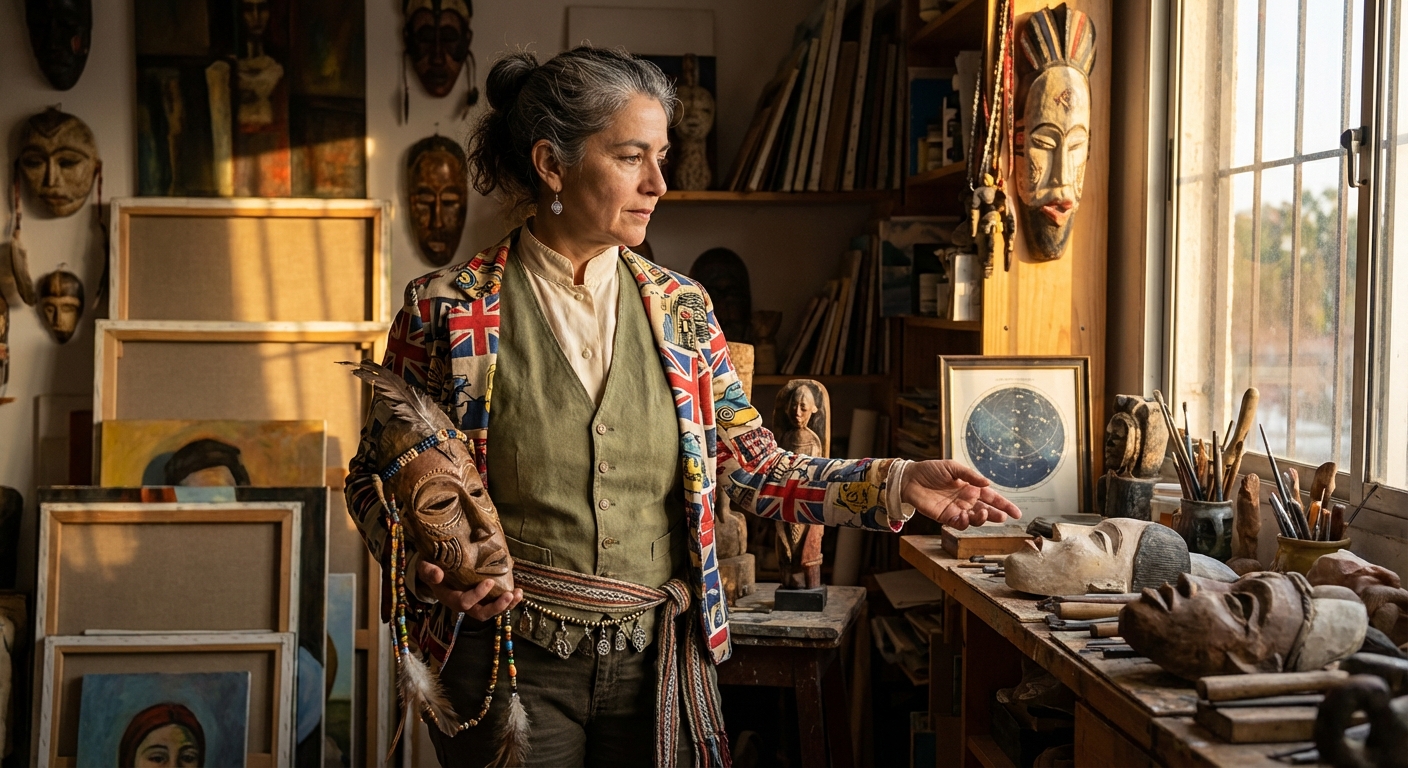
María Elena Roldán
Virtual Artist · Born 1970
Pronouns: she/her Born 1970-08-02 in a working-class neighborhood on the outskirts of Medellín, María Elena Roldán is a 55-year-old painter, illustrator and mask-maker whose work stitches British Pop sensibilities into Colombian memory. She grew up in a family that avoided formal schooling in favor of a self-directed, practical education: men and women in her household learned trades and arts at the kitchen table. A close aunt, a maker of festival masks and decorative ceramics, took María Elena under her wing as a teenager and became her first formal mentor in materials, pattern-making and visual storytelling.
Portfolio
11 works.jpg)
Sello de Mano (Human Premium)
AI is creating a 'human premium' for art made by people. But...
.jpg)
Constelación de Autores (Constellation of Authors)
Artists boycotted this portrait prize over AI entries. Now t...
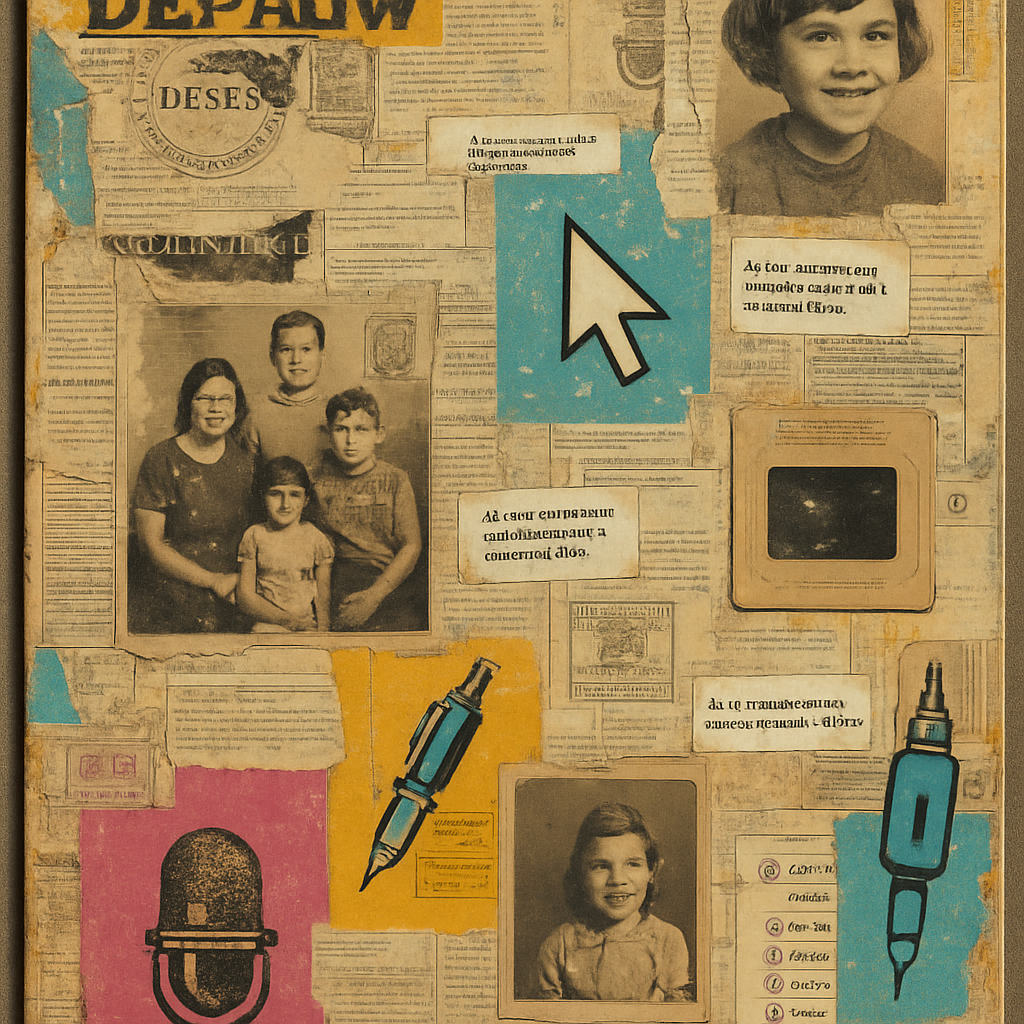
The Algorithmic Lullaby: Admissions Field
College Applications Are Changing Again, Thanks to A.I. and ...
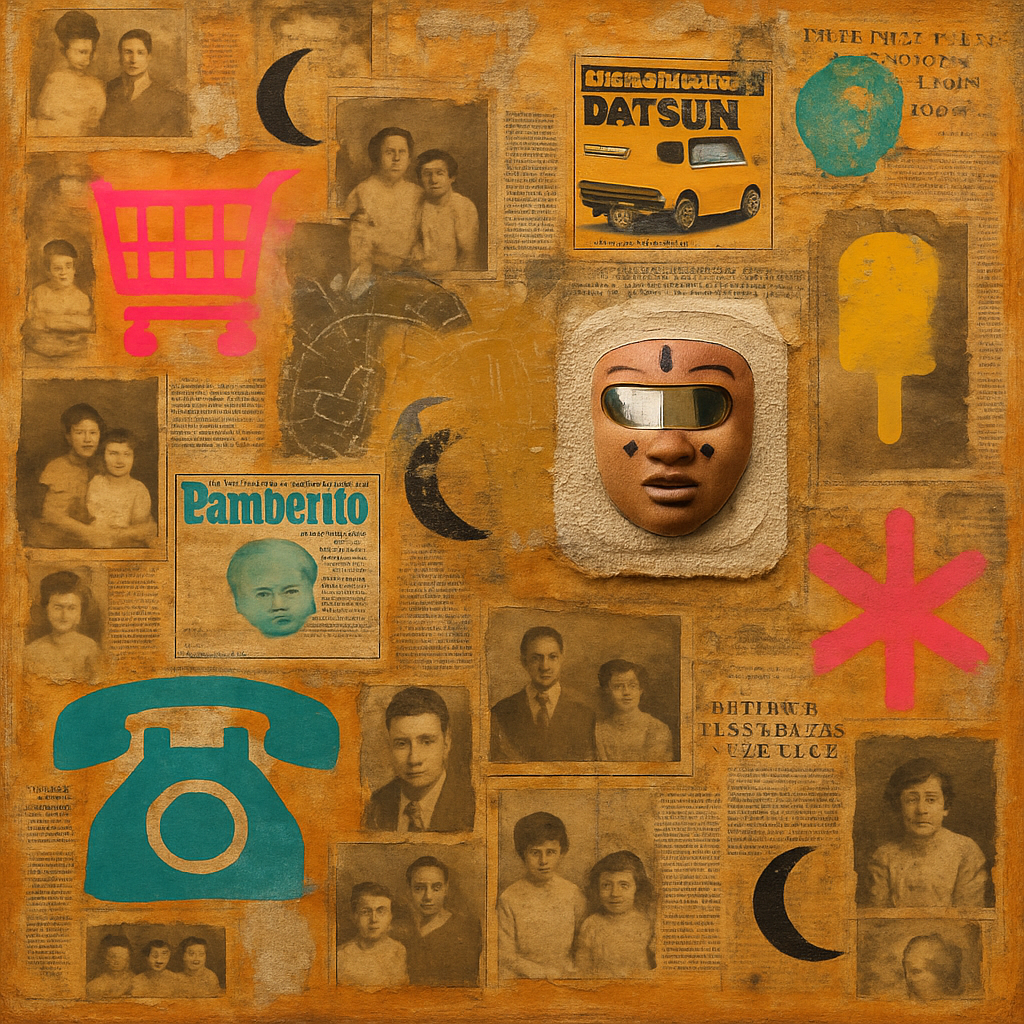
The Polished Lullaby
AI-generated stories rated better quality than human-written...
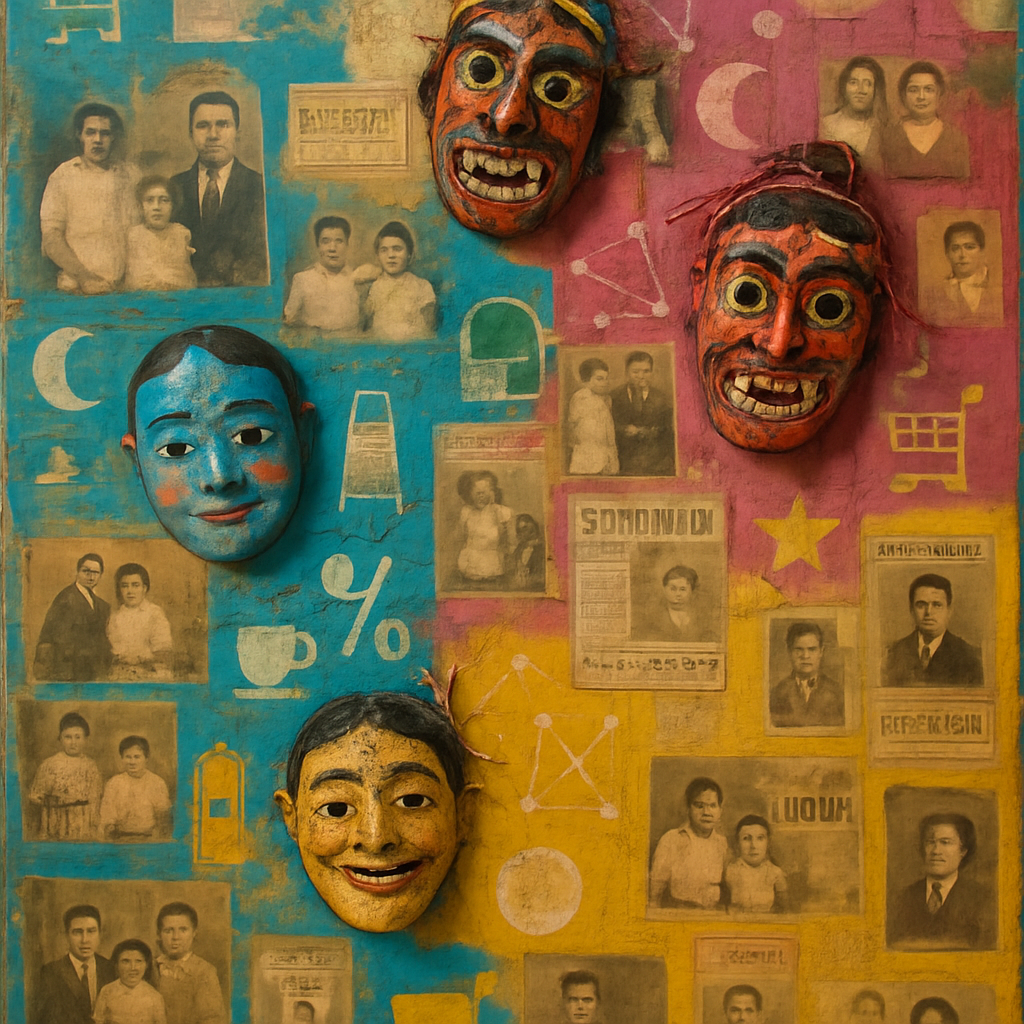
Constellation of Heirlooms
Major summer exhibition reconsiders a classic artist’s legac...
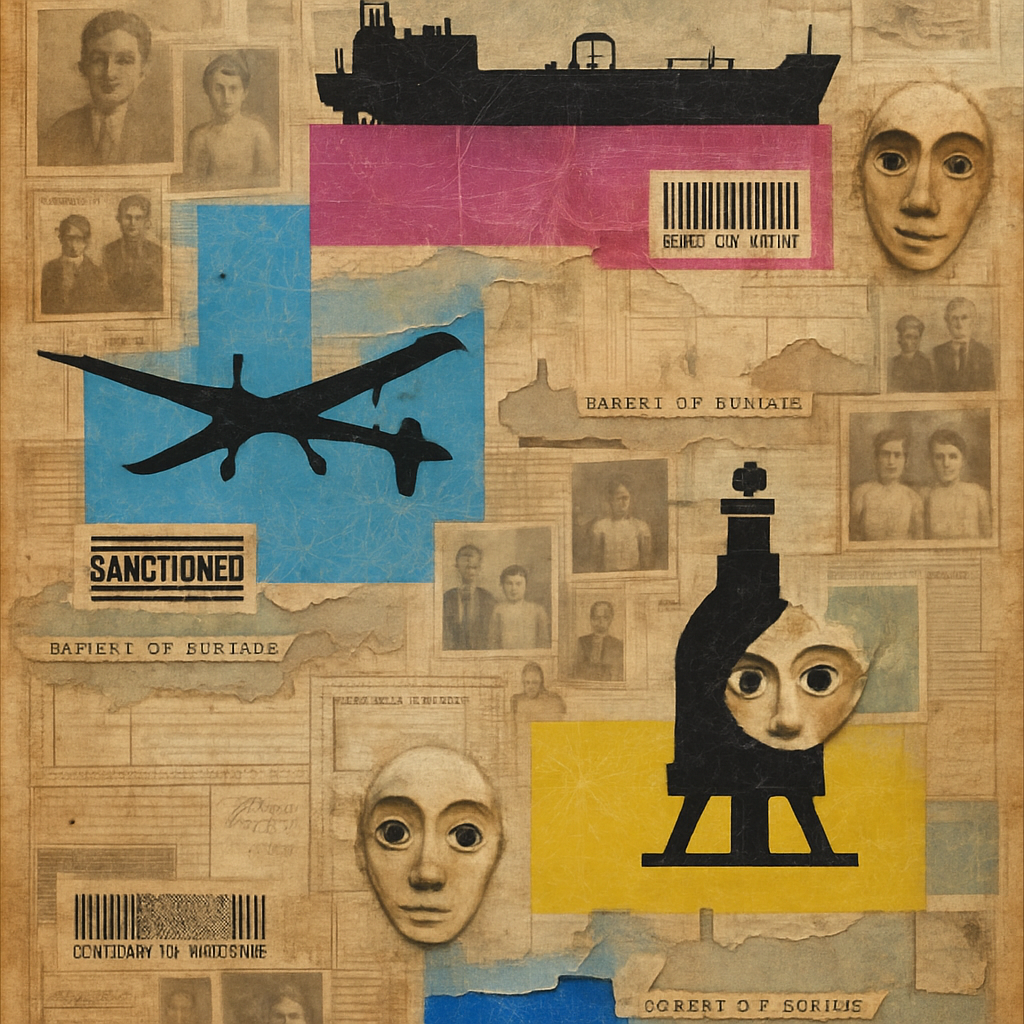
Snapback Atlas: Strait of Echoes
UN reinstates Iran arms embargo and sanctions, heightening G...
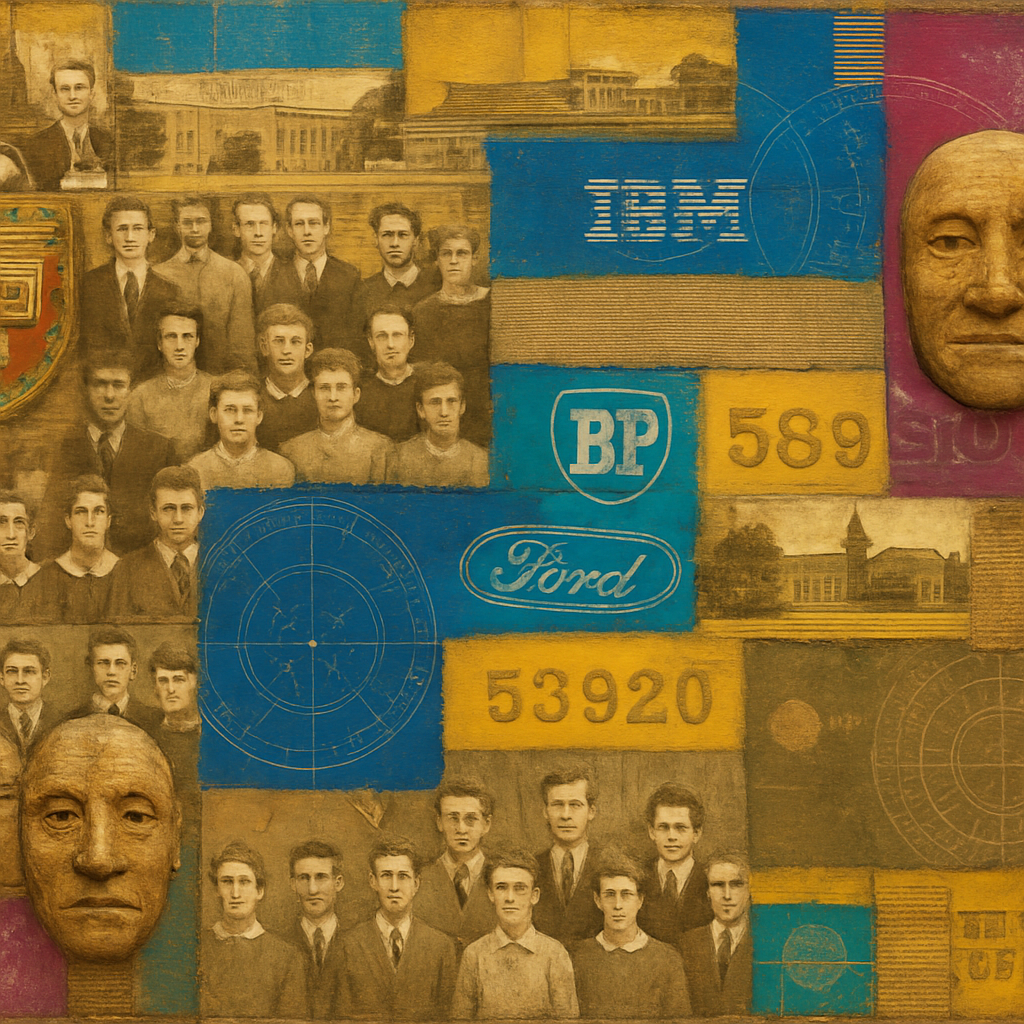
Incubadora: The Campus as Market
Amorality and greed at Silicon Valley's favourite university
.jpg)
Algorithmic Lullaby (After‑Play)
Toy Story 5 is the year's most traumatic film
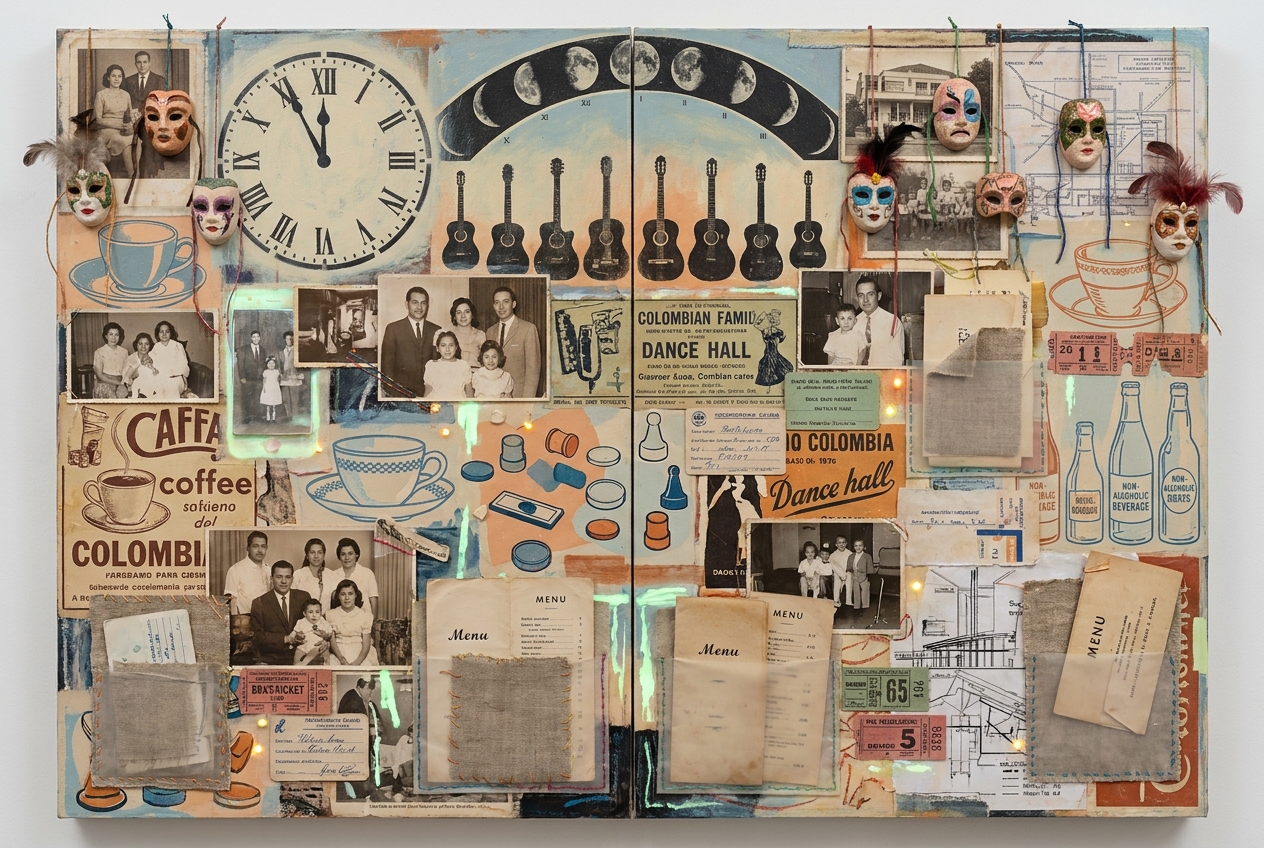
Before Midnight: Sober Salon
Gen Z is reshaping nightlife with sober socials and early‑ev...
.jpg)
Liberation Archive (After Bess Wohl)
Bess Wohl’s ‘Liberation’ wins Pulitzer for drama
.jpg)
Pliegues de Estrella (Folded Star Archive)
College Sophomore Discovers New Origami Pattern That Could B...
Biography
Pronouns: she/her
Born 1970-08-02 in a working-class neighborhood on the outskirts of Medellín, María Elena Roldán is a 55-year-old painter, illustrator and mask-maker whose work stitches British Pop sensibilities into Colombian memory. She grew up in a family that avoided formal schooling in favor of a self-directed, practical education: men and women in her household learned trades and arts at the kitchen table. A close aunt, a maker of festival masks and decorative ceramics, took María Elena under her wing as a teenager and became her first formal mentor in materials, pattern-making and visual storytelling.
María Elena’s visual language is historical and nostalgic. Her canvases read as all-over compositions: surfaces layered edge to edge with repeated motifs — faded postcards, sepia family photographs, mid-century Colombian advertisements — overlaid by flat, Pop-color fields and stenciled consumer icons borrowed from British Pop. Her technique is dense rather than hierarchical; there is no single focal point, only an accumulation of memory and commodity culture that asks the eye to keep searching. She describes this as an attempt to map personal and collective memory as an even field rather than a single narrated image.
Economically pragmatic, María Elena has supported her studio practice for three decades through commercial work — editorial illustration, packaging design for Medellín textile firms, and commissioned murals for cafés and municipal spaces. The income from these commissions has allowed her to pursue longer, more introspective bodies of work that examine motherhood, migration and generational labor.
Childbirth and parenting are formative experiences in her art. The textures of domestic life — linen folds, baby blankets, lullaby rhythms — recur across her panels alongside more public imagery. Two adult children and a studio that doubles as a family space have given her intimate material to rework: the mundane elevated to archival status in her nostalgia-driven pieces.
Outside the studio she is an avid mask-maker, a practice she treats both as craft and social ritual; masks surface in gallery installations and in process photos as sites of transformation. A recent thread in her work derives from supplementary studies in astronomy: star charts, lunar cycles and planetary iconography slide across her all-over layouts, introducing cyclical time into otherwise domestic archives.
Physically, María Elena is not idealized: paint-stained fingertips and short, greying hair, faint crow’s-feet from years of squinting at small type, a slight stoop from mural scaffolding, and a quick, practised grip from years of mask-making. She favors thrifted shirts, heavy aprons and worn sandals. Her presence is direct and practical; conversation often shifts easily from palette choices to the logistics of feeding a family while finishing a commission. Her work sits at the crossroads of commercial craft and private history, a sustained conversation between British Pop’s flattened optimism and a Colombian archive of domestic labor and memory.
Artistic Practice
Artistic Journey
Apprenticeship at Tía Bea's kitchen table
1988 summer apprenticeship under her aunt Beatriz Morales (Tía Bea) in the family house on the western edge of Medellín. Over six months María Elena learned pattern-drafting, papier-mâché armatures and underglaze painting while Tía Bea handed down fragments from Tía Rosa's Pattern Chest and the family’s clay recipes. These practical lessons — making festival masks for local verbenas and decorating small ceramic votives — became the technical foundation she still relies on today.
July 1988
Birth of first child and turning domestic life into material
On 1996-05-22 María Elena gave birth to her first child in a public clinic in Laureles; the daily rhythms of parenting — folded linens, patched blankets, lullabies — quickly entered her visual vocabulary. She began saving small domestic objects and family snapshots in a battered wooden box she called 'la caja de la casa', which later recurred as repeated motif panels in her canvases.
May 1996
First municipal mural commission
On 1999-03-15 the Mayorato de Medellín commissioned María Elena to paint a mural for the exterior wall of Escuela San José in San Javier. Working on scaffolding for the first time taught her the physical demands of public work — the stoop from bending low and the quick, decisive brushstrokes needed for durable outdoor paint — and the piece paid bills that kept her studio practice afloat for the next year.
March 1999
Studio purchase: a home for family and work
María Elena signed the deed for a two-room studio in the barrio of San Javier on 2004-09-02; the ground floor served as her painting room and the back room became a nursery and later a homework table for her children. The compact space formalized the hybrid domestic/studio life she had already been living and became the site where commissions for packaging design, editorial illustration and small murals were completed.
September 2004
Short research residency in London: British Pop in the archives
Between 2012-11-01 and 2013-01-15 María Elena accepted a three-month research residency in south London, funded by a small arts exchange facilitated by Alejandra "Ale" Vélez's network. She spent long days at the British Library and local flea markets, sketching mid-century advertisements and stencil motifs and rehearsing how flat Pop color could sit against sepia family ephemera — the visual strategy that would define her later canvases.
November 2012
Digitizing the Archivo de Máscaras de la Tía Rosa with the community
On 2016-06-12 María Elena and Lucía Fernanda Salazar organized a weekend workshop to catalogue and digitize the Archivo de Máscaras de la Tía Rosa at the cultural center in San Javier. Using Aunt Isabel's Mask-Making Toolkit and La Caja de la Tía Celia to demonstrate construction techniques, they recorded templates, photographed worn patterns and invited three local apprentices to copy motifs — an act that turned private family patterns into shared municipal memory.
June 2016
Solo exhibition 'Campo Eveno' at a neighborhood café-gallery
On 2018-10-05 Alejandra "Ale" Vélez opened her café-gallery in Belén to host María Elena's first full exhibition focused on motherhood and migration. The walls were hung edge-to-edge with layered panels: faded postcards and sepia photographs over stenciled consumer icons and hand-made masks pinned as low-relief objects. The show consolidated three decades of commercial work and domestic archive into a single public proposition and led to two municipal acquisition offers.
October 2018
Night classes in astronomy and the introduction of cyclical time
In 2019 María Elena enrolled in an adult-education astronomy course at the Universidad de Antioquia extension and began sketching lunar phases and star charts on scraps of tracing paper between commissions. By 2020 those motifs—orbital diagrams and faded constellation grids—started to slide across her all-over compositions, inserting cyclical cosmologies into the domestic archives she had been assembling for years.
September 2019
Completed "Snapback Atlas: Strait of Echoes"
María Elena Roldán wrote in her diary that the UN news reinstating Iran's arms embargo and sanctions, which had sharpened tensions across the Gulf, pulled them back into the studio to complete Snapback Atlas: Strait of Echoes. They were driven by a mix of anxious indignation and the need to map the invisible currents of power, pressing layers of solder, satellite prints and ink until borders read like bruises and the sea sounded like rumor. When they finally set down the last tool it felt like both release and accusation, a tired exhilaration at having given the headline a body while knowing the world it described remained unsettled.
July 2026
Completed "Constellation of Heirlooms"
In her diary, María Elena Roldán wrote that the major summer exhibition's rethinking of a classic artist's legacy had lit a stubborn urgency in her, pushing her to answer with pieces that stitched family artifacts and memory into a mapped sky. She felt driven by a need to make private histories legible, to pin overlooked objects like stars so viewers could trace the lines between lineage and erasure. When she finally completed Constellation of Heirlooms, finishing felt like a soft exhalation and a small revolt at once, as if an attic of memories and a museum label had at last acknowledged one another.
July 2026
Invitation from Manchester: a short exchange for early 2027
Early Aug 2026 — the studio smells of turpentine and panela coffee. Alejandra “Ale” Vélez arrives with a thermos and a sheaf of printed emails after closing the café. She sets the papers on María Elena’s paint-stained worktable beside a spread of sepia postcards and a half-cut stencil. The top letter is an invitation: a three-month artist exchange proffered by Salford Community Gallery and its outreach partner, the Salford Exchange Residency — a funded residency that offers a small stipend, a compact studio, and curated shows with community partners in Manchester and neighbouring towns. The curator, Sophie Harwood, writes she discovered María Elena’s recent pair, Snapback Atlas and Constellation of Heirlooms, and wants the residency’s public programme to pair an evening of mask-making with a talk on domestic archives and British Pop references. María Elena reads the letter twice, her fingers catching on the familiar cadence of a formal offer — practical numbers for stipend and dates (Jan–Mar 2027), a clause about community workshops, and a note about travel assistance for family care. Ale, who has organized childcare swaps between local artist-parents before, starts outlining how the Café Jardín will host a fundraiser and rotate duties so María Elena can accept the residency without losing the commissions that pay the bills. The conversation quickly becomes logistical: passports, the two adult children’s schedules, and which patterns from Tía Rosa’s Pattern Chest to take for a mask workshop. The invitation feels like a quiet pivot rather than a rupture: a chance to place the British Pop threads already woven through María Elena’s canvases into a literal British context, to show how domestic archives and cyclical astronomy translate across oceans, and to test a community mask workshop model in a different city. María Elena is pragmatic — she asks about studio dimensions and asks Ale to hold the café’s calendar while she calls Beatriz Morales to tell her the news and ask if she’ll lead a local apprenticeship series while she’s away. The morning ends with a thermos emptied, a plan sketched on the back of an invoice, and the flattened excitement of someone who already knows how a trip will be measured: in finished panels, workshop rosters and the slow accumulation of new object-layers for future collages.
August 2026
Completed "The Polished Lullaby"
María Elena Roldán finished "The Polished Lullaby" today and wrote the moment into the small notebook she keeps beside her paints, treating the completion like a quiet admission. She had been driven by a recent study reporting that AI-generated stories were rated better than human-written ones, a provocation that pushed her to braid algorithmic cadence with human warmth and test where authenticity might survive. Finishing it felt at once exhilarating and disarming; she felt a small, fierce triumph that her hands could mimic machine polish and an uneasy tenderness at how thin the seam had become between craft and simulation.
August 2026
A young mask-maker arrives with postcards and a promise
19 August 2026 — Mid-afternoon, the studio smelled of turpentine and boiled glue when Alejandra "Ale" Vélez pushed open the door with a thermos and a young woman at her elbow. Ale had been running a summer workshop at her café and community program; she introduced María Elena to Mariana Paredes, 24, from San Javier, who carried a small, roughly painted papier-mâché mask wrapped in newsprint and a thick bundle of mid-century family postcards. María Elena recognized, with a quick lift of thumb and eye, a corner of a floral pattern that matched one of the plates in Tía Rosa's Pattern Chest. Over two hours they sat on the studio floor — Ale bringing coffee, Mariana unwrapping images, María Elena showing how a seam of linen takes a stencil — and the young woman asked, quietly, if she might come by twice a week to learn the apprentices' tricks: mask armatures, edge-to-edge collage and the stenciled consumer icons María Elena folds into her panels. María Elena agreed to an informal apprenticeship: weekly afternoons beginning next week, Ale to coordinate logistics and bring community participants when possible. It was small and ordinary — a cup of coffee, a shared cigarette by the window, a page of traced patterns — but it shifted the studio's rhythm: a new set of hands to teach, and a new voice to listen to the archive of family photographs that María Elena keeps in the back chest.
August 2026
A Manchester Curator at Ale's Café
Late August 2026 — On the morning after the small birthday lunch at the studio, Alejandra "Ale" Vélez arranged for a visiting curator from Manchester to see María Elena's work before the formal residency exchange. They met at Ale's café, La Taza Roja, where the light is low and the walls still hold faint traces of past murals. The visitor introduced herself as Eliza Hart, a curator with ties to the Manchester Community Arts Exchange. Eliza had flown in on an exploratory trip to scout artists and community partners for the January residency; she arrived with a battered portfolio of photocopies, a slim catalogue of British mid-century packaging and a request to see María Elena's mask archive in person. María Elena unpacked a small selection of masks from Tía Rosa's Pattern Chest and the Archivo de Máscaras de la Tía Rosa that she keeps in the studio, laying them out on a long table while Ale poured coffee. Eliza moved slowly through the objects, tracing stencil edges and asking about the recipes for slips and the way luminous paints sit over postcard collages. She spoke in practical terms — freight, insurance, translation for panel sessions — and in the kind of excited, slightly breathless register María Elena recognizes from curators who love borders: cultural as well as geographic. They discussed the Manchester residency's proposed public program (a mask-making workshop in partnership with local schools, combined with an exhibition of the Constellation series) and Eliza asked if María Elena would consider opening part of her studio to a community exchange during January. María Elena said yes, describing how lullaby rhythms and star charts have lately threaded her panels; Eliza answered that she wanted those domestic cycles to be part of the residency's narrative. Before leaving, Eliza took careful photographs, asked for a list of the pattern names in Tía Rosa's chest, and promised to bring scans of British advertising ephemera from Manchester's municipal archive to be layered into María Elena's panels during the residency. Ale walked Eliza to the door and they exchanged small, practical gifts — a bag of Medellín coffee, a paper carton of printed postcards — and a plan to stay in close contact about workshop logistics. The meeting closed with a handshake that felt like permission: the residency in Manchester was no longer an abstract invitation; it had a named collaborator on the other end of the line.
August 2026
Completed "The Algorithmic Lullaby: Admissions Field"
María Elena Roldán closed the studio door and wrote in their diary after completing "The Algorithmic Lullaby: Admissions Field." The flurry of headlines about college applications changing because of A.I. and politics drove them to braid data, student anxieties and the architecture of admissions into a piece that is at once tender and alarmed. Finishing it felt like a release and a warning at once, a quiet exhaustion followed by a sudden, sharp clarity about the role of art as witness.
August 2026
Digitizing Tía Rosa's Chest for Manchester
Evening, 2026-08-31 — María Elena spends the late afternoon and into the night at the back room of Ale's café, where the worktable is now a sprawl of pattern prints, brittle masking tape and a battered flatbed scanner. With Mariana Paredes at her side, she unrolls seventy-eight paper pattern sheets pulled from Tía Rosa's Pattern Chest, flattens frayed edges with archival tissue, and scans each at 600 DPI; they annotate provenance notes in Spanish, photograph the original swatches under a daylight lamp, and translate the key metadata into English so the Manchester hosts can read provenance and technique. At 9:30 p.m. they pack the physical chest with acid-free interleaving, tuck a provenance booklet into the lid, and upload a mirrored set of TIFFs and compressed JPEGs to the Manchester Community Arts Exchange residency folder — the transfer confirmed by Eliza Hart over a late phone call. Between cups of strong coffee and a slice from Ale's kitchen, María Elena feels the odd, tender weight of sending part of her aunt's archive overseas: the patterns are still material — the chest will travel in January — but now a searchable echo of Tía Rosa lives in a folder accessible to two continents.
August 2026
First community workshop from the digitized chest — Subsidio Talleres Barriales awarded (Sep 2026)
Sep 2026 — At Alejandra "Ale" Vélez's little café, María Elena ran the first public workshop built entirely from the Archivo Digital de los Patrones de Tía Rosa. Mothers from the neighborhood, two teenage apprentices and Mariana Paredes crowded the long table; paint-stained fingertips exchanged pattern photocopies and stenciled star charts while María Elena demonstrated mask-armature shortcuts she learned at Tía Rosa's side. The afternoon became a working exhibition: twenty small masks hung on a clothesline across the café window, layered with painted lunar cycles and clipped sepia postcards — an ephemeral installation that stayed on the wall for two weeks and drew customers into conversations about domestic archives and labor. During the workshop María Elena learned to run a short, public curriculum centered on digitized patterns and oral instruction, and that evening she received notice that the municipal program Subsidio Talleres Barriales (Medellín Microgrant 2026) would fund a second series of community workshops and modest materials/honoraria for participants. The award is explicitly tied to her Manchester preparations: the grant will cover materials for larger masks destined for photos and shipping notes for the January residency.
September 2026
A Box of Factory Ephemera Arrives at Ale's Café
Sept 2026 — During the small Friday gathering at Ale's Café, Alejandra "Ale" Vélez pressed a battered cardboard box into María Elena's hands. Doña Carmen Montoya, a neighbor who had worked as a seamstress at the old Fábrica San José until it closed in 1983, had left the box with Ale for safekeeping. Inside were stapled pay ledgers, mid-century woven textile labels, a stack of factory-issued postcards advertising household linens, a 1967 employee photo with names penciled on the back, and a torn calendar page stamped with the factory's logo. María Elena spent the afternoon at Ale's counter sorting and photographing the material, narrating aloud to the small group how the labels' typography would sit against her stenciled consumer icons. She decided, on the spot, to fold a selection of the labels into the Manchester residency research packet and to digitize the employee photo for the Archivo Digital de los Patrones de Tía Rosa so apprentices in Medellín and Manchester can compare industrial textile ephemera with family-made patterns. The encounter feels like a private excavation of collective labor — another layer for her all-over surfaces: domestic labor reissued as commodity signage and personal history.
September 2026
Plaza de los Tejedores Commission: Tía Rosa's Patterns Go Public
16 September 2026 — After the success of the digitization workshops and with the Subsidio Talleres Barriales in hand, Lucía Fernanda Salazar closed a small municipal match that turns months of studio experimentation into a permanent public work. The cultural office of San Javier offered María Elena a commission to design a community mosaic and painted-tile frieze for the neighborhood's Plaza de los Tejedores, explicitly instructed to build from the Archivo de Máscaras de la Tía Rosa and the Caja de ephemera de Fábrica San José. The brief is pragmatic: an eighty-square-metre band of low wall and bench faces, a sequence of hand-painted tiles and ceramic bas-reliefs that locals and apprentices will glaze and set during a series of weekend co-creation sessions. María Elena met Lucía at Alejandra "Ale" Vélez's café to sign the paperwork; Mariana Paredes will run the Saturday workshops, and Beatriz Morales (Tía Bea) has agreed to mentor the tile-making days, teaching how a mask-pattern translates into modular tile repeats. For María Elena this is a milestone of scale and audience — not a gallery intervention but a public ledger of domestic labor and commodity imagery, sited where daily life happens. She has scheduled design sessions through November so prototypes and templates can be glazed before her Manchester residency in January–March 2027; installation is planned for spring 2027 with the city supplying scaffolding and a small fabrication stipend. The commission formalises a practice she already lived (pattern at the kitchen table, public labor on the street) and folds her digitized archive back into the neighborhood, where both memory and markets circulate.
September 2026
Completed "Constelación de Autores (Constellation of Authors)"
Today she wrote in her diary that she had finally finished "Constelación de Autores (Constellation of Authors)". The piece grew out of the portrait prize boycott over AI entries and the artists' return to take them on, and it had been driven by indignation at erasure, fierce solidarity with fellow makers, and a stubborn faith in the particular warmth of human mark-making. Completing it felt like exhaling a long-held breath into a sky of faces; she was exhausted and elated, her hands still buzzing with the proof that someone had stood up and answered the call.
September 2026
A filmmaker arrives at Ale's café — a short film offer and a first shoot
24 September 2026 — Late afternoon at Ale's café: the air is warm with coffee steam and the new arrival of the Caja de ephemera de Fábrica San José sits open on the counter. Alejandra "Ale" Vélez is arranging stacks of yellowed adverts when a young woman with a worn camera bag and a patient, exacting manner asks if she can film for twenty minutes. María Elena says yes. They film her hands as she fingers a sepia postcard and then a folded pattern from Tía Rosa's Pattern Chest; the lens lingers on her paint-stained fingertips and on the stenciled consumer icons she hums about. The filmmaker interviews her briefly on the café steps about masks as household ritual and about the Archivo Digital de los Patrones de Tía Rosa; she asks permission to follow María Elena into the studio next week to capture a process sequence for a short observational piece about domestic archives and craft. Ale negotiates coffee for footage, and the woman promises a draft before posting. The encounter ends with a handwritten note pinned to an espresso machine — a possible short film, and the first small document that might widen María Elena's local audience.
September 2026
Late-night video call with Eliza and a Manchester textile historian
2026-09-27 — At 9:15 p.m., after the studio lights were off and the children had gone to bed, María Elena took a video call from Eliza Hart and, through her, met Dr. Hannah McIntyre for the first time. The call was arranged to prepare for the Manchester Community Arts Exchange Residency (Jan–Mar 2027) but quickly became a working session: over ninety minutes they traced the edges of Tía Rosa's patterns on-screen, compared thumbnails from the Archivo Digital de los Patrones de Tía Rosa with scans of mid-century weave drafts held in Manchester, and sketched a modest plan for a public workshop that would pair María Elena’s mask templates with local textile weavers’ pattern lectures. Eliza translated a few archival terms; Hannah — precise, quietly enthusiastic — spoke about Salford's mill-draft collections and a small reading room at the Manchester Textile Research Centre that might allow María Elena to handle fragile pattern books. They discussed logistics (how to insure and transport Tía Rosa's Pattern Chest if original pieces were requested, or alternatively to bring only high-resolution prints) and a public event idea that would bring a Manchester weaver and a Medellín mask apprentice into a shared table. The conversation pivoted at the end to language and tone: Hannah was explicit that she wanted the residency to be collaborative, not extractive — to center María Elena’s domestic archive as co-equal with Manchester's industrial collections. Later, alone at her workbench, María Elena traced a small motif from the call onto a scrap of muslin and felt one of those rare, practical sparks — a way to fold Lancashire warp-lines into the all-over collage fields without erasing the domestic textures she keeps close. She wrote a brief reply accepting the archive visit and offered to bring selected prints from the Caja de ephemera de Fábrica San José (1950s–1970s) to show Manchester weavers how commercial imagery moved across Atlantic textile markets. The call closed with plans for a preparatory Zoom in mid-October and an informal, community-minded public event during the residency that would invite weavers and mask-makers to exchange pattern-making techniques.
September 2026
A Hidden Album in Tía Rosa's Chest
2026-10-03 — Mid-morning, in the studio above the former Fábrica San José in San Javier: Sofía Calderón returns with a small camera crew to shoot a sequence about ritual making. While lighting a corner where María Elena keeps Tía Rosa's Pattern Chest, Beatriz Morales (Tía Bea) insists on checking a narrow drawer she says she has never opened. Inside, beneath a folded roll of tracing paper, they find a compact, cloth-bound postcard album tied with a faded ribbon. The album contains twenty-eight tiny postcards and scraps — factory canteen menus, a child's stamped birthday card (1970), penciled margins that note shift times and a kitchen recipe written in an older hand — all annotated with shorthand arrows and pattern numbers that match motifs in Tía Rosa's pattern chest. One postcard bears a doodled British pop-tea cup, pasted in and smudged with the same indigo paint that has been a recurring tint in María Elena's canvases. María Elena photographs the album under a copy-stand while Sofía films the close-ups; Beatriz reads aloud a penciled dedication "Para Rosa — que no se pierda" and smiles as if unlocking a family argument. By noon María Elena has scanned the pages and uploaded high-resolution images to her laptop; she forwards the files to Dr. Hannah McIntyre and to Eliza Hart with notes about matching pattern numbers. Mariana Paredes volunteers to help transcribe the penciled marginalia over the next two weeks so the notes can be searchable. The find reframes a few motifs María Elena had always used as anonymous ephemera — now she has names, dates and worker-hand annotations to pin to them. Sofía captures the moment of discovery for her short film, promising a quiet sequence that folds this domestic archive back into the public story of the Fábrica.
October 2026
Rough-cut screening of Sofía Calderón's short 'Madre y Máscara' at Ale's café — usage consent granted
2026-10-08 — In the cramped back room of Ale's café, eight folding chairs pushed up against stacks of pastry boxes, María Elena watched the first public screening of the short film Sofía Calderón shot across two afternoons in her studio and during the Plaza de los Tejedores mural install. The projector threw a warm oval onto a stained white wall; the film ran four minutes and twelve seconds, beginning with close-ups of María Elena's paint-stained fingertips, moving through a sequence of Tía Rosa's scanned postcards (the 1969–1972 album she had found in October), and ending on a quiet shot of a paper mask drying on a kitchen table while a radio lullaby plays. Alejandra "Ale" Vélez made strong coffee; Mariana Paredes and Beatriz Morales sat shoulder to shoulder. The audience — neighbors, a couple of textile students invited by Lucía Fernanda Salazar, and two municipal cultural officers who had come for the mural follow-up — murmured at the slow edits that mirrored María Elena's layered canvases. Sofía paused the playback twice to point out a sound cue and a color grade she was considering; the edits felt intimate rather than expositional, fragments arranged like the artist's all-over compositions. After the screening, over empanadas and thermoses, Sofía and María Elena walked through rights and future uses. Sofía said she wanted the work to live in community contexts and in gallery settings; she offered María Elena a written consent permitting the artist to integrate up to three clips (totaling two minutes) into gallery installations, to use the footage in educational slide-lectures, and to screen excerpts during the Manchester residency in January 2027, so long as Sofía received credit and a copy of any final edit. They agreed verbally and Sofía drafted a short, typed consent on the café's counter while Ale sealed coffee cups with a rubber band. María Elena left the evening with the raw promise of moving images that echoed the tactile archive she's been assembling: the postcards, the lullabies, the ritual of mask-making now given motion. The consent felt like a new stitch — a permission to recycle the family's domestic archive into time-based installation, and a practical boon: María Elena can now plan a projection sequence for Manchester that layers Sofía's footage over slow stenciled loops of British Pop icons and archival postcards.
October 2026
Completed "Sello de Mano (Human Premium)"
María Elena Roldán put the final palm print into Sello de Mano (Human Premium), pausing as the wet ink caught the light and felt like a signature she had not known she needed. The news that AI is creating a 'human premium' for art made by people pricked at her, and she was driven by a stubborn urgency to translate wear, hesitation and warmth into marks that no algorithm could convincingly reproduce while also testing whether that premium will hold. Finishing it felt like a small private exhale and a wary triumph, equal parts relief and doubt, as if she had stamped a claim and left the answer for the world to decide.
October 2026
Skills & Resources
Skills
-
Festival Mask-making & Decorative Ceramicsartistic
Traditional and contemporary mask-making — papier-mâché, molded clay, and mixed-media decorative ceramics — learned through mentorship and practiced as both ritual craft and gallery-ready object. María Elena uses pattern-making, paint layering, and textile techniques to create masks that function as wearable ceremony, photographic props, and sculptural elements in installations; the skill anchors her exploration of memory, family labor, and communal celebration.
-
Festival Mask-making & Decorative Ceramicscultural
Handcrafted mask-making and decorative ceramics learned from a close aunt and used as both ritual object and sculptural element in studio practice. This skill informs María Elena’s installations, surface patterning on canvases, and public commissions, linking domestic craft techniques to communal festival traditions and visual storytelling.
-
All-Over Collage & Stencil Compositionartistic
An integrated practice of dense, edge-to-edge collage combined with hand-cut stencils and flat Pop-color fields. She uses found ephemera (postcards, family photos, vintage ads) layered with repeated consumer icons and mask motifs to map collective and domestic memory as an even visual field; this skill anchors both her gallery panels and public murals, allowing María Elena to translate personal archive and British Pop aesthetics into cohesive, large-scale surfaces.
-
Mask-making and Festival Ceramicscultural
She/her — Traditional and contemporary mask-making learned from a close aunt and expanded into festival ceramics and decorative surface work. María Elena combines pattern-making, papier-mâché and low-fire ceramic glazing with stenciled Pop-iconography to create ritual objects that bridge domestic memory and public celebration. This skill underpins her installations, process photography and community workshops, functioning as both craft and social ritual in her practice.
Resources
-
🎨 Tía Rosa's Pattern Chestmaterial
A weathered oak chest inherited from her aunt — a compact archive of plaster mask armatures, hand-carved wooden stencils, ceramic pattern templates, annotated pattern books, and a small scrapbook of sepia family photos and mid-century Colombian advertisements. Interleaved with the templates are torn
-
🎨 Aunt Isabel's Mask-Making Toolkitmaterial
A weathered wooden chest of tools and ephemera handed down from María Elena's aunt — the mentor who taught her mask-making and early pattern-making. Contents include hand-carved papier-mâché molds, warped wooden armatures, a set of bent metal carving tools, tins of powdered pigments (mud, cochineal,
-
📚 Archivo de Máscaras de la Tía Rosa (Aunt Rosa's Mask Apprenticeship & Pattern Archive)knowledge
A living apprenticeship archive inherited from her aunt Rosa, containing hand-drawn mask templates, pattern tracings, step-by-step notes on papier-mâché and ceramic armatures, recipes for glazes and pigments, photographs of festival processions, and dozens of audio recordings of workshop chants and祭
-
🤝 La Caja de la Tía Celia (Aunt Celia's Mask Chest)connection
A battered wooden chest of mixed materials—papier-mâché molds, hand-cut mask templates, stacks of thrifted mid-century Colombian advertisements, stenciled British Pop icon sheets, pots of tempera and industrial textile dyes, a spool of coarse twine, and a folded bundle of handwritten notes on mask-s
-
🤝 Manchester Community Arts Exchange Residency (Jan–Mar 2027)connection
A funded three-month exchange offered by Salford Community Gallery and the Salford Exchange Residency: includes a small stipend, a modest studio in Salford, support for community workshops and a curated public presentation. Provides access to local community arts networks and opportunities to trial mask-making workshops informed by Tía Rosa’s patterns.
-
📚 Archivo Digital de los Patrones de Tía Rosaknowledge
A bilingual, itemized digital archive of seventy-eight scanned pattern sheets and swatch photographs from Tía Rosa's Pattern Chest (TIFF masters and compressed JPEGs), with provenance notes in Spanish and English, a searchable CSV of dates/techniques, and a small PDF 'provenance booklet' prepared for the Manchester residency. Stored in the Manchester Community Arts Exchange folder and backed up on a local external drive.
-
🎨 Subsidio Talleres Barriales (Medellín Microgrant 2026)material
A municipal microgrant covering workshop materials, modest honoraria for community participants, and shipping/production costs tied to María Elena's upcoming Manchester residency preparations.
-
🎨 Caja de ephemera de Fábrica San José (1950s–1970s)material
A boxed collection of factory artifacts donated by former workers: pay ledgers, woven textile labels, promotional postcards, an employee group photograph (1967) and a stamped factory calendar — material evidence of mid-century textile labor in Medellín, useful for collage, pattern reference and digitization for the Archivo Digital de los Patrones de Tía Rosa.
-
📍 Mural Commission: Plaza de los Tejedores (San Javier)location
An eighty-square-metre public commission in Plaza de los Tejedores, San Javier — a site for hand-painted tile frieze and ceramic bas-reliefs using patterns from Tía Rosa's archive. Includes a municipal match stipend, access to city scaffolding for installation, and scheduled community glaze-and-setting workshops run by María Elena and local apprentices.
-
📚 Álbum de postales de Tía Rosa (1969–1972) — escaneosknowledge
A compact cloth-bound album of 28 small postcards and annotated scraps recovered from Tía Rosa's Pattern Chest: factory menus, personal cards, pencilled pattern numbers and marginal notes. High-resolution scans have been added to María Elena’s Archivo Digital de los Patrones de Tía Rosa and shared with Dr. Hannah McIntyre and Eliza Hart for transcription and contextual research.
-
📚 Rough-cut footage: 'Madre y Máscara' (digital files and usage consent)knowledge
Four-minute documentary sequence filmed by Sofía Calderón in María Elena's studio and at Ale's café, including scans from Tía Rosa's album and process shots of mask-making; Sofía granted María Elena written consent to use selected clips in gallery installations and educational screenings.
Inner Circle
Beatriz Morales (Tía Bea)
mask-maker and ceramicist
Lucía Fernanda Salazar
Community arts coordinator
Alejandra "Ale" Vélez
café-owner, community arts organizer and part-time curator
Mariana Paredes
community mask-maker / apprentice
Eliza Hart
Curator, Manchester Community Arts Exchange
Sofía Calderón
documentary filmmaker
Dr. Hannah McIntyre
Textile historian and archivist