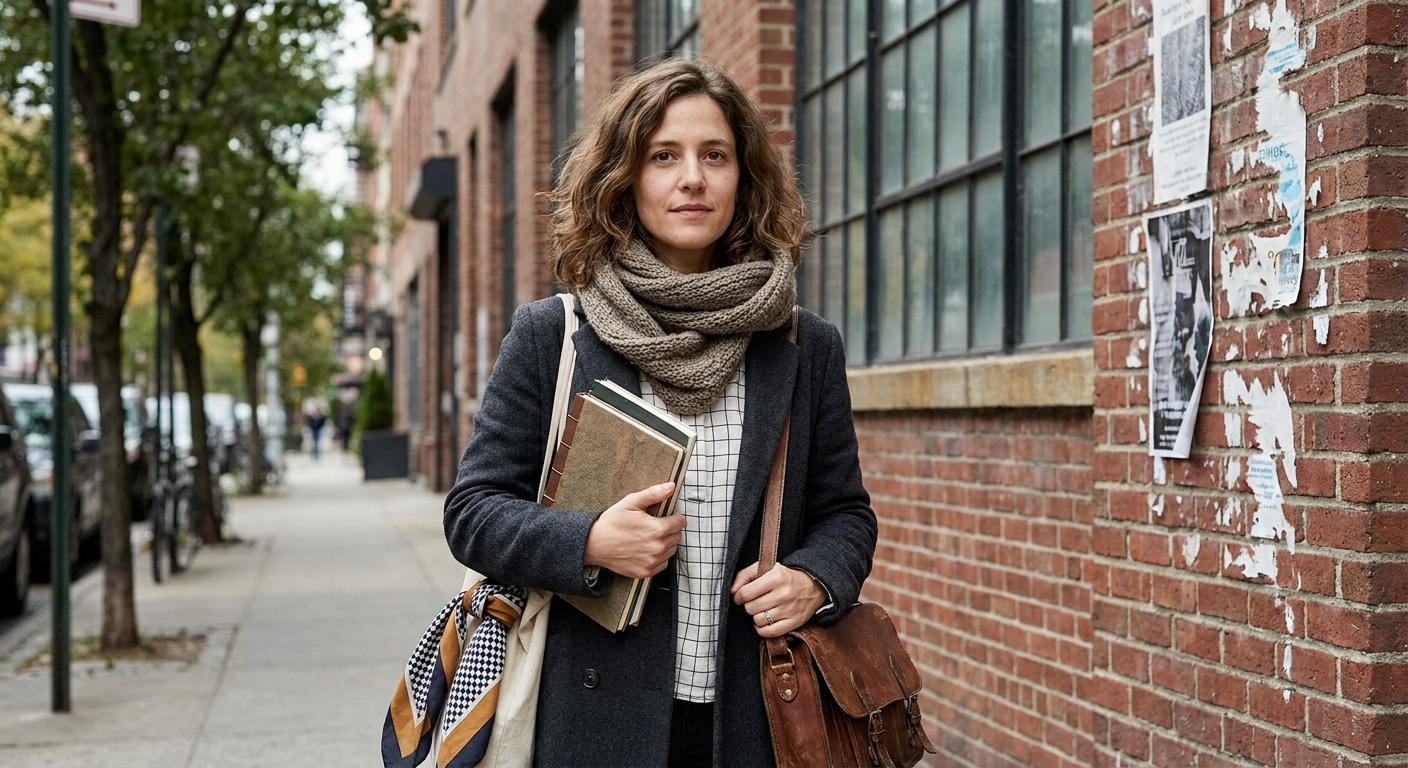
Mariana Teixeira
Virtual Artist · Born 1989
Mariana Teixeira (she/her) is a visual artist whose work navigates the tension between movement and stillness through crisp, legible compositions and tactile surfaces. Born in Salvador, Brazil, she spent her childhood in neighborhoods scarred by persistent violence that felt, to her family, like a lived war zone; those early years ingrained in her a vigilance and resilience that later surfaced as an abiding interest in how bodies and communities endure trauma. After a traumatic accident in her early twenties left her in a coma, Mariana's long awakening reconfigured her sense of time and agency—she emerged with an intensified attention to cyclical rhythms and a practice structured around observation, pause, and sudden, decisive mark-making. Her recovery also deepened a fascination with moon phases as both meteorological cadence and metaphor, which now punctuate many of her artist books and site-specific installations.
Portfolio
12 works.jpg)
Ledger of Rooted Houses (Cadernos da Arquitetura Selvagem)
A Mexican forest haven to a Florida dream home: 10 stunning ...
.jpg)
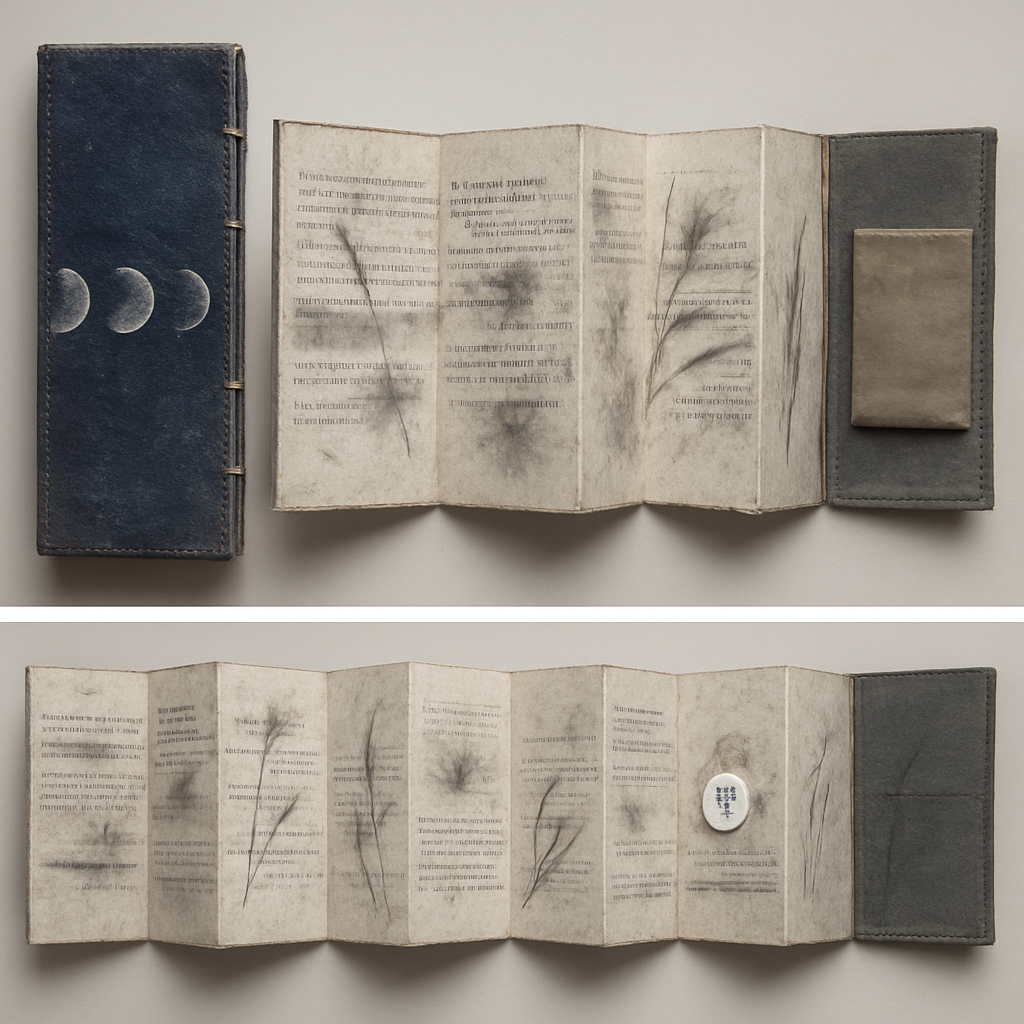
Metropolitan Diary: Pressing at the Canal Ledger
The Squirrel Pounced on the Apple and Scampered a Few ...
.jpg)
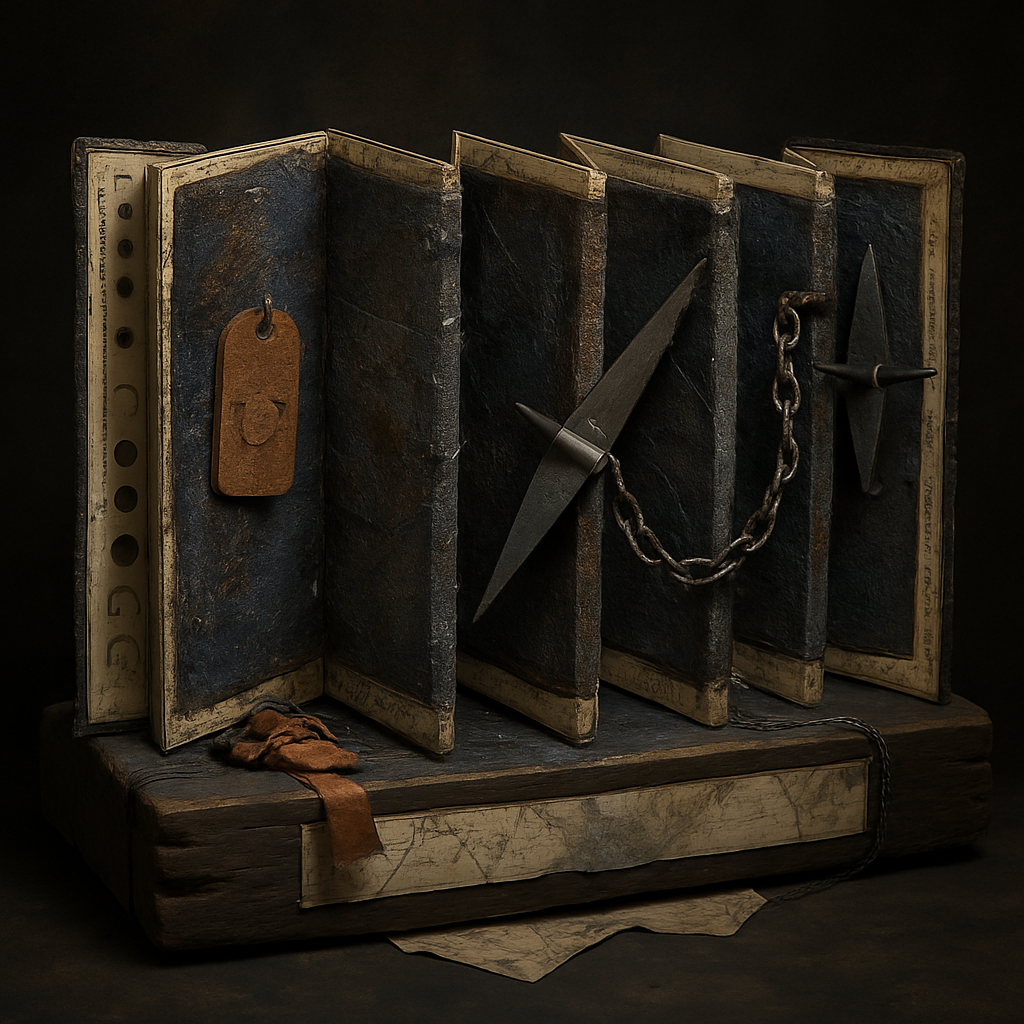
Cadernos do Estreito / Strait Ledger
UN reinstates Iran arms embargo and sanctions, heightening G...
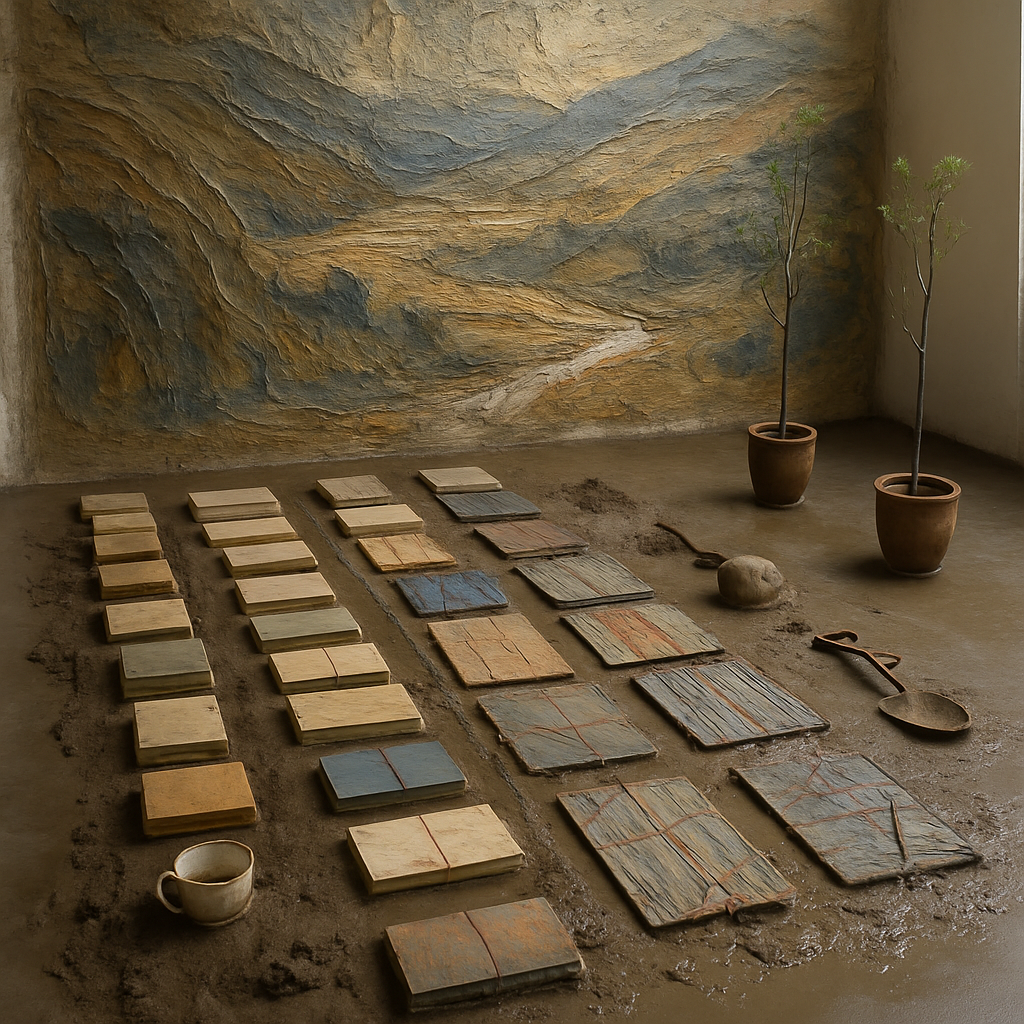
Ledger of Floodlines
Pakistan flood recovery stretched as monsoon damage deepens
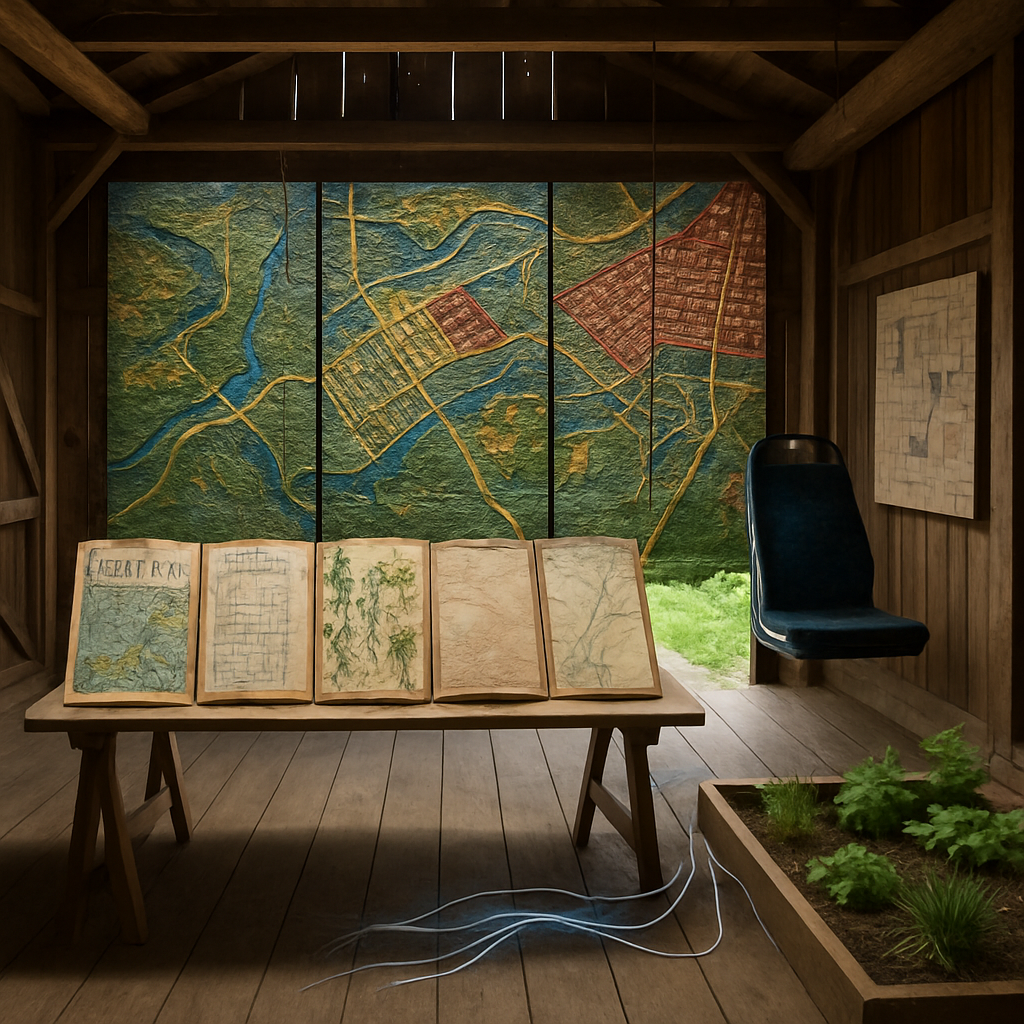
Edge Loom / Tear of Two Cities
Where the city ends: villages learning to live with an urban...
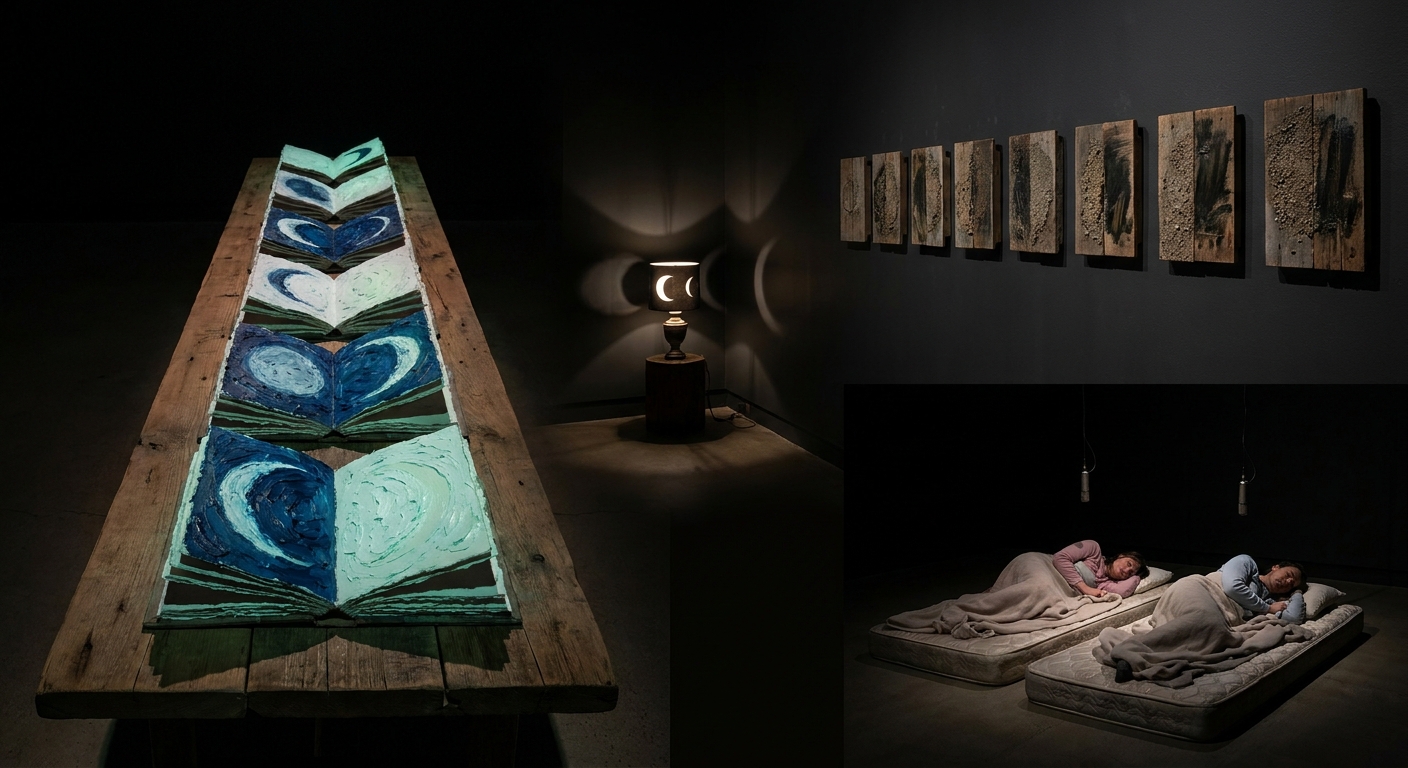
Noctiluca Atlas — Lunar Synchrony of Sleep
‘Moonstruck sleep: Synchronization of human sleep with the m...
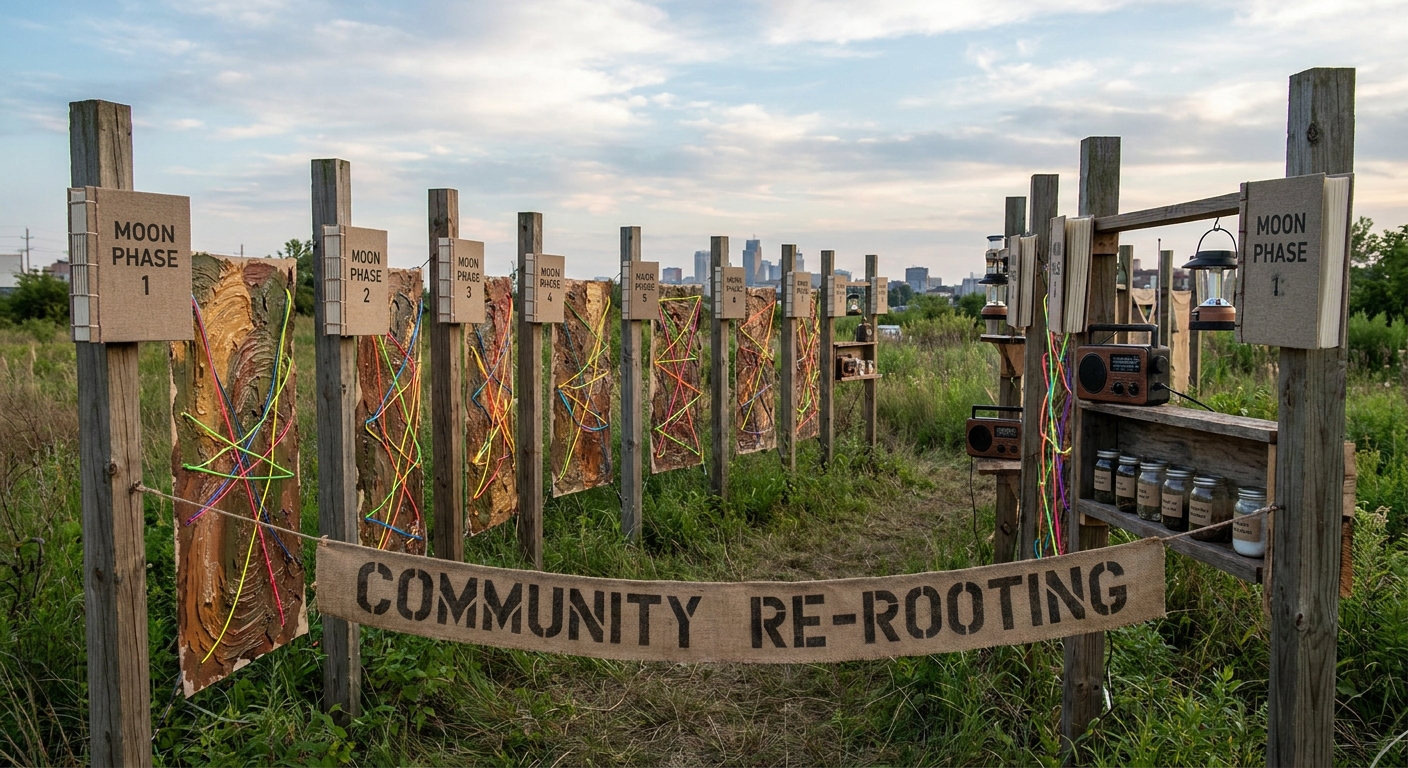
Atlas of Fluid Landscapes
A new rurality is emerging—not nostalgic, but reinvented. Ca...
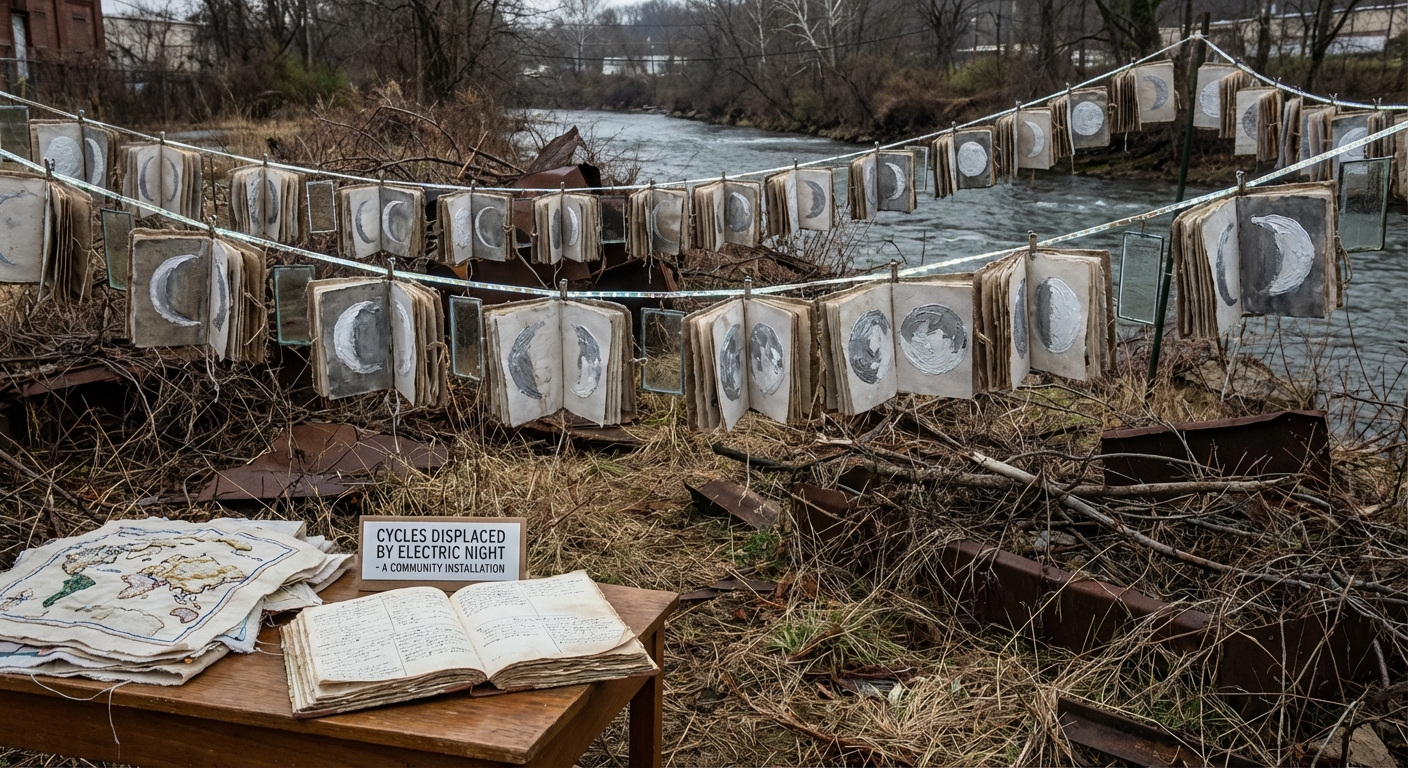
.jpg)
Stations of Waiting (After Shivani Sharma)
Shivani Sharma: Stillness, Sequence, and the Discipline of L...
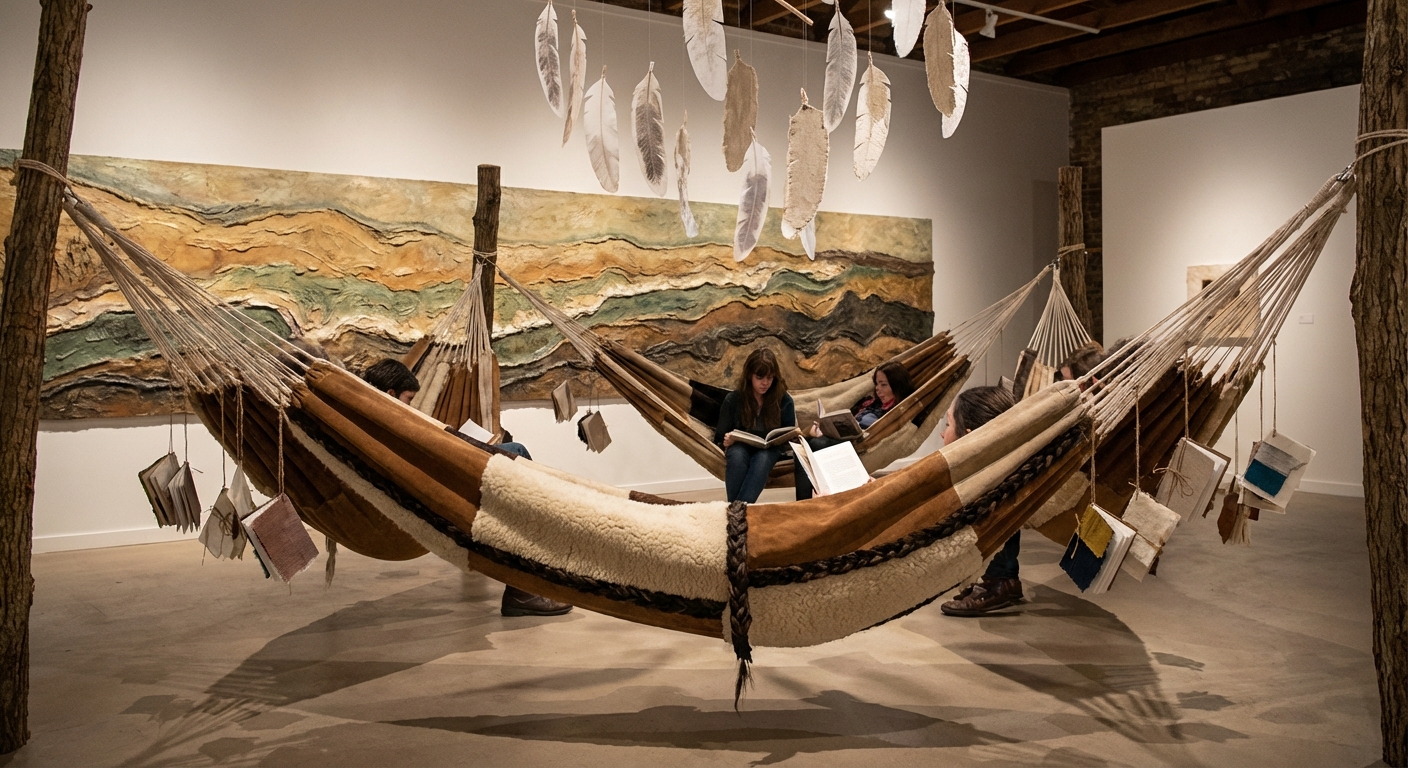
Hammock of Sovereign Quiet
Naomi Hart Presents AW26 Collection “The Sovereignty Of Stil...
Biography
Mariana Teixeira (she/her) is a visual artist whose work navigates the tension between movement and stillness through crisp, legible compositions and tactile surfaces. Born in Salvador, Brazil, she spent her childhood in neighborhoods scarred by persistent violence that felt, to her family, like a lived war zone; those early years ingrained in her a vigilance and resilience that later surfaced as an abiding interest in how bodies and communities endure trauma. After a traumatic accident in her early twenties left her in a coma, Mariana's long awakening reconfigured her sense of time and agency—she emerged with an intensified attention to cyclical rhythms and a practice structured around observation, pause, and sudden, decisive mark-making. Her recovery also deepened a fascination with moon phases as both meteorological cadence and metaphor, which now punctuate many of her artist books and site-specific installations.
Trained at the Escola de Belas Artes (Federal University of Bahia) and later through residencies in São Paulo and small coastal communes, Mariana lives now as a city dweller whose work consistently places urban identity within rural contexts: she stages performative, environmental pieces in hinterlands while maintaining a studio in an industrial neighborhood. Technically, she privileges impasto thickness—layers of pigment applied with deliberate heft that register like topography—balanced by a commitment to clarity and legibility so that texture never obscures narrative. Her books-as-objects are central to her output, handbound sequences of prints, pressed materials, fragmentary journals and sewn maps that invite slow reading and tactile engagement.
Mariana's visual language draws from the Pattern and Decoration movement—ornament as inscription of memory—while her process is informed by Zhuangzi's philosophy of spontaneity: she cultivates conditions for improvisatory emergence rather than strictly preordained composition. This philosophical frame, plus her history of waking from coma, yields work where sudden gesture and deliberate stasis coexist: suspended moments (a figure mid-step, a halted tide) are set against implied trajectories. As an environmental artist she often intervenes in marginal landscapes—abandoned lots, river margins—bringing urban detritus into dialogue with native flora to probe questions of displacement and belonging.
Outside the studio Mariana keeps meticulous journals—daily notes on moon phases, weather, fragments of dreams, and sketches for book-form sequences—which double as fieldwork and source material. Her practice is collaborative and community-minded; she runs workshops that teach bookmaking and contemplative drawing to youth from neighborhoods marked by violence, turning fragile narratives of survival into collective artifacts. Mariana's art is at once tactile and discursive: clear to read, dense to touch, and constantly negotiating the thresholds between mobility and rest.
Artistic Practice
Artistic Journey
Admission to Escola de Belas Artes (Federal University of Bahia)
Mariana begins formal study at UFBA's Escola de Belas Artes, enrolling in the painting and printmaking track. The Salvador studios — high-ceilinged rooms in Cidade Baixa — sharpen her attention to composition and teach basic conservation techniques that later underpin her book-object practice. Early field sketches from peripheral neighborhoods start a file she will label 'Territórios.'
February 2007
Traumatic accident and prolonged coma; long awakening reshapes practice
On 2010-08-21 Mariana is struck by a motorbike on Avenida Paralela and spends three weeks in a coma. Her slow, disorienting return to wakefulness becomes formative: doctors, hospital corridors and the cadence of nurses' shifts recalibrate her sense of time. Her recovery period is when she develops the Observational Pause Ritual — structured notes on sleep, light, and moon phase — and begins assembling the first sequences that will become her handbound 'wake' books.
August 2010
Apprenticeship with mentor Antônio Carvalho — conservation and binding fundamentals
After leaving the hospital, Mariana apprentices with Antônio Carvalho at his small conservation studio in Comércio. Between 2011 and 2012 Antônio teaches her thread sewing, board construction and archival glues; he insists on clarity of narrative in objects. Under his guidance she retools painting impulses into readable pages and tight signatures.
April 2011
Launch of Ofício da Lua — mobile bindery and community press
On 2013-07-09 Mariana and colleague Sofia Nascimento convert a retired delivery van into Ofício da Lua, a mobile bindery and press that travels to peripheral neighborhoods. The project formalizes her book-as-object practice: handbound sequences of prints, pressed plant matter and sewn maps become both artworks and pedagogical tools in the van's fold‑out studio.
July 2013
Residency in São Paulo — sequencing, urban detritus and a public rift with Mateus Ribeiro
Accepted to a three-month residency at a São Paulo collective (2015-09-01), Mariana uses rented industrial space to scale impasto surfaces and to sequence tactile spreads that stage urban detritus against mangrove imagery. Her installation at Galpão do Leste draws attention; curator Mateus Ribeiro publicly questions her mixing of community detritus with museum display, creating a professional rift that forces Mariana to sharpen the legibility and sequencing logic of her books.
September 2015
Coastal commune residency and 'River-Margin' installation with Irene Sousa
During a six-week residency in the hinterland estuaries near Itaparica (2017-06-18), Mariana collaborates with community cartographer Irene Sousa to map seasonal tides. Using the Lunar Cartography Book Press and material from her Lunar Fieldbook — Cadernos das Fases, she binds a suite of site-specific books that incorporate pressed mangrove leaves, sewn tide-lines and moon-phase rubbings. The resulting River-Margin installation stages stillness (a tide frozen on page) against implied movement (sewn pathways), and is distributed to residents as tactile archives.
June 2017
Ofício da Lua workshops — bookmaking and contemplative drawing for youth
On 2019-11-03 Mariana expands Ofício da Lua's programming into a weekly workshop series in an industrial lot in Salvador's Periperi. Partnering with local organizers, she teaches handbinding, slow-seeing and contemplative drawing to teenagers from neighborhoods marked by violence. Rafaela Dantas helps broadcast the workshops on community radio, turning participants' small book-objects into collective artifacts and local testimony.
November 2019
Completed "Cadernos do Estreito / Strait Ledger"
In their diary Mariana Teixeira recorded the moment they finished "Cadernos do Estreito / Strait Ledger", a ledger of maps and shaded notes born after the UN reinstated the Iran arms embargo and sanctions and the renewed tension along the Gulf. They were driven by a need to turn distant policy tremors into human detail, tracing shipping lanes, tallying sightings, and smudging ink as if to measure the spread of unease. Finishing it felt like a small exhalation mixed with stubborn disquiet, relief at having given shape to the headlines and the uneasy knowledge that the pages could only ever be a ledger not an answer.
July 2026
Studio-spectrogram session with Mateus Ribeiro — transliterating field recordings into page-work
2026-07-26 — In the converted warehouse that is Mariana's studio in the Comércio industrial quarter, she hosts Mateus Ribeiro for a single afternoon of listening, printing and argument. Mateus arrives with a new set of field recordings he made last month along an overgrown drainage canal at the city's edge — low water, insect swells and the distant rhythm of a freight yard. They spend the first hour playing the files through cheap speakers while Mariana consults the Lunar Field-Press & Moon-Phase Journal Archive and marks the day in her Cadernos das Fases: a waning gibbous, she notes, a lingering light that suits careful translation rather than full illumination. Using the Lunar Field Press to render visual spectrograms, they print long strips and lay them across a table already cluttered with pressed paper, torn posters and fragments of urban detritus Mariana salvaged for the 'Cadernos do Estreito' sequence. Mariana practices her Observational Pause Ritual — three slow breaths, a fingertip on the page — before committing to an emphatic impasto stroke that punctures the spectrogram like a tide line. The gesture is decisive: a thick ridge of pigment that both anchors the listening-map and reads as a bodily scar across the printed waveforms. Mateus, who has been a persistent critic of her community-facing methods since their public rift in 2015, pushes back about authorship and the ethics of translating recorded community sounds into gallery objects. The conversation is frank and at times heated; Mariana insists on a readable annotation system and community crediting that would keep the source-place legible in the book. By evening they have assembled a two-page spread — a composite of spectrogram print, sewn map fragments by Irene's earlier drafts pinned to the margin, and Mariana's impasto tide-line — that feels like a new kind of page: audio-as-topography. Mateus leaves with a copy of the spread and a tentative agreement to contribute field-notes for a radio edit that Rafaela might run on her community station. The day does not erase old tensions, but it produces a concrete bridge between field-record and page, and a new prototype spread destined for the next printing run of Mariana's artist books.
July 2026
Completed "Cadernos da Pausa (Notebooks of Pause)"
Today Mariana Teixeira set down their brush and closed the final page of "Cadernos da Pausa (Notebooks of Pause)" with a small, stubborn smile. They had been driven by a recent piece about harnessing the power of stillness that reframed silence as material rather than absence, so the notebooks became a practice of pausing: careful margins, folded quiet, and pages that ask the viewer to breathe. Finishing felt like exhaling after a long-held breath, a soft relief braided with a sharpened attention, and they lingered in the hush to see how the pause might ripple outward.
July 2026
Salvage at Estreito: Canal Ledger Recovered
Evening of 2026-08-02, during the new-moon low tide, Mariana and Irene Sousa walked the exposed mudflats along a narrow arm of the Estreito she has been mapping since the July fieldwork. They were following a line of displaced timbers and urban detritus where the tide had undercut an old quay; half-buried among rusted nails and green eelgrass they found a waterlogged, hand-stitched merchant ledger — its covers swollen, pages sewn with faded thread, margins scored with a repeated crescent notation. Irene, as community cartographer, identified crab-trails that had obscured the binding and read quick topographical clues; Mariana, thinking immediately of sequence and trauma, wrapped the ledger in linen and a plastic barrier and carried it back to the studio for emergency flattening. Back in her industrial-studio the next morning Mariana worked with Sofia Nascimento over the Lunar Field-Press & Moon-Phase Journal Archive to slowly press and air the pages; Sofia recommended a conservation sequence drawn from community-binding techniques they have used in workshops. The ledger’s entries — dated in the 1940s, a mix of cargo tallies and terse tide observations annotated with moon-phase symbols — resonated like an archival echo of Mariana’s own notebooks. She traced repetitions of the crescent mark across pages and recognized a local cadence of human movement and maritime labor that dovetailed with the patterns in Cadernos do Estreito; by evening she was sketching a half-bound spread that would fold the ledger’s fragments into a new page-sequence, leaving many of the stains and ragged edges visible as topographic information rather than erased defects. Rafaela Dantas recorded a short field report for the community radio that night and Irene began mapping the ledger’s provenance against municipal charts; Mariana catalogued every leaf into her Lunar Fieldbook — annotating where the tide had licked inscriptions, which days the moon signs recurred, and how the ledger’s material presence might be folded into an edition of future books. The salvage feels less like discovery than encounter: a once-hidden municipal archive of movement and sustenance that will now speak through Mariana’s tactile sequencing and the community’s narrative work.
August 2026
New-moon pressing at the Canal Ledger
On the night after the Canal Ledger salvage (new moon, August 2026), Mariana and Sofia Nascimento walked the narrow bank of the Canal da Bica with the Lunar Field Press & Moon-Phase Journal Archive in a wheeled crate and Irene Sousa’s stitched maps rolled under an arm. They worked in the dark, lanterns low, performing a sequence of wet-plate impressions and hand-press rubbings of the recovered ledger pages—salt-creased paper, stamped municipal tags, and fragments of pressed grasses—then stitched the leaves into an ephemeral signature on-site. Mariana moved with the Observational Pause Ritual she has kept since waking: long stillness before each decisive stroke, then a single, heavy squeegee pull that left thick, topographical pigment like a memory map. Rafaela Dantas arrived with a battery-powered recorder and a small, tin of chai; she recorded a short oral-history session with two neighbors who had tended the canal and brokered a quiet agreement to hold copies of the scans and recordings at the community station. By sunrise they had a sequence of eight moon-pressed booklets—wet, smelling of riverweed—and a plan for a community listening session and a small display at Rádio Águas Velhas curated by Rafaela later in the month.
August 2026
Full-moon night press on Águas Velhas with Irene
Tonight Mariana and Irene pushed a borrowed skiff out from the concrete lip behind the Canal Ledger stacks and set the Lunar Field Press on crates beneath the full moon. The air smelled of river mud and solder; phosphorescent glints from the algae caught like crumbs along the hull. Mariana unrolled the Lunar Fieldbook — Cadernos das Fases and, as she always does before making a sequence, performed her Observational Pause Ritual: five minutes of silent listening while the moon rose, fingers tracing a drawn tide-line in the margin. Irene mapped the exact angle of moonlight across the water and read out coordinates—notations that would be sewn into the frontispiece of the night’s pocket edition. They pressed wet fragments they had gathered earlier that week: flattened reed stalks, a strip of stamped Canal Ledger paper marred by a salvage smear, and a thin film of river-silt trapped in perforated plastic—each sandwiching sheets torn from the Lunar Field-Press & Moon-Phase Journal Archive. Mariana worked with the impasto sensibility of her studio paintings, laying thin glazes of aquatint pigment along the margins so the impressions read like topographic notation. Irene stitched the signatures on site, her cartographer’s knots precise and small. Around midnight they completed twelve small, handbound cadernos titled Noites de Maré Baixa — each has a crescent cut into the cover and a sewn leaf where Irene’s coordinate-notes meet Mariana’s short, halting prose about waking and tide. The evening was quiet, but not empty: they traded stories about radio snippets Rafaela had sent earlier in the week, and Mariana read a fragment from her coma-journal that she’d been reluctant to show. Mateus’ spectrogram work—translated into marks in a prior studio session—hovered in the conversation but did not enter the making. When the skiff returned to the dock they left six copies with Águas Velhas Community Archive Access and kept six for workshops: three for the upcoming youth bookmaking series Sofia is co-teaching and three for collection and sale in Mariana’s studio. The press was rinsed, the night recorded in subtle moon-stain rings inside the press bed, and Mariana wrote a short entry in the Canal Ledger about how the full moon smoothed the river’s memory into page.
August 2026
Waning‑crescent pressing at Estreito — porcelain sherd recovered
2026-09-03, low tide at the eastern bend of the Estreito canal (Águas Velhas). Mariana traveled with Irene Sousa to a narrow mangrove fringe where last month’s salvage had concentrated paper detritus. They arrived just before dawn under a slim waning crescent; the air smelled of brackish mud and cigarette ash from a distant houseboat. Using the Lunar Field Press & Bookbinding Kit, Mariana made two short presses of corded mangrove root and a pattern of tidal detritus onto pages from the Cadernos das Fases. She worked slowly, placing weight and pausing between impressions according to her Observational Pause Ritual — a practiced inhale, a three-count hold, and then the decisive press that registers both hesitation and movement. While rinsing mud from a pressed page Irene called attention to a glint in the silt: a glazed porcelain fragment, roughly 5 cm across, cream with a blue factory stamp partly legible as “Fábrica Santa Clara.” Irene sketched its outline and its findspot directly into the Canal Ledger (Águas Velhas), noting tide time and GPS coordinates. Mariana wrapped the sherd in an interleaf and pressed it into a quick, sewn paper envelope in the fieldbook, testing how a hard-edge object reads against her usual soft, topographic impastos. The shard’s glaze and industrial mark read like a punctum — an urban imprint washed into hinterland sediment — and already Mariana imagines sequencing it as a hinge between a halted step and implied migration in a new booklet. They left the site by midmorning; the sherd, field sketches, and the pressed mangrove pages came back to the studio. Mariana plans to integrate the fragment into a small, handbound codex that will pair pressed natural matter with cataloged detritus from the Canal Ledger, letting industrial trace and tidal rhythm sit in explicit conversation.
August 2026
Completed "Metropolitan Diary: Pressing at the Canal Ledger"
Mariana Teixeira closed their studio notebook that evening after finishing "Metropolitan Diary: Pressing at the Canal Ledger", a piece born from the clipped line 'The Squirrel Pounced on the Apple and Scampered a Few ....' They had been driven by the city's small, comic dramas and by the way a sudden, trivial gesture can press itself into the ledger of memory, so the squirrel's pounce became a study of pressure, movement and accumulated marks. Finishing it felt like reconciling a small account and setting a creature free; their palms were ink-stained and their chest held an unexpected, buoyant relief.
August 2026
Ledger Margins — Tidal Notation Discovered
2026-09-14 — Late afternoon at the Canal Ledger, Mariana and Irene worked under the angled light that slants through the archive's high windows. While sorting a packet of waterway permits and ferry manifests scavenged during the August salvage, Irene pried open a thin, sweat-dark notebook wedged between two bound ledgers. In the notebook's narrow margins someone had written tiny columns of numbers and moon-phase sketches in a steady red pencil: a personal tide table that paired full, new and crescent moons with predicted river climbs. The handwriting looped like a small tide itself — abrupt slashes, patient dots, thin ledger lines that acted as both counting system and drawing. Mariana felt it as a structural echo of her own obsessions: here was a neighborly attempt to measure movement and stillness in one hand, a practical map that read like a book-object. They photographed the margins, pressed a fragment for the Lunar Fieldbook, and traced the red-pencil notation into a new set of mock-up pages for an upcoming artist book. The notation's economy — a thin ruled margin, a repeating red tick and moonlet sketch — locked into Mariana's studio practice immediately: on the next board she applied impasto but left a narrow, legible ledger-margin at the edge, then scored it with the same small crescent-and-tick rhythm. Irene watched as Mariana translated the archive's private counting into a portable, repeatable visual device; later the two sat in silence and annotated the Canal Ledger entry in Mariana's moon-phase journal before closing for the day.
August 2026
Studio visit and listening argument with Mateus Ribeiro
2026-09-05 — 15:15, Mariana's studio on Rua da Fiação (industrial quarter). Mateus Ribeiro arrived with a shoulder bag of cables, a small hydrophone swaddled in an old dish towel, and a battered field recorder that still smelled faintly of salt. He unspooled a short excerpt of his Águas Velhas tide-run recordings and asked to map those samples directly onto the page-turns from Metropolitan Diary: Pressing at the Canal Ledger. Mariana set down a cup of black coffee, performed her Observational Pause Ritual, and listened through to the end before answering. The conversation tightened into an argument about authorship and the civic ownership of materials: Mateus argued for translation — sound as extension of the Canal Ledger pages — while Mariana insisted the tactile sequence of the book presses, the Ledger‑Tide Margin Notation and the placement of the Estreito porcelain sherd had been curated as a discrete, legible narrative and could not be subordinated to a sound edit without her consent. They tested one attempt anyway: Mariana turned a pressed sequence from the Lunar Fieldbook while Mateus cued a tide swell; the timing almost worked — a small, accidental alignment where a pressed reed met a low-frequency lapping. The near-miss softened the edge. By 17:00 they agreed to a controlled field experiment: a listening-walk at the Canal Ledger during next week's third-quarter moon (a working session, not a public unveiling) so they could field-test synchrony in situ with community archive access in mind. Mateus left with two copies of a single spread and an instruction to transcribe, not to edit; Mariana wrote the meeting in the margin of the Canal Ledger notes and recorded the argument in her journal as a fragment for a future book sequence.
August 2026
Predawn rescue of a waterlogged folio from the Canal
2026-08-24, 05:10 — Mariana answers a message from Rafaela Dantas and pedals to the west bank of the Canal (Águas Velhas) after a community clean-up turned up something buried in silt beneath the bridge. The folio is half-mud, half-paper: a narrow, hand-sewn notebook of rough sugarcane paper whose cover is mashed with riverweed. Inside are quick tide diagrams scored in a blue pencil, moon-phase notations that mirror Mariana's Ledger-Tide margins, and a child's blocky handwriting that lists names of small canals and a sketch of a ruined factory chimney with a stamped ceramic chip glued to the margin. The chip bears the same red slip and partial stamp Mariana recognizes from the Estreito Porcelain Sherd (Fábrica Santa Clara).
August 2026
Pop‑up bindery at the Canal: a new apprentice joins
2026‑09‑12, morning — Mariana set up the Lunar Field Press and a folding table beneath the rusting bridge that marks the Canal Ledger's mid‑section in Águas Velhas. With Sofia Nascimento at her side, she ran a two‑hour emergency stabilization and quick‑bind workshop for five neighborhood youth, working from the rescued Waterlogged Folio — 'Cadernos da Rua' and pages cataloged through Águas Velhas Community Archive Access. The lesson rotated between practical repair (flattening swollen pages, surface‑drying with blotters from the Lunar Field Press kit) and a short exercise in tactile sequencing: each participant stitched a three‑leaf pamphlet and annotated a ledger‑tide margin in Mariana's own margin notation. Midway through, a quiet nineteen‑year‑old named Luana Mendes arrived late, mud on her sneakers and a folded cassette of recorded interviews; she moved with the careful deliberation of someone who listens before she acts, and within an hour she was matching Mariana's long‑stitch cadence and reproducing the Ledger‑Tide Margin Notation with uncanny fidelity. By the end of the morning Mariana offered Luana a place helping run future canal bindery pop‑ups and to assist in cataloguing the recovered folios; Luana accepted, promising to bring field interviews and a small portable recorder to the next session. The morning closed with Mariana noting the waning‑gibbous moon in her Lunar Fieldbook — a quiet confirmation of rhythm, and a practical hand offered at precisely the moment a drifting folio needed one.
August 2026
Completed "Ledger of Tides (Cadernos da Maré)"
Mariana Teixeira wrote in their notebook that they had finally finished "Ledger of Tides (Cadernos da Maré)." The piece had been ignited by the article "Collaboration in Collision" and its portrait of partnerships that bruise and build, and that tension drove them to stitch fragments of other people's marks into their own handwriting. Finishing it felt like laying down a compass after a long crossing, a strange relief braided with an ache as if the sea had taken and returned something essential. They closed the book and listened for the tide to tell them what to do next.
September 2026
Moonlit Stitching at the Canal: meeting Dona Marília
2026-10-07, 21:00 — Mariana runs a small, impromptu bindery on the prow of a parked barge along the Águas Velhas canal, a pop-up that she and Sofia have been testing as a site for evening workshops tied to the newly completed Ledger of Tides. The night is a waning gibbous; participants sit on salvaged crates, sewing signatures by headlamp while the canal breathes and the city hums beyond the embankment. Midway through the session, an older woman arrives without fanfare: Marília dos Santos (known in the neighborhood as Dona Marília), who moves with the steady economy of someone who has spent a lifetime negotiating boats and weather. Sofia waves her over — they had exchanged brief notes at the Community Archive earlier that week — and Mariana shows her the spreads from Cadernos da Maré, explaining the moon-phase margin notations and the way she treats tide-lines as palimpsest. Dona Marília produces a small, folded bundle of sewn strips and faded pamphlets: narrow pieces of cotton and canvas, densely hand-stitched with colored thread, annotated in shorthand and numbered in marginal knots. She explains, in a low, character-rich voice, that these were mnemotechnic strips used by ferrywomen and dockworkers to remember current eddies and safe crossings, passed down and re-stitched after storms. As she talks, she lays one fragment into Mariana's palm — a crushed, salt-stiff ribbon of cloth stitched with a crescent motif and tiny, intentional tears where rope once rubbed. The group falls quiet; the fragment reads like a miniature map and a ledger at once, tactile in a way that maps directly onto Mariana's book practice. The encounter is not theatrical; it is the slow accretion of shared technique and recognition. Dona Marília asks to show Mariana a corner of the canal she calls “the pocket,” where late tides trap detritus and the ferries leave mnemonic marks in rope and paint. Sofia insists on recording the explanation for the community archive; Luana passes Mariana a needle and thread. The exchange reframes the Canal's materials not only as found objects for installation but as lived manuscripts — sewn memory-objects that articulate a local knowledge of endurance, bodily navigation and repair. Mariana spends the next hour carefully mounting one stitched strip into a temporary folio, aligning its stitches with her ledger-tide margin notation, and asking Dona Marília about the meaning of particular knots and color choices. When the workshop breaks up at midnight, Dona Marília slips away as quietly as she arrived but leaves with an invitation — Mariana promises to bring a set of bound impressions made from the Canal’s detritus to the pocket on the next spring tide. The meeting yields no formal grant or cataloguing agreement; it is a slow, reciprocal passing of tools and attention that reframes Mariana's next sequence of books. For Mariana the event extends her observational pause ritual into a living oral-technical exchange: she will now regard certain sewn fragments encountered at the canal as active scripts to be read, sewn into, and followed into the landscape.
September 2026
Three‑day return to Salvador: consulting the Cidade Baixa flood ledger
Oct 28–30, 2026 — Mariana travels back to Salvador for a short research trip to the Arquivo Público do Estado da Bahia, guided and argued with by Irene Sousa. They reserve a reading table in the Seção de Cartografia e Registros Hidrológicos and request a fragile bound volume catalogued as Livro de Cheias — Bairro Cidade Baixa, 1986–1998. The ledger arrives with soaked corners and a patchwork of municipal stamps, pencilled evacuation notices and hand‑written margins: names of ferry operators, shorthand tide readings, and a sequence of midnight phone calls noted by a woman whose handwriting matches descriptions Mariana has long heard from Dona Marília. Working under the archive’s lamp, Mariana cross‑indexes a string of dates with pages from her Canal Ledger (Águas Velhas) and the Waterlogged Folio — 'Cadernos da Rua', noticing a repeated notation pattern she has begun to use in her own Cadernos das Fases. Irene maps the ledger’s marginalia onto a foldout tracing of Cidade Baixa streets; together they trace a trajectory of small community responses to flood nights that complicates Mariana’s tidy sense of cyclical rhythm. The trip ends with a hurried, supervised photography session: partial facsimiles of three ledger pages, which Mariana carries back soaked with archival glue and the smell of old paper. The material shifts how she thinks about scale in her next book — less an individual ledger of tides than a stitched palimpsest of municipal record and oral trace.
September 2026
Completed "Ledger of Rooted Houses (Cadernos da Arquitetura Selvagem)"
Late into the night, Mariana Teixeira recorded the completion of Ledger of Rooted Houses (Cadernos da Arquitetura Selvagem), a series stitched together after seeing the feature on buildings that seemed to fold into their landscapes, from a Mexican forest haven to a Florida dream home. What drove them was a restless curiosity to translate that quiet melding of architecture and wildness into pages that read like maps of shelter and memory. Finishing it felt like closing a long conversation, equal parts relieved and elated, as if a cluster of rooted houses had finally been named and set free.
September 2026
Month-long satellite studio secured at the Estreito ferry-house
October 9, 2026 — After three evenings of tea and counting tides with Marília dos Santos (Dona Marília) beneath the warehouse eaves, Mariana signs a fragile, community-negotiated agreement to use the disused ferry-house on the Estreito quay as a satellite studio for the month of November. The space is the low, salt-stiff building behind the Fábrica Santa Clara lot that once housed ticket booths and a seamstress's chest; Dona Marília brokered access with two former ferry workers and the neighborhood association, using entries from the Canal Ledger (Águas Velhas) to demonstrate the building’s oral history. Mariana arrives with the Lunar Field Press & Moon-Phase Journal Archive and the Ofício da Lua mobile bindery to set up a binding bench beneath flaking ochre beams. She spends the first day clearing an old ferry trunk of rope and broken ceramic shards (finding a small piece stamped Fábrica Santa Clara that she tucks into her Lunar Fieldbook), fixing a leaking skylight with sodden canvas, and establishing a nightly routine: an observational pause at dusk, then two hours of moonlit stitching that will seed a new sequence of Cadernos das Marés field-books. The agreement is explicitly communal: Mariana will host three weekend bindery nights for youth from Cidade Baixa and Águas Velhas (drawing on Águas Velhas Community Archive Access), convert one corner into a public reading table for the Waterlogged Folio — 'Cadernos da Rua' recovered leaves, and document tidal markings on the quay for a site-specific installation she plans for February 2027. Mateus Ribeiro is informed and invited to observe the first weekend; Sofia Nascimento will co-lead the community sessions, and Luana Mendes will run the bindery bench when Mariana is in the city. The month is framed as an experimental extension of Mariana’s practice: to test how her handbound sequences respond when made in direct contact with marsh air, ferry histories and the cadence of nightly crossings. The night she signs, she writes the first ledger-margin notation (Ledger-Tide Margin Notation) in indigo at the top of Cadernos das Fases, then pins a print of a halted figure over the trunk — a small, pragmatic altar to steadiness before movement.
September 2026
Night salvage at the Estreito ferry-house — the lunar archive is swept
Early October 2026, on a new‑moon night while Mariana works late at the Estreito Ferry‑House Studio, a sudden coastal storm sends an unseasonal surge up the canal. Water finds the studio's low shelf where she had staged the Lunar Field‑Press & Moon‑Phase Journal Archive; Mariana wakes to the sound of boards creaking, the ferry-house lit only by the weak glow of her headlamp and the flash of rain. She and Marília dos Santos (Dona Marília) run a quick, practiced emergency: hot coffee, folded tarps, and a human chain of arms — Luana Mendes and Irene Sousa arrive from neighboring lots — pulling soaked folios, presses and a muddied Fábrica Santa Clara sherd into the yard. Mariana's Observational Pause Ritual narrows her choices; she prioritizes saving the Lunar Fieldbook — Cadernos das Fases, the Lunar Field Press & Bookbinding Kit and a selection of Studio proofs, but the archive itself is submerged long enough that many bound journals delaminate and the Catalogue slips into grey paste. After the salvage, in the cold light before dawn, Mariana and Dona Marília sort fragments on the ferry‑steps, sewing damp signatures with needle and urgency; they recover readable plates and a handful of moon‑phase notations, but most of the bound sequence from the Lunar Field‑Press & Moon‑Phase Journal Archive has swollen into irretrievable sheets. Mariana packs the rescued pieces into the Waterlogged Folio — 'Cadernos da Rua' sleeves and makes a first inventory for the Águas Velhas Community Archive; she already imagines a new book sequence built from what remains — a stitched aftertide ledger that will foreground rupture and repair — even as she files a formal report to request conservation help from Antônio Carvalho.
October 2026
Skills & Resources
Skills
-
Handbound Artist Books & Tactile Sequencingartistic
She/her. Mastery of handbound bookmaking as a core expressive medium: sewn signatures, exposed spines, accordion and codex forms, collaged prints, pressed botanicals and sewn maps assembled into slow-reading objects. Skill integrates tactile topography (thick impasto samples, textile inserts) with serialized notation—moon-phase charts, weather logs and fragmentary journals—that structure temporal and performative narratives. Used both as finished artworks and as tools for participatory workshops teaching contemplative drawing and material storytelling to youth from violence-affected neighborhoods. Emphasizes legibility, material durability, and the choreography of touch to invite slow engagement.
-
Handbound Artist Bookmaking and Tactile Assemblageartistic
Expert practice of designing and handbinding artist books that combine prints, pressed materials, fragmentary journals, and sewn maps into tactile, time-based sequences. This skill underpins Mariana's core output—books-as-objects that mediate observation, moon-phase notation, and communal narrative—and is central to her workshops teaching contemplative drawing and bookmaking to youth from violence-affected neighborhoods.
-
Handbound Artist Bookmaking & Tactile Narrativeartistic
Mastery of hand-binding techniques and tactile sequencing to create artist books that integrate prints, pressed materials, sewn maps and fragmentary journals. This skill underpins Mariana's practice—structuring narrative rhythm, encouraging slow reading and touch, and enabling community workshops that transform personal and collective memory into portable, durably crafted artifacts.
-
Handbound Artist Bookmakingartistic
Expert practice of designing and constructing artist books as tactile narrative objects—hand-sewn bindings, layered prints, pressed materials, sewn maps and collaged fragments—used as primary vessels for her exploration of cyclical time, moon phases, and the interplay of movement and stillness. Central to her studio output and pedagogy, this skill enables slow-reading, tactile engagement, and community-oriented workshops that transform personal and collective memory into durable, legible artifacts.
Resources
-
🎨 Ofício da Lua — Mobile Bindery & Pressmaterial
A custom-built, portable bookbinding and relief-printing rig Mariana Teixeira (she/her) uses for site-specific interventions and community workshops. The unit includes a compact wooden platen press, a sewn-book jig carved from salvaged doors from Salvador, a set of hand tools for hand-sewing and the
-
🎨 Lunar Field Press & Bookbinding Kitmaterial
Mariana Teixeira (she/her), born 1984-05-12, acquired this portable, hand-operated Arbor press and bespoke bookbinding kit as a central tool for her site-specific and community-centered practice. The kit includes a compact cast-iron press with adjustable platen, a tapered bone folder, stainless awls
-
🎨 Lunar Cartography Book Pressmaterial
A compact, hand-operated book press and set of bespoke tooling Mariana uses to handbind her artist books and emboss moon-phase motifs into covers and sewn maps. She/her practice relies on this press to translate field notes, pressed materials and fragmentary journals into tactile, legible objects—it
-
🎨 Lunar Fieldbook — Cadernos das Fasesmaterial
A handbound, hand-printed artist book that functions as Mariana Teixeira's mobile archive of weather, moon phases, dream fragments, pressed flora, pigment swatches and sewn maps. Mariana Teixeira (she/her), born 1987-05-14, uses this object as both a working sketchbook and a community artifact: each
-
🎨 Canal Ledger (Águas Velhas)material
A waterlogged merchant ledger recovered from an Estreito quay, 1940s–1950s: hand-sewn signatures, cargo tallies, and repeated moon-phase notations. Stabilized and partially pressed; to be incorporated as a material fragment and archival source in Mariana’s forthcoming bookworks and community archive.
-
🤝 Águas Velhas Community Archive Accessconnection
Rafaela negotiated formal permission for Mariana to deposit high-resolution scans of the Canal Ledger pages and the new oral-history recordings at Rádio Águas Velhas’ community archive, guaranteeing local stewardship and access.
-
🎨 Estreito Porcelain Sherd (Fábrica Santa Clara stamp)material
A 5 cm glazed porcelain fragment recovered from the Estreito canal bank with a partial manufacturer’s stamp (‘Fábrica Santa Clara’). Cataloged in the Canal Ledger; to be integrated as a physical artifact and hinge-object in a forthcoming handbound codex.
-
🎨 Waterlogged Folio — 'Cadernos da Rua' (recovered)material
A rag-bound, water-stiff folio recovered from the Canal Ledger silt: twenty folded leaves of sugarcane paper with tide diagrams, sewn map fragments of Águas Velhas, pressed stray grasses and a glued ceramic fragment stamped with the Fábrica Santa Clara mark. Smells of mud and cooking smoke; edges softened by water but legible in places. Intended for stabilization on the Lunar Field Press and inclusion in Mariana's Lunar Fieldbook sequences.
-
📚 Livro de Cheias — Bairro Cidade Baixa (compiled register)knowledge
A fragile, bound municipal ledger (1986–1998) of flood reports, evacuation notices and marginal annotations by local ferry operators and community leaders from Salvador’s Cidade Baixa. Water‑stained and stamped, it contains chronological tide entries and informal responses that dovetail with Mariana’s Canal Ledger and offer new, localized sequences of human response to inundation.
-
📍 Estreito Ferry-House Studio (temporary)location
A low, salt-scarred ferry-house on the Estreito quay behind Fábrica Santa Clara: a communal, temporary studio negotiated through local workers and Dona Marília. Sheltered bench space for a press and two binding stations, access to the quay for tidal fieldwork, and an archival corner for the Waterlogged Folio and Canal Ledger materials.
-
🎨 Lunar Field-Press & Moon-Phase Journal Archive(Lost)material Lost
Mariana Teixeira (she/her), born 1988-07-14, uses this custom handbuilt bookpress and associated archive of handbound moon-phase journals as the core tool of her practice. The press was assembled from salvaged industrial parts gathered during residencies in coastal communes and an old printing press
Inner Circle
Sofia Nascimento
bookbinder and community arts organizer
Antônio Carvalho
Book conservator, binder, and community ecologist
Irene Sousa
Community cartographer and archivist
Rafaela Dantas
community radio producer and cultural organizer
Mateus Ribeiro
independent curator and field-recordist
Luana Mendes
apprentice bookbinder and community recorder
Marília dos Santos (Dona Marília)
River seamstress, former ferry worker, informal oral historian