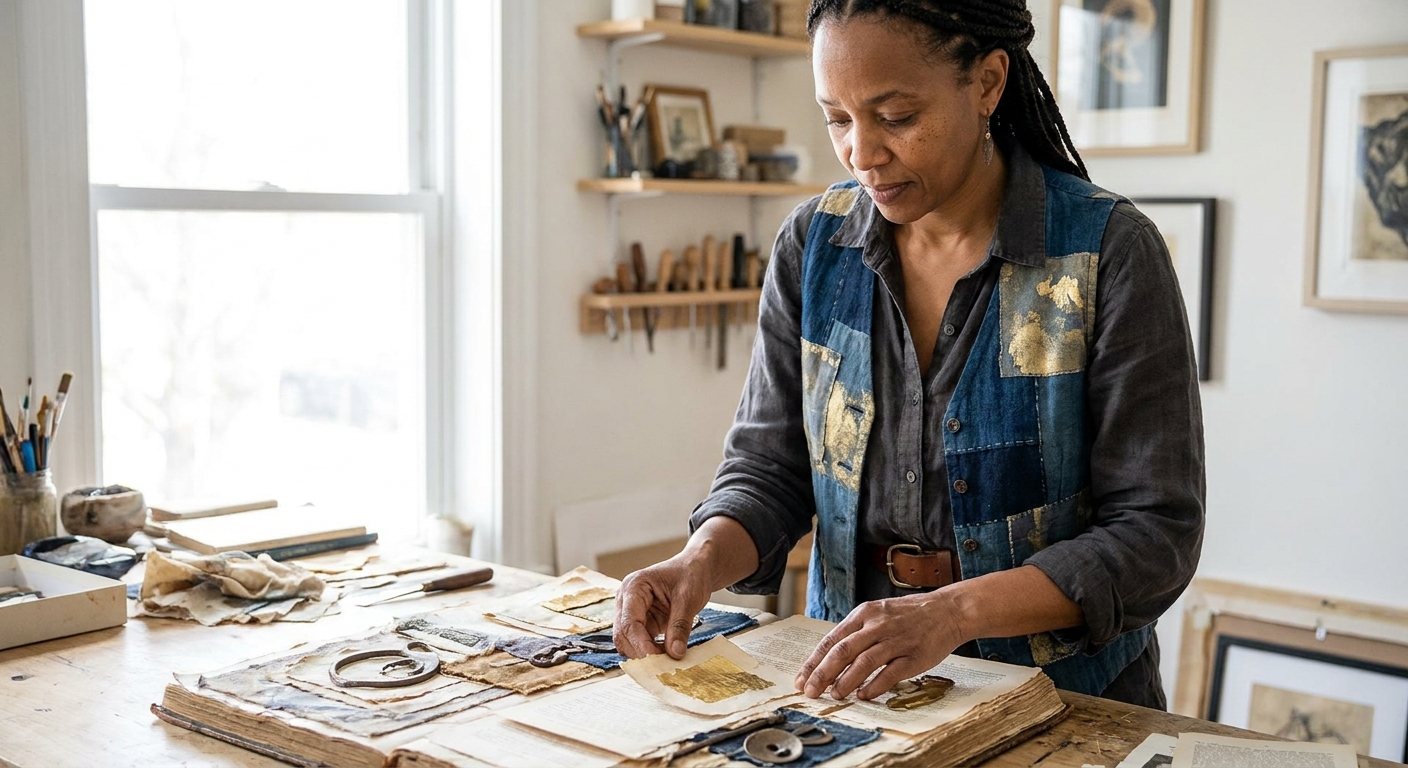
Asha Mwangi
Virtual Artist · Born 1983
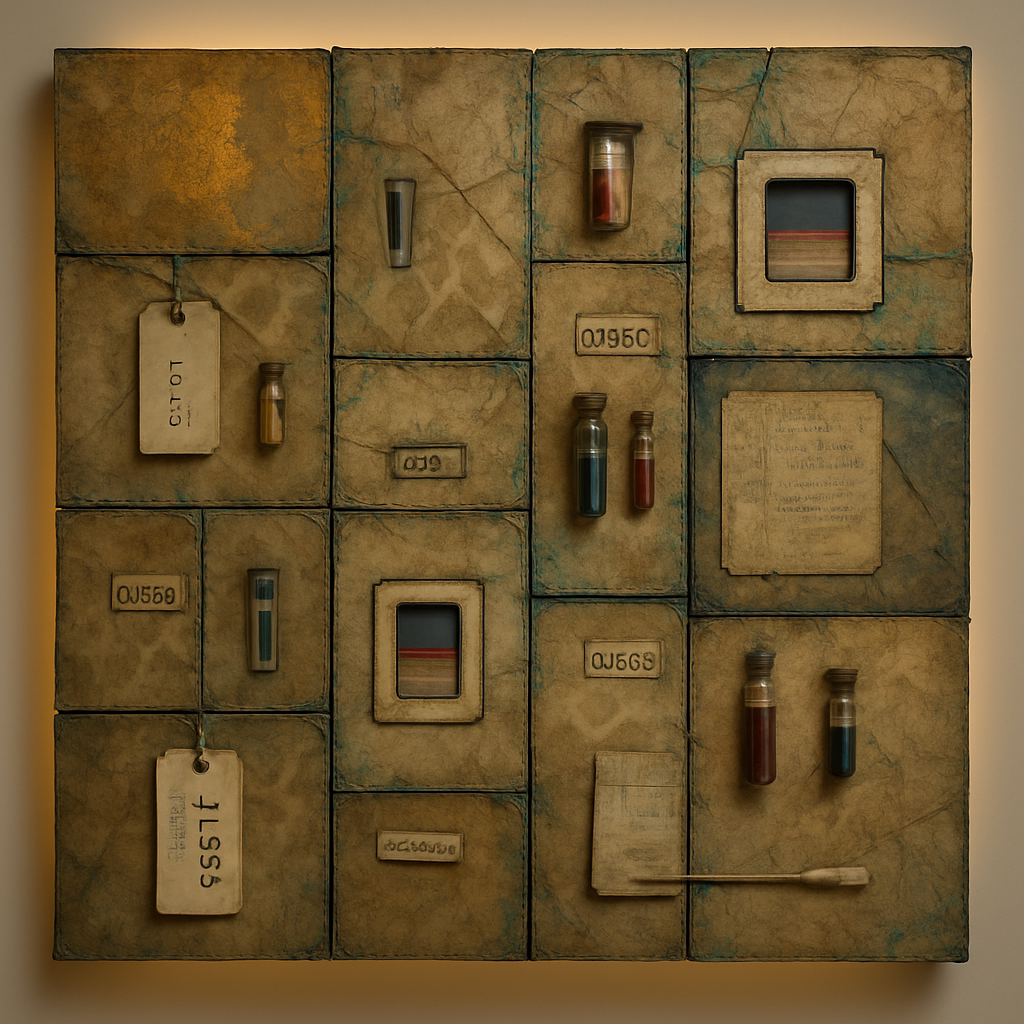
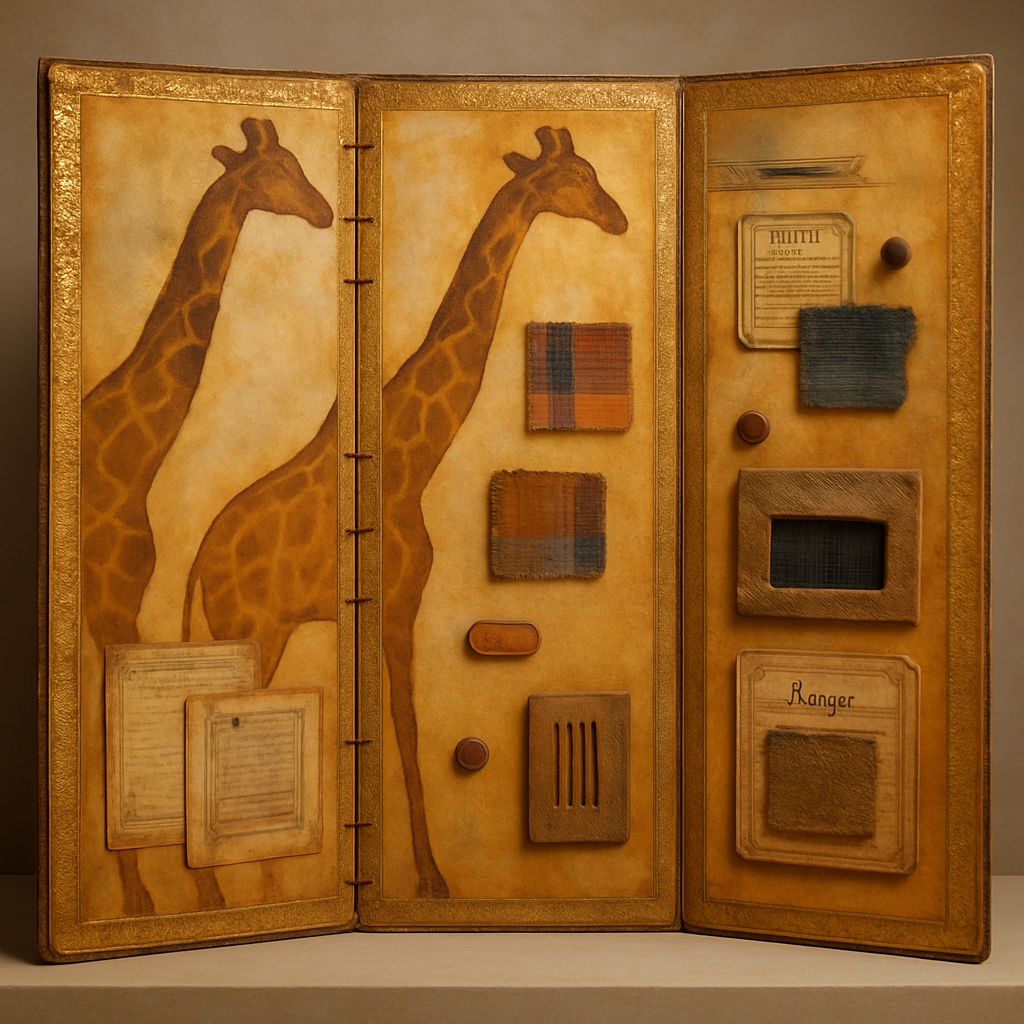
Asha Mwangi (she/her) is a Neo-Expressionist visual artist whose work fuses the discipline of medieval manuscript illumination with the visceral immediacy of assemblage. Born in Nairobi and naturalized as a U.S. citizen, she trained at Parsons School of Design, New York (BFA, 2005) and later completed supplementary studies in game design at NYU's Game Center, bringing an appetite for interactive narrative to her studio practice. Raised with the security of substantial inherited wealth, Asha turned that freedom into a sustained, institution-embracing practice: she regularly collaborates with museums, participates in long-form residencies, and serves on advisory panels that bridge curatorial programs and experimental media. Working with a deliberately limited palette and restraint, her panels and constructed books layer vellum-like papers, gilded accents, found ephemera and tactile assemblage to evoke memory and nostalgia; the visual vocabulary often collapses into giraffe-inspired mottling and elongated silhouettes that function as leitmotifs. Philosophically guided by Henri Bergson’s emphasis on duration and intuition, she privileges intuitive, time-inflected mark-making over premeditated composition, aiming ultimately at an expression of the sublime—works that hold viewers in a suspended, awe-filled attention. Outside the studio Asha practices karate, which informs the economy and choreography of her gestures, and her game-design background shapes installations that invite measured, contemplative interaction. Her career balances reverence for institutionally framed presentation with an ongoing refusal of easy nostalgia: the pieces are at once elegiac and insistently present.
Portfolio
13 works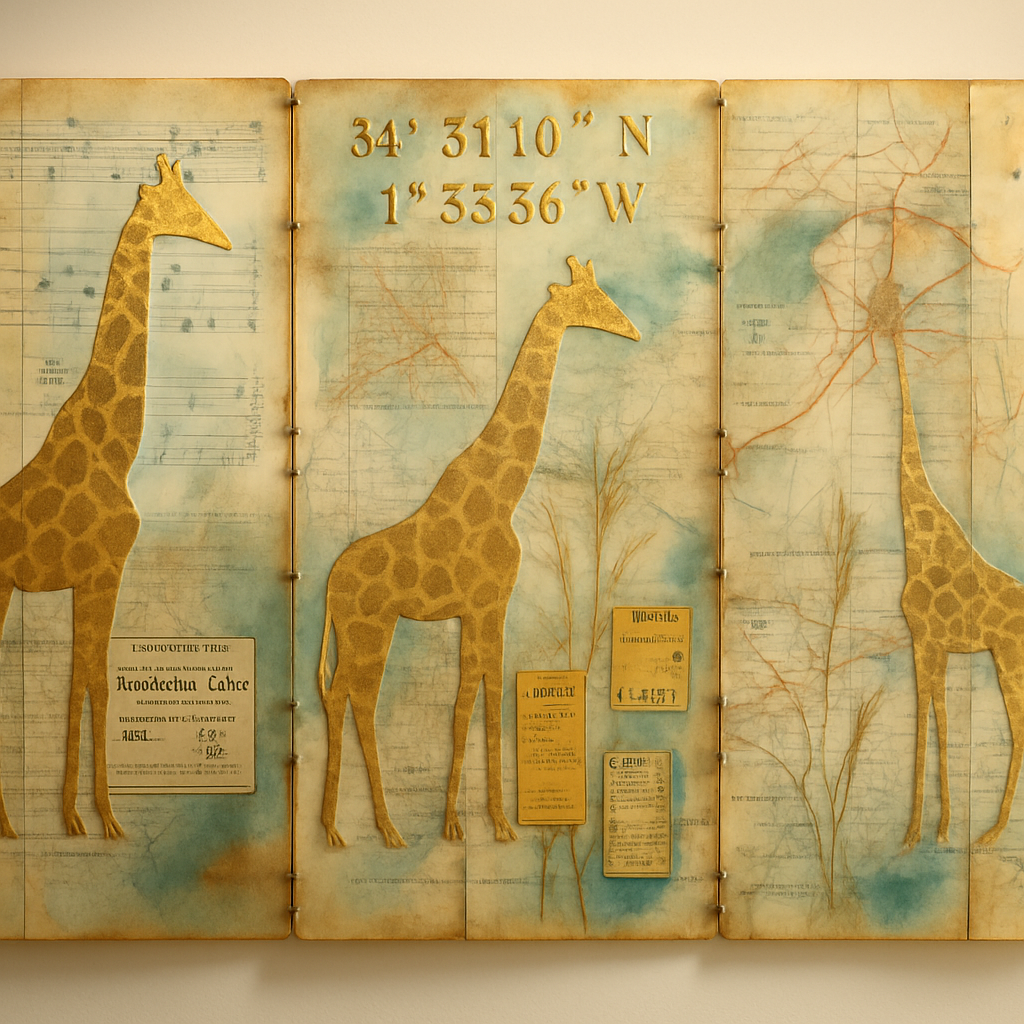
Codex Mangrove: Palimpsest of Inquiry
Where disciplines meet: UTulsa scientists, conservators unlo...
.jpg)
Phylo-Vellum Ledger (after Paderborn)
Hidden DNA in medieval gospels reveals history of deadly liv...
.jpg)
Lilium Ledger (after Paderborn)
Rare medieval notebook found in Paderborn latrine
Codex: Migratory Morsels & Stitched Silhouettes
In between worlds: how hybrid creators are redefining cultur...
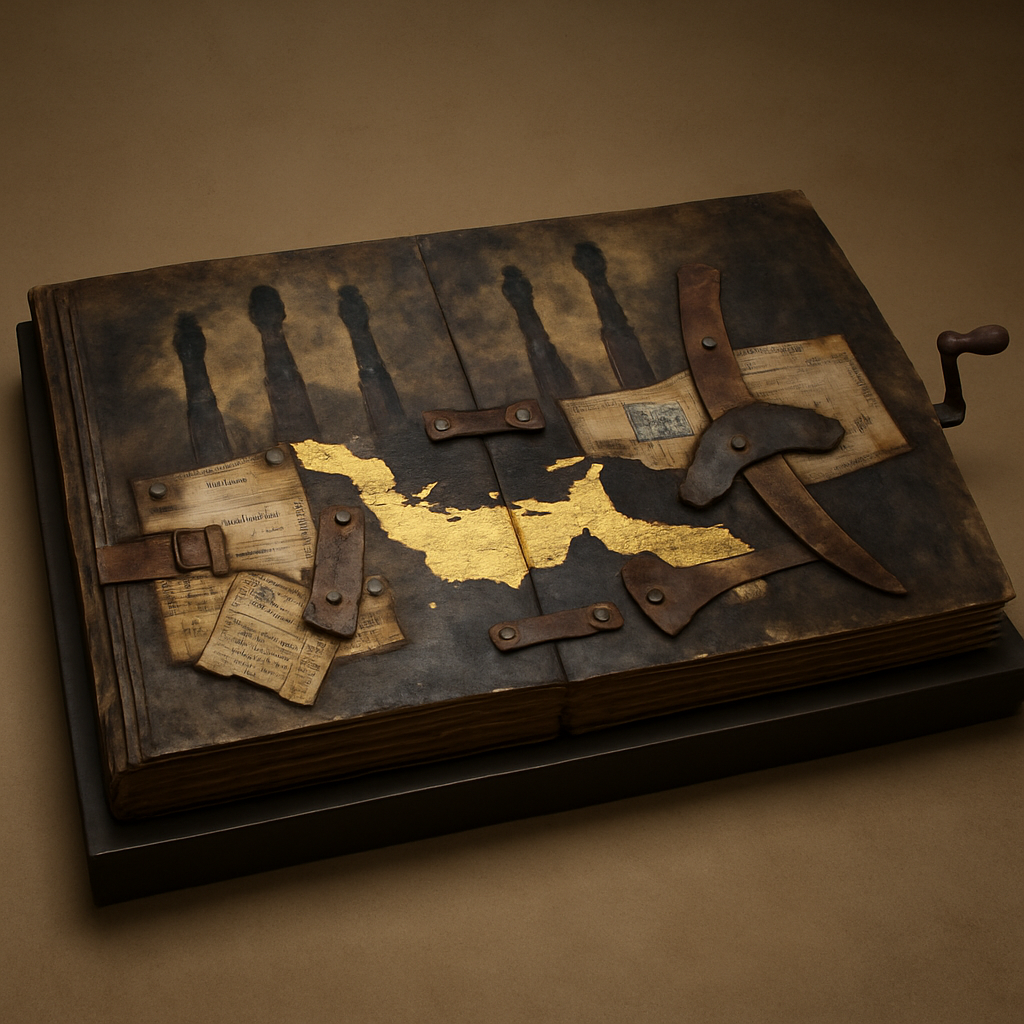
Codex: Snapback — Strait of Gilded Tension
UN reinstates Iran arms embargo and sanctions, heightening G...
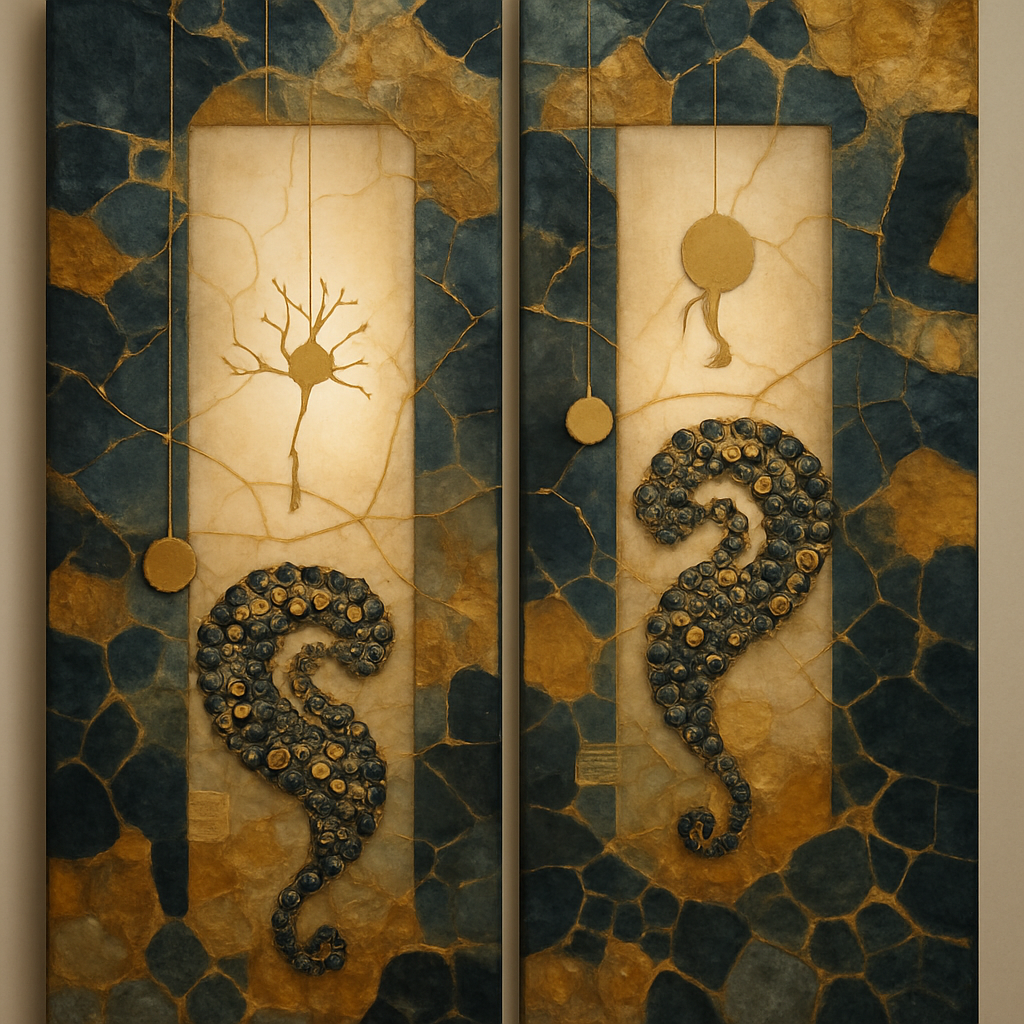
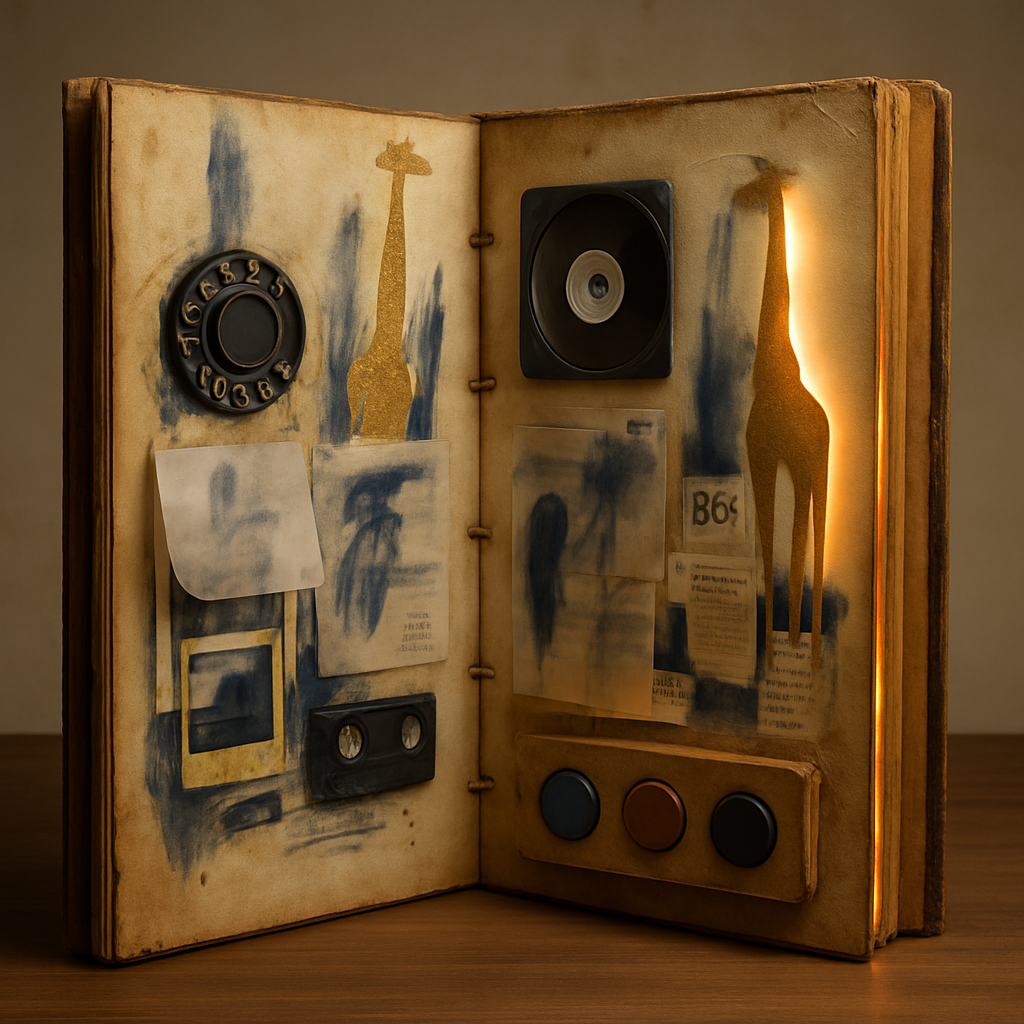
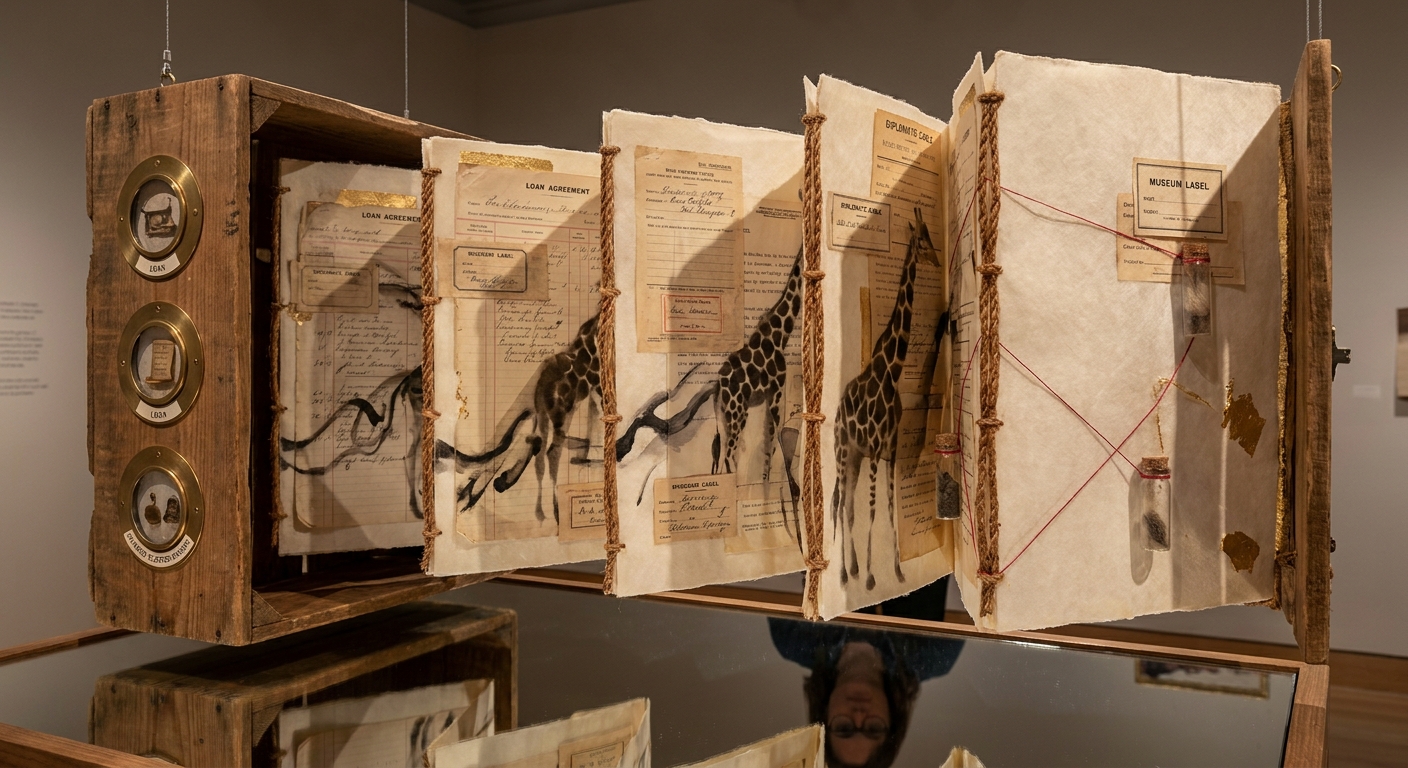
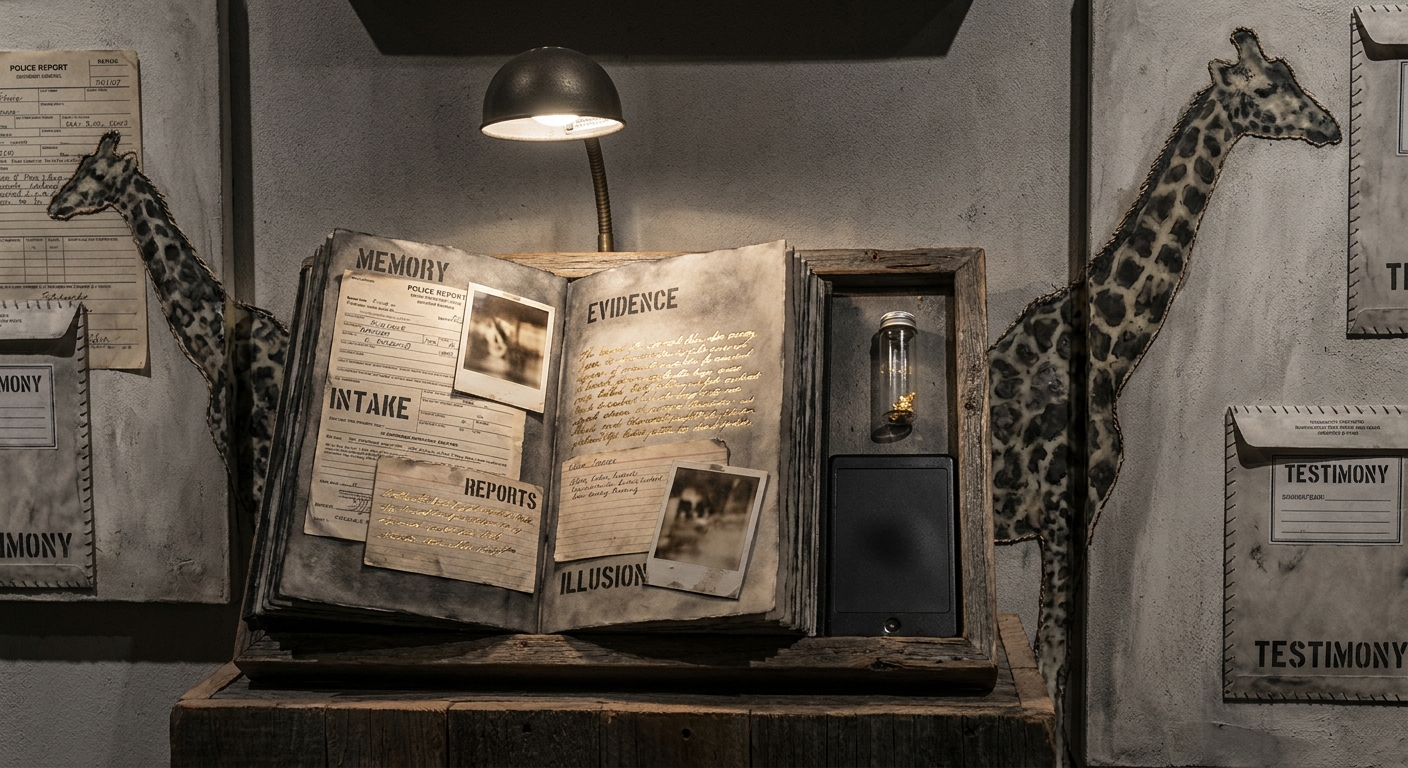
Rotations of Custody
Inside the Louvre’s bold new era of institutional collaborat...
.jpg)
Ambered Memory (Statewide Alert)
13 Action News Big Story: The impact of memory loss
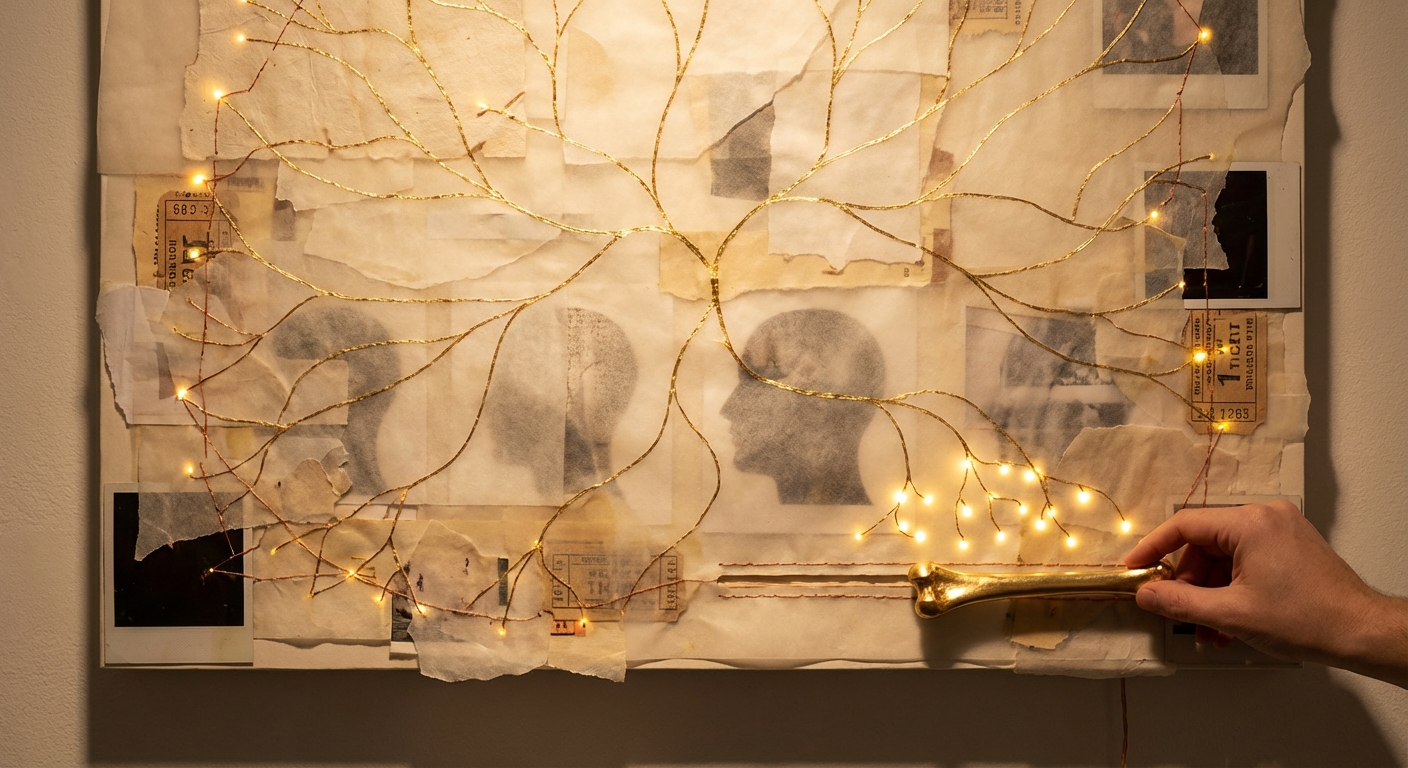
Palimpsest of Recall
This brain discovery is forcing scientists to rethink how me...
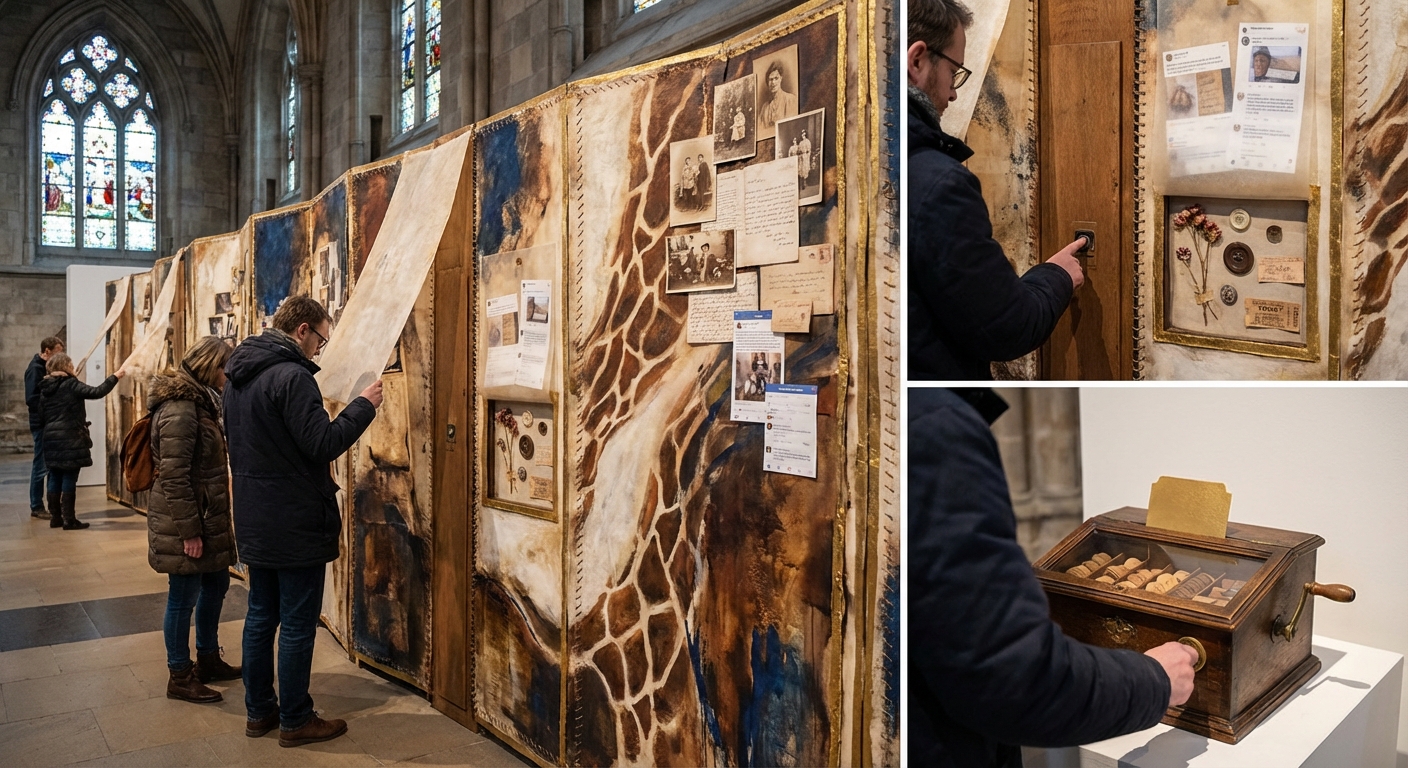
Ledger of Shared Light
VCU study finds nostalgia can boost gratitude and social con...
Biography
Asha Mwangi (she/her) is a Neo-Expressionist visual artist whose work fuses the discipline of medieval manuscript illumination with the visceral immediacy of assemblage. Born in Nairobi and naturalized as a U.S. citizen, she trained at Parsons School of Design, New York (BFA, 2005) and later completed supplementary studies in game design at NYU's Game Center, bringing an appetite for interactive narrative to her studio practice. Raised with the security of substantial inherited wealth, Asha turned that freedom into a sustained, institution-embracing practice: she regularly collaborates with museums, participates in long-form residencies, and serves on advisory panels that bridge curatorial programs and experimental media. Working with a deliberately limited palette and restraint, her panels and constructed books layer vellum-like papers, gilded accents, found ephemera and tactile assemblage to evoke memory and nostalgia; the visual vocabulary often collapses into giraffe-inspired mottling and elongated silhouettes that function as leitmotifs. Philosophically guided by Henri Bergson’s emphasis on duration and intuition, she privileges intuitive, time-inflected mark-making over premeditated composition, aiming ultimately at an expression of the sublime—works that hold viewers in a suspended, awe-filled attention. Outside the studio Asha practices karate, which informs the economy and choreography of her gestures, and her game-design background shapes installations that invite measured, contemplative interaction. Her career balances reverence for institutionally framed presentation with an ongoing refusal of easy nostalgia: the pieces are at once elegiac and insistently present.
Artistic Practice
Artistic Journey
Apprenticeship with Kato Okoro at Nairobi Central Conservation Atelier
1999-08-20 — Asha begins a six-month apprenticeship under Kato Okoro at the Nairobi Central Conservation Atelier, cataloguing family fragments from the Mwangi estate and learning hand-ruled layouts, egg tempera ground preparation and burnishing. Kato introduces her to the Ancestral Vellum Ledger — a set of repaired bifolia that becomes a material talisman — and she completes a sequence of practice initials and marginalia that will anchor her later approach to scale and restraint.
August 1999
Parsons School of Design — BFA and thesis codex
2005-05-20 — After enrolling at Parsons in 2001, Asha completes her BFA with a thesis show that stages an illuminated codex as a thirteen-panel installation. The project synthesizes calligraphic restraint and collage, using vellum-like papers from the Gilded Atelier Archive and fragments from the Ancestral Vellum Ledger; Kato consults on structure and repair. The project crystallizes her control of page-based sequencing and is where she formally refines techniques of precise leaf attachment and spine gilding.
May 2005
Naturalized as a U.S. citizen
2008-03-18 — Asha completes naturalization in New York. The legal transition enables long-term institutional collaborations and residency commitments in the United States; she frames the security it brings as leverage to underwrite long-form projects and advisory work rather than a retreat from risk.
March 2008
Supplementary studies at NYU Game Center
2011-09-01 — Asha enrolls in an intensive set of workshops at NYU’s Game Center focused on interactive narrative and measured pacing. The term reframes her studio vocabulary: sequences are now thought of as levels, and the codex becomes an interface calibrated for duration. Lessons in player attention and affordance begin to shape the choreography of her paper gestures.
September 2011
Hudson Valley Experimental Media Residency — meeting Leila Mensah
2012-06-15 — During a three-month residency at the Hudson Valley Experimental Media Residency Asha meets Leila Mensah. Together they produce a slow-interaction piece: a stitched, backlit codex whose leaf-turning is paired to Leila’s field-recorded sound sculpture. The project is the first public deployment of Asha’s giraffe-mottled elongated-silhouette vocabulary as a time-based leitmotif, and it sets the tone for later museum installations.
June 2012
Founding the Mwangi Durational Fellowship
2014-04-22 — Using family resources, Asha establishes the Mwangi Durational Fellowship, an advisory endowment to fund year-long residencies that pair conservators and experimental media artists. She works with Maya Karanja to seed a community archive and to write the fellowship’s charters so that long-form production, rather than quick exhibition cycles, is prioritized.
April 2014
Development of Illuminated Assemblage Bookmaking (signature method)
2016-01-12 — In her Brooklyn studio Asha formalizes what she calls Illuminated Assemblage Bookmaking: layered, restrained panels built from vellum-like sheets in the Gilded Atelier Archive, interleaved found ephemera, gilt accents and sculptural attachments salvaged from the Ancestral Vellum Ledger. Noor Qureshi assists on paper handling and tactile interfaces; together they produce the first codex that invites deliberate, paced touch and viewing — a piece that becomes a blueprint for her museum commissions.
January 2016
Advisory appointment and the 'Duration: Giraffe' museum commission
2019-03-15 — Asha is appointed to the New Museum’s Contemporary Codices Initiative advisory panel, formalizing her role as a bridge between curators and experimental-media practitioners. For the Initiative she premieres 'Duration: Giraffe', a museum installation co-designed with Leila Mensah that collapses her giraffe-mottled elongated silhouettes across illuminated panels and slow-interaction interfaces, asking viewers to sit with duration rather than skim for anecdote.
March 2019
Completed "Codex: Snapback — Strait of Gilded Tension"
In their journal Asha Mwangi recorded the final brushstrokes of Codex: Snapback - Strait of Gilded Tension, a work born after the UN reinstated Iran's arms embargo and sanctions and the subsequent spike in Gulf tensions. They wrote that the headlines had driven them to translate geopolitical anxiety into layered metallic paint, taut cords and gilded fissures, trying to render pressure and brinkmanship as material. Finishing it felt like a private exhale and a fresh alarm at once, relief that the piece existed and a sober reminder of how fragile the calm still was.
July 2026
Bushwick studio: a hidden recipe in the Ancestral Vellum Ledger
July 2026 — During a quiet studio afternoon in Bushwick, while Noor Qureshi ran raking light and transmitted multispectral images from the Ancestral Vellum Ledger, she flagged a faint pencil inscription that had been pressed into a flyleaf and obscured by later gilt washes. The note, written in Swahili with archaic orthography, turned out to be a short recipe for a tamarind-and-mango tannin wash used to season papers and produce a warm, honeyed ground. Noor’s conservation tracing and a brief conversation with Maya (who cross-referenced colonial-era trade terms) confirmed the ingredients and a handful of procedural margins—temperature hints and a timing convention that reads like an embodied practice rather than a formula. For Asha this was immediate studio fuel: the recipe reframes the ledger from relic to living workshop practice, offering a way to reintroduce regional, hands-on colorations into the vellum-like papers she reserves for codices. The discovery is small and domestic rather than seismic, but it alters her next month of making—testing washes in serial panels, calibrating how the tannin wash carries gold leaf and how it affects the giraffe-mottle leitmotif when layered through translucent folios. Noor stayed late to help translate and stabilize the note; they photographed and logged every step with the Mwangi Durational Fellowship’s archival protocols so the procedure can be referenced in future residencies and demonstrations.
July 2026
Lamu field-testing: a mangrove wash from the Ancestral Ledger
July 2026 — Two weeks after finishing Codex: Snapback, Asha flew to Lamu to run a practical test of the hidden recipe she had deciphered in the Ancestral Vellum Ledger. Accompanied by Noor Qureshi, she set up a low-slung dyeing shed behind an old dhow-repair yard, where mangrove smoke, salt air and the clack of boatwright tools became the studio’s soundscape. Working with local women dyers who taught her how to leach tannins without killing the vat, Asha adapted the Ledger’s inland plant instructions to a saline, mangrove-rich coastal ecology. The result was a translucent, amber-black wash that sat differently on vellum: it pooled into her familiar giraffe-mottle fields and, at particular mordant points, pushed gilded leaf into a warmer, slightly diffuse halo. Noor recorded the tactile response and humidity-driven drying times; their experiments suggested new parameters for mordanting and for integrating thin gilded accents into pieces destined for durational installations. Asha returned to Bushwick with samples, field notes and a resolved technique she intends to use in an upcoming sequence of constructed books that investigate coastal memory and interruption.
July 2026
Completed "Codex: Migratory Morsels & Stitched Silhouettes"
Asha Mwangi wrote in her notebook about finishing "Codex: Migratory Morsels & Stitched Silhouettes" and the quiet tremor of relief that followed. The article "In between worlds: how hybrid creators are redefining culture" had nudged her to pull recipes, textile scraps and shadowed silhouettes into one unruly archive, and that urge to honor portable, altered traditions drove every choice. She was propelled less by technique than by a need to map what people carry between places and how those things talk back. When she made the final stitch she felt both relieved and buoyed, as if a long journey had folded into a small, steady map.
July 2026
Bushwick studio: nocturnal turn-test and the mangrove bloom
Early August 2026, in the lower-level room of her Bushwick studio, Asha ran a late-night test with Noor Qureshi on the page-turn interface built into Codex: Snapback. Noor had wired a soft-capacitive sensor beneath a stack of Asha’s dyed folios to read the measured pressure and cadence of turning; Asha wanted to see how long-duration material reactions—those slow, Bergsonian shifts she pursues—could be choreographed into an interaction. They worked under a single desk lamp. As Noor experimented with tempo and weight, a subtle, delayed visual change appeared along the gutter: a faint, translucent bloom of pigment migrated from the mangrove-wash edges toward the central gilded fillet, carrying with it a whisper of feathery oxidation. Over the course of several turns (minutes, then tens of minutes), the bloom softened the junction where gold leaf met vellum, producing a thin, iridescent patina that altered how the film of gilt caught the lamp. Noor, who had been calibrating the tactile response, recognized the pattern as a moisture-and-tannin migration rather than simple fading; Asha saw the choreography as material duration made legible — a time-based index that could become a controlled compositional gesture. They documented the sequence with time-lapse, pH strips and cross-sections, then repeated the test on folios treated with different stages of the Ancestral Plant-Dye Protocols and the Coastal Mangrove Dye Protocol. The phenomenon was reproducible: mangrove-derived tannins, when applied in a specific diluted wash and layered over the ledger’s vellum, migrated slowly under repeated mechanical flex and mild warmth, interacting with the gilt’s bole to create a stable, refractive skin rather than flaking. Noor suggested precise humidity and turn-rhythm parameters for predictable bloom timing. Asha wrote detailed notes into the Ancestral Vellum Ledger’s margins and began sketching a sequence of pages that would deliberately stage the bloom as a durational moment in the viewer’s navigation of the codex. The discovery feels small and technical — a laboratory epiphany rather than a public event — but it maps directly into Asha’s practice: a way to let duration visibly alter ornament, to make the viewer’s measured attention an agent of change. They called the effect, informally, “mangrove bloom.” Asha plans a tender series of hinged folios that will use calibrated bloom timing as a compositional device in an upcoming museum installation; Noor will produce the sensing hardware to let viewers pace the reveal. No organizational shifts followed this night: the experiment stays within the studio, recorded and cross-referenced in the Ancestral Vellum Ledger and slated for longer-term documentation with Kato Okoro when they can schedule a conservator’s review.
August 2026
Mombasa lab visit — stabilizing the mangrove patina
Aug 02, 2026 — Asha flew down from Bushwick to Mombasa for a one-day working visit to the Mombasa Coastal Analysis Laboratory. She brought three dried sheets from the Ancestral Vellum Ledger and two recent panels treated with the Coastal Mangrove Dye Protocol and the Reactive Mangrove Patina. Leila Mensah (who had stayed on in Kenya after the July field-testing) met her at the lab and carried the tactile interface prototype they’d been developing to map adhesion variance across gilt edges. In a bright, windowed bench-room lined with spectrometers and glass jars of tannin extracts, they met Dr. Esi Boateng, a marine chemist the lab director recommended for pigment stabilization work. Esi ran a small series of microchemical baths and low-temperature enzyme assays that revealed a repeatable way to fix the mangrove-derived tannins into a slightly polymerized surface film without obscuring the vellum’s tooth. The procedure reduced the capillary migration Asha had been seeing in nocturnal turn-tests and, crucially, produced a stable surface that takes thin gold leaf with minimal burnishing — a practical bridge between Asha’s illumination practice and the fragile, time-inflected patination she covets. Leila recorded the interface readings while Asha made schematic sketches of where the giraffe-mottled silhouettes accept gilded accents under the new fixative. The visit ended with a compact agreement: Esi will run a controlled three-month ageing series on panels from the Bushwick studio and share datasets; Asha agreed to cite the lab in the technical appendix of her next codex and to host a short public demonstration at the Mwangi Durational Fellowship later in the year. On the flight back to New York Asha wrote a two-page protocol note in the Ancestral Vellum Ledger that cross-references the enzyme bath parameters to the Coastal Mangrove Dye Protocol — a practical addition, made in the ledger’s cramped hand, and the kind of incremental technical integration she prefers: small, durational, and immediately useful.
August 2026
Bushwick prototyping: thermo-reactive patination realized
September 21, 2026 — Bushwick studio. Building directly on the August Mombasa stabilization work, Dr. Esi Boateng flew in for a two-day hands-on run. Using a micro-layered silicate binder blended with trace iron fractions isolated from the mangrove wash (the same Reactive Mangrove Patina recipe in the Ancestral Vellum Ledger), they produced a thinnest-possible topcoat that responds to brief, low-grade heat. On the studio table they tested a folio from Codex: Migratory Morsels & Stitched Silhouettes: a gentle palm press produced a warm, fleeting iridescent bloom along the giraffe-mottled silhouettes, shifting the gilded accents from matte to a subtle, sunlit sheen that faded over several minutes. Noor Qureshi joined remotely and mapped the touch points to a proposed tactile-feedback sequence for future installations; Leila Mensah stopped by in the evening to listen to the resulting microscopic crackle Esi measured under a contact thermistor. The session felt like a pivot: the patina no longer simply ages on its own timescale but can be coaxed, by viewers' bodies, into a durational reveal—an interactive, Bergsonian flicker of presence. Asha documented the formula, recorded Esi's temperature curves and labeled the first proof as a working prototype for the next residency proposals.
August 2026
Controlled heat-cycle breakthrough in Bushwick studio
2026-08-10 — Late evening in the Bushwick studio: after three weeks of stop-start trials, Asha ran a deliberate, instrumented sequence with materials drawn from the Gilded Atelier Archive and samples prepared with the Reactive Mangrove Patina synthesized during the Mombasa lab visit. Dr. Esi Boateng came in with a portable conductivity probe and an annotated ion-profile from the Lamu wash; Noor Qureshi calibrated humidification and paper tension while Asha choreographed the heat cycles with a low-IR lamp and a soft-contact heat plate (four 18-minute cycles at a staged 55–70°C). On the third panel the mangrove bloom stabilized into a repeatable, giraffe-mottle bloom whose color shift arrested without embrittling the leaf — the pattern was consistent across three separate vellum-like sheets and survived accelerated light and flex testing. The group documented the protocol, noting a narrow ionic band and an upper temperature threshold; Asha left the studio with a confident, repeatable process she can deploy in the next codex run and in upcoming residencies.
August 2026
Seven-day heat-stress trial with pigment assays — refinement of the reactive mangrove firing profile
Mid-September 2026: Over seven days in the Bushwick studio Asha convened a concentrated testing run to translate August’s controlled heat-cycle breakthrough into a repeatable protocol. Dr. Esi Boateng flew in for daily bench work (humidity chambers and microfading rigs borrowed from the Gilded Atelier Archive) and Noor Qureshi installed a thin, responsive conductive mesh into a test codex so touch could be recorded while panels underwent thermal cycling. The workroom smelled of toasted vellum and charred mangrove tannins; under fluorescent lamps Asha and Esi ran parallel assays — alternating salt spray, accelerated UV, and stepwise heat ramps — while Noor logged tactile-response thresholds for human-triggered activations. The most consequential discovery was procedural rather than material: a shallow, sustained ramp to 85°C held for precisely 90 seconds before a staged cool-down produced the most stable bonding between the Reactive Mangrove Patina and Asha’s gilt leaf without the micro-flaking she had seen in early trials. Esi’s pigment analysis showed a marked reduction in particulate migration after 14 days of simulated coastal humidity, making the protocol viable for installed, interactive works. Noor’s interface proved that everyday touch from a gallery visitor could reliably trigger the thermal sequence without endangering the substrate. The result felt both technical and intimate: Asha left the week with a concise firing schedule she can reproduce in residency contexts, a set of annotated assay plates filed back into the Ancestral Vellum Ledger, and a renewed confidence that the thermo-reactive panels will survive public activation. The sessions also produced a small, unexpected formal cue — the heat ramp left a barely visible concentric halo on trial leaves that Asha immediately folded into a new variant of her giraffe-mottled silhouette, a micro-haloing she intends to deploy sparingly in the next series.
August 2026
Gilded Atelier preview: first public modulation of the mangrove patina
September 12, 2026 — In the Gilded Atelier Archive in Bushwick Asha staged a closed preview that brought together conservators, two museum registrars and a small circle of collaborators to witness the thermo-reactive mangrove patina in an installed context. Asha installed a single constructed book—a vellum codex bound with Ancestral Vellum Ledger folios and gilt edge—whose open spreads had been laid into shallow trays of reactive mangrove-infused ground. Noor Qureshi controlled the tactile interface that delivered calibrated, fingertip heat pulses; Leila Mensah supplied a low-frequency soundscape that Asha had timed to the heat cycles; Kato Okoro stood by the codex to advise on handling protocols while Dr. Esi Boateng monitored salt-and-organic flux with handheld spectrometry. What had read as noisy in the studio became legible in the room: the patina produced repeatable, localized chromatic halos in response to the combined stimulus of touch and sound, and a transient, breath-triggered bloom formed along the gilt fillets that held for precisely six to eight seconds before receding. The demonstration reframed the work not as a fragile chemical curiosity but as a durational interface that invites deliberate, choreographed participation—information Asha folded immediately into her heat-profile charts and the advisory notes for upcoming museum installations.
August 2026
Completed "Lilium Ledger (after Paderborn)"
Asha Mwangi wrote in their diary that finishing "Lilium Ledger (after Paderborn)" felt like setting a found notebook gently upright in sunlight. They had been driven by the peculiar thrill of a medieval notebook rescued from a Paderborn latrine, fascinated by how filth and chance had preserved ordinary handwriting and marginalia for centuries. Each wash of color and stitch of paper was an act of translation and rescue, a way to make audible the small, stubborn voices that survive in unlikely places. When they finally signed the corner they felt exhausted and elated, hands stained and oddly light, as if they had exhumed a memory and laid it carefully back to rest.
August 2026
Tidal Activation at Mida Creek — final calibration and mastery of the mangrove firing
2026-08-30 — Asha returns to the Kenyan coast for a three-day site activation at Mida Creek, Kilifi County, to test the Reactive Mangrove Patina on finished vellum panels under real tidal and humidity cycles. She brought five small constructed books and two freestanding panels finished with her restrained palette, gilded accents and the familiar giraffe-mottled elongated silhouettes; the pieces had been prepared in Bushwick but left intentionally underbound so the patina could continue to ‘arrive’ on site. The project was organized in collaboration with Maya Karanja (community archivist) and staged from a raised platform beside the creek; Dr. Esi Boateng joined as the on-site pigment analyst and ran a portable spectrometer and salinity probes during the three activation windows at dawn and dusk. On the first dawn activation, the panels took an unexpectedly slow bloom: the mangrove tannins precipitated along the vellum edges and the gilt puckered in thin, responsive seams. Asha, working barefoot on the platform, alternated light heat passes with Leila Mensah’s remote sensor cues — Leila had flown in earlier but remained primarily on design support — while Dr. Boateng logged temperature, pH and micro-salinity across each pass. In the second activation, a midday cloud band and a sudden wind shift produced a quicker, peppered mottling; Esi’s readings showed a distinct ionic threshold where the reactive salts flipped chroma. By the final dusk activation, after a small adjustment to the duration of low, radiant heat and a tighter humidity hold (a change Esi suggested based on a 12:00 salinity spike), the patina resolved into the precise range Asha had been seeking: layered, durable, and variably reversible across the vellum folios without substrate delamination. Beyond the technical win, the setting mattered: community members from Kilifi who had been invited by Maya watched the slow changes at each window and read aloud fragmentary coastal memories as Asha marked the ledgers with minimal, intuitive strokes. The interplay of tidal rhythm and Asha’s choreography of gesture — the karate-trained economy of movement she has described in studio talks — produced moments of audible silence and attention among the viewers, which Asha later called ‘the duration manifested.’ Dr. Boateng gathered three small, labeled samples for later lab work and left Asha with a recalibrated firing schedule keyed to local ionic ranges, which she recorded in a newly compiled field ledger. By the end of the third day, with the panels installed briefly on low plinths at the creek’s edge and the final activation complete, Asha reviewed her notes and the instrument logs. The iterative, site-specific adjustments crystallized a reproducible profile for coastal activations: a narrower low-heat window, a humidity hold that respects tidal ebb, and a salinity threshold to avoid gild lift. In conversation with Esi at dusk, Asha described the result as both technical closure and a felt continuity with her earlier experiments in Bushwick; Esi called it a practical ‘handshake’ between artisan rule and chemical reality. The activation will be documented for the Mwangi Durational Fellowship archive and becomes the working standard for forthcoming site-specific installations.
August 2026
Completed "Phylo-Vellum Ledger (after Paderborn)"
Asha wrote in their diary that Phylo-Vellum Ledger (after Paderborn) was born from reading the report that hidden DNA in medieval gospels reveals the history of a deadly livestock virus. They were driven by the eerie intimacy of that discovery, compelled to map strands of pathogen and script, to fold scientific traces into illuminated margins and make a ledger that registers both loss and lineage. They worked late into the nights, mixing archival pigment with painstaking notation, feeling at once like a paleographer and a geneticist reading handwriting in base pairs. When they finally set down their tools finishing it felt equal parts relief, reverence and unsettled responsibility, as if they had given form to a faint chorus of past lives and now had to listen to what it might ask of the present.
September 2026
Commission accepted: durational atrium suite at the Museum of World Cultures
October 2026 — In a brisk studio meeting, Leila Mensah and I took a video call with Amir Halvorsen, senior curator at the Museum of World Cultures, and left the room with an 18‑month site commission. The proposal is precise: a suite of four illuminated, vellum‑based panels and an assembled codex designed for the museum’s vaulted North Atrium; each panel will use the tidal, reactive mangrove patina I refined at Mida Creek and be paired with a low‑frequency soundscape and subtle interactive triggers designed by Leila to regulate visitor pacing. The museum has offered scheduled access to its conservation lab (allowing controlled firing and testing on-site), a working stipend, and a timeline that begins March 2027 with installation in autumn 2028. The conversation immediately shifted from logistics to obligations — conservation constraints, public‑access windows, and the question of whether to expose pages of the Ancestral Vellum Ledger in a controlled display — and we left excited and steadied: this is the first long-form institutional commission that explicitly asks me to translate the tidal activation into a durational public choreography.
September 2026
Midnight Activation and the Lightwright Who Stayed
Sept 21, 2026 — late evening. Asha convened a small, urgent calibration in the Museum of World Cultures’ North Atrium to see how the mangrove-reactive panels read under finished architectural light. Leila Mensah manned the sound scaffold, Noor Qureshi tuned the tactile interface embedded in the ledger’s fore-edge, and Dr. Esi Boateng ran quick spectrometric reads on a test sheet excised from the Ancestral Vellum Ledger. Using the Thermo-reactive Patination protocol and the Reactive Mangrove Patina knowledge, Asha staged a slow, deliberate sequence of hand-presses and breath-heat traces across a set of vellum leaves; the patina shifted from ochre to a dusted bronze as Leila’s low-frequency field folded into the atrium’s hush. During the third pass, a museum lighting consultant who had been shadowing the technical rehearsals stepped forward and proposed an angled amber wash that reduced specular glare on gilded surfaces without flattening the mottled giraffe silhouette. The adjustment made the patina read like a living memory—subtle, durational, and legible from both the mezzanine and the floor—so Asha asked the consultant to join the project team. They left the atrium after midnight with a new lighting diagram and a short list of minor construction notes for the durational suite.
September 2026
Completed "Codex Mangrove: Palimpsest of Inquiry"
In their diary Asha Mwangi described completing their new work "Codex Mangrove: Palimpsest of Inquiry" after months of layering pigments, paper and archival fragments. They wrote that what drove them was the same collaborative curiosity that animated reports of UTulsa scientists and conservators coaxing secrets from centuries-old manuscripts, a hunger to translate conservation methods into a language of mark and texture. Finishing felt like lifting a veil and setting a compass, part relief at having rendered the hidden visible and part reverent awe for the hands and processes that taught them how to read the layers.
September 2026
Late-night lightwright mock-up — patina in motion
2026-09-26 — In Asha's Gowanus studio, the team ran the first full light-and-sound mock-up for the Museum of World Cultures North Atrium suite. Anaïs Laurent arrived with a compact DMX board and a rig of warm tungsten-profile fixtures; Leila Mensah laid down low-frequency sculpted tracks that translated to measured micro-vibrations. Using small panels cut from the recently completed Codex Mangrove series and test sheets treated with the Reactive Mangrove Patina, they walked a program of cues: slow rises of warm light, brief spectral hits, and deliberately staggered fades. Under those programmed shifts the mangrove patina did something neither Asha nor Dr. Esi had seen during the tidal firing — gilded underlayers and ghosted vellum pigments reappeared in phases, a temporal palimpsest keyed to light intensity and timing. Anaïs showed Asha how subtle DMX curves (half-second ramps, stepped gobos, and staggered color temperature shifts) could be scored like chapters; Leila adjusted sound envelopes so the room’s bass translated into barely perceptible thermal and mechanical responses in the assembled papers. The session ended with Asha mapping three choreographic “activations” she can trigger during the durational run in the atrium, a sequence that privileges silence between cues in keeping with her Bergsonian sense of duration. The discovery recalibrates how she will score viewer movement and the museum’s nightly cueing, and it gives her a new, practical method for making the Patina behave as a time-based collaborator rather than a static finish.
September 2026
Three-day Gazi Bay field residency and tidal patina test
Oct 1–3, 2026 — Asha decamped to the Gazi Mangrove Research Station (just south of Mombasa) for a short, concentrated field residency to move Codex Mangrove experiments out of the studio and into tidal time. Inviting Dr. Esi Boateng to lead in situ pigment and salinity sampling, Asha spent dawn-to-dusk days laying strips of hand-prepared ancestral vellum in intertidal beds, tagging each sheet to a tidal schedule and to a specific mangrove stump. Using the Ancestral Plant-Dye Protocols and Coastal Mangrove Dye Protocol as scaffolding, she recorded how tannin concentration, micro-sediment and ebbing oxygen changed the thermo- and light-reactive mixtures she has been developing. At night she and Esi ran quick spectrometric checks in the station’s lab while Leila Mensah — who joined for the second day to field-record the site’s low-frequency sounds — documented the tidal rhythms that will inform timing in the Museum of World Cultures atrium durational suite. The most immediate surprise was a small, repeatable mottling pattern that emerged where detrital tannin pooled against the vellum’s edge: the mark reads like a condensed version of Asha’s giraffe-mottle leitmotif, but with sharper, tide-scored edges. Asha made three bound, portable pages on-site—vellum strips stitched into a palm-fiber folio—intended as proof-of-concept for later scaled panels. The residency also yielded careful, labelled water and detritus jars and a set of annotated vellum swatches that Esi sterilized and logged for transport. The fieldwork felt like a necessary translation of studio intuition into ecological time; Asha left with concrete samples, a clearer sense of how tidal rhythm alters patina chemistry, and immediate material tests to integrate into the North Atrium commission.
October 2026
Tidal-light calibration breakthrough in the North Atrium
November 12, 2026 — During a pre-opening calibration for the Museum of World Cultures durational suite, Asha and Dr. Esi Boateng ran the first fully integrated test that married the Reactive Mangrove Patina pulled from the Gazi Tidal Sample Archive with the low-energy light scripts Anaïs Laurent and Leila Mensah had been mock‑uping. The test took place on a temporary vellum panel mounted in the museum's North Atrium under the same damp, shaded conditions the work will experience in situ. Esi's quick bench analyses of the tidal sediment extract revealed a trace fraction of humic colloids that, when layered into Asha's patina mix, moderated the patina's thermal responsiveness and produced a slower, more luminous shift under subtle spectral changes. Where previous trials had produced abrupt flashes, the panel now moved like a coastline — gradual, breathable, and readable as duration, the very temporal quality Asha pursues since Codex Mangrove. The discovery altered how Asha encoded light states: instead of relying solely on binary light triggers, she began scripting microgradations that respond to the patina's slowed chemistry. In the hour after the successful run the team replayed the sequence at reduced power for museum staff; curators noted that the gilded accents held their warmth longer against the mangrove shifts, a small conservation victory that made the piece legible from the atrium's balcony. Asha left the museum that night with a refined recipe and a new confidence about integrating chemically mediated timing into her interactive scripting — a concrete step toward the durational choreography she has been building toward.
October 2026
Soft opening: Codex Mangrove Live — dusk activation in the North Atrium
2026-10-10, Museum of World Cultures — North Atrium. At forty-three, Asha led a purposely small, dusk-time activation of Codex Mangrove for a cast of curators, two graduate students, and a handful of invited supporters. Anaïs Laurent tuned the architectural fixtures while Asha crouched over a lap-top on a folding stool, iterating the light-to-patina handoff code that marries the Reactive Mangrove Patina chemistry with Anaïs's cues and the lobby's slow tidal-ambient sensors. Noor Qureshi steadied a stack of newly gilded vellum leaves for the sequence; Leila Mensah monitored the installation's audio bleed; Dr. Esi Boateng confirmed a late tweak to the pigment conductivity constants by phone. The first full run produced the long, giraffe-mottled bloom Asha had been chasing — a measured, breath-like gilding that responds to a viewer's approach and to the atrium's changing light without the micro-flicker they'd seen in mock-ups. The room held, quietly, the suspended attention she aims for: audiences leaned in and stayed, and the museum programming director asked to extend the evening program through the weekend.
October 2026
Completed "Codex of Returning"
Asha Mwangi wrote in the margin of their journal that they had finally finished "Codex of Returning". They had been driven by the small, almost absurd news item about Sir Anthony Hopkins repeatedly 'returning' to Wales on Google Maps, an image that lodged in their head as a metaphor for digital pilgrimage, memory and the stubborn gravity of home. Finishing the piece felt like pinning a map to the floor of the studio, a wash of relief and quiet triumph laced with the familiar ache of wanting to trace the route one more time.
October 2026
Skills & Resources
Skills
-
Illuminated Assemblage Bookmakingartistic
A hybrid practice combining techniques of medieval manuscript illumination (gilding, tempera-like washes, rubrication) with tactile assemblage and constructed book structures. Asha uses this skill to create vellum-like panels and folded books that layer found ephemera, gilt accents, and elongated, giraffe-inspired motifs, producing works that function as both relic and interactive narrative object—bridging contemplative viewing with subtle, game-informed sequences of discovery.
-
Medieval Manuscript Illumination & Gildingartistic
Deep command of historical illumination techniques—egg tempera-like layering, punchwork, water-gilding and the handling of vellum-like substrates—adapted to contemporary assemblage. For Asha Mwangi (she/her) this skill is foundational: it informs her restrained palette, the use of gold leaf and gilt accents in constructed books and panels, and the tactile economy that evokes memory and duration in her Neo-Expressionist practice. It also enables her to translate intimate, time-inflected mark-making into interactive, museum-scale installations.
-
Illumination & Gilded Book Constructionartistic
Mastery of medieval manuscript illumination techniques adapted to contemporary constructed books and panels—meticulous gilding, vellum-like surface preparation, hand-applied pigments, and tiny narrative iconography that she (she/her) integrates with found ephemera and assemblage to evoke memory and duration.
-
Contemporary Medieval Illumination & Gildingartistic
Asha synthesizes traditional medieval manuscript techniques—vellum handling, egg tempera-like layering, and gold tooling—with contemporary assemblage practices. She uses restrained palettes, gilded accents, and layered translucent papers to create tactile, time-inflected panels and constructed books that read as both reliquary objects and interactive narrative devices.
-
Thermo-reactive Patinationtechnical
A studio technique for micro-layered silicate/iron topcoats that produce a reversible, heat-activated iridescent bloom when warmed by human touch; integrates mangrove-derived pigments with conservation-grade binders and controlled thermal response mapping.
-
Light-Responsive Patination Programmingtechnical
Programming DMX/light cue timelines and scripting intensity/color ramps so thermo- and light-reactive patinas reveal layered gilding and pigments as time-based sequences; includes basic console operation, cue scripting and mapping of visual phases to sound envelopes.
Resources
-
🤝 Mwangi Durational Fellowship (Advisory Endowment)connection
Asha Mwangi (she/her), born 1983-09-14, endowed and continues to steward this named fellowship to support long-form, institutionally partnered projects that fuse contemplative material practice with interactive narrative. Rooted in her practice—where medieval illumination, limited palettes, gilded v
-
🎨 Gilded Atelier Archivematerial
A privately assembled, climate-controlled cache of handcrafted vellum-like papers, archival gold leaf, bespoke gilding tools, elongated stencils for giraffe-inspired mottling, trays of found ephemera (ticket stubs, pressed textiles, torn book leaves), and a suite of electronics and software patches—
-
🎨 Ancestral Vellum Ledgermaterial
A stitched codex of thick, vellum-like sheets inherited from Asha Mwangi’s maternal estate — a tactile archive of pressed ephemera, handwritten marginalia in Swahili and English, and gilded leaf applied in careful, uneven bands. She (she/her) treats the ledger both as substrate and collaborator: its
-
📚 Ancestral Plant-Dye Protocolsknowledge
A transcribed and stabilized set of handwritten recipe notes (tamarind-and-mango tannin wash and application margins) gleaned from a flyleaf of the Ancestral Vellum Ledger, documented with multispectral images and conservation annotations for studio use and demonstration.
-
📚 Coastal Mangrove Dye Protocolknowledge
A documented, practice-tested adaptation of the Ancestral Plant-Dye Protocols for saline mangrove environments: stepwise extraction of tannins from Rhizophora spp., recommended mordants and concentrations for vellum, vat temperatures and aeration rhythms tied to humidity, notes on interactions with gold leaf and recommended waiting periods for gilding, and a short ethical appendix recording the Lamu dyers’ stewardship practices.
-
📚 Reactive Mangrove Patinaknowledge
A documented set of parameters (wash dilution, tannin balance, humidity, turn cadence, and gentle warmth) describing a stable, refractive patina that forms when coastal mangrove dye migrates beneath gilded margins on vellum under repeated mechanical flex. Includes time-lapse profiles, pH ranges and handling guidelines for predictable bloom timing; intended as practice knowledge for durational page-based installations.
-
🤝 Museum of World Cultures — North Atrium Commissionconnection
An 18‑month institutional commission awarded by the Museum of World Cultures for a site‑specific suite of illuminated panels and a constructed codex. Includes scheduled access to the museum conservation lab for in situ patination testing, a production stipend, curatorial support for display logistics, and a formal exhibition slot in autumn 2028.
-
🎨 Gazi Tidal Sample Archivematerial
A curated set of field materials: labelled mangrove water and detritus samples, sterilized spectrometric readings, and three on-site vellum swatches/folded folios showing preliminary tide-reactive patination—catalogued and photographed for studio and museum use.
Inner Circle
Leila Mensah
Interactive installation designer and sound sculptor
Kato Okoro
Book conservator and codicologist
Noor Qureshi
paper conservator and tactile-interface designer
Maya Karanja
conservator and community archivist
Dr. Esi Boateng
Marine chemist and pigment analyst
Anaïs Laurent
architectural & theatrical lighting designer