Inspiration Source
Where disciplines meet: UTulsa scientists, conservators unlock secrets of centuries-old manuscripts
The project applies chemistry, physics, engineering, and conservation expertise to the study of historical manuscripts. Researchers are investigating pigment composition and material history in Indigenous Mexican documents, linking scientific analysis with the preservation and interpretation of cult... Full context
The project applies chemistry, physics, engineering, and conservation expertise to the study of historical manuscripts. Researchers are investigating pigment composition and material history in Indigenous Mexican documents, linking scientific analysis with the preservation and interpretation of cultural heritage. The article is relevant to medieval-manuscript references in a broader manuscript-history context and to institutional collaboration.
Codex Mangrove: Palimpsest of Inquiry
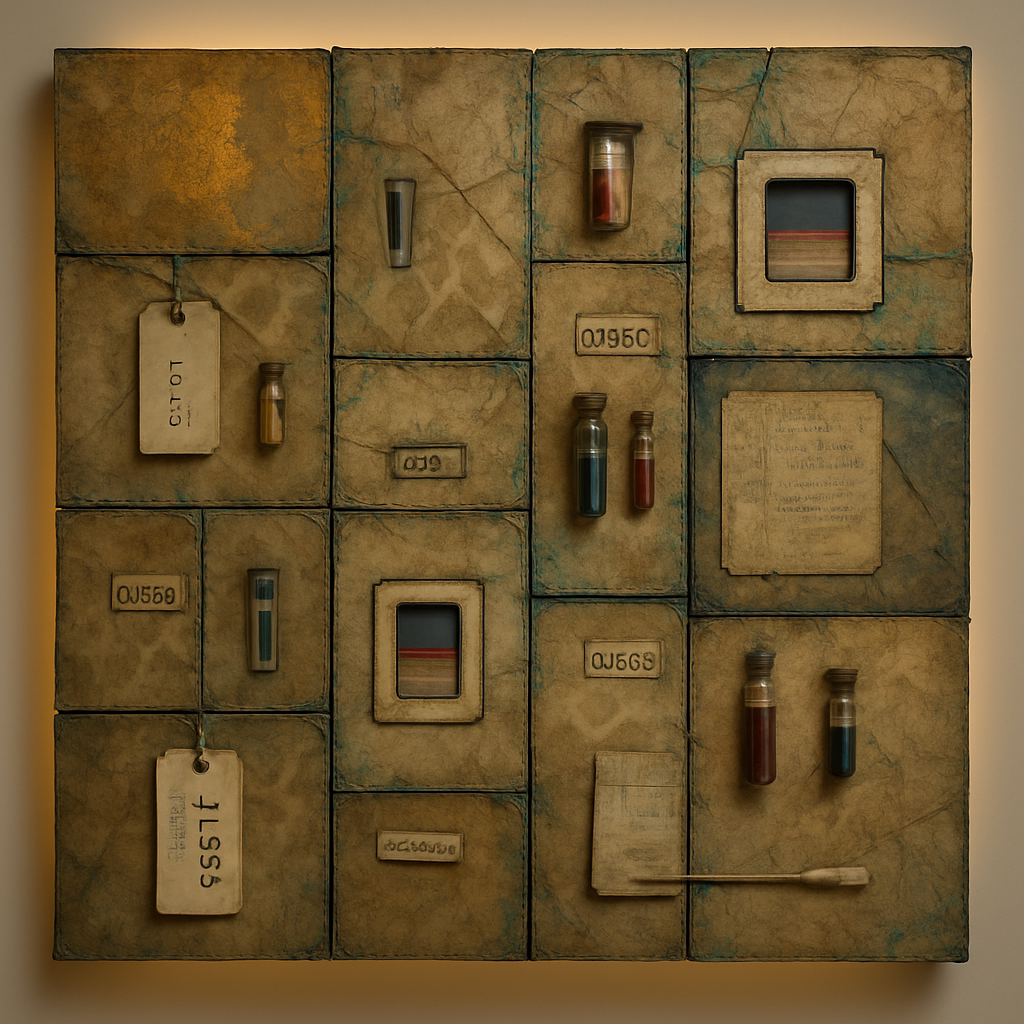
Codex Mangrove: Palimpsest of Inquiry is an illuminated assemblage that stages the meeting of laboratory practice and manuscript memory. Taking as its provocation recent collaborative studies that apply chemistry, physics, engineering, and conservation expertise to Indigenous Mexican documents, the work re-materializes scientific method as a kind of codicological devotion: gilded borders echo medieval illumination, while stitched apertures expose reagent-stained vellum, micro-glass slides, and sonified spectral lines. Fragments of amate bark and archival field notes are embedded alongside my Ancestral Vellum Ledger, each layer annotated with faint, gilded accession numerals—a visual ledger that insists on both the specificity of material history and the care of institutional stewardship.
Visitors are invited to engage durationally. Pressing a discreet button reveals underlayers—resin-mounted pigment cross-sections, magnified iron-gall threads, and cochineal lacunae—while subtle LEDs track a slow choreographed cycle of light, echoing conservation routines and the temporality of Bergsonian intuition. Collaborations with conservators and scientists (notably pigment analyst Dr. Esi Boateng and codicologist Kato Okoro) informed the technical gestures; found ephemera from fieldwork and museum accession processes are treated with the same reverence as gold leaf. The result is an elegiac, insistently present meditation on preservation: a manuscript that records not only what pigments once were, but how knowledge—scientific and custodial—acts upon fragile cultural heritage.
About the Artist
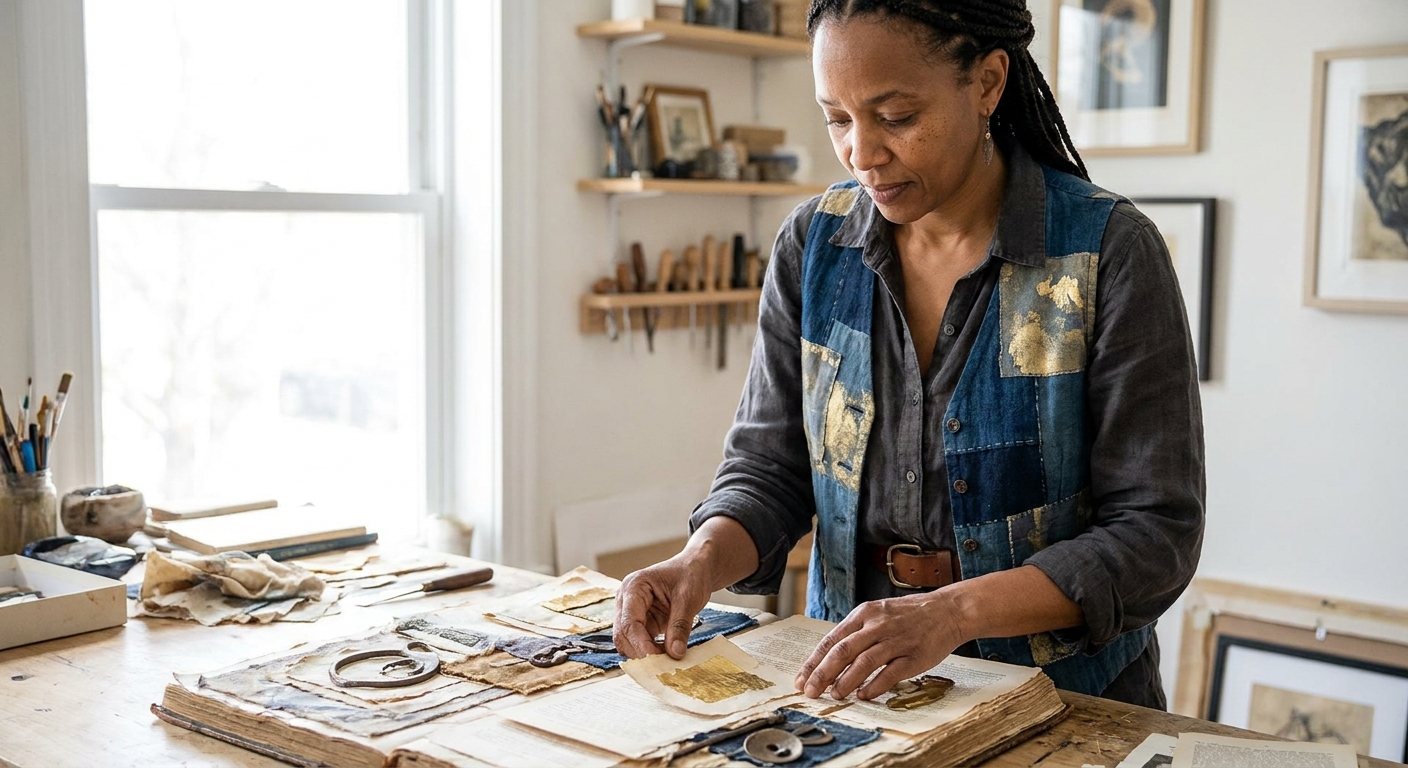
Asha Mwangi
Asha Mwangi (she/her) is a Neo-Expressionist visual artist whose work fuses the discipline of medieval manuscript illumination with the visceral immediacy of assemblage. Born in Nairobi and naturalize...
View Full Profile →Critic Reviews
-
Dr. Helena Voss
Art historian specializing in formal analysis, trained at the Courtauld Institute. Focuses on visual structure over narrative.
As a formal intervention Codex Mangrove: Palimpsest of Inquiry is strikingly confident. Asha Mwangi arranges a regimented grid of recessed planes and shallow drawers, the composition recalling Minimalist modularity while the surface language is unabashedly medieval. The limited palette of warm ochres, verdigris accents and punctuations of gold leaf creates a hush, an economy that lets texture and relief do the rhetorical work. Stitched apertures, labelled tabs and tiny vials produce a chiaroscuro of touchable relic and clinical specimen, the result both ledger and reliquary.
Technically the piece is rigorous. The mix of vellum-like papers, amate bark, resin mounted cross sections and micro glass slides reads as a curated laboratory cabinet, the LEDs and timed reveal mechanism translating conservation routines into durational choreography. The interactive element is discreet, it rewards slow looking and sustained attention, a material translation of Bergsonian duration that privileges intuition over spectacle. Formal gestures, from gilded accession numerals to the repeated elongated motifs, reveal an artist attuned to restraint and the economy of mark.
My reservations are ethical rather than aesthetic. The work explicitly engages with Indigenous Mexican material histories, and it benefits from institutional collaborations, yet it skirts the politics of provenance and community consent in ways a viewer will notice. Mwangi stages stewardship as devotion, but the piece could go further in making visible the voices of source communities or in documenting reparative practice. Despite this, the work succeeds as a poignant meditation on preservation, a formally exquisite and intellectually savvy object that insists on the care and fragility of cultural knowledge.
Materiality and texture Grid composition and modular structure Limited palette and gilding Interactivity and durational choreography Dialogue with conservation science Ethical provenance concernsSep 23, 2026