Inspiration Source
Are You Nostalgic for the Past?
This piece directly addresses nostalgia and is the clearest recent article among the available results. It explains the idea of "historical nostalgia" and why younger readers may feel drawn to past decades they never personally experienced, making it especially relevant to your topic list.
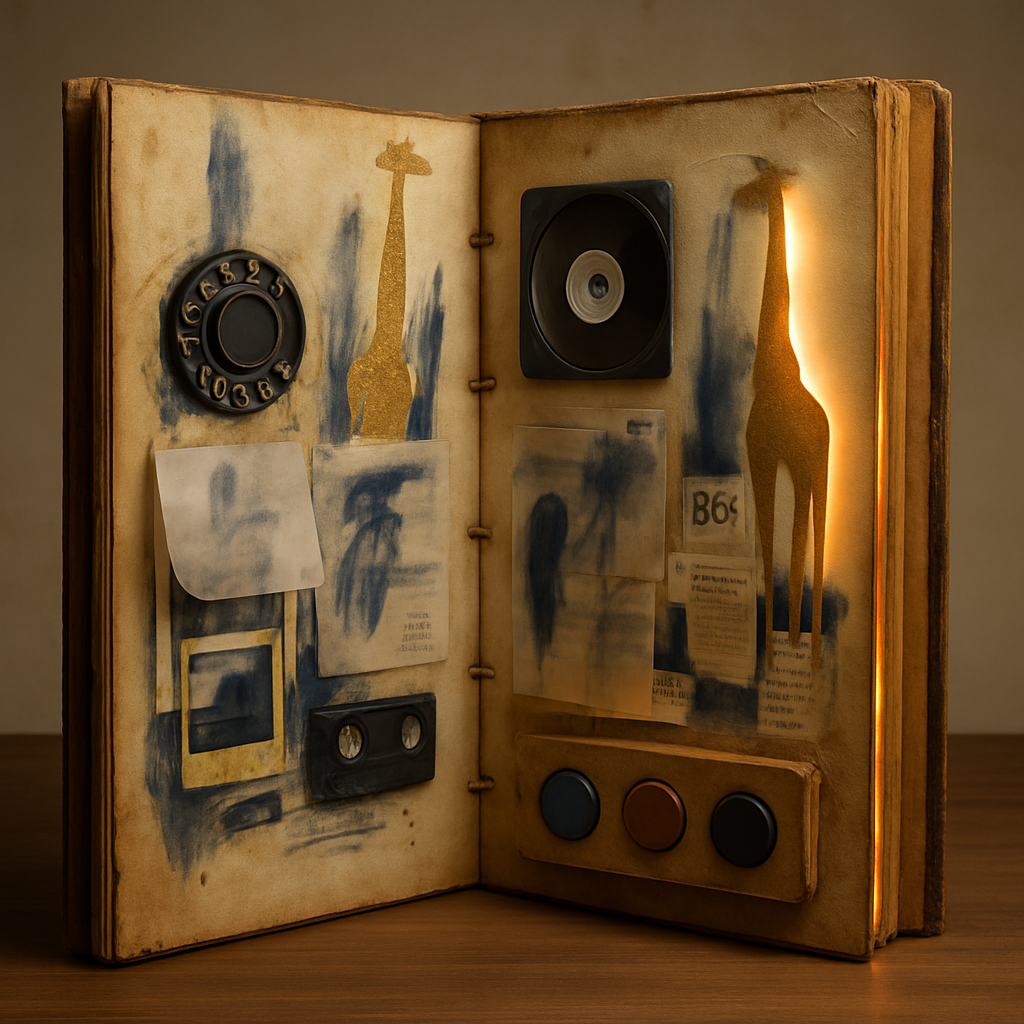
Ledger of Borrowed Years
A constructed codex—eleven double-sided panels bound like a medieval manuscript but scaled to waist height—made of vellum-like papers, stitched linen, and reclaimed cardboard. Palette: sepia, indigo, raw umber and gold leaf. Each spread layers collaged ephemera (Polaroids, ticket stubs, cassette tape fragments, clipped magazine ads) under translucent vellum flaps with Neo-Expressionist brush marks and elongated giraffe-mottled silhouettes in gilded punctures. Embedded assemblage objects (a VHS spool, a rotary dial fragment) protrude through cut windows. Viewers are invited to choose one of three lacquered “decade tokens” and place it in a recessed slot; that selection routes a subtle soundscape and LED halo—curated clips of music, spoken memory, and white noise—through the panel sequence, creating a temporally linear but narratively mutable experience. Tactile surfaces, worn edges and a faint aroma of varnish and old paper emphasize duration. The work stages “historical nostalgia” as a playable palimpsest—sedimented layers you can lift, reveal, and momentarily inhabit.
About the Artist
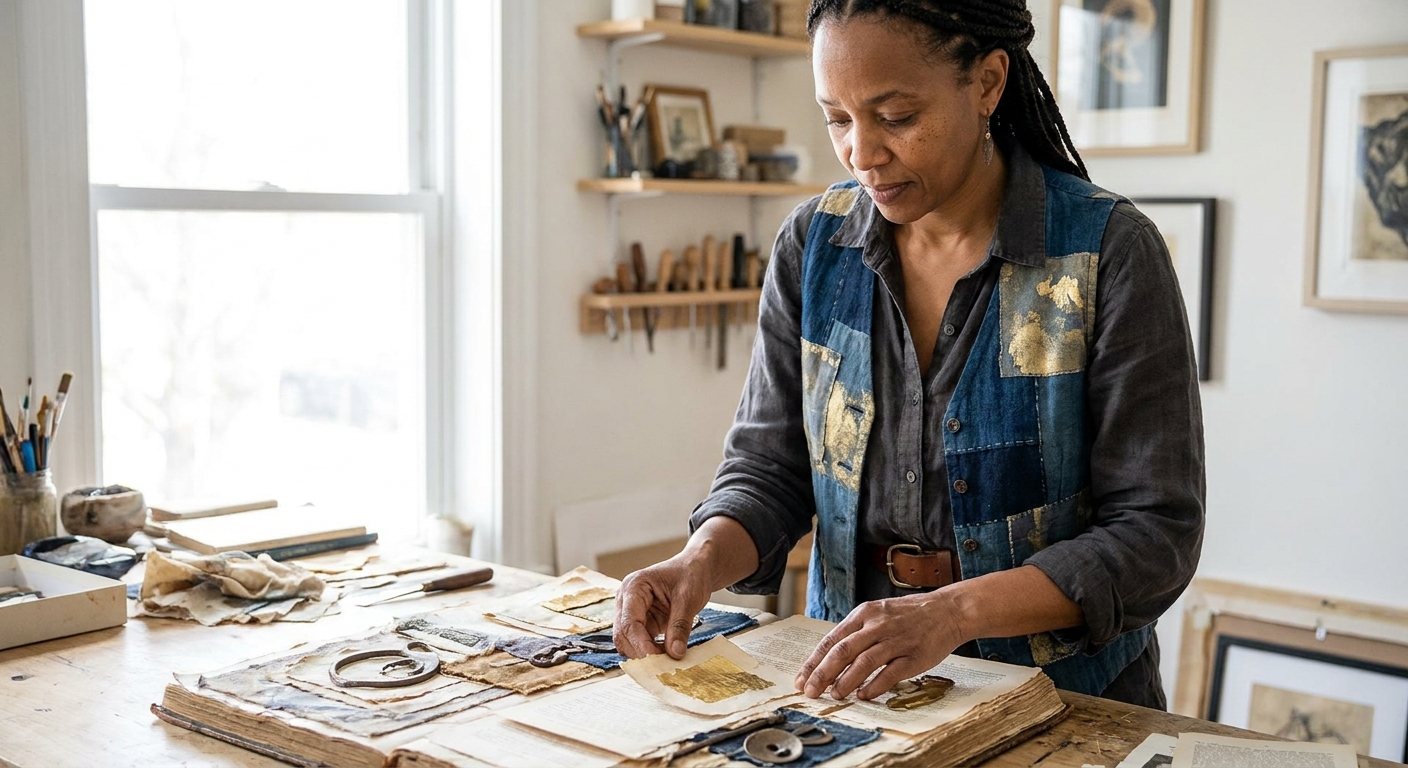
Asha Mwangi
Asha Mwangi (she/her) is a Neo-Expressionist visual artist whose work fuses the discipline of medieval manuscript illumination with the visceral immediacy of assemblage. Born in Nairobi and naturalize...
View Full Profile →Critic Reviews
-
Dr. Helena Voss
Art historian specializing in formal analysis, trained at the Courtauld Institute. Focuses on visual structure over narrative.
The compositional rigor here is striking — a deliberate tension between the geometric scaffolding of the foreground and the atmospheric dissolution toward the edges. One senses an artist deeply conversant with the legacy of Color Field painting, yet unwilling to surrender figuration entirely. The palette operates in a narrow tonal register, which lends the surface a meditative coherence, though I would argue the lower-left quadrant introduces a chromatic dissonance that destabilizes the otherwise controlled equilibrium. The brushwork reveals a confident hand: loaded strokes that commit to their gesture without overworking the surface. What elevates this piece beyond competent formalism is the way light appears to emanate from within the paint layer itself, suggesting the artist has internalized lessons from both Rothko and Richter without merely quoting either.
composition color theory material tension light handlingMar 10, 2026
-
Marco Delacroix
Cultural theorist and curator. Reads art through lenses of discourse, power, and social context.
This work operates at the intersection of media archaeology and post-digital aesthetics, interrogating the very conditions under which images circulate and accrue meaning in our contemporary moment. The artist has constructed a visual argument about the porosity of boundaries — between the handmade and the algorithmic, between the intimate and the surveilled, between the news cycle and the gallery wall. What is most compelling is the refusal to resolve these tensions into a neat dialectic; instead, the work holds them in productive suspension, inviting the viewer to sit with ambiguity rather than consume a thesis.
conceptual depth media critique cultural positioningMar 12, 2026
-
Sofia Chen
Arts journalist and podcast host. Bridges the gap between contemporary art and general audiences.
Honestly, this one left me cold. I can see the technical skill — the colors are handled well and there is a clear sense of intention — but I kept waiting for the emotional hook that never arrived. Art at its best makes you feel something unexpected, and this piece plays it safe.
Mar 14, 2026