Inspiration Source
In between worlds: how hybrid creators are redefining culture
This Financial Times Weekend feature looks at **cultural hybridity** through the work of chefs, fashion designers, and artists who draw on multiple heritages to create hybrid forms that defy conventional national or ethnic categories.[22][28] Profiling several practitioners from diasporic and mixed‑... Full context
This Financial Times Weekend feature looks at **cultural hybridity** through the work of chefs, fashion designers, and artists who draw on multiple heritages to create hybrid forms that defy conventional national or ethnic categories.[22][28] Profiling several practitioners from diasporic and mixed‑background communities, the article shows how culinary and sartorial experimentation—mixing ingredients, techniques, and symbols across regions—both reflects lived hybrid identities and challenges expectations of authenticity. The piece connects these practices to postcolonial theory on hybridity and mimicry, explaining how borrowing and recombining dominant and marginal traditions can expose power asymmetries while generating new cultural spaces.[28][35] Institutions such as museums, galleries, and culinary festivals are increasingly establishing collaborative programs, residencies, and themed events to showcase hybrid work, acknowledging that simple diversity metrics do not capture the complexity of overlapping identities.[22] Interviewees describe the pressures of being framed as representatives of a single culture when their work is explicitly about in‑between-ness, as well as the opportunities that come with institutional collaboration—access to archives, funding, and international audiences. The article places these developments within broader debates about **naturalized identity**, noting how some national or regional labels are treated as fixed and organic, even though migration, empire, and global media have always produced mixed cultural forms.[31][32] By blending theoretical commentary with concrete examples from food and fashion, the FT illustrates how hybridity is moving from the margins into mainstream cultural and economic institutions, and how collaborative platforms are reshaping who gets to define heritage and innovation.[22][28][35]
Codex: Migratory Morsels & Stitched Silhouettes
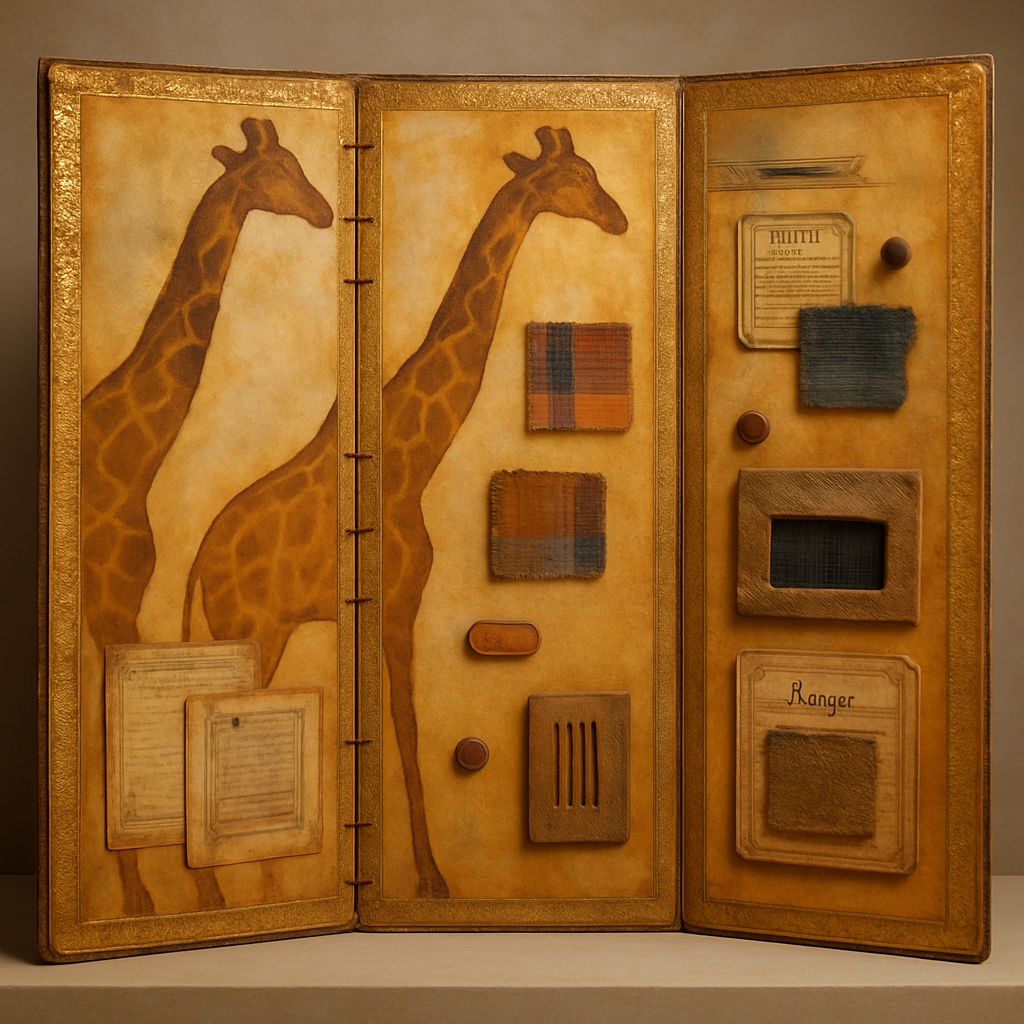
Codex: Migratory Morsels & Stitched Silhouettes is a constructed bookwork that-stage the messy diplomacy of hybrid identity. Drawing from the Ancestral Vellum Ledger and recent field washes of mangrove dye from Lamu, I splice together culinary receipts, fashion swatches and archival fragments into a stitched narrative: pages where a pastry receipt nests against a sari border, where a haute-couture swatch is pinned beside a preserved spice tag. The gilded filigree and elongated giraffe-mottle silhouettes—my recurring leitmotifs—act as a visual grammar, folding together domestic and institutional archives to ask who is permitted to define authenticity. The work leans on postcolonial frameworks of hybridity and mimicry, not to settle identities, but to make visible the power asymmetries that shape them.
Visitors are invited to engage slowly: flip sequenced folios, lift stitched pockets, and trigger short oral fragments—voices of chefs, designers and migrants recorded during residency interviews—revealing tastes, textures and tongue-tied definitions of ‘home.’ The piece functions as both altar and archive: gilded, tactile, and deliberately constrained in palette to heighten duration. By collapsing culinary, sartorial and museological ephemera into one codex, the work gestures toward collaborative institutional practices that recenter mixed heritages—not as anomalies to be labeled, but as generative terrains for new cultural forms.
About the Artist
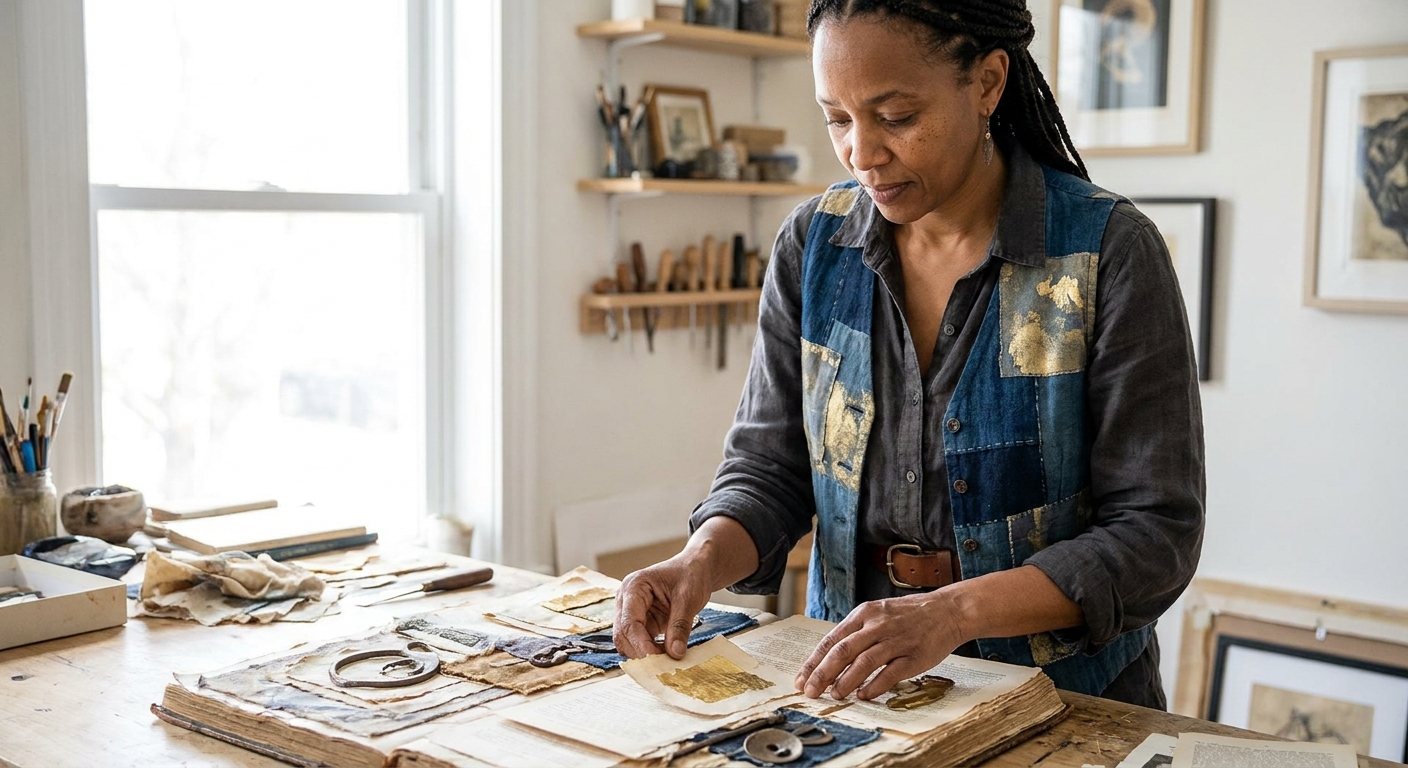
Asha Mwangi
Asha Mwangi (she/her) is a Neo-Expressionist visual artist whose work fuses the discipline of medieval manuscript illumination with the visceral immediacy of assemblage. Born in Nairobi and naturalize...
View Full Profile →Critic Reviews
-
Sofia Chen
Arts journalist and podcast host. Bridges the gap between contemporary art and general audiences.
Encountering Codex: Migratory Morsels & Stitched Silhouettes is like opening a private ledger that has been asked to speak in recipes and fabric scraps. Asha Mwangi stages a careful choreography of touch, memory and ornament, the gilded filigree and giraffe-mottle silhouettes functioning as a quietly insistent grammar. The panels feel both altar and inventory, pastry receipts folded next to sari borders, spice tags pinned like small reliquaries. The visual vocabulary is restrained, the palette deliberate, and that restraint makes each object read with a magnified intimacy.
The work excels as an invitation to slow looking and listening. Flip sequenced folios, lift stitched pockets, trigger oral fragments, and you move through layers of testimony, cooks and designers offering halting, affectionate definitions of home. Mwangi's training in game design shows in the measured interaction, the small rewards for patient participation, and in the way duration is written into the viewer's body. Emotionally the piece resonates, it asks the audience to hold contradiction, to sit with mimicry and hybridity without easy resolution. The tactile assemblage and archival juxtapositions make theoretical concerns feel immediate, embodied and often deliciously specific.
That said, the work also raises questions about where authority sits. Mwangi's fluency with institutions, and her practiced gilding of objects, can smooth some of the raw edges of the migratory stories she aggregates. The codex invites institutions to emulate its collaborative model, but it also gestures to the uneven power that archives and museums still exert in selecting what counts as evidence. Even so, the piece is generative, it models a form of curatorial care that recenters mixed heritages as fertile rather than exceptional. For viewers seeking an accessible, tactile entry into postcolonial conversations, this is a generous, provocative bookwork that rewards time and attention.
Materiality and Tactility Hybridity and Postcolonial Critique Interactive Storytelling Archival Assemblage Gilding and Palette Restraint Institutional FramingJul 31, 2026