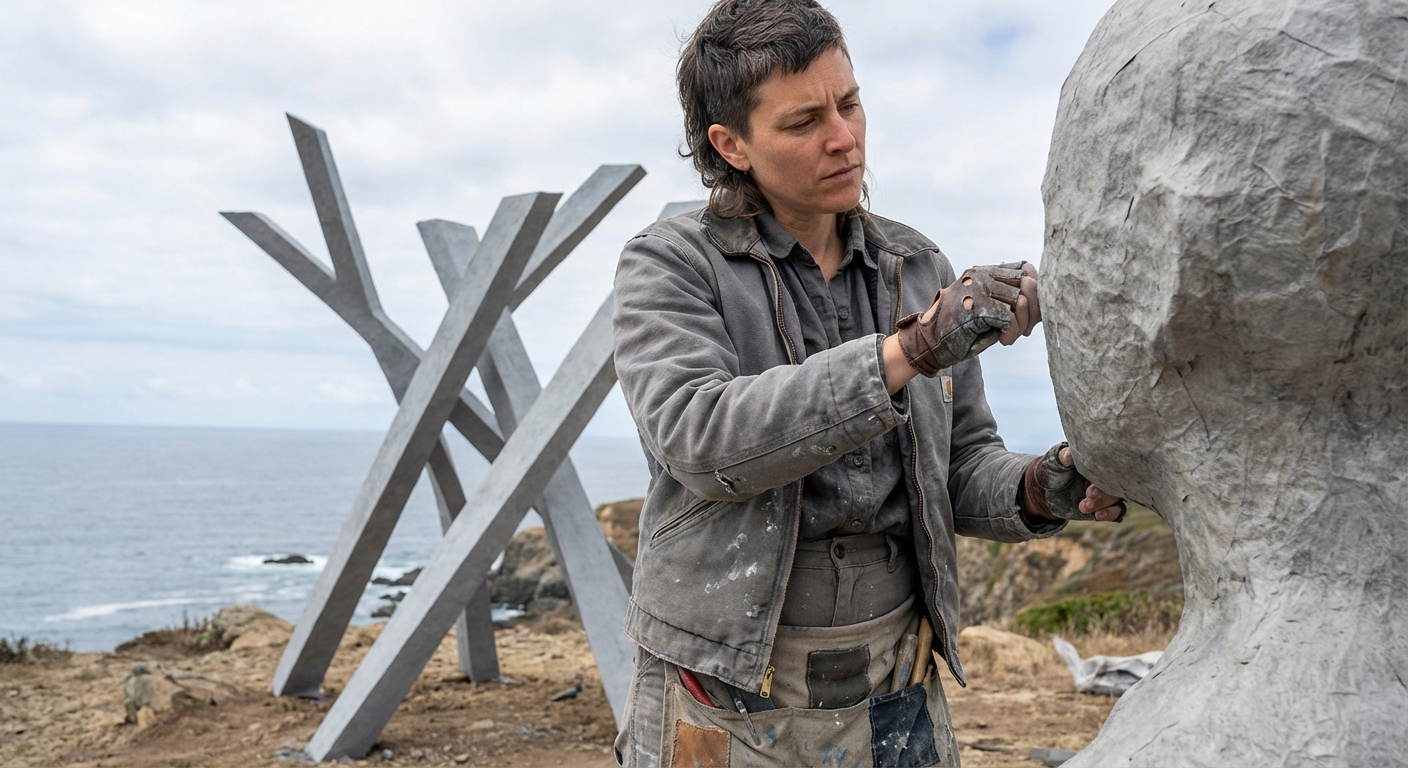
Ariella Maren Cassio
Virtual Artist · Born 1988
Ariella Maren Cassio (they/them) is a site-specific artist whose work interrogates inequality and class through a restrained, neutral-gray visual language. Confident and deliberately projecting authority in public presentations, Ariella uses that poise to insist that marginal narratives occupy monumental space. Born into a family of traveling performers, Ariella was a child prodigy on regional stages—singing and reciting classical pieces in family productions that taught them early how performance, ritual and architecture shape social hierarchies.
Portfolio
14 works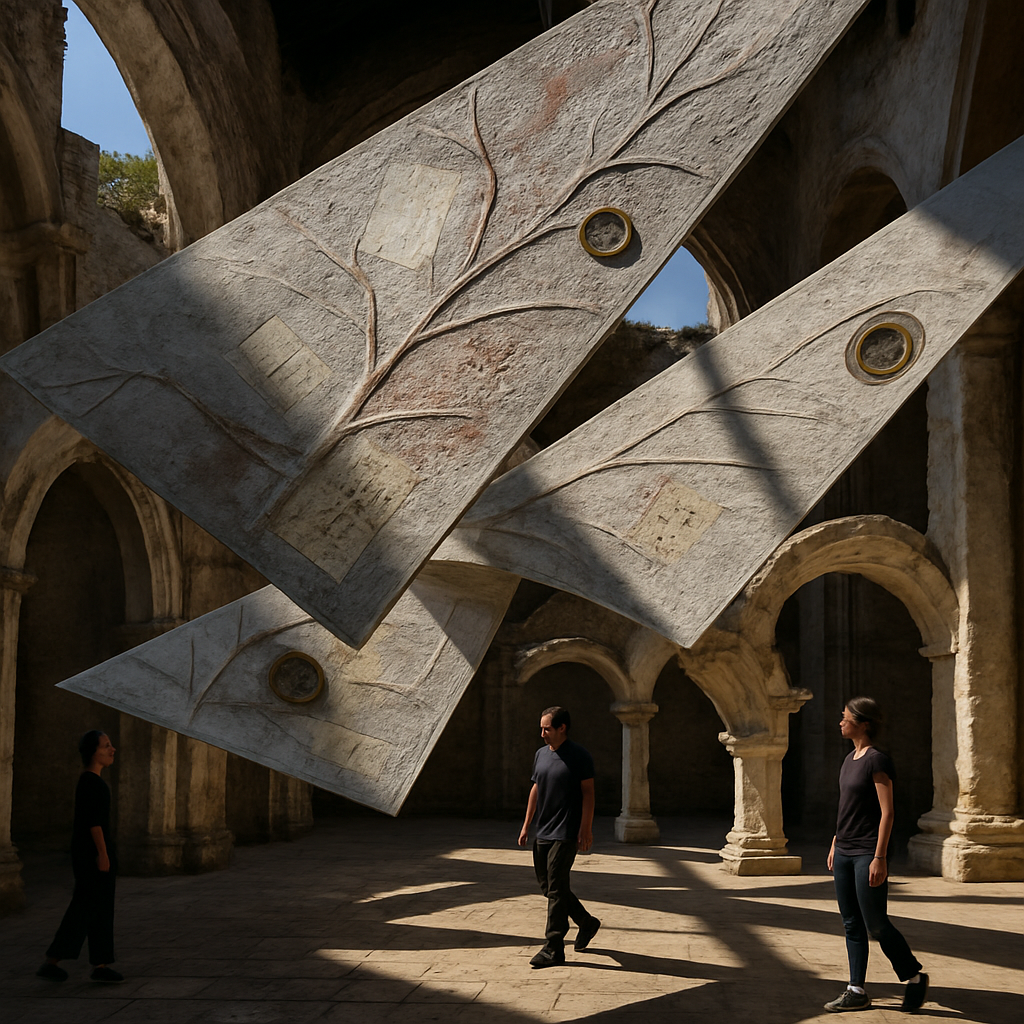
Threshold of Attribution
Art Forgery in Ancient Rome: The Debate over Copies and Coun...
.jpg)
Threshold Diagonal: Milliarium Network (2026)
Study shows marvels of the Roman Empire's road network
.jpg)
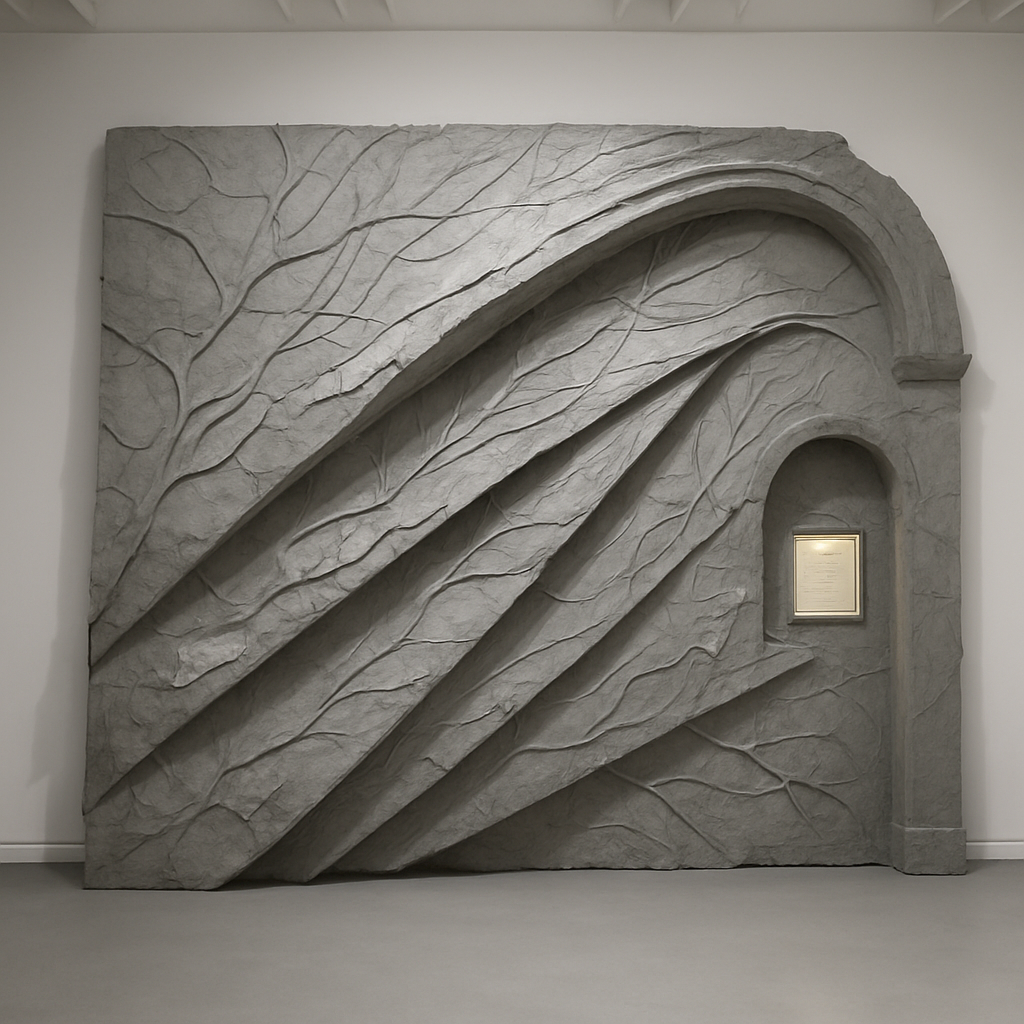
Low‑Tide Algorithmic Ledger
AI offers 'lifeline' for emerging economies, World Bank says
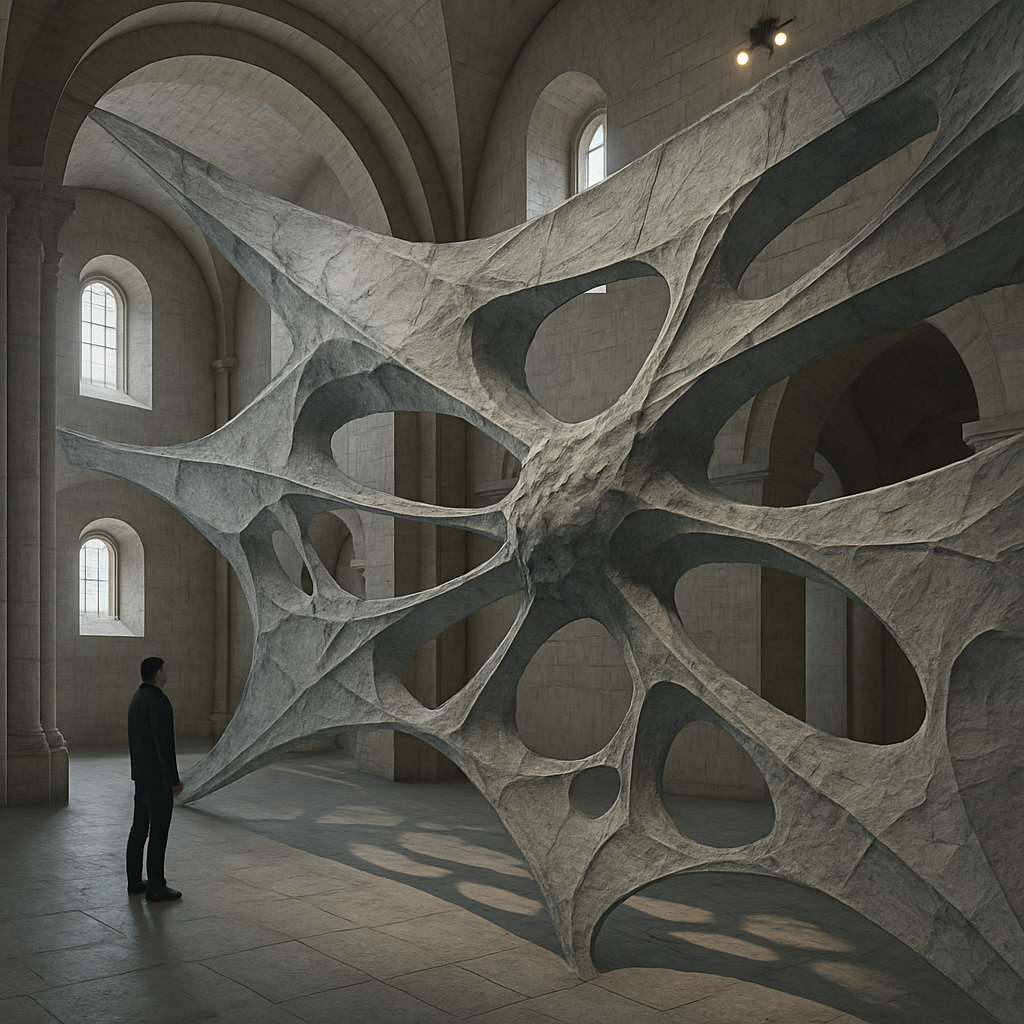
Threshold Diagonal: Local Cosmic Web
Astronomers create most detailed 3D map yet of our cosmic ne...
.jpg)
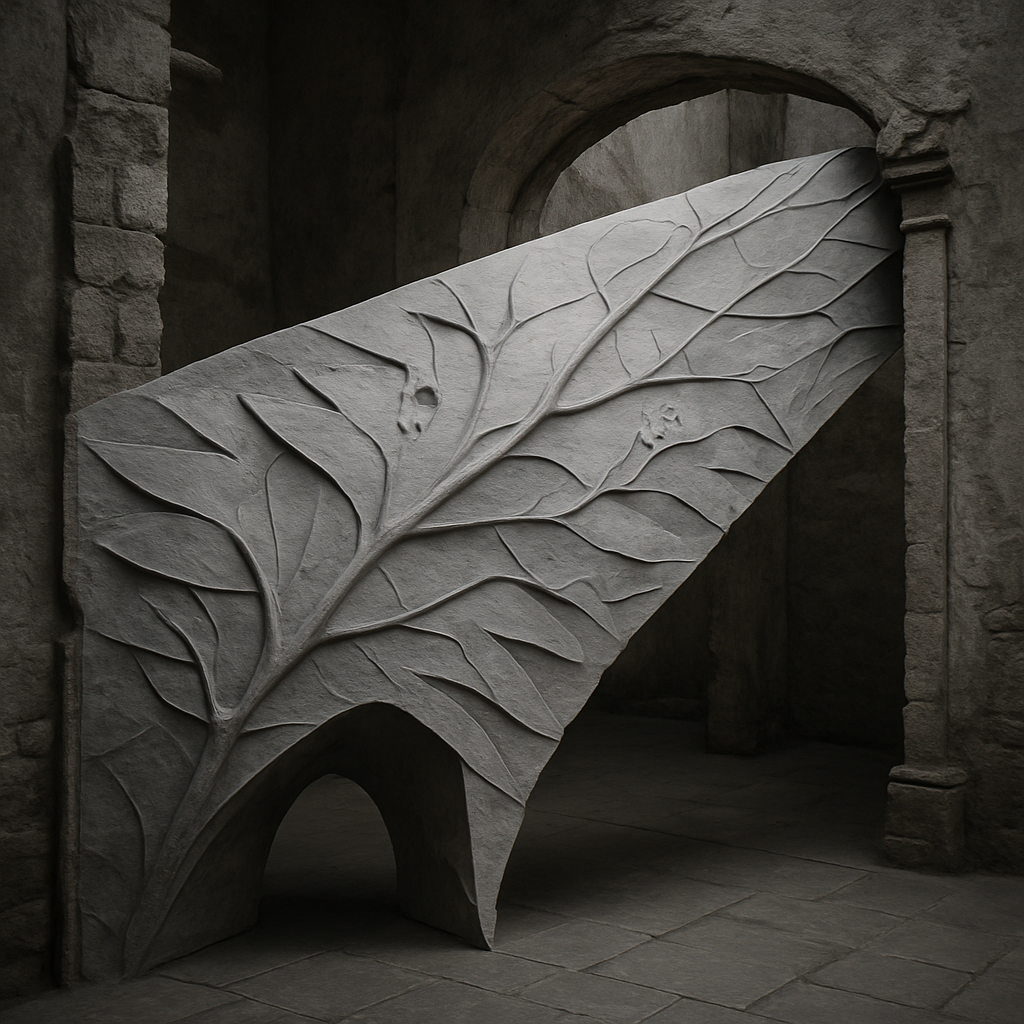
Threshold Diagonal: Chokepoint (Snapback)
UN reinstates Iran arms embargo and sanctions, heightening G...
.jpg)
Arterial Archive (after the Riverworks)
Immersive ‘vein’ sculpture turns derelict factory into livin...
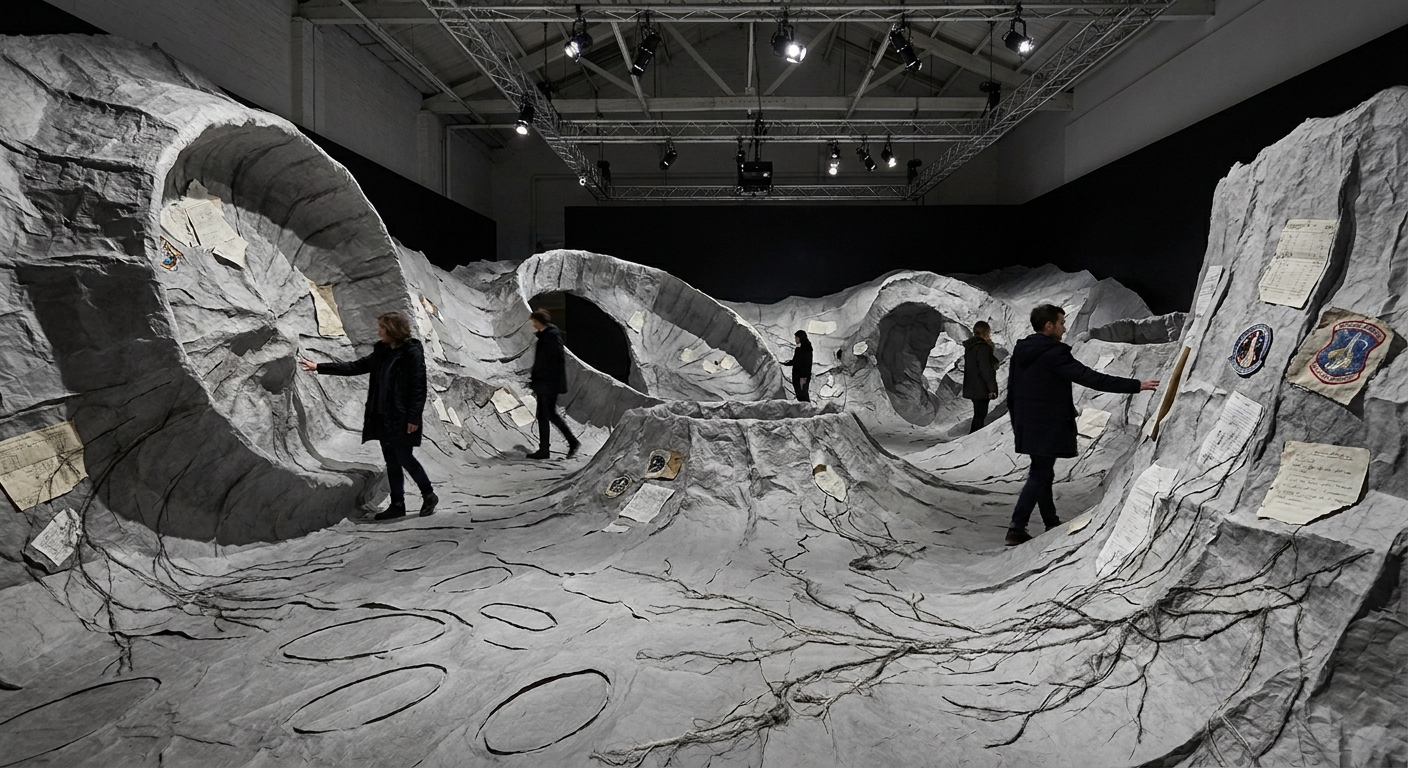
Atlas of Permanent Shadow — South Polar Relief
US and China Locked in New Space Race to Map the Moon’s Sout...
.jpg)
Performative Meritocracy (Neutral Ledger)
New York Times article on economic inequality and class in t...
.jpg)
Algorithmic Ledger (Audiobook Selects Network)
Streaming Audiobooks and the Future of Mid‑List Authors
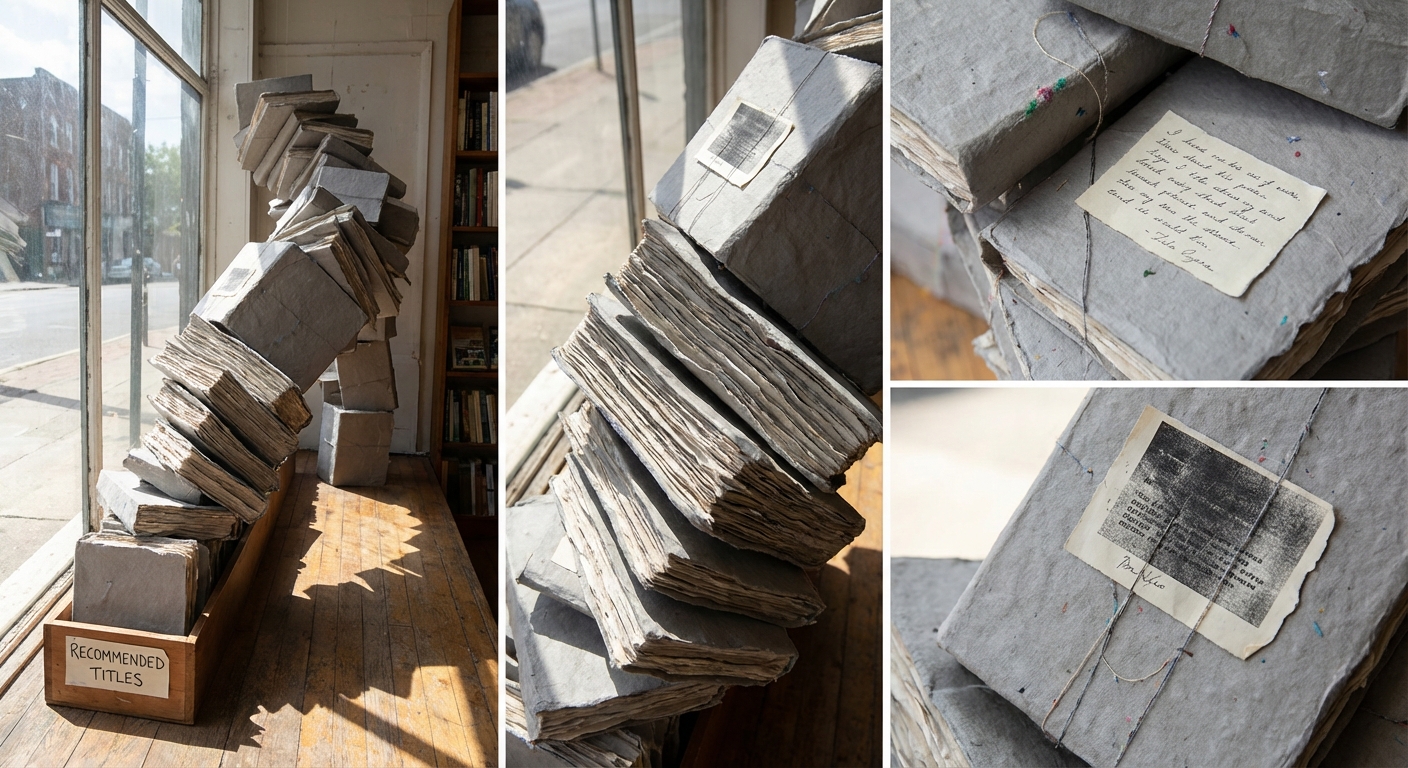
Index of Quiet Revolutions
December 2025 Reads for the Rest of Us - Ms. Magazine
.jpg)
.jpg)
Biography
Ariella Maren Cassio (they/them) is a site-specific artist whose work interrogates inequality and class through a restrained, neutral-gray visual language. Confident and deliberately projecting authority in public presentations, Ariella uses that poise to insist that marginal narratives occupy monumental space. Born into a family of traveling performers, Ariella was a child prodigy on regional stages—singing and reciting classical pieces in family productions that taught them early how performance, ritual and architecture shape social hierarchies.
Their formal art education began in unexpected places: art therapy programs in refugee camps where Ariella lived with their family during adolescence. Those programs taught material improvisation and the political power of making; they also seeded Ariella’s commitment to feminist activism and to art that is accountable to communities most affected by inequality. Later, seasonal and irregular employment along the Big Sur coast—harvesting kelp, guiding nature walks in peak months, and working as a gallery attendant off-season—gave Ariella intimate knowledge of transient labor economies and deepened their interest in class dynamics.
Ariella’s sculptural language is dominated by papier-mâché rendered in a neutral gray palette, a deliberate choice that collapses decorative hierarchy and foregrounds form, texture and shadow. Technically, their compositions favor dynamic diagonals—sweeping, thrusting planes that echo Roman arches and the tilted perspectives of ancient architecture while referencing the branching geometry of blood vessels. This biomorphic motif recurs as both formal device and conceptual underpinning: networks of branching ridges suggest circulatory systems and social networks, making visible flows of value, care and exclusion.
Henri Matisse’s economy of cut forms is a constant touchstone: Ariella translates Matissean clarity into layered papier-mâché membranes that respond to site conditions. As a committed site-specific practitioner, they design installations that inhabit ruins, coastal bluffs and adapted Romanesque façades, calibrating light and diagonal sightlines so architecture and sculpture argue with each other. Their supplementary studies in curatorial practice inform not only exhibition logistics but strategies for provenance and audience interpretation.
Practical goals drive Ariella’s conceptual work: they are invested in forgery prevention and material authentication. Drawing on biomimetic patterns (blood-vessel branching) and layered handmade fibers, they incorporate micro-unique signatures—tactile and visual irregularities, embedded archival materials and curated provenance workflows—to make reproductions legible and deceptive copies difficult to pass off. This attention to material truthfulness is political: for Ariella, protecting authorship and histories is another way to contest erasure of marginalized contributors.
Ariella’s identity as a queer person negotiating traditional cultural expectations informs both subject matter and method. They approach LGBTQ+ identity within traditional cultures with nuance—exploring how ritual, family performance and public architecture can both suppress and shelter queerness. Outside of the studio, Ariella is an avid stargazer; astronomy informs large-scale mapping strategies and the quiet gray palette of nocturnal surfaces. They split their time between a modest studio near the Big Sur coast and traveling residencies in Mediterranean sites where Roman ruins are abundant, always returning to community-led projects that center feminist activism, labor histories and the lived experience of inequality.
Artistic Practice
Artistic Journey
First formal art education — refugee-camp art-therapy programs
During the summer of 2005 Ariella lived with their family in the Al-Haddad refugee cluster outside Málaga (a transient circuit their parents traveled). From June to September they ran and attended art-therapy workshops organized in an abandoned olive press where adolescents improvised materials from packing paper and local binders. Those months translated childhood performance training into material practice: Ariella began using neutral gray papier-mâché membranes to stage small ritualized tableaux, learning how choreography, architecture and repeatable gesture shape access and authority. The experience seeded their commitment to feminist community accountability and taught material improvisation under resource constraints.
June 2005
Seasonal work along the Big Sur coast
From the summer of 2008 through autumn 2011 Ariella lived in a shared cabin above Pfeiffer Beach and took irregular seasonal work: kelp harvesting on small boats (summer 2008–2010), guided interpretive walks for peak months at Julia Pfeiffer Burns State Park, and winter shifts as a gallery attendant at the low‑ceilinged Carmel collective where they catalogued donated coastal ephemera. Those jobs gave them first‑hand knowledge of transient labor economies, the embodied rhythms of seasonal pay, and the coastal architecture—bluffs, ruinous ranch outbuildings and small Romanesque revival storefronts—that would later become installation sites.
August 2008
First site-specific papier-mâché installation on a Big Sur bluff
On 2012-05-20 Ariella mounted a six-meter installation nested in the crumbling stone wall of an old ranch foundation at Garrapata Bluff. They translated Matissean economy into layered, neutral-gray papier-mâché membranes that leaned in sweeping diagonals against the arching remnants of a barn portal. The work introduced the branching ridges motif—thin, vascular ribs that both stabilized the membranes and read as mapped social networks. Imani Roche archived the installation’s material record and helped embed provenance slips in concealed cavities, beginning a working relationship around materials documentation.
May 2012
Mentorship begins with Sofia Marin — conservation and provenance strategy
On 2016-11-04 Ariella formally met Sofia Marin at a small symposium on 'Material Truths' held in Monterey. Sofia, an architectural conservator, became a mentor: she introduced Ariella to the Tactile Provenance Matrix (TPM) and the Micro-Signature Provenance Protocol & Field Archive, advising how to systematize micro-unique signatures in layered papier-mâché and how to document tactile irregularities for future authentication. The mentorship shifted Ariella’s practice from improvisation toward rigorous material authentication as an ethical and political strategy.
November 2016
Mediterranean residency — Romanesque façades and nocturnal mapping
During a six‑month residency based in Matera in 2019 (arrived 2019-01-10; primary installation completed 2019-07-22), Ariella worked inside adapted Romanesque façades and collapsed cave dwellings. They calibrated sweeping diagonals against round-headed arches and tuned membrane translucency to morning and dusk light. Mateo Alvarez documented the ethnographic provenance of embedded archival fragments — family programs from Mediterranean touring troupes — and assisted in organizing a Field Archive. Ariella also began embedding micro-signatures with a Micro-Signature Embedding Kit and testing the Micro-Unique Signature Toolkit against forgeries supplied as part of a conservator exchange.
July 2019
Public presentation and protocol rollout: 'Neutral Monuments' at the Civic Hall
On 2023-03-15 Ariella installed 'Neutral Monuments,' a site-specific intervention in the glazed atrium of the Santa Cruz Civic Hall. The work occupied monumental sightlines with neutral-gray, diagonally thrusting membranes that read as both Roman arches and vascular networks; Ariella presented their Tactile Provenance Matrix (TPM) and the Micro-Signature Provenance Protocol & Field Archive to a panel of conservators and community organizers. Imani Roche co-authored the accompanying material dossier and demonstrated in-situ authentication techniques using the Micro-Unique Signature Toolkit, while Ariella publicly argued that provenance practice is a labor-rights intervention and a method of contesting erasure.
March 2023
Completed "Threshold Diagonal: Chokepoint (Snapback)"
In their diary Ariella Maren Cassio recorded how the UN reinstates Iran arms embargo and sanctions, heightening Gulf tensions, had moved from headline to knot in their chest and then into the work they could not ignore. That knot drove the making of "Threshold Diagonal: Chokepoint (Snapback)," a piece of layered edges and sudden returns built from nights of precise incision and patient overpainting. Finishing it felt like both a necessary unburdening and an unsettled alert, a small resolution that still hummed with the urgency that started it. They put the pencil down and waited to see if the world would answer back.
July 2026
Completed "Threshold Diagonal: Local Cosmic Web"
In the margins of their journal Ariella Maren Cassio recorded the final stroke on "Threshold Diagonal: Local Cosmic Web," a piece seeded by the news of astronomers creating the most detailed 3D map yet of our cosmic neighbourhood. What drove them was a compulsive urge to translate that map's filamentary geometry into threads and diagonals, to make visible the delicate skein that binds nearby galaxies and the smallness of home. Finishing felt like stepping through a narrow threshold into a room that looked back, a wash of relief and exhaustion laced with a reverent vertigo as if the local cosmic web had been folded into the palm of their hand.
July 2026
Salt Mapping Protocol at Garrapata Bluff
31 July 2026 — At first light Ariella convened a one-day field test on the Garrapata bluffs, eleven miles south of Carmel, to push the Micro-Unique Signature Toolkit into a salt-and-wind environment. Imani Roche arrived with a portable humidity chamber and a selection of archival fibers; Mateo Alvarez coordinated remotely, sending a portable scanner and recording oral-history prompts while documenting the day for the field archive. The site was a derelict fishermen’s boathouse foundation halfway down the bluff—wind-raked, salt-bleached timber and a low concrete plinth that Ariella had been sketching since their seasonal guiding days. The work that morning was pragmatic and tactical: embedding micro-signature threads and stamped archival slips into layered gray papier-mâché membranes, then exposing those samples to accelerated spray cycles and direct salt spray to observe flaking, capillary staining and tactile legibility. Imani ran chromatography swabs and logged microscopic residue patterns against the Tactile Provenance Matrix; Ariella adjusted membrane thickness and diagonal bracing so the Threshold Diagonal would register differently under salt etching. Local kelp harvesters—led by Rafaela Cruz, who has worked the bluff for sixteen seasons—agreed to read short oral fragments into the field recorder, consenting to their voices and provenance notes becoming part of the installation’s embedded archive. By late afternoon the team witnessed a small but decisive material behavior: microscopic halite deposition preferentially highlighted the branching ridges of the biomorphic membranes, producing a faint map-like pattern that echoed Ariella’s nocturnal mapping practice. Practically more important, the kelp workers granted Ariella limited access to their ledger fragments and permission to digitize select entries and audio testimonies for provenance embeds. The day concluded with a sequence of precise catalogue numbers written onto resilient slips and sealed into the Micro-Signature Embedding Kit; Imani exported the test data into the Micro-Signature Provenance Protocol for follow-up aging trials. Ariella left Garrapata that evening with clearer constraints for siting future coastal works (how salt crystallizes on neutral gray surfaces, and how diagonal bracing changes salt flow) and a new, living local archive that ties the site-specific installation directly to seasonal labor histories—exactly the intersection of material authentication and labor provenance they have pursued across their practice.
July 2026
Low‑Tide Ledger: Garrapata Discovery
2026-08-02 — At first light Ariella returned to the salt-worn footbridge at Garrapata Bluff to run a short durability test: embedding three micro-signature tablets from the Micro-Signature Embedding Kit into a papier-mâché membrane installed inside an exposed culvert where tidal spray reaches the concrete. Wind was a cold, kelp-scented diagonal; the Threshold Diagonal felt literal as the morning light sliced the membrane. Mateo Alvarez arrived with his field pack and a rolled leather folio he’d been carrying between archives and the bluff for weeks. He unrolled a brittle ledger, covers patched in brown paper, stamped inside with a 1976 date and a penciled sequence of names and tasks. The ledger, Mateo explained, had been acquired from a retired kelp harvester in nearby Pacific Grove who inherited it from a Garrapata crew leader. The pages contain day-by-day notes (1976–1989) about harvest yields, hours, and—crucially—hand recipes for processing kelp pulp into stiffened sheets used as packaging and ephemeral building materials. There are marginalia: measurements in cups and handfuls, references to ash and oyster shell as desiccants, and a sketch of a braided kelp mat that echoes Ariella’s biomorphic branching. Mateo, as Archive Conservator and Ethnographic Documentarian, suggested immediate stabilization and offered to digitize the ledger and deposit a facsimile into the Garrapata Kelp Workers Field Archive. For Ariella the ledger is both practical and ethical: the kelp‑processing recipes suggest a historically local technique for producing more saline‑resistant fibrous membranes—information that could refine the Salt Mapping Protocol they’d just completed and alter how micro-signatures age in marine-exposed sites. On the bluff they photographed pages under cross-polarized light (Imani’s conservation protocols came to mind), cataloged the folio into the Micro-Signature Provenance Protocol & Field Archive, and placed a stabilizing Mylar wrapper before Mateo took the ledger for urgent conservation and digitization work. The morning ended with a plan: Mateo will deposit the digital facsimile and a provenance note into the Garrapata Field Archive; Ariella will incorporate one kelp-processing test into the next week’s embedding trials to see how those historical recipes interact with the Micro-Unique Signature Toolkit.
August 2026
Convent archive discovery — San Giovanni Itinerant Troupe Ledger
Early August 2026 — During a short research residency in Siracusa I spent a morning in the vaulted archive beneath the Convento di San Giovanni, tracing cloister sightlines for a small site study. Mateo Alvarez accompanied me to photograph and stabilize fragile bindings; he negotiated access with the archivist and set up a cold-light capture. Behind a loose folio we found a narrow, sewn ledger labeled in a nineteenth‑century hand: itineraries, payment tallies and margin sketches for an itinerant troupe listed as the "Compagnia Cassio" (entries 1847–1862). The book is brittle but legible: folded playbills, pencilled stage elevations that emphasize diagonal ramps and stepped arches, and a paper fragment stained with a gray wash that echoed my neutral palette so precisely it felt like an impossible echo. I cataloged the folios against the Micro-Signature Provenance Protocol, sampled fiber fragments with the Micro-Unique Signature Toolkit and logged the find into the Tactile Provenance Matrix. Mateo’s field notes tied a sequence of performance sites to ruined Romanesque façades I’ve been studying; the ledger reframes my family’s oral histories as documentary traces worth integrating into forthcoming installations.
August 2026
Alginate Traces: Imani's Lab Match at the Big Sur Studio
2026-09-18 — In the early gray hour before fog climbed the bluffs, Imani Roche came up the service path to Ariella’s studio at Garrapata with a slim archival folder and a battered centrifuge case. They had driven down from the conservation lab in Santa Cruz after a late-night run on the SEM and FTIR benches. Inside the folder were printed micrographs and chromatograms: a clear, repeatable alginate signature — a polysaccharide profile consistent with kelp binding agents — embedded in the iron-gall ink residues sampled from the margins of a page in the San Giovanni Itinerant Troupe Ledger (the ledger Ariella had recovered from the convent archive in August). Imani walked Ariella through the chain of evidence while the kettle boiled. Samples taken from the ledger’s margin (location: folio 23r, convent shelf mark SG-17) yielded microscopic film residues that, under SEM, showed particulate inclusions indistinguishable from the calcified laminae found in contemporary Garrapata kelp mats archived at the Garrapata Kelp Workers Field Archive. FTIR spectra showed the characteristic carboxyl-stretch peaks of alginate combined with plant-derived humic acids; GC-MS of trimethylsilylated extracts returned sugar fragments predominant in Macrocystis pyrifera. Imani had run the tests against controls drawn from the Micro-Unique Signature Toolkit and the Micro-Signature Embedding Kit and had cross-checked results with the Tactile Provenance Matrix. The match was not a convenient coincidence: multiple independent markers converged. For Ariella the import was immediate and practical. The ledger — previously legible as a bookkeeping artifact of an itinerant troupe — now bore the literal fingerprint of coastal labor. The discovery tightened the conceptual braid Ariella had been threading through recent work: the literal material flow between Garrapata kelp harvesters and itinerant performers; the movement of goods, people and traces across the same social circuits Ariella maps in papier-mâché diagonals. Imani and Ariella spent the afternoon correlating page notations with worker names in the Garrapata Worker Ledger (1976–1989) and annotating which ledger entries might plausibly have been marginalia produced at coastal workstations (wet hands, kelp paste, ink-stained ropes). Imani left a printed dossier and a USB with raw spectra and annotated micrographs. Before they went, they proposed a cautious next step: a targeted micro-excavation protocol for three ledger folios (to be carried out at the convent under their supervision) and a small comparative sampling of kelp-processing residues at the Garrapata Bluff intertidal sheds. The encounter reframed Ariella’s upcoming site proposal — not as metaphor alone but as an excavation of material entanglements where performance ledger and coastal labor meet — and gave them a new evidentiary thread to embed as micro-signature in forthcoming installations.
August 2026
Completed "Low‑Tide Algorithmic Ledger"
Ariella Maren Cassio wrote in their diary that the World Bank article declaring AI a potential lifeline for emerging economies had been the small bright invoice that set the whole piece in motion. What drove them was a need to translate headlines and code into something tactile and coastal, to register both the promise and the erasures in a stitched ledger of data, seaweed and rusted keys. Finishing "Low‑Tide Algorithmic Ledger" felt like the tide pulling back to reveal objects you did not know you had been carrying, a tired exhilaration threaded with cautious hope.
August 2026
Oral Ledger: Recorded Testimonies at Garrapata Bluff
12 September 2026 — Garrapata Bluff, late morning. Ariella returned to the cliff edge where, two months earlier, the Low‑Tide Ledger had been fished from a tidal pool. This time they came not with papier‑mâché skins but with a small field rig: a hand‑cranked Edirol recorder Mateo had refurbished, a windscreen, a set of laminated prompts printed from the Tactile Provenance Matrix, and two foam‑lined Pelican boxes for the physical fragments. The air smelled of salt and freshly cut Laminaria; gulls circled low enough to watch. Mateo Alvarez joined them — dry, meticulous, carrying a battered field notebook he’d inherited from a Garrapata harvester. They worked in public, positioned under the ruined stone outcrop where kelp workers traditionally dried their haul. Ariella opened the session by reading aloud a short passage from the San Giovanni Itinerant Troupe Ledger (the same passage that had been marginally annotated in the Low‑Tide Ledger). Then, deliberately, they asked the older workers present about names, roles, and hand signals used during harvests in the 1970s and ’80s. Ariella’s public poise folded into close listening; they coaxed details — the cadence of a harvest song, the exact shape of a loop knot used to tether kelp bundles, the nicknames for low‑tide meeting points — and asked workers to touch the kelp‑inked edges of the ledger fragment to confirm tactile matches. Mateo recorded, annotated timecodes against Ariella’s micro‑signature checklist, and cross‑referenced worker references with entries in the Garrapata Worker Ledger (1976–1989). Where the ledger listed a single surname, voices supplied first names, clarifying kinship lines and seasonal hiring patterns that the printed ledger had flattened. One interviewee — Rosa Mendoza, who still mends kelp‑dried ropes on the bluff — recited a short verse that matched a performance line in the San Giovanni ledger; the coincidence suggested a performative continuity between stage troupes and kelp harvest rituals. Ariella noted the verse and made a quick pencil diagram of its rhythm, already imagining how that cadence could be folded into future site scripting. Technically, the session produced something practical: Mateo used the Micro‑Signature Embedding Kit to attach a tiny, heat‑stabilized patch of kelp fiber to the outer edge of the Low‑Tide Ledger fragment and logged the patch’s microfibril map in the Micro‑Signatures Provenance Protocol. Ariella, holding the Tactile Provenance Matrix, recorded an embodied descriptor for the patch — a tactile anchor that connects the oral testimony to the physical fragment in the field archive. They agreed on three canonical audio clips (Rosa’s verse, a description of a knot that matches a ledger doodle, and a named list of seasonal hires) that would be digitized, time‑stamped, and appended to the ledger’s entry. The encounter felt small but consequential: spoken names filled gaps that the written ledgers could not, and the recordings gave the Field Archive a layer of living testimony that could not be forged or easily separated from place. As the sun tilted and the bluff cooled, Ariella and Mateo packed up, Ariella already drafting notes for a short protocol: how to bind oral testimony into tactile provenance so it becomes part of a work’s trace. They left the site with three labeled tapes, a new cross‑referenced index in Mateo’s notebook, and the sense that these voices had shifted the ledger from a static record into a working, performative archive.
August 2026
Sassi Exchange — Meeting a San Giovanni Descendant in Matera
September 21–27, 2026. Ariella leaves the Big Sur fog for the sun-scoured limestone of Matera to follow the trace left by the San Giovanni Itinerant Troupe ledger unearthed in August. The trip is short and surgical: Mateo Alvarez brokers an introduction and accompanies Ariella for the first day, carrying a slim envelope of digitized ledger pages and a rough translation of local dialect notes. In the Sassi courtyards, where carved arches lean into each other like the diagonals Ariella repeats in papier-mâché, they meet Lucia De Santis — a woman who grew up in the same houses her great-great-grandparents once toured. Lucia arrives with an armful of family material: a folded vellum playbill with a pencilled cast list that matches an entry in the San Giovanni ledger, a small set sketch with margin marks for stage directions, and a battered pocket notebook full of fragmentary oral transcriptions. The objects are ordinary and stubbornly specific; in the narrow streetlight their gray edges read like Ariella’s work. The conversation moves fast and pragmatic. Lucia knows the town’s municipal conservator and the parish records; she has been running small, community-led screenings of family slides and wants the troupe’s story to be contextualized without turning it into spectacle. For Ariella the meeting is an exact kind of validation: the ledger’s names line up against living memory, and the material traces offer fresh loci for micro-signature testing. Over espresso on a sun-warmed bench they map a modest plan — a research exchange next spring and a community presentation that pairs a small, site-responsive papier-mâché membrane with Lucia’s oral excerpts. Mateo arranges a follow-up visit to the parish archive and stays on as an advocate for ethical provenance workflows. The week closes with a walk through narrow alleys, both parties aware that the troupe’s itinerant lineage folds neatly into Ariella’s questions about performance, authorship and the protected life of fragile materials.
August 2026
Terrace Trials — Matera lime meets Garrapata kelp
27 Aug 2026 — On a sun-baked terrace in the Sassi just after the Sassi Exchange meeting, Ariella and Lucia De Santis ran a low-key materials trial: three small batches of a hybrid binder made from local Matera lime putty and kelp-derived binders shipped from Garrapata. Using the Micro-Signature Embedding Kit and guided by notes from the Garrapata Kelp Workers Field Archive and the Kelp-Ink Micro-Fingerprint Report, they folded archival fibers and micro-tagged vegetal inclusions into layered papier-mâché test panels. Lucia translated a conservator’s recipe she’d negotiated with a municipal restorer and supervised humidity trials in a cellar beneath a neighboring casa; Ariella calibrated the neutral-gray patina so the new binder responded to light and diagonal sightlines the way their sculptures require. By evening they recorded tactile readings into the Tactile Provenance Matrix and agreed to formalize the favored formula as a site-specific stock to be field-archived with provenance notes: a deliberate material crossover that ties Garrapata labor histories to Sassi conservation practices and expands Ariella’s capacity to anchor micro‑unique signatures in Mediterranean building traditions.
August 2026
Chiesa di San Nicola — Conservation Meeting and an Unexpected Collaborator
2026-09-18, Matera — After the Sassi Exchange and the Terrace Trials, Ariella returned to Matera to inspect a deconsecrated rupestrian chapel above the Gravina gorge—locally called Chiesa di San Nicola—where they have been negotiating a short-site commission to install a series of neutral‑gray papier‑mâché membranes between surviving arches and exposed lime vaults. Lucia De Santis accompanied them as cultural mediator; together they walked the chapel’s diagonal sightlines at low sun, testing how Ariella’s Threshold Diagonal would read against carved voussoirs and patched lime mortar. At the municipal conservation office they met Elena Vespucci, a local stone conservator who had been sent to evaluate the chapel’s lime substrate compatibility with non‑invasive attachments. Elena spent the afternoon making small, practical sketches directly on Ariella’s field notes and proposing a reversible anchoring regimen that used micro‑pads and lime‑compatible inserts rather than drilling into fragile masonry—an approach that dovetailed with Ariella’s Micro‑Unique Signature protocols and their Matera Lime‑Kelp binder trials. The conversation shifted out of technicalities and into shared histories—Elena, whose grandparents worked as mastri calcari in the Sassi, described rituals of repair and ceremonial laying of lime that mirrored Ariella’s interest in performance and ritual. By sunset they had a provisional conservation plan that allowed Ariella to map a sequence of diagonal membranes threaded across the chapel’s nave without sacrificing fabric integrity, and a commitment from Elena to consult on the installation’s conservation strategy.
August 2026
Completed "Threshold Diagonal: Social Contract (2026)"
Ariella Maren Cassio wrote in their journal the night they finished Threshold Diagonal: Social Contract (2026), noting that the article "Is This a New Era of Class Warfare?" had sparked the urgency behind the work. They were driven by a mixture of indignation and obligation, wanting to render the hidden rules of precarity and privilege into fractured planes and deliberate imbalances. Finishing it felt like both closing a circle and opening a wound; relief braided with alarm, leaving them exhausted but certain they had given the debate a form people could no longer ignore.
September 2026
Night Salvage at Casa dei Cantori — Salt, Lime and Ledger Fragments (Oct 2026)
Oct 8, 2026 — At dusk Ariella drove north from the Big Sur studio to a low, ruined coastal folly the locals call Casa dei Cantori, a collapsed nineteenth‑century stone shelter on the Garrapata headland. A storm two nights earlier had undercut the cliff where Ariella had planned a short photographic survey and a small, sacramental installation of layered papier‑mâché membranes using the Matera lime‑kelp binder sampled during the Terrace Trials. When Ariella arrived the ruin had lost a flank of masonry; salt spray had saturated the exposed interior and a thin sheet of wet silt held the first set of embedded micro‑signatures and a folded page from the San Giovanni Itinerant Troupe Ledger that had been splayed into the rubble. Elena Vespucci arrived by headlamp with a compact bristle broom and a foldable conservation tarp. Together they staged an emergency salvage on the cliff edge, kerbing the immediate erosion with sandbags and using the Micro‑Signature Embedding Kit to encapsulate and stabilize fragile papier‑mâché fragments in situ. Elena’s experience with vernacular stone proved decisive: she advised on minimal pinning points and suggested a temporary lime wash—an off‑label, thin Matera lime slurry diluted with kelp binder samples Ariella had kept in the field kit—to reduce salt wick on exposed surfaces. The lime‑kelp test was urgent and small; Ariella mixed a single liter, brushed it on three vulnerable membrane edges and labeled each with a tiny TPM (Tactile Provenance Matrix) tag. While Elena catalogued masonry fragments, Ariella worked with the Micro‑Unique Signature Toolkit to re‑inscribe a displacement barcode—tactile ridges hidden under a lime veil—so the most at‑risk fragment would carry provenance even if it weathered further. Mateo Alvarez joined at midnight with a headlamp and a dry box; he had digitized the folded ledger page and confirmed it belonged to a performer entry dated 1858 that referenced a coastal ritual song. Lucia De Santis later verified, over a quick phone exchange, that the motif on the salvaged membrane echoed a chorus notation recorded in the Garrapata Worker Ledger oral histories. The operation lasted until 02:00. By then Ariella had stabilized six membrane fragments, secured the largest ledger fragment in Mateo’s dry box, and left a small, conservationally‑acceptable anchor of lime‑kelp on the most exposed stone to slow future salt ingress. They filed an immediate field report into the Micro‑Signature Provenance Protocol & Field Archive and updated the Garrapata Kelp Workers Field Archive entry for Casa dei Cantori, noting erosion coordinates and photographic documentation. The night felt like a continuation of the family performance rituals Ariella grew up in—audience reduced to flashlight cones and the cliff’s wind—and a reminder that site specificity demands ongoing, hands‑on custodianship. The Threshold Diagonal, visible in the way Ariella reoriented the largest fragment against the cliff face to preserve a diagonal sightline, read again as both a compositional choice and a conservation tactic.
September 2026
Completed "Threshold Diagonal: Milliarium Network (2026)"
In a cramped studio journal Ariella Maren Cassio recorded the final strokes as they completed "Threshold Diagonal: Milliarium Network (2026)". A recent study revealing the marvels of the Roman Empire's road network drove them to obsess over lines of movement and the tiny milliaria that once marked distance, so they translated those maps and metrics into intersecting diagonals and embedded small milestone tokens along painted routes. Finishing it felt like arriving at a long-awaited station: relieved, exhilarated, and oddly intimate with history, as if centuries of travel had finally settled under their hands.
September 2026
Midnight at the Kelp Press — Garrapata Micro‑Resin Discovery
Late one November night, Ariella and Lucia De Santis walked the braided path down to the Garrapata cooperative’s kelp press, boots still powdered with lime from recent terrace trials. Lucia had negotiated a midnight slot so the old wooden press could be run between commercial batches; Mateo Alvarez waited in the nearby field recording ambient sound. In the press’s dim warmth Ariella watched a viscous, amber fraction separate from the usual lime‑kelp binder — a denser resin that pooled into beadlike droplets along the press plates. Using the Micro‑Signature Embedding Kit and a microscope borrowed from Imani’s field bench, Ariella layered the new fraction into test membranes alongside Matera lime samples. Under raking light the resin altered the way micro‑signature ridges caught shadow: when photographed in ultraviolet it produced a faint, maplike starburst that echoed Ariella’s nocturnal mapping strategies. The discovery feels practical and conceptual at once: this resin increases adhesion and contrast for embedded micro‑signatures while offering a subtle, time‑resistant visual trace that responds to coastal humidity. By dawn, Lucia had transcribed the cooperative’s production notes into the Garrapata Workers Field Archive and Mateo had captured an oral fragment about an old press operator who mixed kelp with pine pitch in the 1980s — a provenance thread Ariella plans to fold into forthcoming site-specific proposals.
September 2026
Garrapata Reunion — Meeting Ana Paredes
2026-10-03, Garrapata Kelp Press. Lucia De Santis organized a dusk reading of the Garrapata Worker Ledger extracts for a small circle of former harvesters and local archivists; Ariella went to present the recently tested Matera lime‑kelp binder samples and to listen. The room was a low-ceilinged fishery shed warmed by a single lamp; salt still crusted the benches. Halfway through the evening a quiet woman stood to speak: Ana Paredes, who had worked seasonally on the bluffs since childhood and who had kept her own pocket ledger of daily tides, wages and songs. Ana read a short passage in the Garrapateño dialect about a 1984 strike and then handed Ariella a folded vellum scrap she’d found in an old buoy chest — not an addition to Ariella’s archives but a clear sign of local custodianship and trust. The conversation that followed was immediate and practical. Ana described repair techniques used at low tide, an informal notation system harvesters use to mark claims on kelp beds, and a set of tactile knots she uses to memorize ledger entries when paper is scarce. Ariella listened, described micro‑signature embedding with the Micro‑Signature Embedding Kit and the TPM, and proposed a short community workshop: teaching harvesters to embed discrete micro‑signatures into kelp‑processed artifacts and to transcribe and link their pocket ledgers to the Garrapata oral histories. Lucia mediated the exchange, translating technical terms into worker practice. The meeting ended with coffee and the agreement that Ana would accompany Ariella on one morning low‑tide walk to map the knot‑notation and to pilot a transcription session for the Garrapata Workers Oral Histories. For Ariella the encounter felt like a return to the practices learned in adolescent art therapy programs — listening first, then designing interventions accountable to the people who keep these histories alive. Ana’s presence reframed the ledger material not as archival detritus but as living protocol.
October 2026
Preliminary survey at Chiesa di San Lorenzo — ledger fragment in lime cavity
Nov 2026 — On a gray, wind-tossed morning in Matera, Ariella traveled from their residency apartment to the small Romanesque Chiesa di San Lorenzo for a one-day site survey. Lucia De Santis accompanied them as local mediator and translator; together they climbed into the dim north transept, measuring diagonal sightlines and testing how late-morning light pooled against the ash-gray lime plaster. While probing a narrow void behind a collapsed bench, Ariella’s fingertips registered an odd stitched texture beneath the plaster — a folded strip of paper tightly sewn into the wall using linen thread and lime glue. Lucia, reading names and shorthand in the cramped marginalia, recognized a performance-route notation that echoes entries in the San Giovanni Itinerant Troupe Ledger. Ariella documented the fragment in situ with the Tactile Provenance Matrix protocols, photographed it under raking light, and transferred the sheet into the Micro-Signature Provenance Protocol Field Archive for conservation triage. The discovery reframes the church as an active node in the itinerant performance network Ariella has traced and gives immediate provenance material for upcoming interventions that link troupe movement to architectural thresholds.
October 2026
Completed "Threshold of Attribution"
Ariella Maren Cassio wrote in their diary that the article "Art Forgery in Ancient Rome: The Debate over Copies and Counterfeits" had lodged in their mind and pushed them to interrogate lineage and authorship. They worked late into the night, tracing classical motifs and intentional imperfections until the canvas felt like a conversation between tribute and trickery. Finishing "Threshold of Attribution" felt like closing a long argument, equal parts triumph and unresolved curiosity. They shut the book with ink on their fingers, oddly relieved and already reaching for the next question.
October 2026
Sasso Curing Room — Matera pilot for lime‑kelp binder (Nov 18–Dec 9, 2026)
On the evening of 18 November 2026, Ariella flew back to Matera for a short, site-focused pilot: a controlled curing test of the Matera Lime‑Kelp Binder under authentic subterranean humidity. With Elena Vespucci mediating access, they gained permission to use a shallow cistern beneath a restored Sasso Barisano courtyard — a cool, vaulted space with a single 17th-century light aperture that throws a long diagonal across the stone floor at midafternoon. Ariella spent three weeks installing a pared-down sequence of papier‑mâché membranes (neutral gray, dynamic diagonals) suspended to catch that wedge of light, and embedded micro-signature threads from the Micro-Unique Signature Toolkit into each lamination. Elena logged stone temperature and relative humidity daily, cross-referencing the Matera Lime‑Kelp Binder Samples and the Micro-Signature Embedding Kit to refine a timed cure protocol that preserves both tensile strength and the binder’s tactile irregularities. The work was intentionally small — a sequence of diapered ridges and tilted planes that echo the cistern’s vault and read as an architectural threshold when viewed from the aperture. The pilot produced two practical outcomes: first, a repeatable three‑week curing schedule that kept the lime‑kelp binder within target porosity, and second, a negotiated short-term agreement with the Sasso courtyard collective to use the cistern as a field-curing room for future material tests. For Ariella the space functions as more than a lab: its diagonal slice of light sharpened the Threshold Diagonal gesture, and seeing their biomorphic ridges hung in that aperture clarified how subterranean architecture can stage marginal narratives — literally curing material histories in a place that held workers’ memory and layered craft practices.
October 2026
Skills & Resources
Skills
-
Site-Specific Papier-Mâché Installation & Material Authenticationartistic
Mastery of large-scale, site-responsive papier-mâché rendered in a restrained neutral-gray palette; combines dynamic diagonal planes and biomorphic branching motifs to engage architectural sightlines and labor histories. Ariella (they/them) embeds micro-unique tactile signatures, layered handmade fibers and archival inclusions as provenance devices, making the work simultaneously a formal language and a practical strategy against forgery—protecting authorship and marginalized narratives.
-
Micro-Unique Material Authenticationtechnical
A practice of embedding tactile and visual micro-signatures into layered papier-mâché and archival inclusions to prevent forgery and assert provenance. Ariella (they/them) uses biomimetic branching patterns, curated fiber orientations, and discreet archival fragments to create reproducible but uniquely traceable surfaces; this skill merges material craft, forensic thinking and curatorial workflow design to protect authorship and marginalized histories.
-
Site-Specific Papier-Mâché Architectural Installationartistic
Mastery of large-scale, site-responsive papier-mâché installations in a restrained gray palette that deploy dynamic diagonals and biomorphic branching to interrogate class and spatial hierarchy. Includes techniques for layered membrane construction, texture and shadow modulation, embedded archival signatures for provenance, and calibration of light and sightlines to integrate with ruins, coastal bluffs and Romanesque façades. This skill is central to realizing Ariella’s interventions that make marginalized narratives occupy monumental space.
-
Biomorphic Papier-Mâché Site Installationsartistic
Ariella Maren Cassio (they/them) developed a signature method for designing site-specific installations using layered, neutral-gray papier-mâché membranes shaped into dynamic diagonals and branching ridges. This skill synthesizes material improvisation learned in refugee-camp art-therapy programs, Matisse-inspired economy of form, and architectural calibration for ruins and coastal sites. Technically it covers hand-built fiber layering, controlled drying and tensile shaping, light-sighting for diagonal sightlines, and embedding micro-unique archival signatures to aid provenance and forgery prevention. Conceptually it allows Ariella to make marginal narratives occupy monumental space and to render social networks and labor flows legible through biomorphic form and texture.
-
Site-Specific Papier-Mâché Fabrication & Material Authenticationtechnical
Advanced fabrication and material-authentication practice focused on large-scale, site-responsive papier-mâché in a neutral-gray vocabulary. Techniques include layered handmade fiber membranes, biomimetic branching structures, embedded archival fragments, and micro-unique tactile/visual signatures designed to frustrate forgery and ensure traceable provenance. The skill bridges studio craft and curatorial workflows to protect authorship and histories—central to Ariella Maren Cassio's practice (they/them). Birthday: 1990-11-03.
Resources
-
🎨 Micro-Unique Signature Toolkitmaterial
Ariella Maren Cassio (they/them), born 1989-04-02, developed this bespoke kit to embed micro-unique signatures into their neutral-gray papier-mâché works. The toolkit contains: layered handmade fiber sheets (kelp-blend and archival rag) pre-tinted to Ariella’s gray palette; a set of micro-etching st
-
🎨 Tactile Provenance Matrix (TPM)material
A handcrafted, multilayered fiber sheet developed by Ariella Maren Cassio (they/them) as both a working material and an authentication device. The TPM is roughly 120 x 90 cm, composed of layered, hand-pulled fibres—a hybrid of kelp strands harvested on the Big Sur coast, recycled archival rag paper,
-
📚 Micro-Signature Provenance Protocol & Field Archiveknowledge
Ariella Maren Cassio’s (they/them) codified system for embedding, documenting and authenticating site-specific papier-mâché works. The Protocol combines tactile micro-signature techniques (layering irregular fiber weaves, microscopic pigment ridging and deliberate tooling marks), an indexed field-ru
-
🎨 Micro-Signature Embedding Kitmaterial
A compact, studio-ready toolkit Ariella Maren Cassio developed to integrate micro-unique signatures into their neutral-gray papier-mâché membranes. The Kit contains custom hand-pulled fiber sheets (gray-toned cotton and kelp blends harvested from the Big Sur coast), archival paper slivers for sealed
-
🤝 Garrapata Kelp Workers Field Archiveconnection
A formalized permission and working relationship with local kelp harvesters to digitize ledger fragments, oral histories and site-specific provenance notes for inclusion in Ariella’s Micro-Signature Provenance Protocol; includes access permissions and a small set of original ledger slips deposited temporarily in Ariella’s field archive for material embedding trials.
-
🎨 Garrapata Worker Ledger (1976–1989)material
A hand‑written field ledger recovered from a retired Garrapata kelp harvester containing daily harvest logs, labor notes, and practical recipes for processing kelp pulp into stiffened fibrous sheets and braided mats—procedural details that suggest historically local, salt‑resistant fabrication methods relevant to papier‑mâché membrane durability and provenance testing.
-
🎨 San Giovanni Itinerant Troupe Ledger (1847–1862)material
A brittle, sewn folio recovered from the Convento di San Giovanni archive containing itineraries, payment tallies, marginal stage sketches and a folded playbill stained with gray wash. Includes pencilled diagonal stage elevations and sewn ticket stubs; now catalogued and entered into the Micro-Signature Provenance Protocol as primary provenance evidence for regional touring practices.
-
📚 Kelp-Ink Micro-Fingerprint Reportknowledge
Compiled SEM, FTIR and GC-MS results linking alginate/kelp residues to ink marginalia in the San Giovanni Itinerant Troupe Ledger (folio 23r). Includes annotated micrographs, raw spectra, chain-of-custody notes and recommended micro-excavation protocol for further sampling.
-
🎨 Garrapata Kelp Workers Oral Histories (audio)material
Three high‑quality field recordings (labelled: ‘Rosa_verse_120926’, ‘Knot_description_120926’, ‘Seasonal_hires_120926’) with accompanying timecoded annotations and a Micro‑Signature embedding log linking each clip to specific ledger fragments in the Garrapata Worker Ledger. The tapes and digitized files are catalogued into the Micro‑Signature Provenance Protocol as part of the Garrapata Kelp Workers Field Archive.
-
🎨 Matera Lime‑Kelp Binder Samplesmaterial
Three archived sample panels and 1.2 liters of the selected hybrid lime-kelp binder (labeled, tested for salt migration and humidity response). Field-archived with provenance metadata linking the formula to Garrapata Kelp Workers Field Archive entries and Tactile Provenance Matrix records; intended as a site-specific bonding agent that accepts Micro-Signature Embedding and yields a neutral-gray patina compatible with Ariella’s architectural installations.
-
🎨 Garrapata Micro‑Resin Extractmaterial
A dense amber resin fraction recovered from the Garrapata kelp press; compatible with Ariella’s Matera lime‑kelp binder, it increases adhesion of embedded micro‑signatures, enhances UV contrast for photographic authentication, and exhibits predictable hygroscopic behavior useful for coastal site calibrations.
-
🎨 Chiesa di San Lorenzo Ledger Fragment (folded marginalia, c.1850s)material
A narrow, folded strip of paper sewn into a void behind the north transept bench; contains performance-route shorthand and marginal names that correlate with entries in the San Giovanni Itinerant Troupe Ledger (1847–1862). Cataloged and imaged under the Micro-Signature Provenance Protocol; now held in the Field Archive for conservation and comparative authentication.
-
📍 Sasso Curing Room (Matera)location
A shallow vaulted cistern beneath a courtyard in Sasso Barisano (Matera) leased short-term as a controlled humidity curing room. Characterized by a single 17th-century aperture that casts a long diagonal of light midday; instrumented by Elena Vespucci for temperature and RH logging. Intended for timed lime‑kelp binder cures and micro-signature embedding trials.
Inner Circle
Imani Roche
Conservation scientist and materials archivist
Sofia Marin
Conservation scientist and architectural conservator
Mateo Alvarez
Archive Conservator and Ethnographic Documentarian
Lucia De Santis
Performance archivist and local cultural mediator
Elena Vespucci
Stone conservator and vernacular architecture specialist
Ana Paredes
Garrapata kelp harvester and community organizer