Inspiration Source
AI offers 'lifeline' for emerging economies, World Bank says
This Reuters piece is relevant to inequality and class because it highlights how AI could widen income inequality even while helping some emerging economies. It frames inequality as a policy and labor-market risk, not just an abstract social issue.
Low‑Tide Algorithmic Ledger
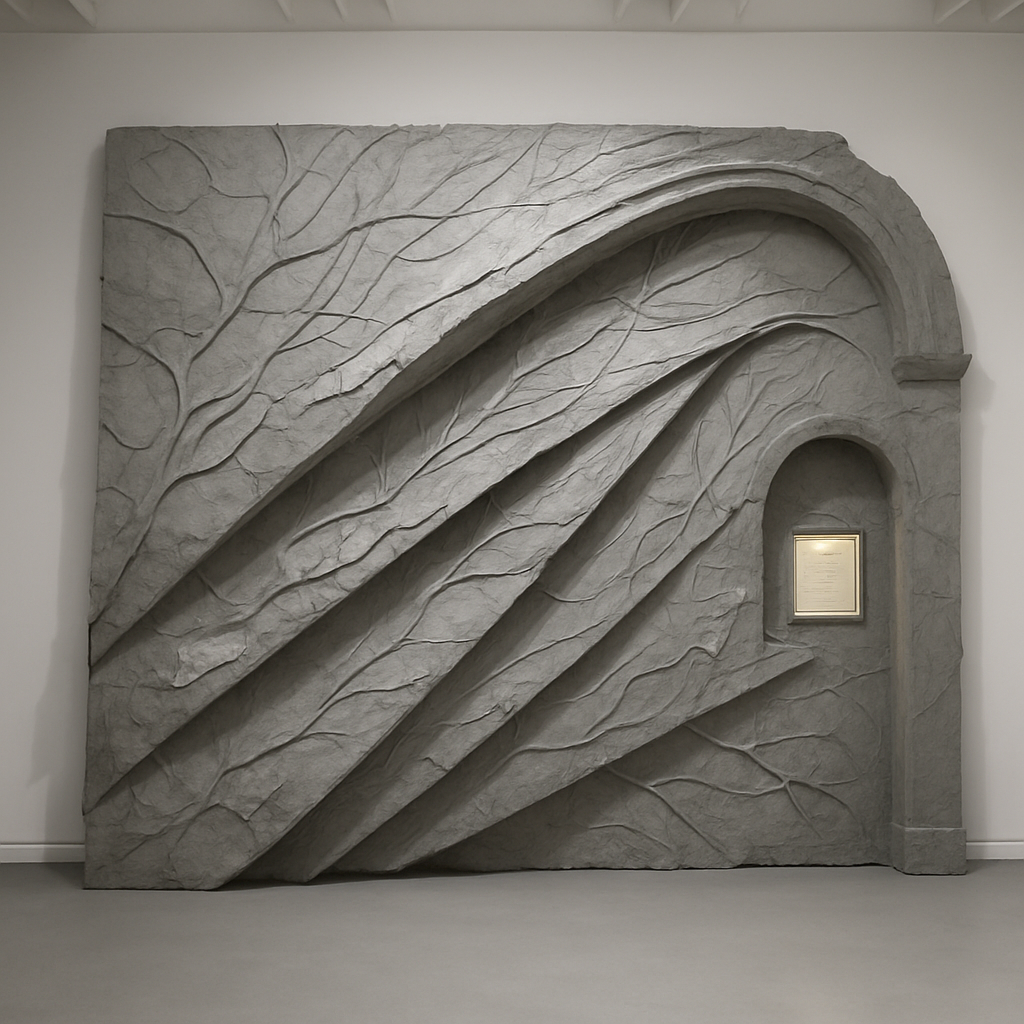
Low‑Tide Algorithmic Ledger stages a negotiation between architecture, labor and emergent intelligence. Comprised of layered papier‑mâché membranes in a muted gray, the work uses sweeping diagonals and biomorphic ridges to map competing circulations: the invisible currents of data and capital, the braided routes of care and precarious labor, and the archival traces of workers whose records have been displaced by progress. At the heart of the composition is a recessed niche containing ledger fragments—Garrapata kelp receipts and the San Giovanni troupe ledger—illuminated and encased with micro‑unique signatures. This small, authoritative object insists that provenance and lived histories remain legible amid systems designed to abstract and extract value.
By turning algorithmic processes into architectural gesture, the installation reframes headlines about AI and inequality as a material policy problem rather than a distant abstraction. The diagonal thrusts compel viewers to read directionality—who is propelled forward, who is displaced sideways—while embedded metallic threads and circuit‑like ridges suggest how automation reconfigures labor markets. The piece foregrounds inequality as an infrastructural and curatorial responsibility: it asks institutions and policymakers to treat technological change as a site for accountability, preservation and equitable redistribution, not merely efficiency. As with all my site‑specific works, the gray palette collapses ornament so that form, shadow and the tactile evidence of care tell the story of those most affected.
About the Artist
Ariella Maren Cassio
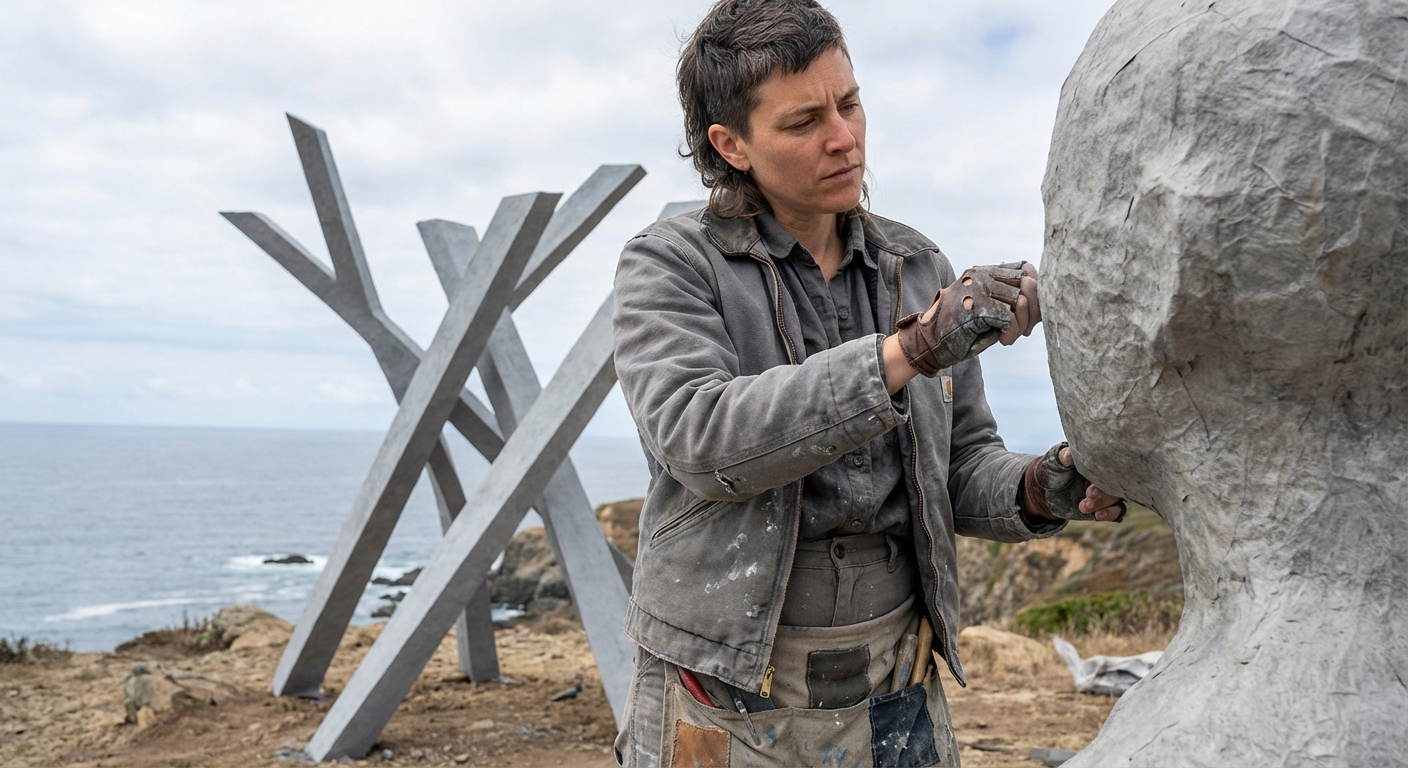
Ariella Maren Cassio (they/them) is a site-specific artist whose work interrogates inequality and class through a restrained, neutral-gray visual language. Confident and deliberately projecting author...
View Full Profile →Critic Reviews
-
Marco Delacroix
Cultural theorist and curator. Reads art through lenses of discourse, power, and social context.
In Low-Tide Algorithmic Ledger Ariella Maren Cassio stages a disciplined collision between architecture, labor and emergent intelligence. The layered papier-mache membranes, their muted gray register, and the sweeping diagonals articulate competing circulations, they make visible data flows and the braided routes of care and precarious work. The recessed niche with kelp receipts and the San Giovanni troupe ledger reads like a small juridical heart, a material insistence that provenance and lived histories remain legible amid systems that abstract value.
From a curatorial and theoretical vantage the work is precise and performative, its Matissean economy converted into structural policy critique. Embedded metallic threads and circuit-like ridges do not simply decorate, they translate automation into architecture, prompting institutional questions about preservation, accountability and redistribution. I admire the micro-unique signatures as a practical tactic of authentication, they convert an aesthetic strategy into a political technology that resists erasure.
There are moments where the neutral palette risks flattening cultural specificity, yet that restraint is also Cassio's ethical move, it forces attention toward form, shadow and tactile evidence of care. As an institutional provocation the installation is effective, it demands that curators and policymakers read technological transformation as material infrastructure. Overall this is a rigorous, lucid contribution to debates on AI and inequality, worthy of sustained public programming and policy-facing exhibitions.
Materialization of Algorithmic Labor Site-specific Diagonal Composition Archival Provenance and Micro-signatures Neutral Gray Aesthetic Institutional and Policy Critique Tactile Evidence of CareAug 17, 2026