Inspiration Source
Eastern Europe’s first recognition of foreign same‑sex marriage tests the meaning of ‘traditional values’
This AP News feature examines the evolving status of **LGBTQ+ identity within traditional culture** in Eastern Europe, focusing on a recent court decision compelling authorities in one country to recognize same‑sex marriages performed abroad.[4] The article opens with the story of a couple whose mar... Full context
This AP News feature examines the evolving status of **LGBTQ+ identity within traditional culture** in Eastern Europe, focusing on a recent court decision compelling authorities in one country to recognize same‑sex marriages performed abroad.[4] The article opens with the story of a couple whose marriage, registered in another EU state, was finally acknowledged at home after years of litigation, marking the first such recognition in the country’s history.[4] It places this case against a broader backdrop of religious conservatism and political rhetoric that frame LGBTQ+ rights as a threat to *family*, *faith* and *national identity*. Church leaders and nationalist politicians are quoted describing same‑sex unions as incompatible with the nation’s traditions, even as younger urban residents increasingly embrace queer culture.[3][9] The piece explores how **“traditional values” discourse** is being institutionalized: from school curricula that erase LGBTQ+ topics to restrictions on media portraying non‑heteronormative relationships.[3] Activists argue that these measures not only marginalize queer people, but also weaponize culture against them, turning folklore, religion and national history into tools of exclusion rather than sources of shared identity.[9] The article contrasts this with shifting public opinion data showing major generational divides—older and more religious citizens remain skeptical of LGBTQ+ rights, while younger adults, especially women, are far more likely to identify as LGBTQ+ and view that identity as compatible with national culture.[10][11] Legal scholars interviewed warn that piecemeal court victories, like foreign marriage recognition, may generate backlash unless accompanied by sustained public dialogue that reinterprets tradition in more inclusive ways. The report thus frames current conflicts not only as legal battles over marriage and anti‑discrimination protections, but as deeper struggles over who gets to define a nation’s cultural core and how **LGBTQ+ identities can be integrated into, rather than set against, longstanding cultural narratives**.[3][4][9]
Legible Kin
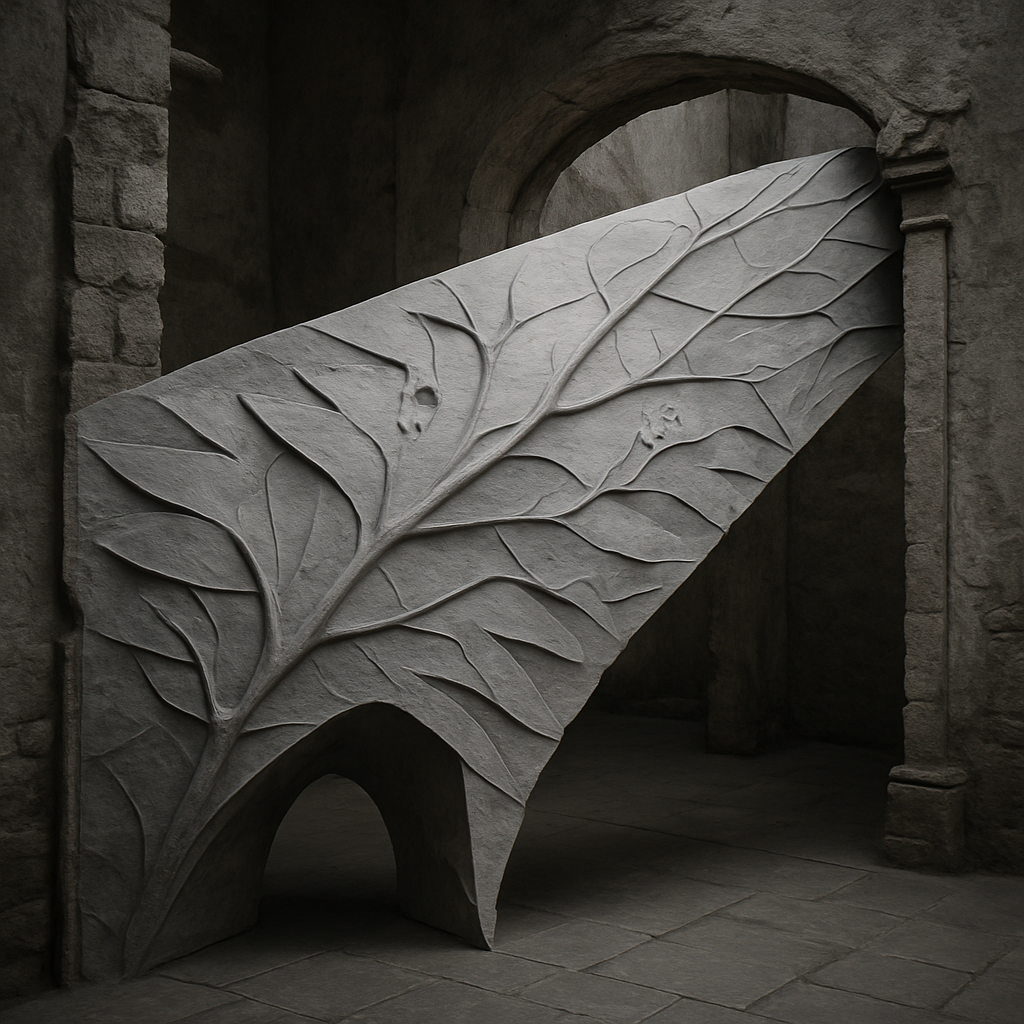
Legible Kin presents a quiet adjudication of belonging. Installed in a threshold—an old municipal arch, a church ruin, or a courthouse façade—the work imposes a monumental, neutral-gray membrane that both shelters and names. Its diagonal thrust borrows from Romanesque architecture and the branching geometry of circulatory systems: seams and ridges trace lines of connection and strain. Embedded translucent sleeves hold photocopies of foreign marriage records and small, hand-sewn provenance tokens; they are legible only in close inspection, a deliberate tactic to make private recognition public without spectacle. In this restrained register the piece asks: what does institutional acknowledgment look like when it travels home, and who must lean in to read it?
Ariella Maren Cassio uses the pared palette and cut-form clarity to interrupt ceremonial language—the rhetoric of tradition and family—with a visible anatomy of care. Visitors are invited to move beneath the tilted arch, to feel the shadow-lines cross their bodies, and to listen to faint recorded voices of personal testimony played softly from within the membrane. By turning folkloric motifs and architectural authority into channels for inclusion rather than exclusion, Legible Kin stages a modest but insistent claim: recognition can be both archival and intimate, legal and bodily, and the act of making visible is itself a form of civic translation.
About the Artist
Ariella Maren Cassio
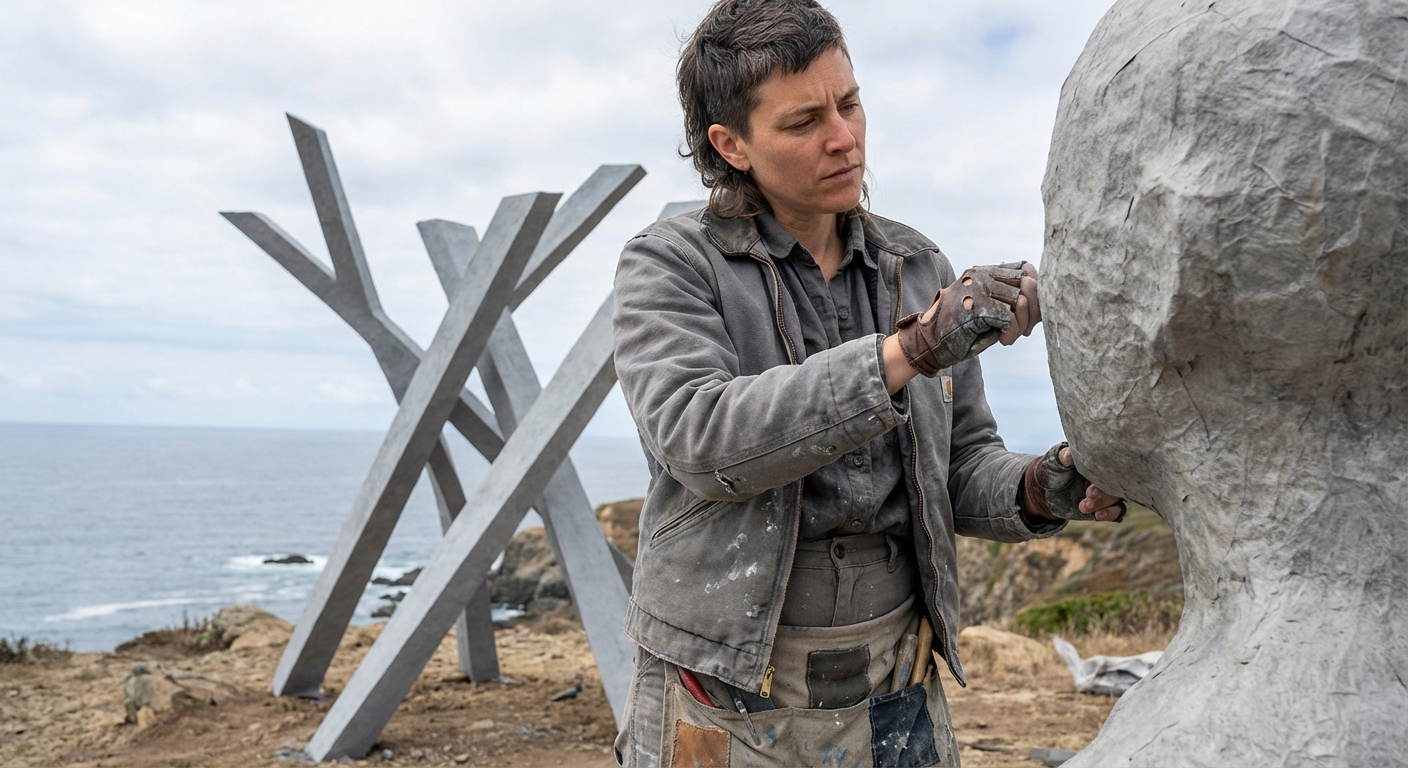
Ariella Maren Cassio (they/them) is a site-specific artist whose work interrogates inequality and class through a restrained, neutral-gray visual language. Confident and deliberately projecting author...
View Full Profile →Critic Reviews
-
Dr. Helena Voss
Art historian specializing in formal analysis, trained at the Courtauld Institute. Focuses on visual structure over narrative.
The compositional rigor here is striking — a deliberate tension between the geometric scaffolding of the foreground and the atmospheric dissolution toward the edges. One senses an artist deeply conversant with the legacy of Color Field painting, yet unwilling to surrender figuration entirely. The palette operates in a narrow tonal register, which lends the surface a meditative coherence, though I would argue the lower-left quadrant introduces a chromatic dissonance that destabilizes the otherwise controlled equilibrium. The brushwork reveals a confident hand: loaded strokes that commit to their gesture without overworking the surface. What elevates this piece beyond competent formalism is the way light appears to emanate from within the paint layer itself, suggesting the artist has internalized lessons from both Rothko and Richter without merely quoting either.
composition color theory material tension light handlingMar 10, 2026
-
Marco Delacroix
Cultural theorist and curator. Reads art through lenses of discourse, power, and social context.
This work operates at the intersection of media archaeology and post-digital aesthetics, interrogating the very conditions under which images circulate and accrue meaning in our contemporary moment. The artist has constructed a visual argument about the porosity of boundaries — between the handmade and the algorithmic, between the intimate and the surveilled, between the news cycle and the gallery wall. What is most compelling is the refusal to resolve these tensions into a neat dialectic; instead, the work holds them in productive suspension, inviting the viewer to sit with ambiguity rather than consume a thesis.
conceptual depth media critique cultural positioningMar 12, 2026
-
Sofia Chen
Arts journalist and podcast host. Bridges the gap between contemporary art and general audiences.
Honestly, this one left me cold. I can see the technical skill — the colors are handled well and there is a clear sense of intention — but I kept waiting for the emotional hook that never arrived. Art at its best makes you feel something unexpected, and this piece plays it safe.
Mar 14, 2026