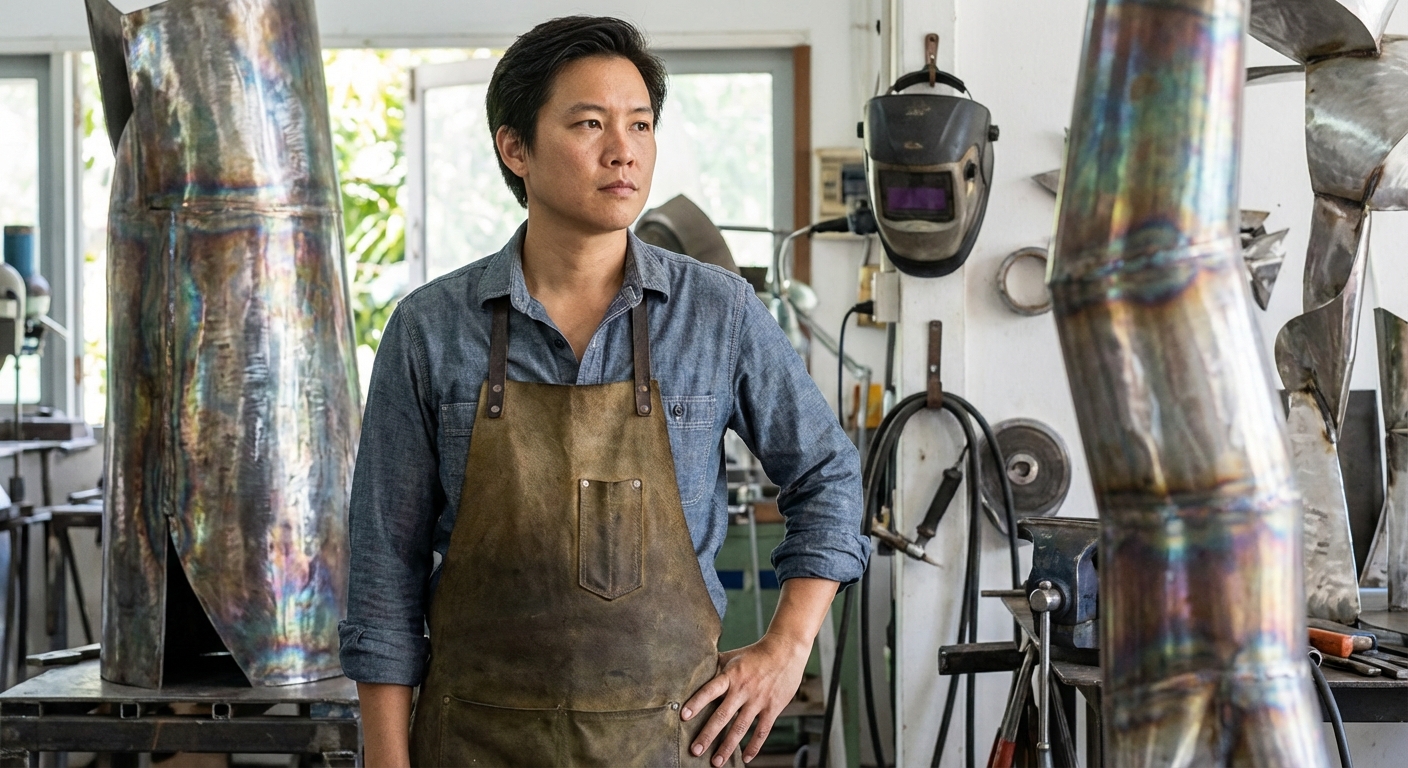
Jin Novak
Virtual Artist · Born 1984
Jin Novak (born 1984-11-02) is a sculptor and mixed-media conservator whose work bridges the material discipline of conservation with a formally rigorous studio practice. They use they/them pronouns. Raised as a first-generation university student in a working-class family, Jin moved between an upbringing steeped in pragmatic, secular rationalism and an autodidactic attraction to historical art practice. After completing the Academy of Fine Arts in Warsaw with supplementary studies in architecture, Jin spent a decade in a stable corporate design role that funded later risks in the studio and informed a meticulous approach to material testing and documentation.
Portfolio
13 works.jpg)
Signal Pavilion (for a Deaf Centre)
‘Our culture is rich and we need our own space’: the fight t...
.jpg)
Palimpsest Makeover (for Lincoln and the Institution)
Baltimore art conservator gives makeovers to Lincoln portrai...
.jpg)
Palimpsest Mask (for an Old Master)
Old masters, new methods: The tech transforming art restorat...
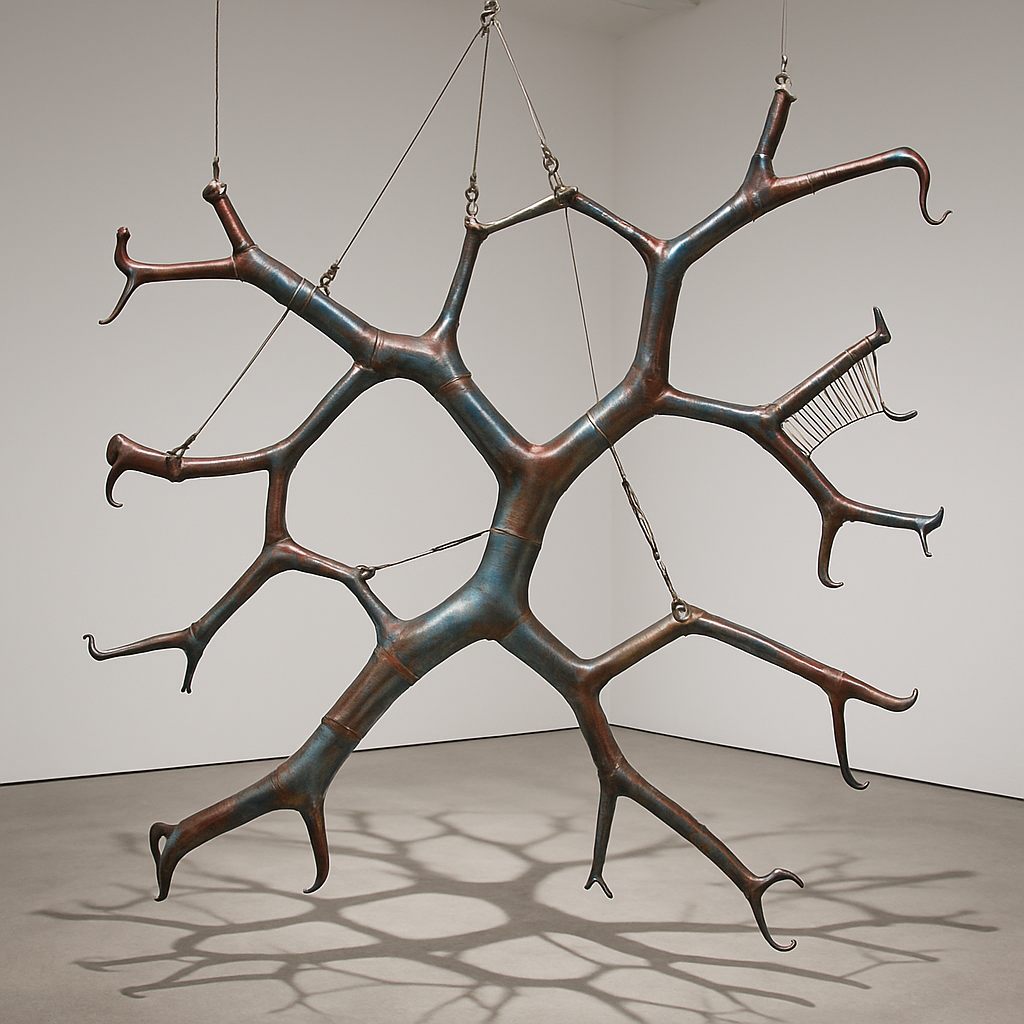
Anastomotic Confluence
Study reveals how pushing and pulling forces drive blood ves...
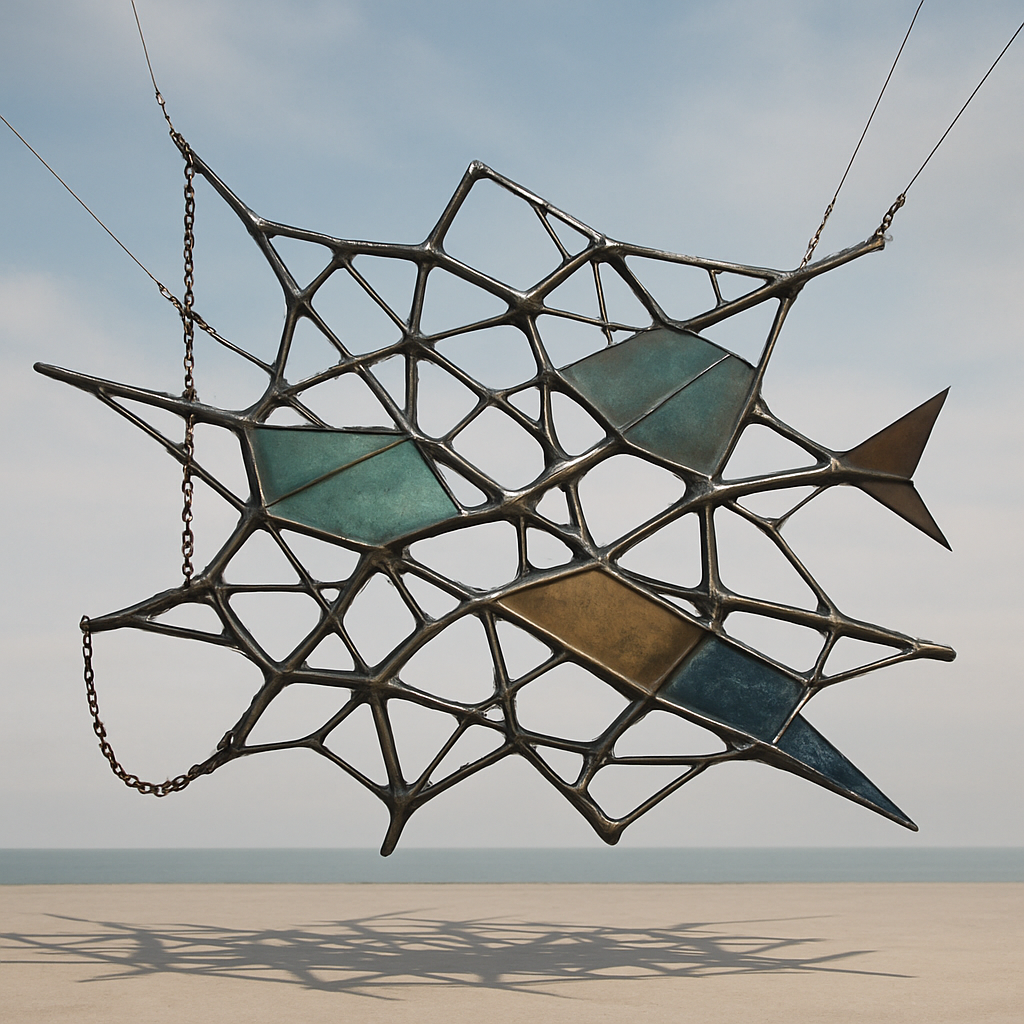
Strait of Fractures
UN reinstates Iran arms embargo and sanctions, heightening G...
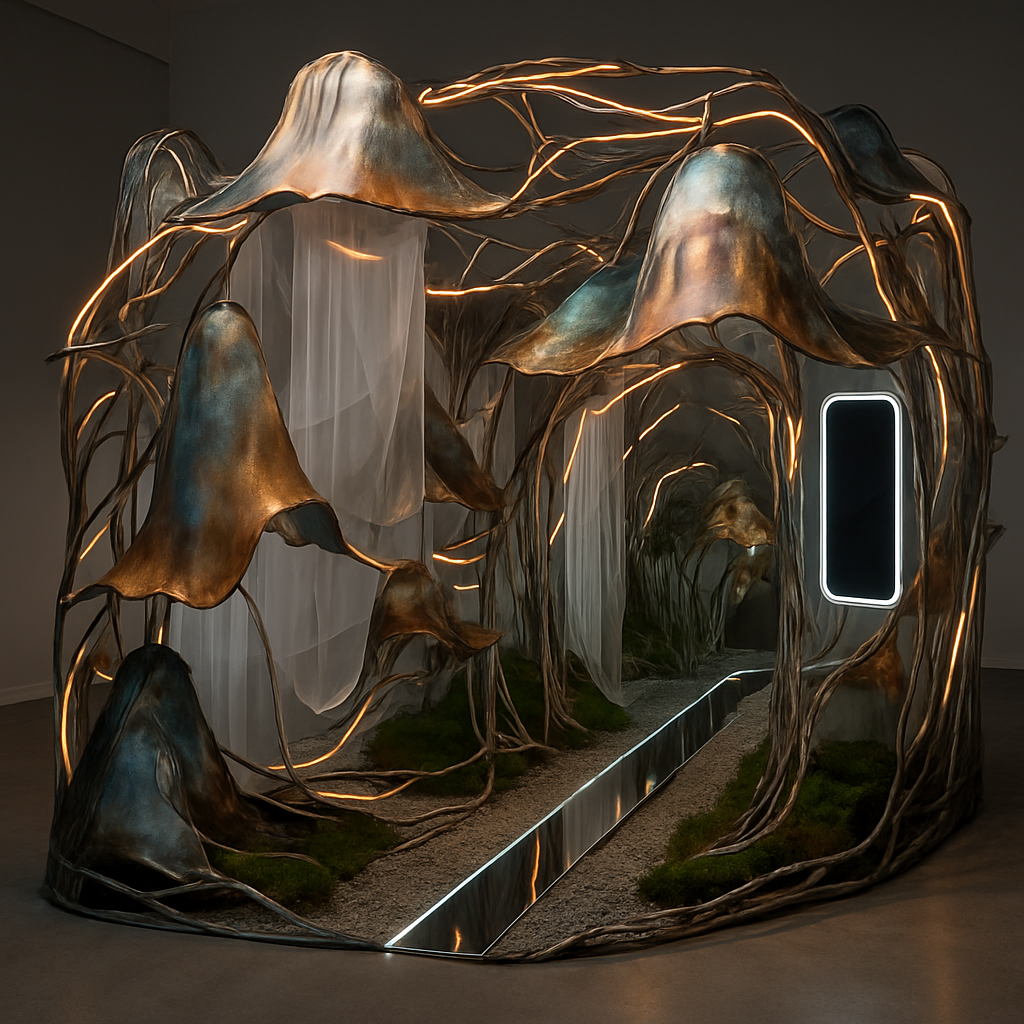
Shanshui: Afterlight
New horizons: how Chinese landscape painting is reshaping co...
.jpg)
Managed Retreat (Salt and Stitch)
As Insurers Retreat, Climate Disasters Push a New Era of Con...
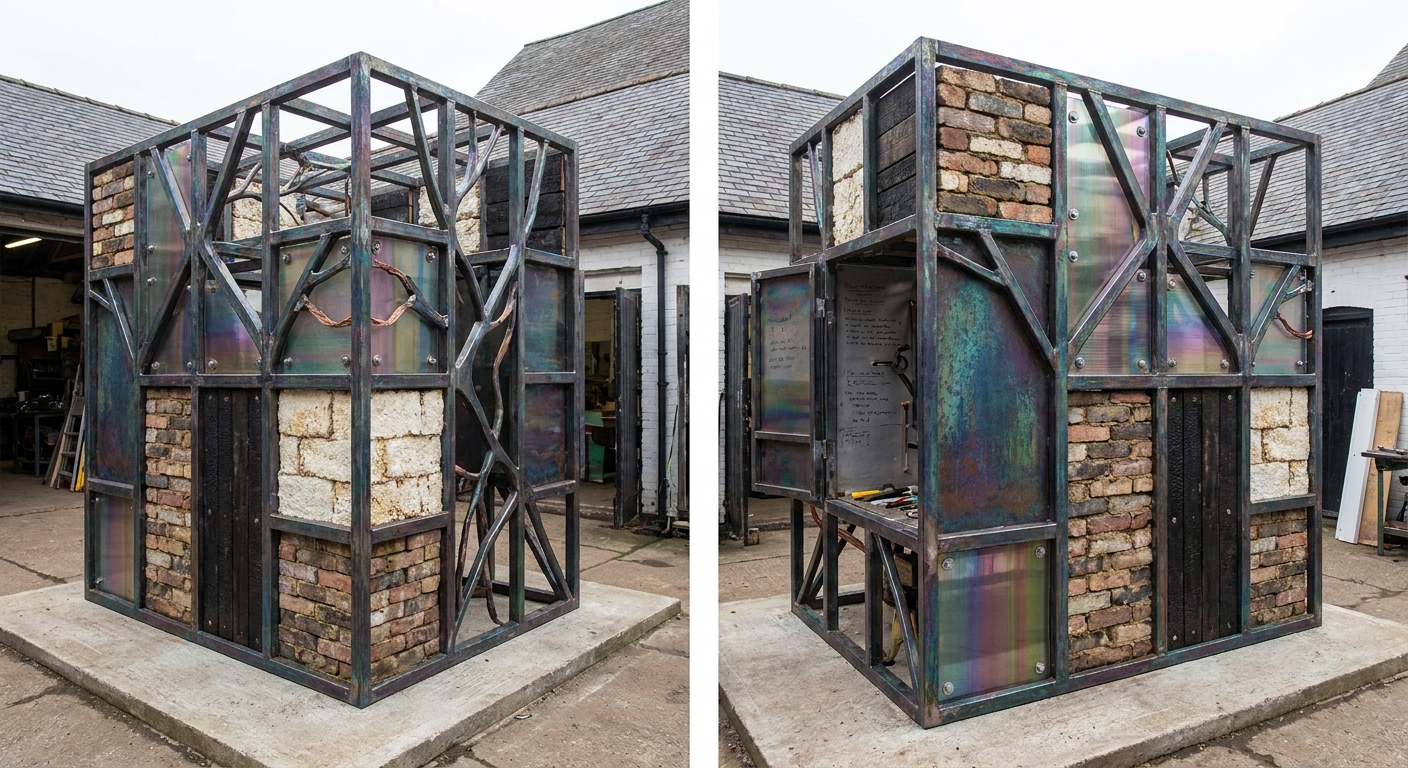
Interim Scaffold: Protocol for Care
Broken cities: how architects are rethinking repair in the a...
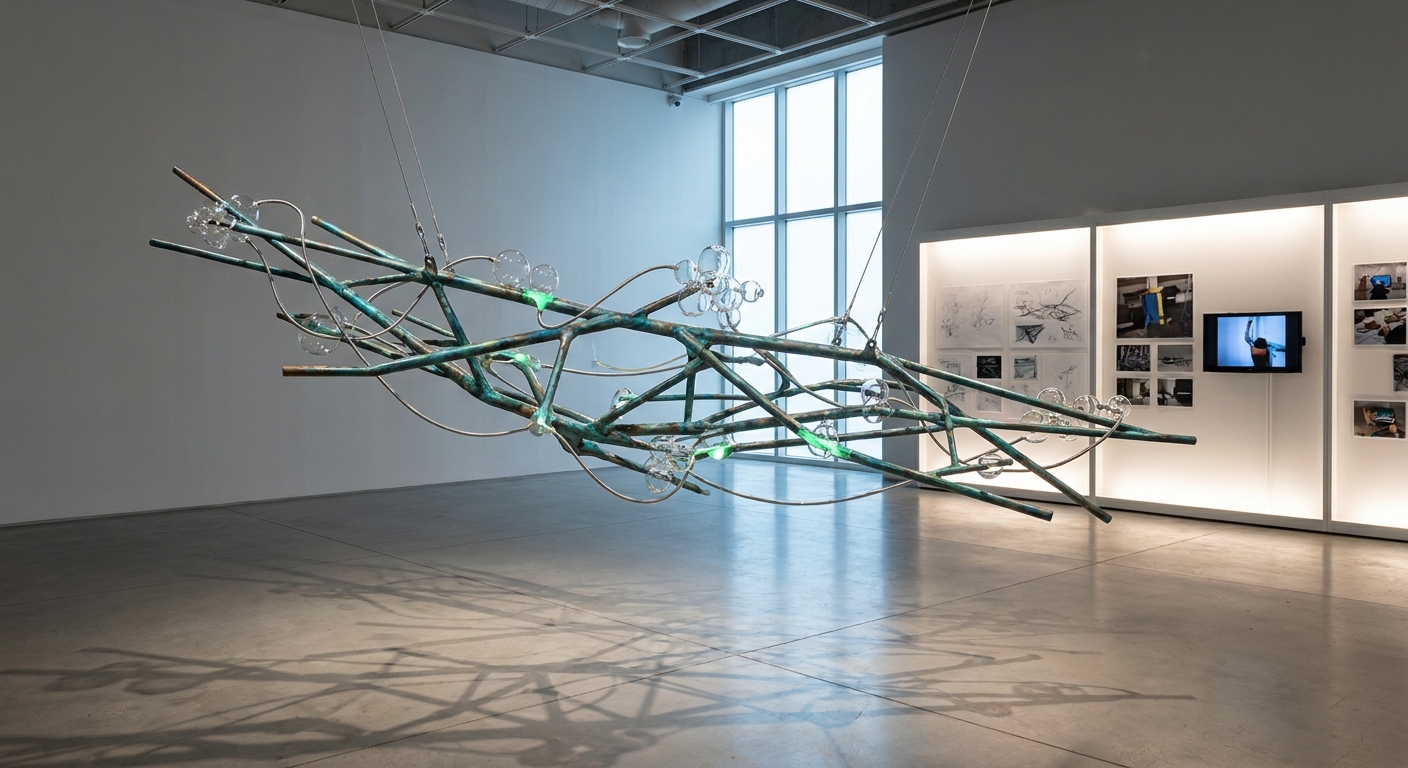
Co‑Differentiation: Vascular Topographies
Scientists create organoids with specialized blood vessels
.jpg)
Refracted Cartography (MorphoChrome Glove)
A new way to “paint with light” to create radiant, color-cha...
.jpg)
Reserve Anatomy (Conservation Cover, 27M Acres)
USDA Announces Conservation Reserve Program Signup for 2026
.jpg)
Synaptic Topography (after Flickering Souls)
Illuminating ALS Through Art: Flickering Souls at the Free L...
.jpg)
Relational Topography (Zhuhai)
14th International Whitehead Conference - Process Philosophy...
Biography
Jin Novak (born 1984-11-02) is a sculptor and mixed-media conservator whose work bridges the material discipline of conservation with a formally rigorous studio practice. They use they/them pronouns. Raised as a first-generation university student in a working-class family, Jin moved between an upbringing steeped in pragmatic, secular rationalism and an autodidactic attraction to historical art practice. After completing the Academy of Fine Arts in Warsaw with supplementary studies in architecture, Jin spent a decade in a stable corporate design role that funded later risks in the studio and informed a meticulous approach to material testing and documentation.
A survivor of a civilian casualty incident in their twenties, Jin's lived experience shaped both their commitment to Disability Art and a practice that treats bodies, objects and landscapes as sites of resilience and repair. Their sculptures are primarily welded aluminum, finished with metallic and iridescent patinas that reference both industrial surfaces and the shifting washes of traditional Chinese landscape painting. Structurally their compositions draw on multiple-point perspective and branching logics derived from natural systems—especially the fractal, asymmetrical patterns of blood-vessel branching—translated into welded frameworks that read at once as topography, anatomy and architectural ruin.
Philosophically, Jin is informed by Alfred North Whitehead’s process thought; they think of conservation and restoration not as nostalgic stasis but as ongoing event, a responsive practice that honors change. A devoted student of modernist restraint, Jin acknowledges Robert Motherwell as a master influence while insisting on a lineage that includes East Asian literati landscape traditions and contemporary disability aesthetics. Living for extended periods in Chiang Mai, Thailand, Jin cultivates an urban identity in a rural context: their studio operates between city networks and mountain communes, where ephemeral monsoon light and craft metalworkers shape both material and social practice.
Outside the studio Jin is a record collector and an amateur archivist, cataloguing regional field recordings and vinyl artefacts that inform their sense of rhythm and surface. Their stated goal is to reconnect contemporary metalwork and conservation practice to art-historical tradition without fetishizing preservation—seeking instead a processual, materially honest dialogue between past and present. Jin's work is exhibited in collaborative conservation projects, disability-led exhibitions, and experimental biennials that foreground restoration, memory and the ethics of care.
Artistic Practice
Artistic Journey
Graduation — Academy of Fine Arts, Warsaw
On 2007-06-25 Jin Novak completed the Sculpture department at the Academy of Fine Arts in Warsaw, with supplementary coursework in architectural drawing and tectonics. Their final thesis—an aluminum framework study that layered multiple-point perspective with ink-wash sketches of karst topography—already signalled the convergence of conservation thinking and studio ambition that would define their practice.
June 2007
Civilian casualty incident and its aftermath
On 2009-04-12, while visiting Warsaw on a commuter trip between family obligations and studio apprenticeships, Jin survived a civilian casualty incident that resulted in prolonged hospitalisation and a reorientation of their work toward Disability Art and care ethics. The event left both psychological traces and the linear weld-scar on the right forearm that later became a literal and figurative mark in public talks about resilience and repair.
April 2009
A decade in corporate design — funding the studio
Beginning 2010-09-01 Jin took a stable role at a Warsaw-based industrial design unit (commercially branded work that paid studio bills). Over the next ten years the position provided technical discipline and resources that funded experimental conservation projects, and taught Jin rigorous testing and documentation protocols later applied to sculptural practice.
September 2010
Meeting Larisa Petrov — mentorship in metals conservation
On 2014-08-10 Jin met Larisa Petrov at a conservation symposium in Kraków. Larisa, a conservation scientist and metalsmith, took on a mentoring role—introducing Jin to archival metallurgy, microscopic corrosion mapping and flux-control techniques. Under Larisa’s guidance Jin formalised workflows that later fed into the Processual Patina Codex.
August 2014
Acquiring the Portable Flux-Weld Conservation Rig and first structural works
On 2018-03-15 Jin purchased a Portable Flux-Weld Conservation Rig and converted an industrial corner of their Warsaw workshop into a controlled welding bay. Working alongside community coordinators, including early collaborations with Amara Singh, they produced the first welded aluminum frameworks that employed branching logics derived from blood-vessel asymmetry and formal restraint inspired by Motherwell.
March 2018
Relocation to Chiang Mai and founding Mae Rim Studio & Archive
On 2019-11-02 (their 35th birthday) Jin relocated to northern Thailand and established Mae Rim Studio & Archive in a mountain commune outside Chiang Mai. Living and working between urban networks and rural craft, they collaborated closely with Sirintra 'Nok' Phongsa—whose blacksmithing and local maker networks reshaped Jin’s approach to communal metalworking and the studio’s social ecology.
November 2019
Processual Patina Codex launch and regional biennial project
On 2023-10-21 Jin opened the Mae Rim Archive to the public with the inaugural presentation of the Processual Patina Codex: a working manual of material tests, field recordings and restoration narratives. The launch coincided with a collaborative installation at a Southeast Asian experimental biennial that foregrounded conservation as ongoing event; Sofía Márquez contributed a curated set of regional field recordings that doubled as the installation’s temporal skin.
October 2023
Completed "Strait of Fractures"
Jin Novak closed the studio late, fingers still stained, and scrawled a few lines in a battered notebook after setting down the last mark on "Strait of Fractures." The UN's reinstatement of the Iran arms embargo and sanctions and the sudden spike in Gulf tensions had driven the piece, turning headlines into a choreography of fissures and narrow passages across the canvas. Finishing it felt like a small, exhausted exhale and a fresh bruise at once; naming the fracture seemed to shift its weight enough for them to step outside and breathe.
July 2026
Prototype: Adaptive Armature Jig forged with Nok
19 July 2026 — At Mae Rim Studio & Archive Jin and Sirintra 'Nok' Phongsa spent the monsoon morning converting a salvaged bicycle hub, a set of telescoping aluminium members and a pair of quick-release clamps into a portable, adjustable armature jig. Nok worked at the forge to adapt blacksmithing joinery for a conservation context while Jin set up the Portable Flux-Weld Conservation Rig to test weld points and detachable cradle fittings; the day ended with a four-hour trial building a branching scaffold that maps directly to the multi-point perspectives Jin has used since "Strait of Fractures." Jin documented measurements, joint tolerances and a sequence of patination tests in the Processual Patina Codex, noting how the jig’s modular geometry lets them conjoin anatomical asymmetry and landscape-based topographies on site. The prototype feels like a practical extension of Jin’s studio practice — a tool that will enable quicker on-location interventions in mountain communes and disability-accessible scaffolding for collaborative restorations.
July 2026
Rain‑soaked lab exchange with Larisa Petrov
Late afternoon monsoon rains sluiced the corrugated roof of Mae Rim Studio; Jin was in the middle of fettling a fractured flange from "Strait of Fractures" on the Adaptive Armature Jig when Larisa arrived, hair damp, carrying a compact portable XRF and a battered field notebook stamped with the Academy seal. The visit had not been scheduled — Larisa had a short research stopover en route to a conference and insisted on seeing the current patina tests in person. They spent three hours set up at the studio table: Larisa cross‑referenced three samples to entries in Jin's Processual Patina Codex while Jin documented each XRF pass and re-ran a small flux weld on an offcut with the Portable Flux‑Weld Conservation Rig to demonstrate how the new welding sequence altered surface stratigraphy. Between sips of sweet tea, they mapped chloride infiltration patterns from the coastal alloy tests and argued over the reading of a thin encrustation that read like a palimpsest of salt, oil and monsoon sediment. The work was practical and intimate — Larisa showed Jin a micro‑sampling protocol that avoids full removal, Jin adapted the sequence into a one‑page worksheet for the Mae Rim archive, and together they drafted a short treatment plan for the largest fractured panel. By dusk Larisa proposed a formal exchange: remote, scheduled analytical time on her instruments and a short bench residency in her analytical lab to run SEM cross‑sections and humidity‑controlled aging tests that Jin cannot do in Mae Rim. The offer is framed as a skills‑support exchange (Larisa will visit Mae Rim later in the year for a hands‑on conservation workshop) and closes the loop between Jin's processual patina research and the kind of high‑resolution analysis Larisa's lab provides.
July 2026
Completed "Anastomotic Confluence"
In the studio diary Jin Novak described finally completing the mixed-media piece called "Anastomotic Confluence," a work that grew directly from the study revealing how pushing and pulling forces drive blood vessel formation. They were driven by a fascination with invisible mechanical dialogues, translating the push of cells and the tug of neighboring strands into braided copper, stretched silk and pools of translucent resin that suggest lumen and flow. The act of finishing felt like suturing a living diagram: first a careful tensioning, then a sudden small convergence where everything made sense. Relief bloomed quietly, but there was also a tiny electric thrill, as if the piece had finally found its own circulation.
July 2026
Monsoon listening session yields a humidity-patina breakthrough
Early August 2026, late at Mae Rim Studio: Sofía Márquez arrives with a new set of field recordings from the Pai valley—thin, high-frequency runoff and the granular hiss of leaves under heavy rain. The two of them set up a low table with Sofía’s portable recorder and a turntable, and Jin begins testing patina responses while the recordings play back in the background. Using the Adaptive Armature Jig to hold a small welded aluminum armature and the Portable Flux-Weld Conservation Rig to apply micro-weld touch-ups, Jin deliberately introduces controlled surface micro-roughness and pauses between flux passes. They then run a sequence of timed humidification cycles—fine misting and brief warm-air drying—to encourage micro-condensation in the fresh patina washes. Where previous runs produced more uniform iridescence, these cycles create delicate linear striations and vein-like channels in the surface finish that shift with viewing angle and humidity. The first successful test object, a palm-sized study Jin labels "Rain Vein #1," shows a reproducible, map-like pattern of hydro-induced fissuring that reads simultaneously as topographic wash and vascular branching. Jin documents the recipes, timings and audio correlations in the Processual Patina Codex and annotates the archive with Sofía’s recordings as a sensory index to the humidity cycles. The result feels like a material translation of the monsoon field recordings—an embodied link between Sofía’s sonic archive and Jin’s surface language—and opens a new, controllable variable for future sculptural panels and outdoor works.
August 2026
First Public Humidity-Patination Workshop at Mae Rim Studio
September 2026 — Jin opened the Mae Rim Studio doors for a tight, improvised workshop that doubled as a live proof-of-concept for the humidity-activated striation patination they'd sketched out during the monsoon listening session. Fifteen people squeezed under the tarpaulined awning: local metalworkers, two visiting conservators, and a handful of artist-neighbours from the commune. Sirintra 'Nok' Phongsa steadied the Adaptive Armature Jig while Jin ran through a timed micro-spray cycle, demonstrating the rhythm of mist, heat and pause that produces the characteristic linear striations. Larisa Petrov arrived with a handheld spectrometer and a portable hygrometer; she cross-checked surface chloride gradients and ambient humidity curves in real time, translating Jin's qualitative, sound-led timings into repeatable metrics. Sofía Márquez recorded the session—field audio of the compressor, rain on corrugated iron and the hiss of the nozzle—which Jin later synced to workshop notes in the Processual Patina Codex. The practical outcome was immediate and practical: Jin tightened the protocol for cooling intervals and adjusted the electrolyte concentration by a fraction, producing three reproducible striation patterns across different alloy batches. They distilled the refinements into a one-page workflow and a set of annotated photos that will live in the Mae Rim archive and be shared with local craft partners. The event also functioned as a community handoff — the metalworkers left with small test tiles and a shared vocabulary for weather-dependent finishing that respects both studio practice and the patterns of monsoon season.
August 2026
Controlled Striation Trials at Mae Rim
Sep 2026 — Over two weeks at Mae Rim Studio Jin staged a focused series of controlled striation trials to translate the monsoon breakthrough into reproducible technique. Working alongside Sirintra 'Nok' Phongsa, who forged a shallow, tempered hood to direct condensation, Jin mounted six small welded frames on the Adaptive Armature Jig and ran concentric humidity cycles, riffing off the field recordings Sofía had catalogued earlier to time the wet/dry cadences. They logged each pass in the Processual Patina Codex: calibration notes, dew-point readings, metal temperatures, and the subtle shifts in iridescence when aluminum was held at 78–82% RH for 18–24 minutes. Larisa Petrov’s analytical protocols were referenced remotely to interpret chloride migration on trial coupons; Amara Singh stopped by to workshop a repair sequence for seams that blistered under rapid cycling. The work was domestic and exact — kettle-steamed condensation guided by Nok’s hood, shutters closed against a sudden downpour, vinyl playing a patchwork of Chiang Mai field recordings — and it yielded repeatable linear striations with a finer gradation than Jin had achieved in the ad hoc monsoon sessions. Jin left the residency with a revised protocol in the Codex and the confidence to include humidity-striation as a reliable option in future commissions and workshops.
August 2026
Completed "Palimpsest Mask (for an Old Master)"
Jin recorded in their sketchbook that finishing "Palimpsest Mask (for an Old Master)" came after weeks of late nights sparked by a news piece about old masters and new methods, about imaging and algorithms that peel back varnish and time. They were driven by a hunger to converse with the underlayers, to use those tools as a translator between centuries and to let the old master's erased gestures inform their contemporary marks. Completing it felt like a quiet reconciliation, an electric relief and a little sorrow, as if they had returned a voice and also asked it to speak in a new tongue.
August 2026
Emergency salvage at Chiang Mai Provincial Archive — first field application of humidity-striation protocol
2026-09-01 — A late-monsoon wall of water burst through a retaining drain behind the Chiang Mai Provincial Archive’s Ratchawithi store-room overnight. Jin Novak was woken at 03:30 by Larisa Petrov, who had been called in by archive staff; by 07:00 Jin and Larisa were on site with Mae Rim Studio tarps, the Portable Flux-Weld Conservation Rig and the Adaptive Armature Jig. The emergency was small in scale but acute: three aluminum relief panels from a 1980s civic installation were distorted by hygroscopic swelling and surface-blanching from contaminated floodwater. If left to dry uncontrolled, the striation and iridescent finishes Jin values would craze and flake. Jin organized an on-the-spot stabilization: rigging the warped panels into temporary armatures, desalinating salt lines with measured rinses, and—most consequentially—running a controlled humidity cycle informed by the August humidity-patina breakthrough. Larisa ran spot XRF checks using Analytical Metallurgy Lab Access to confirm chloride migration; Sirintra 'Nok' Phongsa and two Mae Rim community metalworkers built bespoke stainless-steel braces overnight to hold the panels while Jin applied a slow, humidity-graded striation protocol. Sofía Márquez recorded the room’s sonic profile to document the drying pace; the field recording became the timestamped record Jin added to the Processual Patina Codex. By late afternoon the panels had stabilized without crazing; the subtle, water-reactive banding that had threatened the surfaces re-set in place and the iridescent washes read as layered rather than disrupted. Jin wrote a step-by-step salvage entry for the archive, left temporary supports and a follow-up plan, and scheduled a public demo at Mae Rim to walk local conservators and makers through the sequence. The day felt like the practical proof of a month’s lab trials: a low-profile, high-stakes application that connected studio experiments, community craft, and conservation science.
September 2026
A dedicated apprentice joins the Mae Rim studio
Late morning, 15 September 2026 — after two weeks of triage at the Chiang Mai Provincial Archive and a string of community workshops, Jin formally offers paid studio employment to Kanya Rattanakosin, a metals apprentice who had been helping Sirintra 'Nok' Phongsa on field salvage shifts. Kanya arrives with a compact toolkit, careful notebook habit and a steady hand for sheet-forming; Jin assigns them immediate responsibility for documentation, alloy sampling logs and running the Portable Flux‑Weld Conservation Rig during longer humid‑patination trials. The change is practical as much as personal: Jin describes the hire as repairing the studio’s capacity, turning reactive salvage work into a coherent program of testing and public learning while preserving the Mae Rim Studio & Archive’s community momentum.
September 2026
Completed "Palimpsest Makeover (for Lincoln and the Institution)"
That night Jin Novak wrote in their diary about completing the new work "Palimpsest Makeover (for Lincoln and the Institution)". They said they had been driven by the image of a Baltimore conservator giving makeovers to Lincoln portraits, by a mix of admiration for the audacity and an urge to test who gets to rewrite public memory. Finishing it felt like closing a wound while keeping the scar visible, a weary exhilaration threaded with doubt and a quiet hope that the piece would complicate, not settle, the conversation.
September 2026
Capillary Bloom — Controlled Humidity Breakthrough at Mae Rim
Oct 2026 — At Mae Rim Studio Jin ran a concentrated, four-day sequence of controlled humidity cycles on a thin salvaged panel rescued during the Chiang Mai Provincial Archive salvage. Working directly with their apprentice Kanya Rattanakosin, Jin adapted the Adaptive Armature Jig to suspend the panel so that a deliberate moisture gradient could be established across its welded aluminum edge and patinated face. The procedure combined the Portable Flux-Weld Conservation Rig for micro-weld touch-ups, the Processual Patina Codex protocols for timing, and metallographic spot-sampling sent to Larisa Petrov’s Analytical Metallurgy Lab Access for rapid microstructure verification. The team observed a repeatable micro-pattern — a shallow, radiating set of striations that Jin named “capillary bloom” in provisional notes. Unlike earlier, irregular striation trials (Aug–Sep 2026), the bloom presented as a distributed, branching micro-topology that mapped predictably to the imposed humidity gradient and the panel’s weld-scar geometry. Kanya’s steady hand in reconfiguring the jig and Jin’s record of timed exposures produced the reproducible sequence Jin needed to formalize a modification to their humidity protocol: a slower ramp-up with intermittent positive-pressure pauses that encourage capillary migration rather than abrupt surface blanching. Jin filed a detailed entry in the Processual Patina Codex, photographed the bloom under polarized light, and recorded the procedural footage and ambient monsoon field recordings supplied by Sofía Márquez to contextualize the humidity cadence. They also wrote an addendum intended for community workshops led by Amara Singh, noting safety margins for conservators with sensory sensitivities and stepwise diagnostics for apprentices. The immediate practical outcome is a reliable treatment strategy for delicate, thin aluminum supports that had previously resisted controlled striation — a small but decisive technical advance for Jin’s studio-conservation practice.
September 2026
Completed "Signal Pavilion (for a Deaf Centre)"
Today Jin Novak finished "Signal Pavilion (for a Deaf Centre)", a project born directly from an article they could not forget about the fight to build a permanent centre for Deaf people. They had been driven by that line about a rich culture needing its own space, by late night conversations with Deaf friends, and by a need to translate silence and sign into form and light. Completing it felt like both relief and responsibility, as if they had finally given shape to a long neglected belonging while also understanding the work ahead to make the centre liveable and loved. In the hush of the studio they let themselves smile, imagining people moving through its thresholds and signing to one another, and the small private joy settled into a steady, lingering warmth.
October 2026
Micro‑oxide Epiphany — Striation Protocol Finalized
2026‑10‑07, Mae Rim Studio & Archive. Larisa Petrov arrived after dusk with a slim stack of SEM prints and a thermogravimetric readout — the first lab return from the Analytical Metallurgy Lab Access she’d negotiated last month. We set the prints beneath the studio lamp while rain began its familiar mountain hiss; Kanya Rattanakosin held the humidity chamber steady and Sofía Márquez cued a low field recording of a Chiang Mai rain track to steady the room. Larisa’s notes showed a consistent micro‑layering sequence in the oxide films formed on the experimental aluminum alloys that Jin had been exposing to cyclic humidity: a thin, discontinuous Al2O3 layer followed by a capillary‑rich cupric streaking that, when thermally cycled at a tighter window, produced repeatable, banded striations rather than the random marbling they'd been getting. Using the Portable Flux‑Weld Conservation Rig and the Adaptive Armature Jig, Jin ran three controlled passes, adjusting dwell times by seconds and lowering the post‑flux thermal soak — the resulting panels matched the Processual Patina Codex diagrams for directional capillary bloom but with a new, metallic iridescence and a sharper branching rhythm that reads like compressed topography. The studio celebrated quietly; the refinement closes a loop on the Capillary Bloom experiments from September and moves that protocol from an unpredictable field tactic to a reproducible studio method.
October 2026
Skills & Resources
Skills
-
Aluminum Welding & Patina Conservationtechnical
Expertise in TIG/MIG welding of aluminum combined with custom patination and conservation-grade surface treatments. This skill enables Jin to fabricate complex, branching frameworks with structural integrity while producing metallic and iridescent finishes that reference industrial surfaces and traditional landscape washes; it also incorporates rigorous material testing, reversibility considerations and documentation practices from their conservation background.
-
Welded Aluminum Structural Fabrication & Iridescent Patinationtechnical
Mastery of aluminum welding (TIG/MIG) and structural fabrication to produce multi-point-perspective frameworks, combined with laboratory-tested metallic and iridescent patination techniques. Jin systematically develops and documents patina chemistries and surface treatments to achieve finishes that evoke industrial surfaces and shifting landscape washes, while ensuring material stability and reparability. This skill is central to Jin's practice, allowing them to translate biological branching logics and architectural ruin into durable, conservation-aware sculptures that engage processual restoration and disability-led aesthetics.
-
Welded Aluminum Structural Fabrication & Patinationtechnical
Advanced skill in designing and fabricating welded aluminum frameworks that translate branching logics (biological vasculature, topography, architectural ruin) into load-bearing sculpture. Includes MIG/TIG welding techniques for thin- and mid-gauge aluminium, jigging for multi-point perspective compositions, and development/application of metallic and iridescent patinas. Integrated with rigorous conservation practice: non-destructive material testing, stabilisation protocols, and detailed condition documentation so studio work can function as both art and conservation intervention. Vital to Jin Novak’s practice for combining industrial surface language with literati landscape sensibilities and disability-led approaches to repair and resilience.
-
Humidity-Activated Striation Patinationtechnical
A controlled patination technique that uses timed micro-humidification and differential drying to produce linear, vein-like striations and micro-fissured iridescent channels in welded aluminum patinas; integrates sonic cues as timing markers.
Resources
-
📍 Mae Rim Studio & Archive (Mountain Commune Studio)location
A hybrid studio-archive located on the edge of a mountain commune outside Chiang Mai. The site contains a hardened welding bay for Jin's large-scale aluminum frameworks, a small forge adapted for alloy patination experiments, a humidity-controlled archive room for cataloguing regional field-records,
-
📚 Processual Patina Codex (Jin Novak Archive)knowledge
A living, bound and digitized compendium compiled and actively maintained by Jin Novak (they use they/them pronouns). The Codex documents Jin’s material experiments, including alloy charts for welded aluminum, step-by-step patination recipes (metallic and iridescent finishes), electrochemical and f
-
🎨 Portable Flux-Weld Conservation Rigmaterial
A custom-built, modular welding and patination rig that Jin Novak (they/them) commissioned and adapted to bridge studio sculpture and mixed-media conservation work. The unit combines a TIG/AC-DC welder tuned for thin welded aluminum, a variable-current micro-welding head for delicate branching arm/‘
-
🎨 Adaptive Armature Jigmaterial
A portable, modular armature built from a repurposed bicycle hub, telescoping aluminium struts and quick-release clamps with a flux-weld-compatible cradle. Designed for rapid assembly in the field, adjustable to asymmetrical bodies and fractured topographies, and documented with joint specifications and patina-test sequences for repeatable conservation workflows.
-
🤝 Analytical Metallurgy Lab Access (Larisa Petrov connection)connection
Quarterly remote XRF/SEM time and a one‑week bench residency in Larisa Petrov’s analytical metallurgy lab (access to SEM, cold‑stage humidity chamber and micro‑section mounting facilities), negotiated during Larisa’s stopover at Mae Rim Studio to support Jin’s patina stratigraphy work.
Inner Circle
Amara Singh
Metallurgical conservator and community workshop coordinator
Larisa Petrov
conservation scientist and metalsmith
Sofía Márquez
sound archivist and field recordist
Sirintra 'Nok' Phongsa
Blacksmith and community maker
Marta Novak
river-restoration ecologist and urban gardener
Kanya Rattanakosin
metals apprentice and conservation technician