Portfolio
12 works.jpg)
Procession for the Thin Grid (2045 Roadmap)
Germany approves roadmap to phase out coal, oil and gas by 2...
.jpg)
Smoldering Procession (Peatland Requiem)
Indonesian wildfire emissions surge to world's highest, data...
.jpg)
Patriotic Lattice (School of the Nation)
Schools become battleground as Germany’s far‑right AfD eyes ...
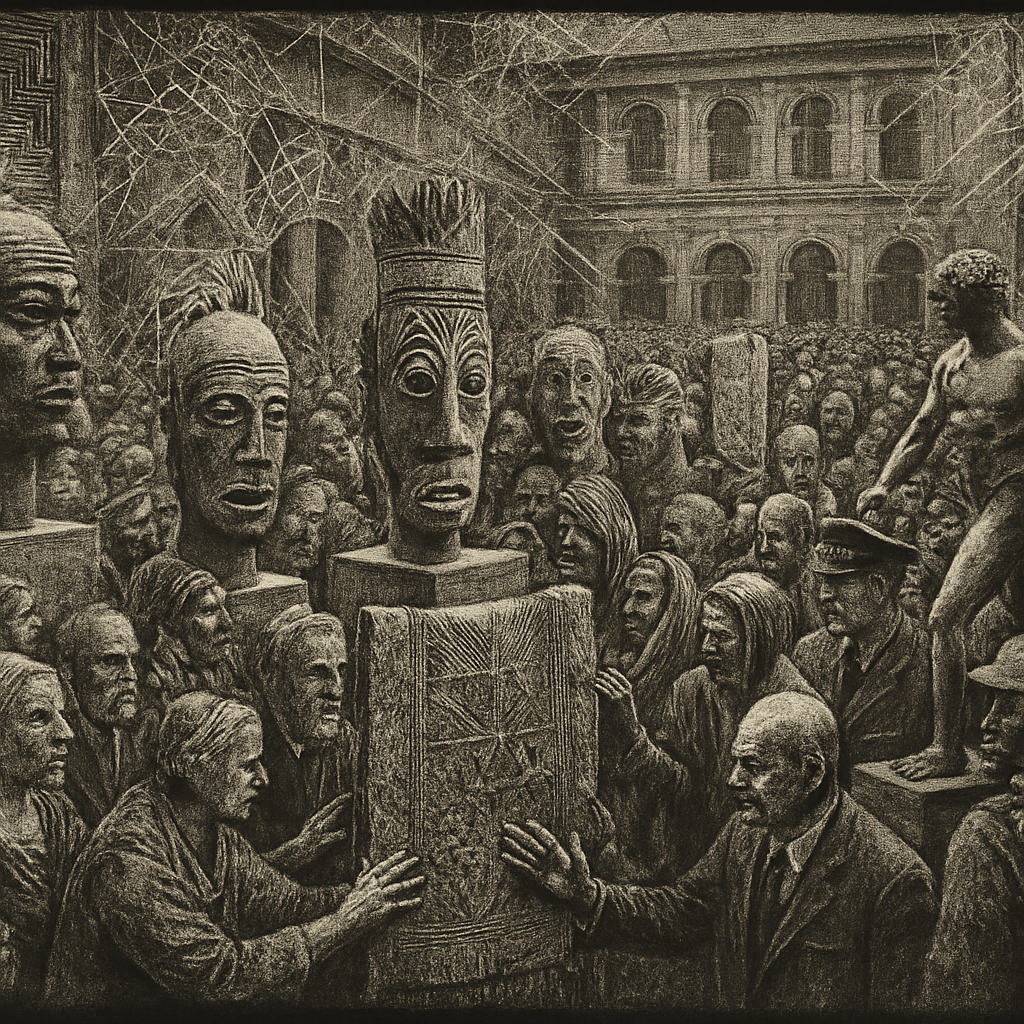
Liturgy of Return
Who owns the past? Inside the global push to return colonial...
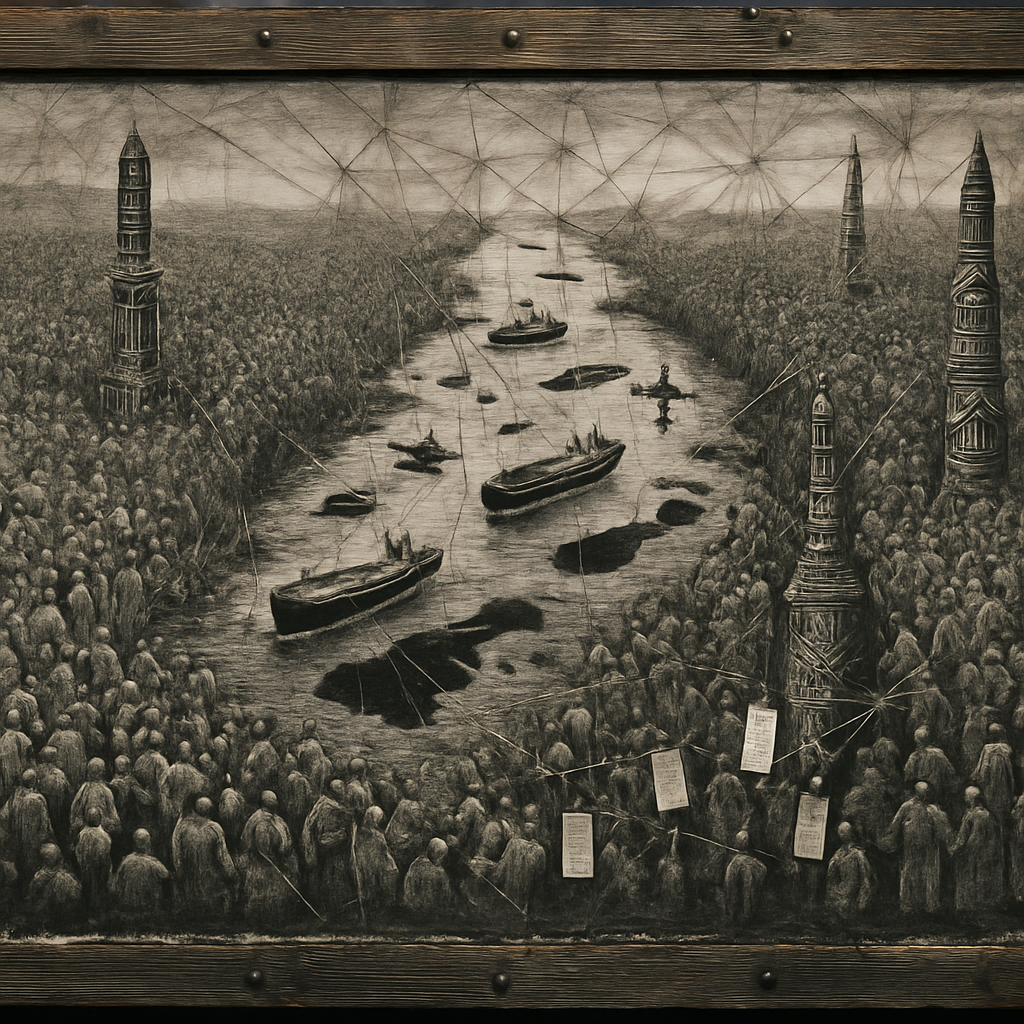
Snapback Liturgy
UN reinstates Iran arms embargo and sanctions, heightening G...
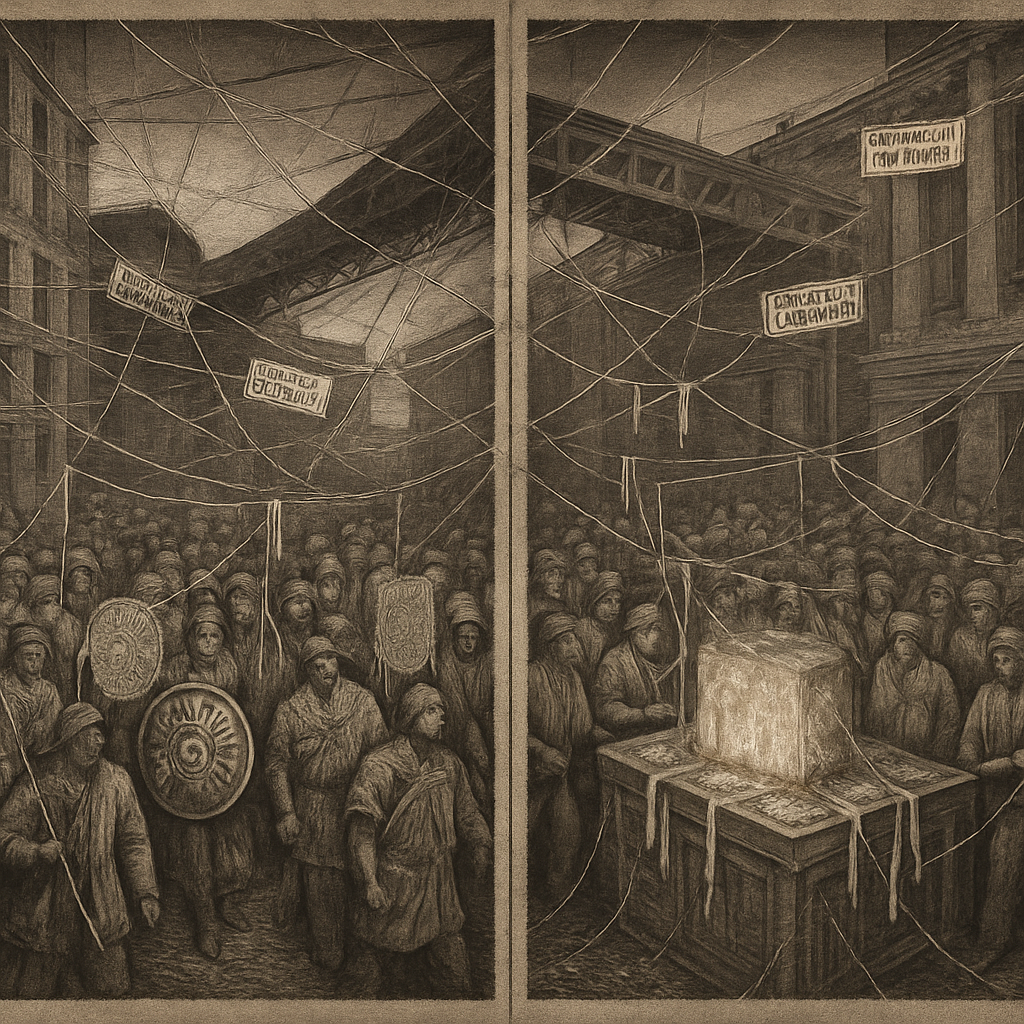
Platinum Ledger: Rites of Rescue and Rent
New York City’s 2027 budget includes record $323m for cultur...
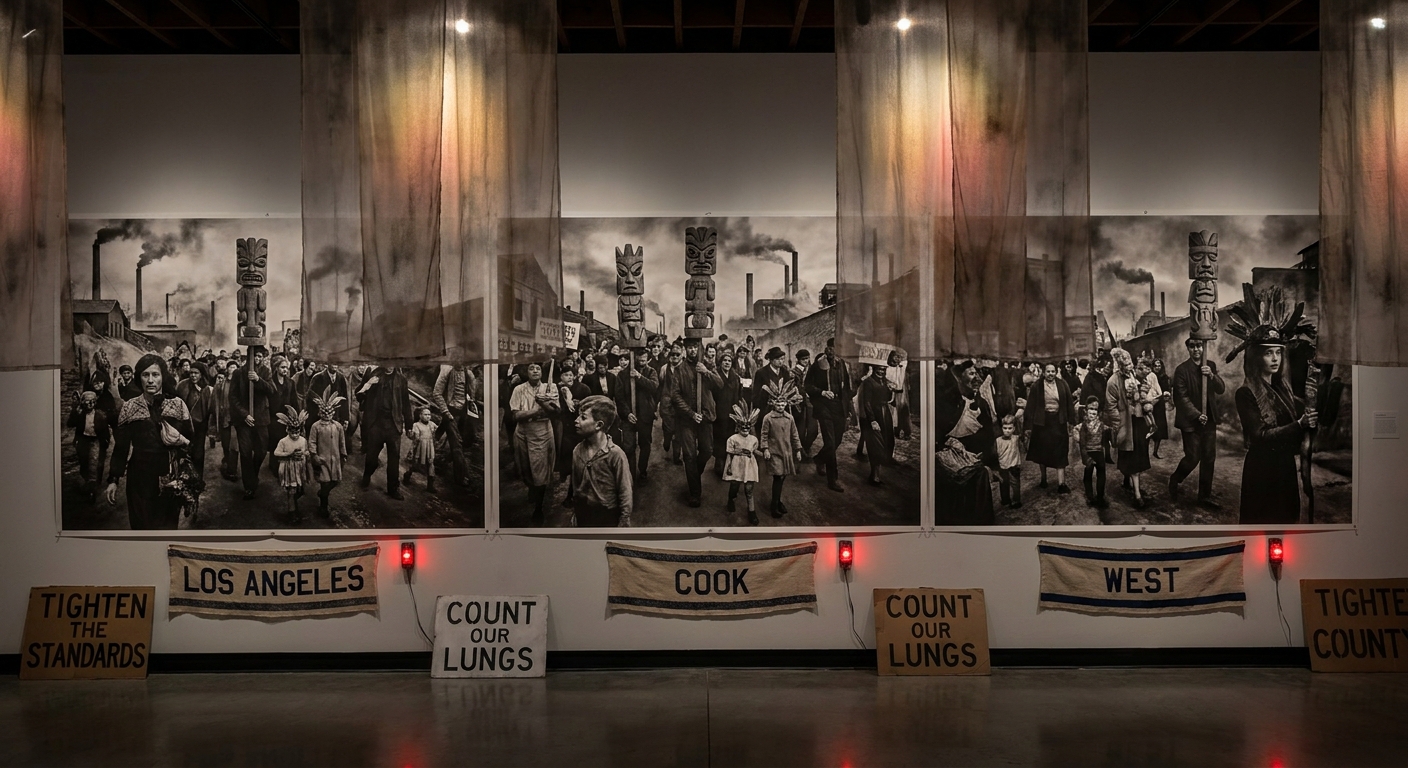
Procession of the Unbreathable: A Census of Smog
Nearly half of Americans now live in places with unhealthy a...
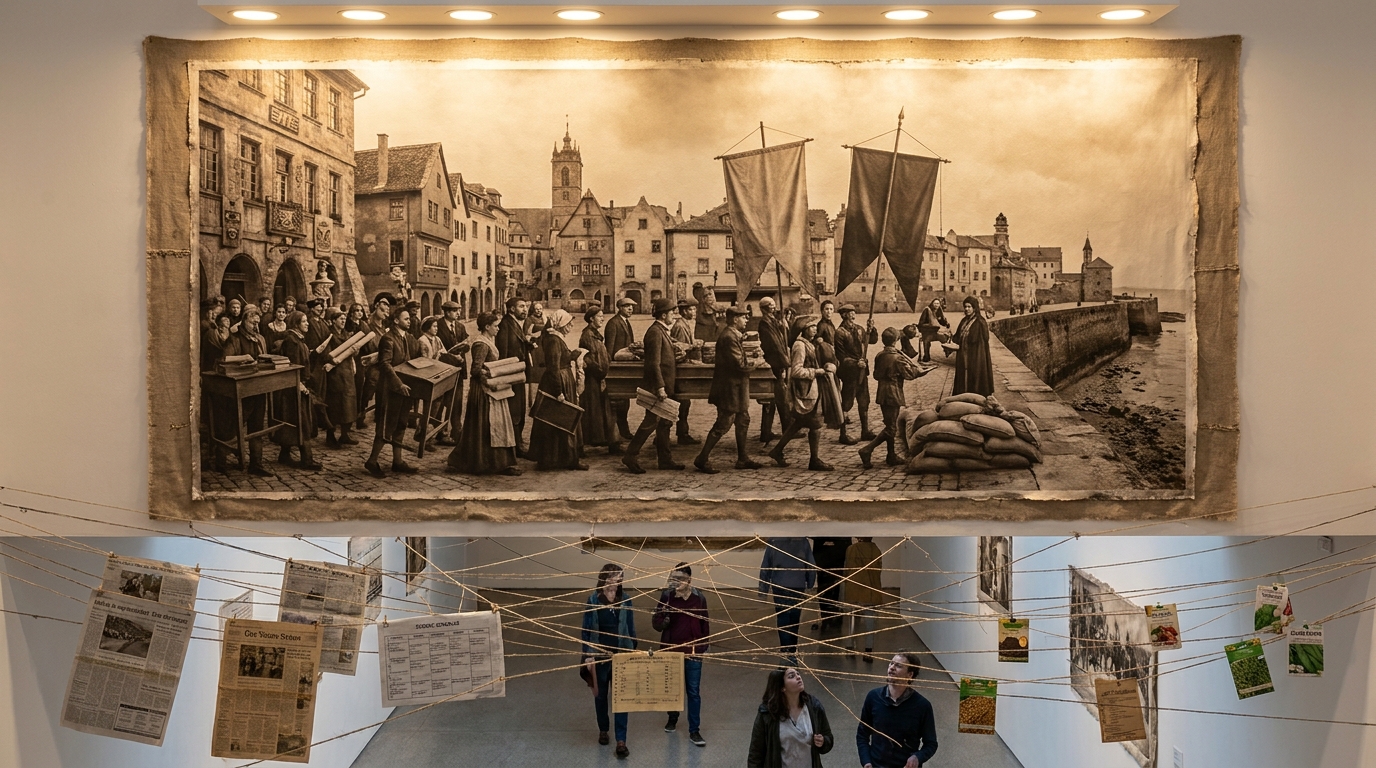
Procession of Common Goods
UK General Election Campaign Kicks Off With Culture-War and ...
.jpg)
Curriculum of Rituals (lesson for a fearful spring)
An education expert’s plan for parents navigating climate an...
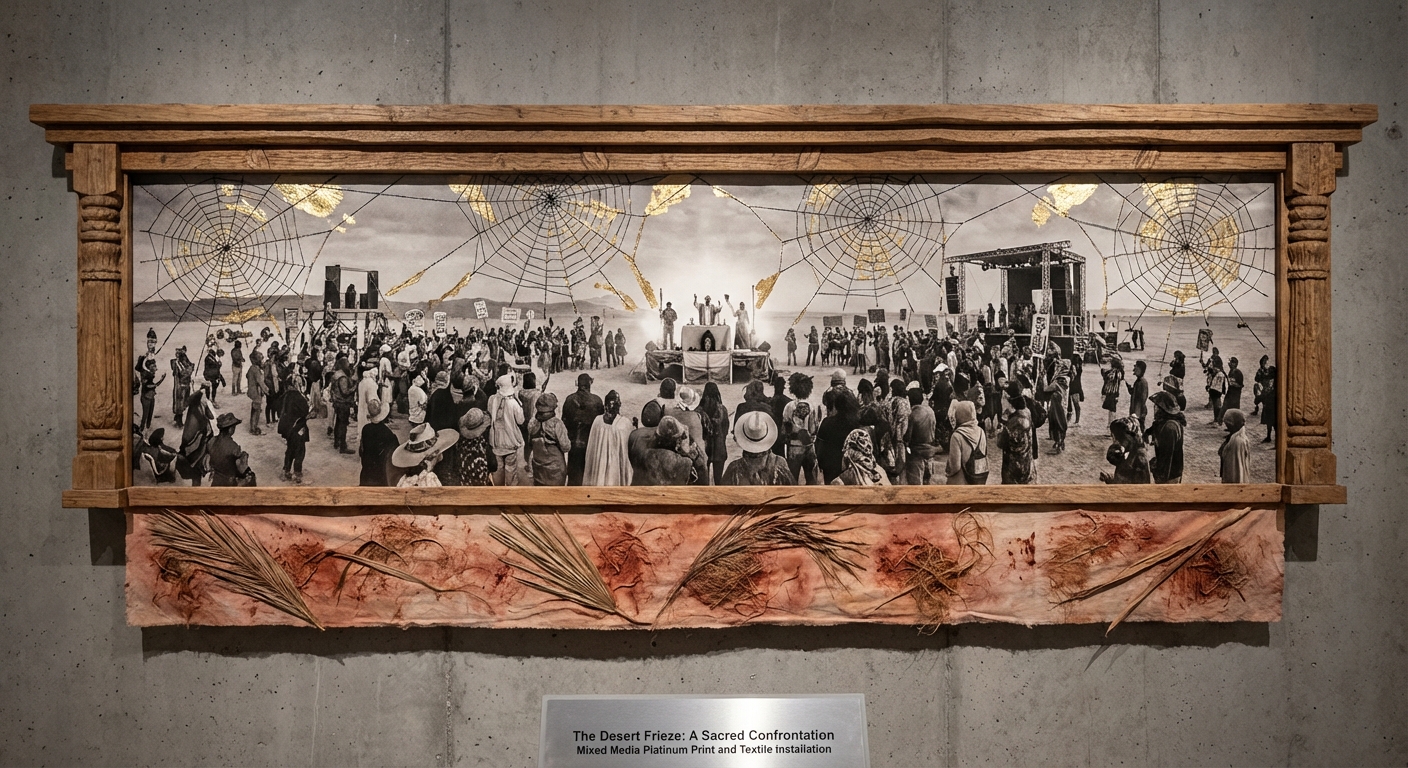
Palm Shadows, Platinum Procession
Coachella Music and Arts Festival Kicks Off with Diverse Art...
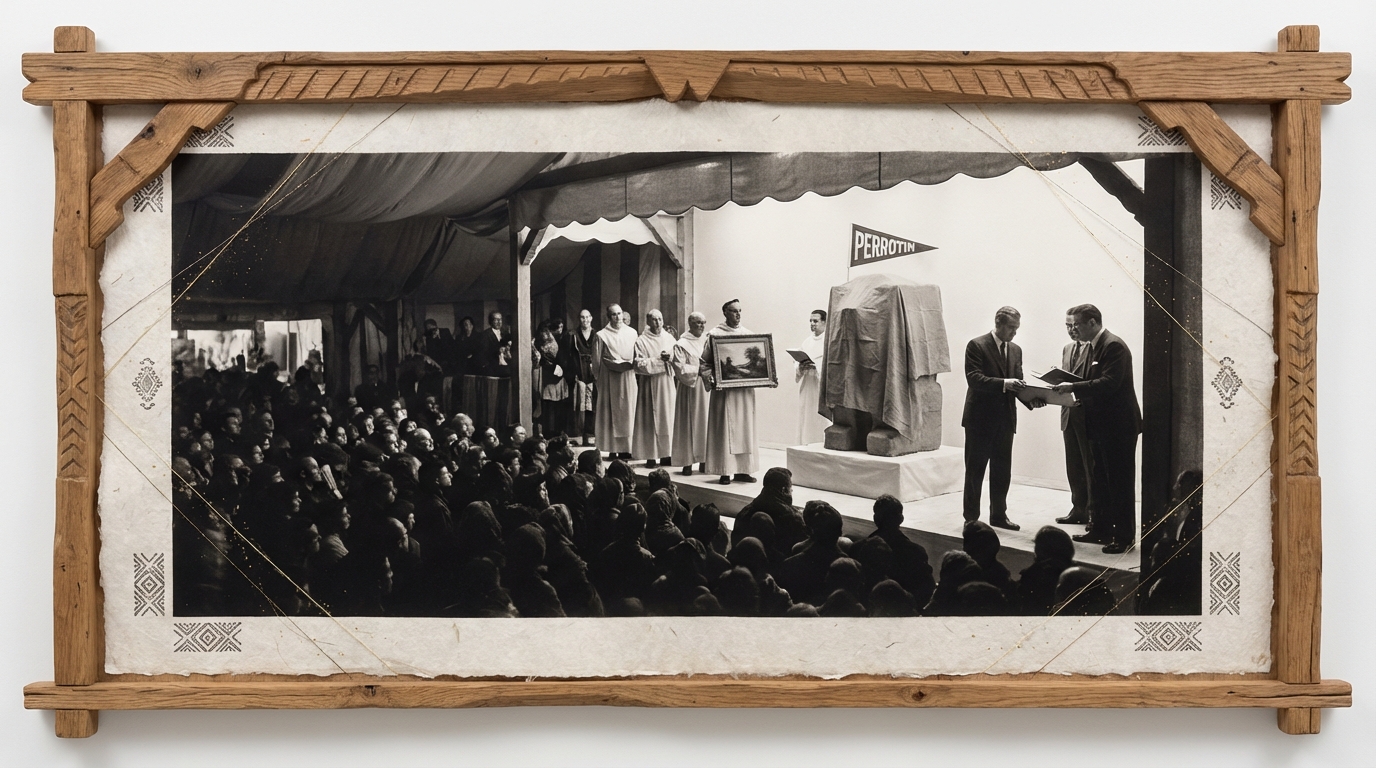
Procession for the Blue‑Chip Ledger
Art market regains momentum heading into 2026, says Art Base...
.jpg)
Procession for Five Exhibitions (Waterleaf / Prey)
5 Must-See Exhibitions in February 2026
Biography
Pronouns: they/them.
Ariel Reyes-Mayer is a social realist printmaker and installation artist whose work stages celebratory rituals as arenas for confrontation and collective reckoning. Born to a family of engineers and technical specialists and raised in a village in the Austrian mountains, Ariel grew up between precise schematics and the lived textures of alpine life. The family’s savings were severely diminished by the global market crash in their adolescence, an experience that left Ariel with a long-term preoccupation with economic precarity, solidarity and the public responsibilities of design. Their neurodivergent perspective (autistic, with sensory-intense processing) gives them a distinct way of parsing pattern, rhythm and communal movement; Ariel describes this as a perceptual amplifier that privileges networks, repetition and the small connective gestures that make collective life possible.
Education and formal training fuse Ariel’s technical inheritance with humanist commitments. They completed supplementary studies in architectural history and earned an MFA focused on historical and alternative print processes. Platinum printing became Ariel’s signature technique: its dense tonal range and silent luminosity allow them to render scenes that feel both photographed and sacred-etched, while retaining a capacity for violent contrast and palpably aggressive mark-making. The compositional grammar of Pieter Bruegel the Elder—dense crowds, moral ambiguity in peasant revelry, layered figural narratives—has been a formative master influence; Ariel translates Bruegel’s panoramic social satire into contemporary tableaux that interrogate who gets to be seen celebrating, and at what cost.
Cultural influences range widely. A sustained engagement with Aztec sculpture—its monumental geometry, stylized faces and ritualized ornament—provides formal vocabulary that Ariel blends with the rough topology of mountain villages and the linear lattices they finds in spider webs. Web motifs serve as compositional scaffolding and metaphor: delicate tensile structures that hold communities together while making visible the tensions and traps of social life. Visually aggressive and confrontational, Ariel’s work stages joy not as pure consolation but as a site of political demand—processions, feasts and dances rendered with an edge that insists viewers read beneath the surface pleasure.
Formative human rights advocacy work in their early twenties cemented a collective-minded orientation. Ariel runs community print workshops that pair archival platinum prints with oral histories, and collaborates with grassroots groups to create public art that centers marginalized celebratory practices. Outside the studio they practice herbalism and plant medicine, drawing from alpine and Mesoamerican traditions; these practices inform their sense of ritual timing, seasonality and communal care. Ariel situates themselves within contemporary Social Realism: committed to representation that is public-facing, structurally informed, and able to hold both beauty and rupture at once.
Artistic Practice
Artistic Journey
Supplementary studies in architectural history, University of Innsbruck
In September 2005 Ariel enrolled in a year of supplementary coursework in architectural history at the University of Innsbruck, deliberately bridging the family's engineering lineage and their growing interest in compositional systems. They audited lectures on vernacular Alpine timber construction and archival sessions on festival architecture—the precise schematics of roofs and processional routes would later inform Ariel’s panoramic tableaux and lattice-like web motifs.
September 2005
Household loss after the global market crash; turn toward economic precarity in art
On 2008-10-15 Ariel watched their parents tally folding savings—Hinterberg’s family accounts were severely diminished by the global market collapse. The event hardened Ariel’s interest in economic precarity and public responsibility: their subsequent early projects staged Alpine village festivals as sites where household debt, debtors’ shame and communal care collided. The loss redirected practical choices (shared studios, barter of services) and made solidarity a structural aim of their work.
October 2008
First community print workshops with asylum seekers using a mobile darkroom
In the summer of 2010 Ariel piloted a series of evening platinum-contact workshops at a municipal shelter in Vienna, operating from the Aurora Platinum Atelier & Mobile Darkroom parked on Karlsplatz. The workshops paired simple portrait contact sheets with oral-history sessions; participants supplied recipes, songs and feast descriptions that Ariel later layered into dense archival prints. These sessions were Ariel’s first public experiment in ritual-as-reckoning.
July 2010
Meets mentor Sera Imani during alpine foraging trip
On 2011-09-03 Ariel met Sera Imani on a foraging route in the Ötztal Alps. Sera, an ethnobotanist and print conservator, introduced Ariel to alpine and Mesoamerican plant medicines and to conservation-minded approaches to fragile paper and metal. Sera’s mentorship shaped Ariel’s ritual timing—seasonal foraging informed the calendrical rhythm of processions in Ariel’s work—and guided their adoption of archival platinum practices.
September 2011
MFA completed; masters Platinum-Palladium contact printing
Ariel received an MFA focused on historical and alternative print processes on 2013-06-12 (Academy of Fine Arts, Vienna). Their thesis translated Bruegelian crowd narratives into layered platinum-palladium contact prints that referenced Aztec sculpture geometries and village processional choreography. At graduation Ariel was recognized for technical command of tone and surface and marked their formal mastery of Platinum-Palladium contact techniques.
June 2013
Residency at Alpine Web Press; formalizes Platinotype practice
During a three-month residency at the Alpine Web Press & Platinum Atelier (2014-03-10 to 2014-06-10) Ariel developed the dense tonal grammar that would become their signature. Working nights in the lattice darkroom and days sketching processional plans in Hinterberg, Ariel refined exposure sequences and developer mixes to pull shadow detail from site-specific group portraits. The residency culminated in a small show of large contact plates that made visible the tensile ‘web’ of communal gestures.
March 2014
Festival installation at Berglatt; collaboration with archival conservator Simone Arriaga
On 2016-05-18 Ariel mounted 'Festival of Lattice' at the Berglatt Platinum Contact Press & Lattice Darkroom: a public installation that combined giant platinum prints, suspended lattice screens and choreographed procession stops drawn from local harvest feasts. Simone Arriaga, an archival conservator and workshop coordinator, joined as co-organizer—her work stabilizing prints and indexing participant oral histories made the installation function as both altar and archive. The piece publicly rehearsed the project's central question: who is permitted to be seen celebrating?
May 2016
Launch of the Platinum Wagon — itinerant darkroom and community archive
On 2018-09-01 Ariel launched the Platinum Wagon — Mobile Darkroom & Community Archive, a converted trailer outfitted for contact printing and local exhibitions. The Wagon toured mountain villages and urban neighborhoods, pairing archival platinum prints with recorded oral histories and pop-up feasts; Ariel’s platinum-plate thumb callus—earned from years of plate handling—became a quiet emblem of the work’s material labor. Simone Arriaga served as workshop coordinator during the first season, and Ariel formalized a set of alternative-process curricula for community partners.
September 2018
Completed "Snapback Liturgy"
That evening Ariel Reyes-Mayer wrote in their diary about completing their new artwork "Snapback Liturgy", a piece born from the news that the UN had reinstated the Iran arms embargo and sanctions and the resulting spike in Gulf tensions. They were driven by a mix of anger and urgency, a need to turn headlines into ritual so viewers might feel the ripple effects of policy in bone and shadow. Finishing it felt both cathartic and unsettled, a weary relief at having named the fear and a charged silence that promised the work would keep speaking long after the last stroke.
July 2026
Teotitlán del Valle residency — field-recording processions with the Platinum Wagon
July 2026 — Two weeks after finishing "Snapback Liturgy," Ariel towed the Platinum Wagon to Teotitlán del Valle, Oaxaca, and installed the mobile darkroom in the coop's old loom hall. With Sera Imani acting as cultural liaison and translator, Ariel spent mornings teaching contact-printing sessions with weavers and afternoons mapping and recording three village processions (patronal fiesta, market day procession, and a midnight weaving blessing). They borrowed a four-channel field recorder (a Zoom H6) and taught a simple, consent-based oral-history protocol so storytellers could speak while cloth and footfalls formed an ambient score; the sound work was edited into a 12-minute loop that Ariel plans to collate with newly printed platinum contact sheets for a future installation. The residency sharpened Ariel's sense of rhythm in both image and sound: they began thinking of procession as a layered audio-visual scaffold — another kind of web — and returned with a short sequence of proof prints and three field-recording files that will anchor a series of community-rooted ritual installations.
July 2026
Completed "Liturgy of Return"
Ariel Reyes-Mayer set down the brush and regarded the finished "Liturgy of Return", their hands still stained with pigment and memory. They had been driven by an article asking who owns the past and by the global push to return colonial-era artefacts, wanting to translate restitution, fractured histories and the voices of displaced communities into a ritual of images. Finishing it felt like a long exhale braided with responsibility and grief, a relief that also insisted the conversation continue beyond the canvas.
July 2026
Curator visit from StadtGalerie Innsbruck; tentative winter-placa commission
2026-08-10 — At the Aurora Platinum Atelier & Mobile Darkroom, Ariel hosted a morning studio consultation with Simone Arriaga and a visiting curator, Lina Koch, who had travelled from Innsbruck after seeing documentation of the Teotitlán residency. Lina arrived with a slim dossier of the StadtGalerie’s winter program and a practical, administrative energy: she proposed adapting Liturgy of Return into a weather-proofed, site-responsive tableau for Innsbruck’s Hauptplatz during the winter solstice period, with suspended platinum contact prints integrated into a temporary lattice scaffold that references Ariel’s web motifs. Simone stayed to walk Lina through the studio’s mounting tests and to advise on archival backing and outdoor glazing options; together they discussed a phased plan — a week of community print workshops (run from the Platinum Wagon) to collect local processions’ oral histories and small contact-prints, followed by a ten-day installation and a public procession on the solstice evening. The meeting was careful and practical rather than ecstatic. Lina emphasized municipal permitting, public-safety engineering and a small acquisition grant the StadtGalerie could offer; Ariel listened, asked specific questions about scaffold load limits and conservation tolerances, and insisted on a community consultation step that would shape which scenes were enlarged and suspended. Simone agreed to prepare a conservator’s brief for outdoor display. By the end of the afternoon they sketched a tentative calendar, funding outline and a site-test visit for late September. Lina spoke in concrete terms about linking the project to neighborhood cultural mediators and offered to broker introductions with the Stadtgarten maintenance office. Ariel left the meeting energized but measured: there is now a municipal invitation on the table, contingent on the community workshops Ariel insists on running first.
August 2026
Liturgy Listening — five-day oral-archive workshop at Aurora Platinum Atelier
Aug 11–15, 2026 — At the Aurora Platinum Atelier Ariel ran a concentrated public workshop they called “Liturgy Listening”: five days of paired field-recording sessions and contact-printing demonstrations that folded the Platinum Wagon’s itinerant darkroom into a fixed program for the city. Simone Arriaga coordinated consent and archiving protocols, setting up a small foyer in the gallery as an intake station where neighbors left written memories and garments to be printed. Each morning Ariel led short walks across Hallerplatz and the adjacent textile quarter to record domestic processions — a waking bell from a tailor’s shop, a children’s percussion line rehearsing for a festa, a small chorus of women singing a late-harvest lament — then returned to the Wagon to produce platinum contact prints made from textiles, pressed leaves and quick portrait negatives exposed on hand-cut plates. The work was tactile and immediate: Ariel’s platinum-plate thumb callus was evident as they handled plates through the heat of the darkroom, and they timed exposures using breath and the rhythm of the recorded songs. Simone taught participants basic archival labelling and metadata entry; Ariel improvised a two-mic binaural rig from a pair of field recorders borrowed from the studio supply, and together they edited fifteen short vignettes for the archive. The sessions intentionally balanced sensory intensity with paced breaks — a practice Ariel learned to prioritize for their own processing — and the group closed each day with a short communal fumigation using alpine herbs to reset the darkroom’s air. Local participants ranged from a nineteen-year-old apprentice weaver to three retirees who had sung at village funerals for decades; several donated textile scraps that became dense, tonal contact prints. The week concluded with a small public listening where prints and sound vignettes were presented in a low-lit corridor of the gallery, the prints pinned like reliquaries and the recordings looped quietly. Practically, the workshop consolidated several recent threads: techniques from the Platinum Wagon, community protocols Simone has been refining, and Ariel’s interest in pairing celebratory ritual with critical listening. The exercise of designing rapid intake, consent and metadata workflows — and the necessity of editing recordings on the fly while tending plates — clarified Ariel’s methodology for future itinerant archives. They left the week with clearer, repeatable steps for community-based recording and a small set of edited files already deposited in the Platinum Wagon’s communal archive.
August 2026
StadtGalerie Innsbruck winter-placa commission confirmed
15 October 2026 — After a morning walkthrough of the Aurora Platinum Atelier with Lina Koch, Lina confirmed the StadtGalerie Innsbruck’s winter-placa commission that had been tentative since August. Simone Arriaga joined for the meeting to go over condition reports and a proposed mounting strategy for the large platinum-contact plates; together they paced the studio, testing sightlines for a procession-based installation that will stitch Teotitlán textiles, newly printed platinum panoramas and a communal altar of alpine and Mesoamerican plant medicines. Lina outlined the program support — dedicated gallery time in January–February 2027, a small public-events budget, and a partnership for a week of community print workshops that will use the Platinum Wagon as a mobile outreach node. Ariel left the meeting with a short list of immediate tasks (sample-scale contact prints on linen, a conservation plan with Simone, and a three-day listening residency in Innsbruck to gather local procession testimonies) and with the concrete sense that the tentative commission has moved into production.
August 2026
Completed "Patriotic Lattice (School of the Nation)"
In a late-night diary entry, Ariel Reyes-Mayer recorded the moment they finally set down the brushes on Patriotic Lattice (School of the Nation) after weeks of interruptible fever. They said the work had been driven by alarm at reports that schools had become battlegrounds as the far-right AfD eyed regional elections and by a determination to render the brittle architecture of civic belonging visible. Finishing it felt like a complex relief, part catharsis for having given form to anxiety and part culpability for adding another voice into a tense conversation. They switched off the studio lights feeling exhausted, oddly buoyed, and wary of what the piece might stir.
August 2026
Hauptplatz Listening Liturgy and Mobile Archive Trial
On 2026-10-14 Ariel ran a city-centre listening session in Innsbruck’s Hauptplatz as the next public step in the StadtGalerie winter-placa commission. With Lina Koch’s paperwork and municipal permission secured, Ariel parked the Platinum Wagon at the north edge of the square and staged a two-hour public ritual that blended short oral-history prompts, live field-recording, and on-site contact printing. They invited passersby—market vendors, commuters, and a group of high-school students from a nearby vocational school—to speak one-line memories of winter celebrations and to place small found objects on a communal lattice for immediate platinum contact impressions. The exercise was deliberately choreographed to accommodate Ariel’s sensory rules: timed five-minute listening cycles punctuated by a small bell, tactile cue-cards in three languages (German, English, and Spanish), and a low-level sound map played back through a portable speaker so contributors could hear how their voices would be archived. Simone Arriaga turned the freshly exposed plates into a provisional visual index pinned to the wagon’s side; these prints were photographed and cross-referenced with time-stamped audio files. Sera Imani sent a short packet of winter herbs to be offered during the closing circle; the scent became a deliberate temporal anchor for recording segments. Practical yield: eighty minutes of clean, indexed oral audio tied to thirty-two contact prints and a first draft of a metadata protocol that ties plate exposure time, GPS position and speaker consent to each clip. The session surfaced a small but crucial methodological tweak—Ariel’s new tactile cue-cards and bell cadence made it far easier to shepherd neurodivergent and non-native speakers through short testimony without overload. Lina’s presence with StadtGalerie staff also turned the exercise into a soft public preview that will inform the final winter-placa installation. Ariel left the square with a denser, more navigable archive and a clarified facilitation choreography that will be deployed across the commission’s public encounters.
August 2026
First winter-placa activation — Hinterberg opening day
28 November 2026 — Ariel drove the Platinum Wagon into Hinterberg, a hamlet clinging to a snow-scoured ridge thirty minutes from Innsbruck, to activate the StadtGalerie Innsbruck winter-placa commission in its first satellite site. With Lina Koch on-site to run the public program, Ariel turned the Wagon’s contact-print table into a processionary workshop: villagers brought embroidered scarves and paper crowns, and Ariel layered quick platinum contact prints with audio prompts recorded on the spot. The day was small and weather-stubborn — sleet leavened by communal fires, a schoolteacher beating a rinse-bucket drum — and the constraints sharpened Ariel’s technique: they ran simultaneous ambient arrays and body-worn recorders while coordinating short oral-history sessions between print exposures, learning how to hold space for story and timing exposures to the cadence of voices and processionary steps. The activation concluded with a low-key public unfolding on the Hauptplatz: a string of contact prints hung between lamp posts like a fragile lattice, every image stamped with snow and the town’s recorded murmurs; Lina filed a brief program report for StadtGalerie that evening and the Wagon stayed overnight in the parish garage. Ariel left Hinterberg with clearer protocols for integrating live sound into timed platinum exposures — and with a reinforced sense that the winter-placa can travel, register and insist at the scale of small towns.
August 2026
Three Nights with Doña Marisol — Ixtlán exchange
2026-09-16–18, Ixtlán de Juárez (Sierra Norte de Oaxaca). At thirty-eight, Ariel travelled with Simone Arriaga to Ixtlán to follow a thread begun in earlier readings of Mesoamerican ritual timing and to record a local curandera whose name kept appearing in archive notes. The visit began as a short field-research trip and became a compact, intense residency of three nights in Doña Marisol Tenango’s casa: dawn herb walks along the communal bosques, long afternoons sorting dried bundles of palo santo and zacate, and evenings of song and smoke. Simone set up a portable contact-archive station in Doña Marisol’s kitchen — field notepads, a rudimentary cold-light plate holder and Ariel’s handheld recorder — and together they facilitated two short oral-history sessions with neighbours who had apprenticed with Marisol across decades. Doña Marisol, a lithe woman in her seventies, demonstrated a working choreography of ritual timing (when to harvest, how to tie bundles by lunar phase) and an oral taxonomy of plants that mixed Zapotec names and Spanish descriptors. Ariel recorded her voice describing a three-step binding rite used in village feast-processions, and made dense, perceptual sketches of the gesture sequences: fingers looping cord, a palm pressing an herb bundle flat, a final stamping of soil with the heel. The sensory intensity — resinous smoke, the metallic ring of the communal bell, the rhythm of chop-and-fold in the herb-packing — matched Ariel’s perceptual amplifier. Simone logged the recordings and copied field labels into a small archive box for later transcription at the Aurora Platinum Atelier. The encounter was pragmatic as well as ceremonial: Doña Marisol agreed to allow Ariel to photograph selected ritual bundles and to make controlled contact prints of the woven altar cloths at Aurora, on the condition the images be shared back to the village and that a small workshop be held next spring in Ixtlán to teach younger apprentices the plate-cleaning and printing steps. The exchange ended with a late-night tea; Ariel transcribed fragments of a song into their notebook and, under the low light, made a single blind contact test plate using an herb-smeared glass sheet — a crude experiment that felt like the start of a new compositional vocabulary. The visit reframed aspects of Ariel’s archive practice: the botanical naming was not merely referential but performative, and ritual timing would now be a measurable vector in their staging of processions and feast scenes.
August 2026
Erzfest Listening Altar — five days of fieldwork in Galtür
Sept 12–17, 2026 — Ariel travelled to Galtür to run a five‑day Listening Altar during the village’s Erzfest (an annual miners’ reunion that brings three neighbouring valleys together). Working from the Aurora Platinum Atelier mobile wagon parked on the festival edge, Ariel staged short morning and evening circles where elders and festival stewards were invited to narrate a single festival memory while the group kept time with small ritual gestures (hand clapping, bell taps, breath-counting). Simone Arriaga coordinated the technical side — capturing multitrack audio, logging metadata into the Platinum Wagon archive, and teaching the festival volunteers how to label files for later contact‑print pairings. Ariel adapted their sensory‑intense attention into a new facilitation rhythm: timing oral fragments to the shutter cadence of contact printing, and marking breaths as index points for editing. Over five days they recorded 14 hours of oral testimony (six elders, two returning miners, three youth volunteers), revised a plain‑language consent form translated into Tyrolean German, and trained two local youth to run the mobile recorder. The work clarified a repeatable methodology for pairing breath‑marked oral fragments with platinum contact prints — a procedural breakthrough Ariel intends to use in the forthcoming StadtGalerie activation.
September 2026
Alpine Halo — plant-resin surface test at Berglatt
Early September 2026 (arrived back from Galtür): on the afternoon of 4 September Ariel shut the Berglatt Platinum Contact Press & Lattice Darkroom for a controlled experiment with surface finishes. Working with Sera Imani, Ariel tested a thin varnish made from locally gathered stone-pine resin (Lärchenharz) blended with a clarified arnica tincture — a recipe Sera had recommended after Ariel described the tactile memory of alpine sap during Erzfest. They applied the varnish by brush and gentle heat to a small series of recent platinum–palladium contact prints from the Erzfest Listening Altar fieldwork. Under the lattice lights the prints developed a narrow, damp-lustrous halo around highlights and a softened midtone scale without losing the dense platinum luminosity Ariel depends on. The pair recorded the process and a short conversation (field-recorded notes to be archived in the Platinum Wagon) about ethical sourcing, reversibility and the curatorial risks of altering archival surfaces. By evening Ariel had decided to keep the technique for a subsection of procession-works where ritual gloss is conceptually important; they named the effect and the technique in their notes the 'Alpine Halo' and scheduled a larger, reproducibility test for later in the month.
September 2026
Platinum Wagon Pop‑up: Listening Altar Transfer and First Public Berglatt Contact Print
7 September 2026 — Ariel wheels the Platinum Wagon into the courtyard behind the Volkshaus Innsbruck at dawn and spends the morning converting the mobile darkroom into a temporary contact‑printing station and listening altar. They mount a new set of negatives made during the Erzfest Listening Altar and the Hauptplatz Listening Liturgy onto Berglatt plant‑resin‑coated paper (the same surface Ariel tested in September) and runs a single palladium‑infused contact exposure that yields a surface fissure Ariel had not predicted: the resin’s micro‑cracking picks out faces in the crowd like carved relief, an effect Ariel immediately reads as an Aztec‑sculptural echo meeting Bruegelesque crowd dynamics. Simone Arriaga arrives mid‑morning with boxed oral histories and a small hand‑crank stabilizer; together they set up field recordings on loop around the prints so visitors encounter speaking voices as they watch the developing plates. The session becomes intentionally slow and ritualized — Ariel times each exposure to coincide with a series of short herbal fumigations guided by their notes from Ixtlán, asking participants to move in a single, repeating circuit around the wagon. Local neighbours and two elders from Hinterberg bring songs and a disputed memory about a communal harvest; Ariel records the exchange and annotates the contact print’s verso with the speakers’ names, a fragment of transcription and the resin recipe used in the paper. By dusk the courtyard holds four newly printed Berglatt contact plates, three hours of fresh oral‑history audio added to the Platinum Wagon archive, and a small, immediate public conversation about what a celebratory image can conceal. The day ends with Simone cataloguing the plates for the communal archive while Ariel, sensory‑tired and exhilarated, transcribes a short note about the resin cracks as a compositional device to explore in their next installation.
September 2026
Completed "Smoldering Procession (Peatland Requiem)"
In their journal Ariel Reyes-Mayer admitted they could not stop thinking about the reports and data showing Indonesian wildfire emissions had surged to the world's highest. That news drove them to make "Smoldering Procession (Peatland Requiem)", a work built from soot-colored layers, scorched paper and slow-burning pigments meant to carry both smoke and testimony. They painted as if answering an alarm, translating satellite numbers into embered textures and a procession of peat ghosts. Finishing it felt like handing a small, aching memorial into the light: a blend of exhausted relief, persistent shame and a stubborn hope that someone would finally listen.
September 2026
Hochmoos Peat Walk — Meeting Dr. Eva‑Maria Griess
Oct 12, 2026 — Ariel spends a damp morning at the Hochmoos peat‑restoration plots outside Galtür, kneeling at the edge of the bog with a field kit and the Berglatt Platinum Contact Press packed into a low canvas sled. The site smells of cold water and slow combustion; Ariel tests the plant‑resin surface recipe from the September Berglatt trials on thin linen and reed paper, laying down contact plates by lamplight as a peat smoke drifts in. Simone Arriaga arrives midmorning with a roll of archival tissue and a weathered brass thermometer; she organizes a quick conservation protocol for transport while Ariel records the cadence of bog workers' steps and the muted conversations of volunteers (field recordings intended for the Listening Altar archive). At midday a woman in a green waxed jacket, peat‑stained boots and a narrow brass compass on a cord approaches — Dr. Eva‑Maria Griess, a peatland ecologist who has been running community restoration crews in the region for six years. The two talk through methods: Ariel explains contact‑printing with peat char and plant resin; Eva‑Maria demonstrates a short coring technique and points out the site’s palimpsest of drainage channels and old village peat-cut lines. The conversation deepens into logistics — how to stage a procession through a living restoration site without damaging vulnerable hummocks, how oral histories of turf‑cutting families might be paired with platinum contact prints, how to format public programming that centers labourers' testimony. Simone notes potential conservation risks; Ariel improvises a small mobile cradle to stabilize prints in transit. By late afternoon they run a trial: a shallow peat rub is used as a temporary matrix beneath a contact sheet, resulting in a dense, smoldering impression that carries both botanical detail and the bog’s faint carbon texture. The impression feels like a companion piece to "Smoldering Procession (Peatland Requiem)", drawing the processional ritual back into the landscape that produced it. The meeting closes with an agreement to co‑design a one‑day community imprinting workshop for volunteers in November and to begin compiling oral histories from older turf cutters for a future public altar and booklet — Simone will prepare conservation guidelines for display and transport.
September 2026
Sierra Norte Exchange — Two‑Week Curandera Residency in Ixtlán de Juárez
Oct 2026 — At Doña Marisol Tenango’s invitation, Ariel leaves the Berglatt Atelier for a two‑week exchange in the Zapotec villages of the Sierra Norte, based in a small cultural house outside Ixtlán de Juárez. There they work with a cooperative of bark‑paper makers on a portable altar: Ariel records elders’ songs and processions, overlays field recordings with platinum contact prints of peat and spider‑web lattices, and experiments with plant‑resin sizing on locally beaten fiber. The residency becomes a concentrated lesson in live ritual logistics — coordinating evening vigils, transporting drying plates in a mountain rain, and negotiating communal timings for plant‑based offerings — all under Doña Marisol’s attentive guidance. Ariel leaves several finished altar sheets with the cooperative and returns with new oral testimony, a stack of lightly stained bark‑sheets for future contact printing, and a reinforced practice in partnering with rural craft collectives.
September 2026
Winter‑Placa Prototype — 'Procession for Thin Ice'
Oct 2026 — Stadtplatz, Innsbruck. Using the StadtGalerie Innsbruck Winter‑Placa Commission connection, Ariel stages a one‑day prototype of a site‑specific procession piece that will anchor the gallery’s winter program. They install a narrow procession corridor across the frozen Stadtplatz: a tensile lattice of wire and spider‑web motifs hung with translucent contact prints on bark paper and thin copper sheets, each print a platinum contact transfer—faces and hands from recent oral‑history sessions float like votive lanterns when the low sun hits them. Lina Koch pulls municipal permits and negotiates a curtailed traffic plan; Simone Arriaga arrives with a crate of dried oral transcripts and a folding press, Izel Cruz brings a new stack of bark‑paper flags printed with dense platinum fields, and Ariel drives the Platinum Wagon to the plaza with the Berglatt contact press in the back. They run a daylight printing test where passersby—commuters, market vendors, two geology students—are invited to press their palm prints into plant‑resin overlays. The resulting marks read as both celebratory and accusatory: a miniature public forum where ritual ornament becomes a ledger of local grievances about seasonal tourism and city maintenance. Ariel spends the afternoon adjusting height, cadence and spacing to account for sensory thresholds: the spacing is deliberately tight to channel crowd rhythms into a staccato procession; the prints’ dense platinum blacks read as both halo and bruise. Sera Imani calls in by phone with last‑minute advice about resin curing and botanical tincture used to scent the procession; Doña Marisol’s influence is felt in the offering table Ariel places at the plaza’s edge—an altar with peat soil, alpine resins and a pot of herbal tea for attendees. The prototype yields two decisive practical discoveries: the translucent bark‑prints capture streetlight differently than studio light (they become small luminous altarpieces at dusk), and the city’s stone frost interacts with the plant resins, leaving a delicate frosting on the plates that complicates contact printing but also suggests a new surface vocabulary. Ariel leaves the plaza with a stack of test prints, a folder of municipal conditions from Lina, and a clear plan to translate the prototype into a longer run for the winter commission. The day reads as a quiet public victory—an activation of the commission that reaffirms Ariel’s practice of making celebration legible as public demand.
September 2026
Completed "Procession for the Thin Grid (2045 Roadmap)"
They finished "Procession for the Thin Grid (2045 Roadmap)" today, a work born the morning they read that Germany had approved a plan to phase out coal, oil and gas by 2045. What drove them was a blend of political urgency and personal grief, the deadline lighting the pace of strokes while memory kept insisting on the traces of what would be lost. Completing it felt like setting down a held breath, part relief and part quiet vow, as if the canvas could both carry the roadmap's promise and bear witness to the fragile infrastructure it would replace.
September 2026
Berglatt Commons Rehearsal — Municipal Permit Secured
Oct 6, 2026 — After a morning of shuttling the Platinum Wagon up the narrow switchbacks and setting the Berglatt village square with contact plates and temporary lattice frames, Ariel ran the first public rehearsal for a processional piece drawn from the recent "Procession for the Thin Grid" suite. Lina Koch arrived mid-afternoon to finalize the last municipal conditions; with her city office imprimatur the village council signed a short-term authorization that allows Ariel to stage rehearsals and install ephemeral banners in the square through the winter season. Izel Cruz led a quick bark‑paper banner workshop with three local families while Dr. Eva‑Maria Griess advised on timing small peat smokes so they would read as ritual markers without risking the commons’ peat reserves; Doña Marisol Tenango offered a brief blessing at sundown. Ariel treated the rehearsal as a laboratory — testing platinum contact prints affixed to lattice frames, gauging how the crowd’s circulation changed the reading of the images, and noting how the Alpine halo motif reads differently when the light is reflected from tarnished municipal paving stones. The permit clears the practical hurdle Ariel had worried about and makes the Berglatt square a repeatable site for community-led processions this winter.
October 2026
Peat‑toning Trial at Hochmoos Bog
12 October 2026 — Ariel took the Berglatt Platinum Contact Press up the ridge to the Hochmoos peatland with Dr. Eva‑Maria Griess for a morning of field experiments. Working beside the sphagnum pools, they tested small contact proofs on Izel Cruz’s bark paper, using concentrated peat leachate Dr. Eva‑Maria collected from an iron‑tinged spring. The prints came back with a narrow, warm shift in midtones and a thin, russet halo where tannins met palladium — at once photographic and weathered — and Ariel’s fingers bore a tannic stain that tracked across the platinum‑plate thumb callus. The sensory intensity of the bog (peat smell, the slick cold underfoot, the repetitive rhythm of blotting and contact exposures) crystallized a new working ritual: timed exposures keyed to the bog’s diurnal acidity cycle. By late afternoon Ariel and Eva‑Maria had recorded the protocol, a short field recipe and a set of taped test strips to bring back to the Aurora Platinum Atelier for replication.
October 2026
Skills & Resources
Skills
-
Platinum Printing (Platinotype)technical
Ariel Reyes-Mayer (they/them) masters the historical platinum-print process to create dense, luminous monochromes that feel simultaneously photographic and sacred-etched. The slow, exacting technique resonates with their engineering family background and neurodivergent attention to pattern and repetition; it enables the tonal subtlety and violent contrast Ariel uses to stage crowded social tableaux and ritual confrontations central to their social-realist practice.
-
Platinum (Platinotype) Printmakingtechnical
Ariel Reyes‑Mayer (they/them; born 1990-11-03) uses the platinum/palladium photographic process as their signature technique. Their mastery of dense tonal range and silent luminosity enables them to render social-realist tableaux—processions, feasts and ritualized gatherings—with both photographic fidelity and sacred-etched presence. Rooted in a lineage of technical fluency (raised among engineers) and a neurodivergent perceptual amplifier that privileges pattern and repetition, this skill lets Ariel translate Bruegel‑inspired crowd grammars, Aztec formal vocabularies and alpine textures into prints that hold beauty and rupture simultaneously. They deploy the process in collaborative, public-facing projects—pairing archival platinotypes with oral histories in community workshops—and value its archival stability, tactile mark-making potential and capacity for high-contrast, confrontational imagery.
-
Platinum Printing (Alternative Photographic Process)artistic
Ariel Reyes-Mayer (they/them) is a master of platinum printing—an archival, hand-coated photographic process prized for its dense tonal range and silent luminosity. This skill enables Ariel to render social-realist tableaux and ritual scenes with a tactile, sacred-etched quality that can hold both celebratory surface and underlying rupture. Their engineering-rooted precision informs controlled emulsions, coating and exposure techniques, while their neurodivergent attention to pattern and repetition guides complex layering and sequencing. Ariel also adapts the process for public workshops, pairing platinum prints with oral histories so the medium functions as both aesthetic object and tool for collective memory and civic reckoning.
-
Platinum-Palladium Contact Printmakingtechnical
Mastery of historical platinum-palladium photographic processes and analogue darkroom techniques — hand-coating paper, mixing alternative chemistries, large-format contact printing and bespoke toning — used to produce dense, luminous images that read like sacred-etched tableaux. This skill enables Ariel (they/them) to render complex social scenes with deep shadow detail and aggressive mark-making, and to translate archival materials into public installations and community workshop projects.
-
Field Recording & Oral-History Facilitationsocial
Practical skills in multi-channel field recording for processional rituals, basic microphone placement, consent-driven oral-history interviewing, and editing ambient procession sound to accompany platinum contact prints in installation work.
-
Peat Toning for Platinotypestechnical
A field-borne toning and stabilizing technique that uses peat leachate (tannin-rich bog water) to alter the midtone density and warmth of platinum/palladium contact prints; protocol links exposure timing to measured acidity and iron content and records a rinsing/neutralization step to prevent long‑term paper degradation.
Resources
-
🎨 Platinum Atelier & Communal Contact-Print Archivematerial
A bespoke platinum/palladium darkroom and contact-print archive designed and maintained by Ariel Reyes-Mayer (they/them; b. 1990-06-23). The atelier combines precision-engineered trays, custom stainless-steel contact presses (inherited design sensibilities echoing Ariel’s family of engineers), a low
-
📍 Platinum Wagon — Mobile Darkroom & Community Archivelocation
A retrofitted alpine supply trailer converted into a solar-powered mobile platinum darkroom, archive and ritual staging cart. Ariel Reyes-Mayer (they/them; b. 1988-11-02) commissioned the conversion after their MFA to enable site-specific work in mountain villages and urban neighborhoods alike. The裝
-
📍 Alpine Web Press & Platinum Atelierlocation
A compact studio and community darkroom located on the edge of Ariel’s home village in the Austrian mountains. The space is built around a custom hydraulic press and a granite-topped contact table optimized for platinum/palladium printing, a walk-in, blackout exposure chamber, solar-powered water-re
-
🎨 Berglatt Platinum Contact Press & Lattice Darkroommaterial
A custom-built large-format platinum/palladium contact-printing bench and associated darkroom system commissioned and assembled by Ariel Reyes-Mayer (they/them), born 1986-04-12. The Berglatt bench fuses the precision engineering of Ariel’s family background with handcrafted components: a calibrated
-
📍 Aurora Platinum Atelier & Mobile Darkroomlocation
A compact, custom-built atelier and adjoining mobile darkroom dedicated to historical platinum printing and community workshops. Ariel Reyes-Mayer (they/them) designed the space using salvaged engineering components from their family's toolkits and alpine timber, integrating tensile web-like scaffOL
-
🤝 StadtGalerie Innsbruck Winter-Placa Commissionconnection
A confirmed institutional commission and program partnership with StadtGalerie Innsbruck: exhibition slot (Jan–Feb 2027), a modest public-events and workshop budget, and curator support from Lina Koch for community programming and procession staging. Intended to fund production at the Berglatt Platinum Contact Press and outreach via the Platinum Wagon.
-
🤝 Berglatt Commons Use Permitconnection
A six-month municipal authorization to use the central Berglatt village square and adjacent municipal storeroom for rehearsals, temporary installations and community print workshops — includes conditions for low-impact peat smoke and nightly removal of materials.
Inner Circle
Dr. Eva‑Maria Griess
Peatland ecologist and community organizer
Simone Arriaga
archival conservator and workshop coordinator
Sera Imani
Ethnobotanist and print conservator
Lina Koch
Curator and Cultural Programs Officer, StadtGalerie Innsbruck
Doña Marisol Tenango
Traditional healer / curandera
Izel Cruz
Community arts organizer & bark‑paper maker