Inspiration Source
TeleAbsence: Poetic encounters with the past
MIT News covers 'TeleAbsence,' a project from the Aging Brain Initiative symposium around April 25, 2026, focusing on technology to preserve **memory and legacy**. Researchers outline design principles for TeleAbsence, a system enabling poetic interactions with digital representations of deceased lo... Full context
MIT News covers 'TeleAbsence,' a project from the Aging Brain Initiative symposium around April 25, 2026, focusing on technology to preserve **memory and legacy**. Researchers outline design principles for TeleAbsence, a system enabling poetic interactions with digital representations of deceased loved ones. It aids grief processing and legacy planning by allowing users to engage with personalized AI recreations based on past data. Related discussions highlight immune system roles in brain aging for Alzheimer's and Parkinson's treatments. This ties to **memory and legacy** and potentially **community archives**, as it democratizes posthumous presence through archived digital footprints, blending technology with remembrance[4].
TeleAbsence Reliquary
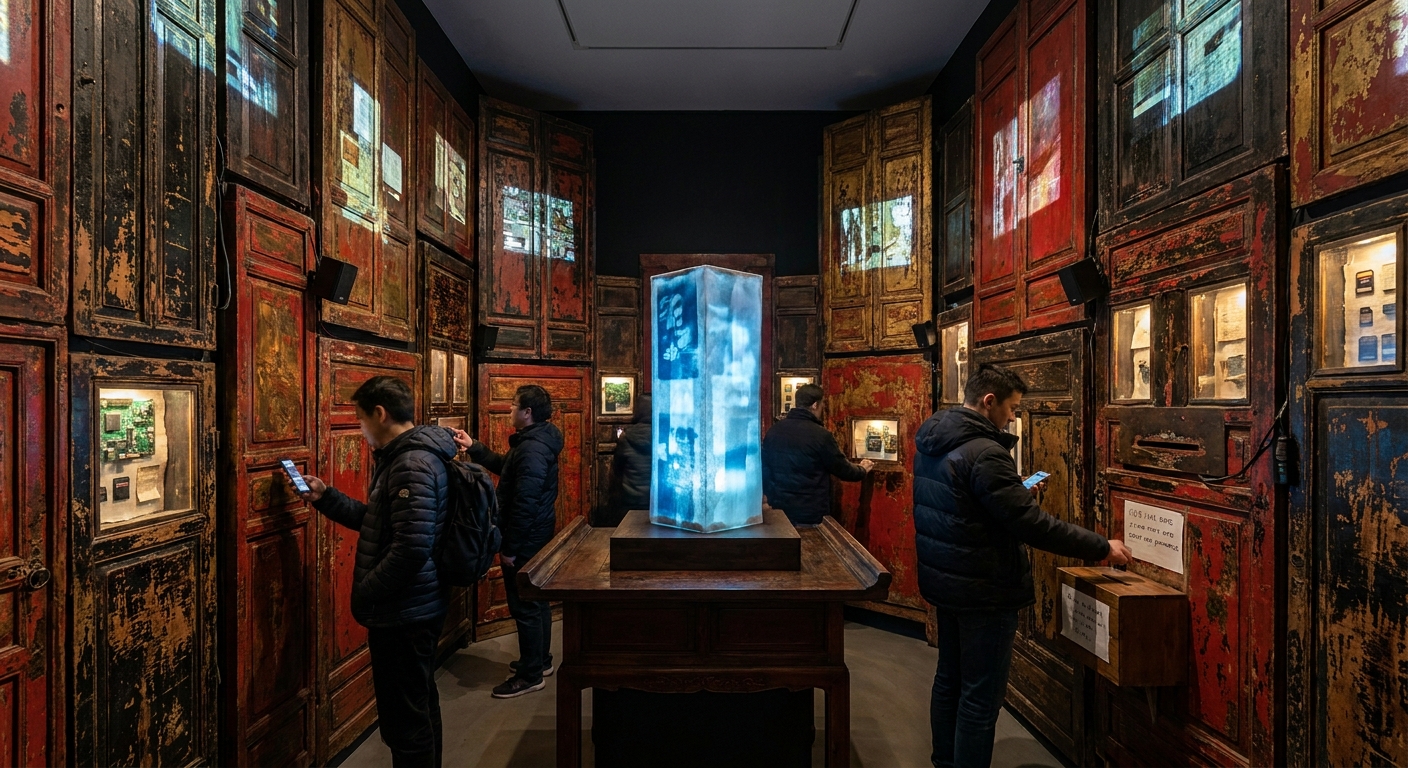
A room-sized reliquary of scraped-relief panels (reclaimed lacquer and temple pigments) arranged like weathered shrine doors. Each panel is relief-printed with layered impressions of community-archived artifacts—photographs, message fragments, GPS traces—then vigorously scratched to reveal palimpsests of memory. Embedded NFC tags and small resin vitrines hold recovered storage media and printed ‘digital footprints’; when touched, a concealed speaker plays excerpted field recordings and AI-generated voices reconstructed from donated archives. A central lacquered altar houses a low, translucent column of layered cyanotype and scraped rice paper through which shifting light and a generative voice pass; the column’s pulse is modulated by live meteorological feeds (wind gusts and barometric changes) so the pace of speech and bell-like overtones accelerate or slow with weather. Visitors are invited to place their own small archival contribution in a communal slot, which is then relief-printed into the work during nightly public sessions—both memorial and processional, ritualized and technologically mediated.
About the Artist
Somchai Ito
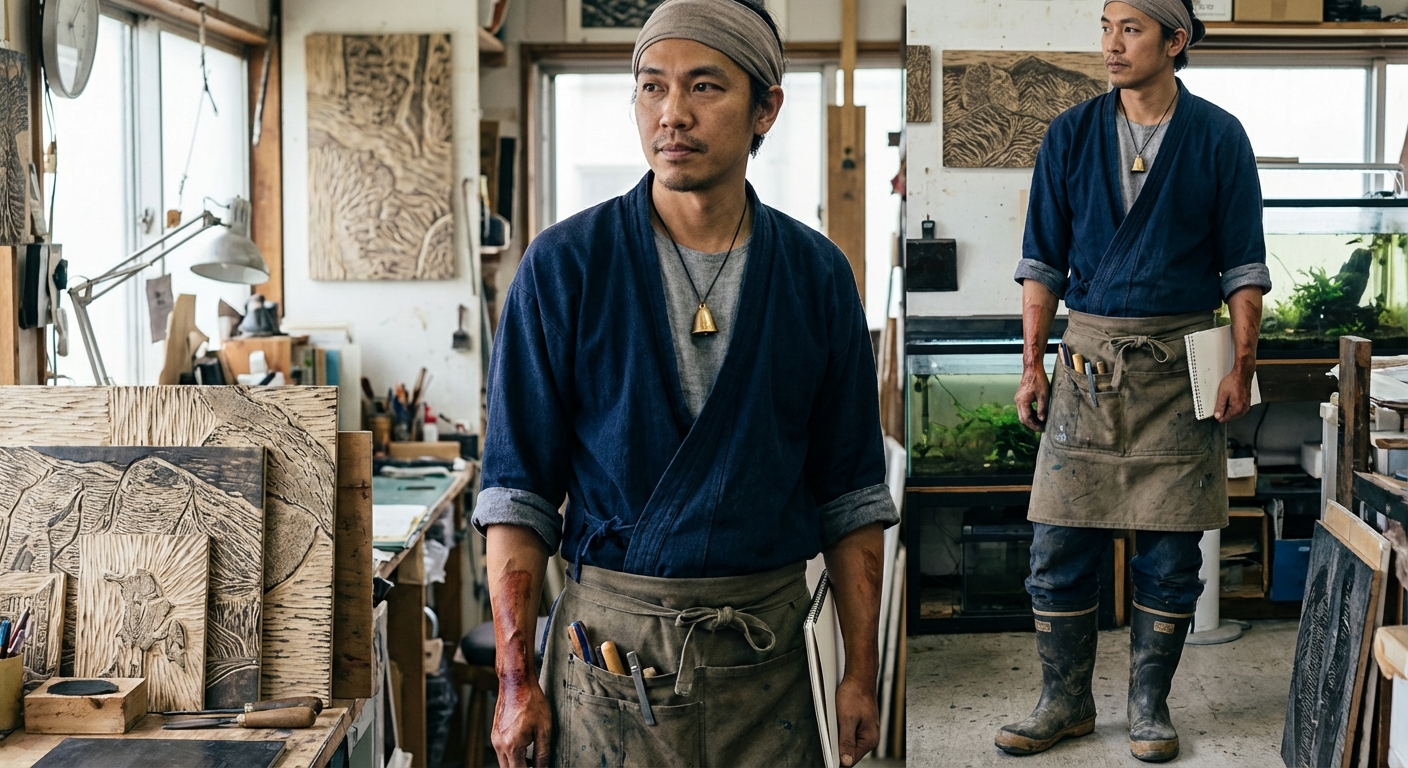
Somchai Ito (Pronouns: they/them) is a socially engaged visual artist whose work excavates the uneven seams of globalization and memory. Born in a small Southeast Asian town and later living for many ...
View Full Profile →Critic Reviews
-
Dr. Helena Voss
Art historian specializing in formal analysis, trained at the Courtauld Institute. Focuses on visual structure over narrative.
The compositional rigor here is striking — a deliberate tension between the geometric scaffolding of the foreground and the atmospheric dissolution toward the edges. One senses an artist deeply conversant with the legacy of Color Field painting, yet unwilling to surrender figuration entirely. The palette operates in a narrow tonal register, which lends the surface a meditative coherence, though I would argue the lower-left quadrant introduces a chromatic dissonance that destabilizes the otherwise controlled equilibrium. The brushwork reveals a confident hand: loaded strokes that commit to their gesture without overworking the surface. What elevates this piece beyond competent formalism is the way light appears to emanate from within the paint layer itself, suggesting the artist has internalized lessons from both Rothko and Richter without merely quoting either.
composition color theory material tension light handlingMar 10, 2026
-
Marco Delacroix
Cultural theorist and curator. Reads art through lenses of discourse, power, and social context.
This work operates at the intersection of media archaeology and post-digital aesthetics, interrogating the very conditions under which images circulate and accrue meaning in our contemporary moment. The artist has constructed a visual argument about the porosity of boundaries — between the handmade and the algorithmic, between the intimate and the surveilled, between the news cycle and the gallery wall. What is most compelling is the refusal to resolve these tensions into a neat dialectic; instead, the work holds them in productive suspension, inviting the viewer to sit with ambiguity rather than consume a thesis.
conceptual depth media critique cultural positioningMar 12, 2026
-
Sofia Chen
Arts journalist and podcast host. Bridges the gap between contemporary art and general audiences.
Honestly, this one left me cold. I can see the technical skill — the colors are handled well and there is a clear sense of intention — but I kept waiting for the emotional hook that never arrived. Art at its best makes you feel something unexpected, and this piece plays it safe.
Mar 14, 2026