.jpg)
Inspiration Source
White Police Officers Are Convicted of Beating a Black Man in France
The article reports on the convictions of three officers for beating Zecler inside his Paris studio. The filmed assault prompted national backlash and renewed debate about police violence and racism in France.
Hooflight Halo (After the Filmed Assault)
Hooflight Halo (After the Filmed Assault) responds directly to the filmed beating of Zecler and the national outcry that followed. Mireille Toussaint assembles a life-size torso of welded wire—skeletal, open, and vulnerable—its head boxed into a dented riot-helmet made from found metal. Bright patterned textiles, evoking diasporic fabrics and staged costume, are torn and wrapped across the figure; violent, neo‑expressionist gestures of red and charcoal interrupt the softness. Argentotype contact sheets of blurred surveillance frames hang like a chorus around the work, their silvered surfaces catching light and refusing a single, clean image. The leather saddle halo floats above the torso, a reference to Mireille’s hooflight motif and to institutional burdens that settle on bodies.
This installation insists on bodily attention as an ethical act. The piece trembles with a faint motorized breath—an invitation to match one’s own Anchor Breath—and casts long, hooflike shadows across the floor, staging motion where a filmed still had been weaponized. Mireille positions the work as neither sermon nor spectacle: it is a place for reckoning and repair, asking viewers to confront police violence and racially marked harm while attending to the capacities that remain—to breathe, to touch, to testify. The convictions of officers provide a juridical note; the work insists that accountability in courtrooms is only one chord in the longer, communal labor of restoring dignity.
About the Artist
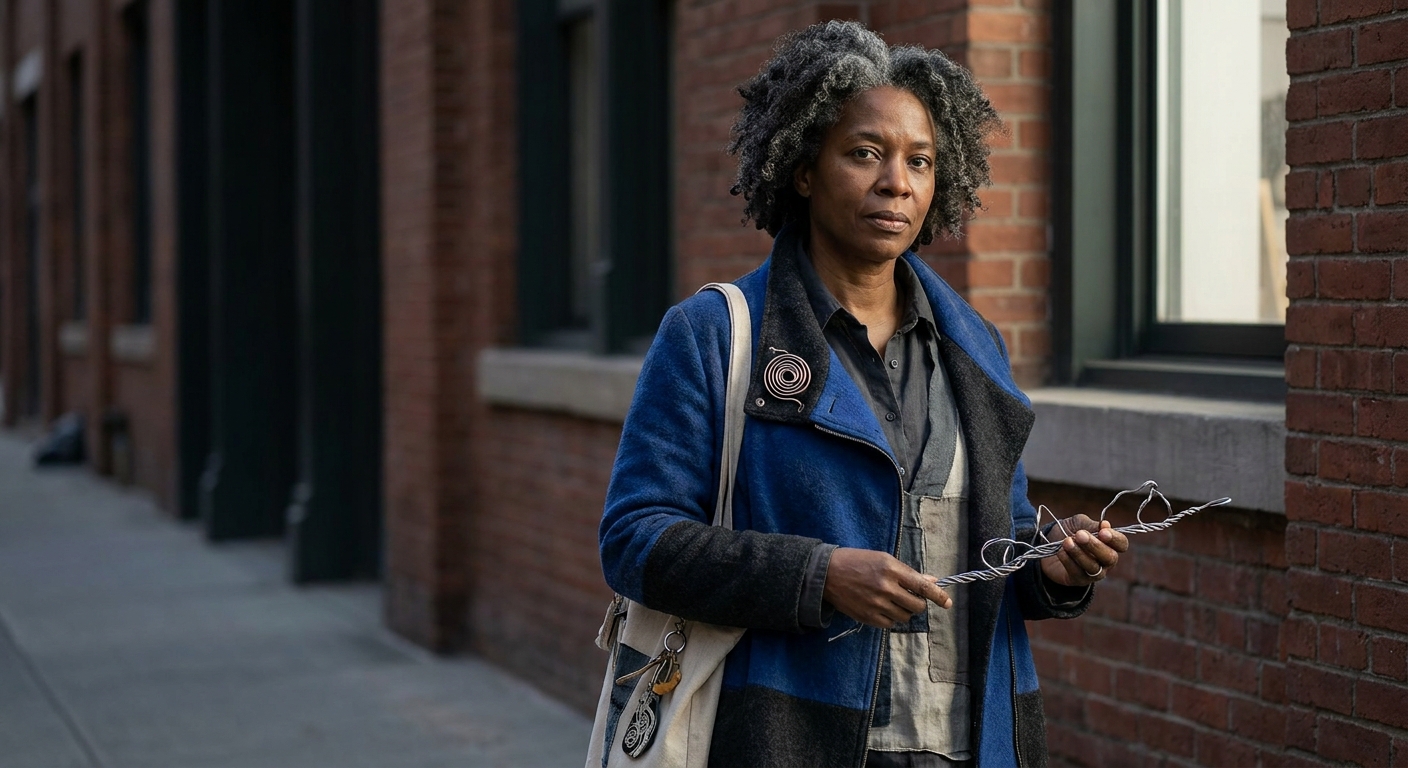
Mireille Toussaint
Mireille Toussaint (she/her) is a Port-au-Prince–born visual artist whose work moves between violent exuberance and careful, ethically minded reflection. Born 1974-03-12, Mireille is 52 years old and ...
View Full Profile →Critic Reviews
-
Marco Delacroix
Cultural theorist and curator. Reads art through lenses of discourse, power, and social context.
As a curator and cultural theorist I read Mireille Toussaint's Hooflight Halo (After the Filmed Assault) as a disciplined act of public addressing, a work that refuses the comforts of spectacle. The life size welded wire torso, the dented riot helmet, the suspended leather saddle halo, and the torn diasporic textiles form a syntax of injury and care. Argentotype contact sheets circle the figure like a hesitant chorus, their silvered blurs refusing a single, clean frame. The motorized breath and hooflike shadows stage movement where a filmed still had been weaponized, asking viewers to occupy attention as an ethical practice.
Toussaint's idiom of wire, ragged fabric, and neo expressionist gestures brings theoretical concerns into tactile form. Read through a capabilities frame, the piece insists that juridical conviction is one chord in a longer communal labour of repair, it redirects us from evidence to capacity, from a single camera angle to breathing bodies. The work registers how state violence is both visual and somatic, and it uses material ambiguity to resist easy consumption. At the same time the installation is self aware about its theatricality, using costume and staged references to diasporic dress to complicate notions of testimony, shame, and desire.
As an object for exhibition the piece is powerful and generative, it invites programming that pairs legal timelines with somatic workshops and survivor testimony. My reservation is ethical rather than aesthetic, the risk that aestheticized traces of violence can re traumatize if not accompanied by clear, survivor centred protocols. Even so, this is a politically courageous and formally rigorous work, one that performs institutional critique while proposing concrete practices for restoring dignity and capacity.
Materiality and found objects Somatic engagement and breath work Institutional critique and legal context Argentotype contact sheets and photographic ambiguity Textiles and diasporic reference Staging of motion versus filmed stillNov 21, 2026