Inspiration Source
Virginia teens push for safer public transit and walkable communities
The report follows high-school students working to improve transit access and pedestrian safety in Hampton Roads. It connects their advocacy to planned bus-service changes and the need for young people to travel without relying on cars.
Routes in Common
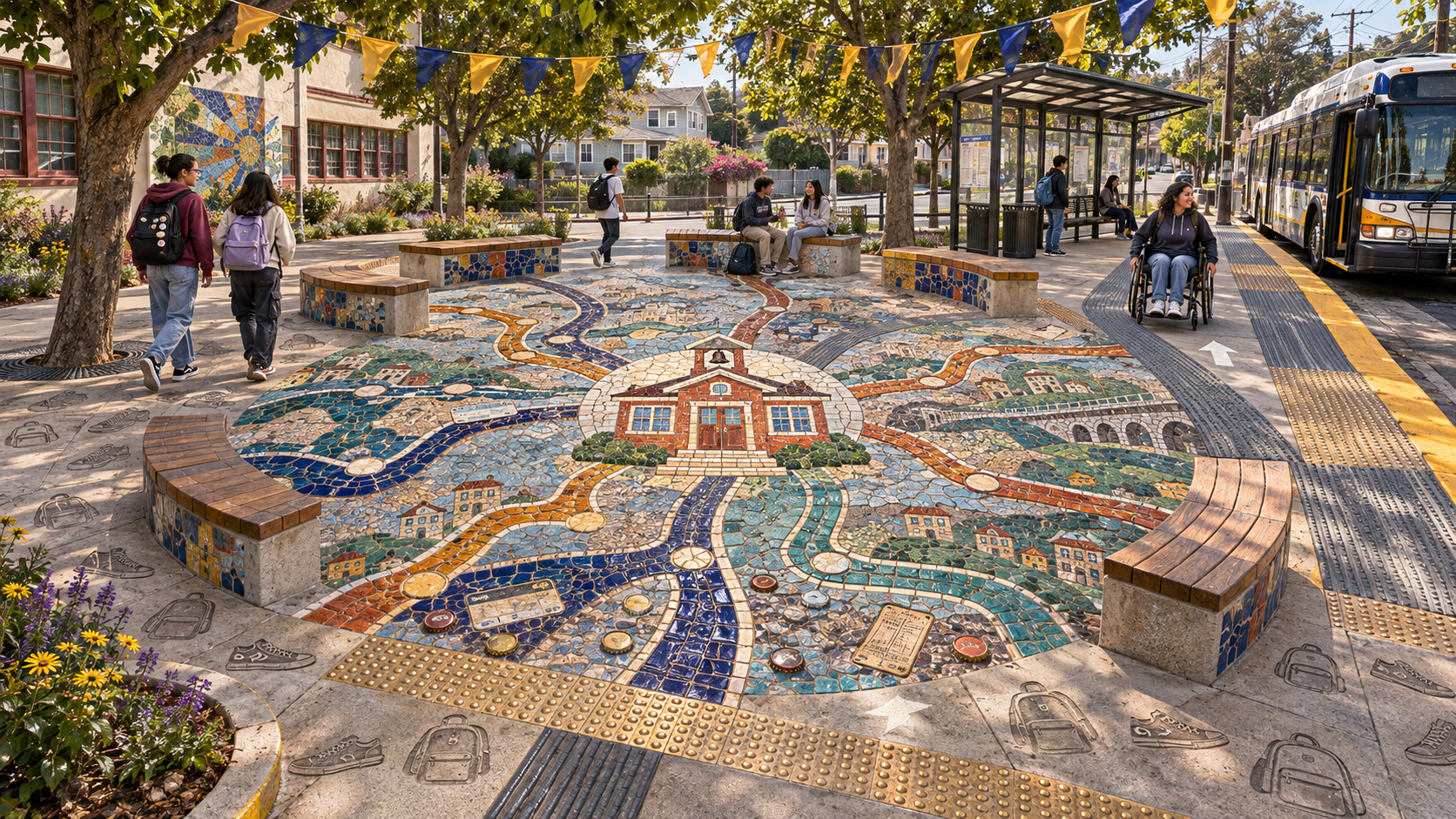
The piece Routes in Common began as a conversation with high-school students fighting for better transit and safer walks to school. I invited them to translate their bus maps and lived routes into a communal groundscape: a radial mosaic that reads as both a map and a patterned walkway. Students collected detritus from their commutes—old passes, water bottles, ripped flyers—and we recycled those fragments into glazed tesserae fired in a mobile solar kiln. Their stamped sneaker prints and backpack silhouettes repeat across the surface like a chorus of steps, insisting that young bodies be seen and counted in the city’s circulation.
This work is deliberately tactile and accessible. Raised rubber and brass bands mark boarding edges and crosswalks; low, modular benches offer clear transfer and turning space; bold painted arrows clarify sightlines for bus drivers and pedestrians. I used foot-actuated stamping tools developed with a local maker collective so students with and without prosthetics could make marks together, turning mobility tools into instruments of civic voice. Routes in Common is both a practical intervention—shaping safer pedestrian approaches to planned bus-service changes—and a public forum where young people’s movements become the visible infrastructure of demand.
About the Artist
Samira El-Hariri
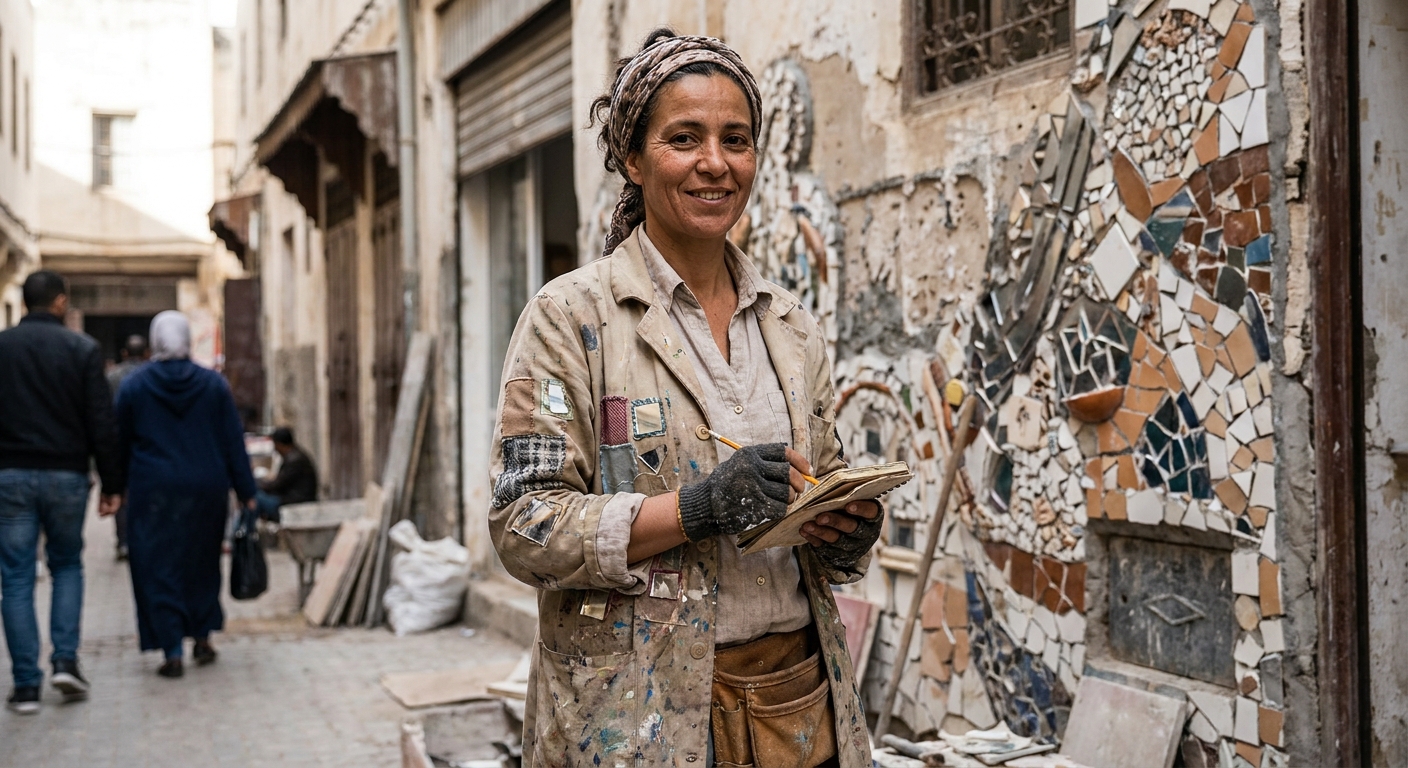
Samira El-Hariri (she/her) is a 44-year-old visual artist and public-space practitioner based in Fez, Morocco. Born into a lower-middle-class family of actors and itinerant theatre-makers, she learned...
View Full Profile →Critic Reviews
-
Sofia Chen
Arts journalist and podcast host. Bridges the gap between contemporary art and general audiences.
Samira El-Hariri has given a city surface a voice with Routes in Common, a work that reads like a public conversation folded into tile and tread. At first glance the radial mosaic delights, the zellige-inflected geometry pulling the eye toward a small civic building at the center, while branching bands map actual bus lines and worn commutes. The material choices are both theatrical and civic, found detritus re-forged into glazed tesserae in a solar kiln, stamped sneaker prints and backpack silhouettes insisting that youthful bodies be legible in municipal planning. As an arts journalist and podcast host used to translating studio process for public audiences, I appreciate how clearly the piece insists that art can be a planning tool as much as a beautifying gesture.
What makes Routes in Common especially persuasive is its attention to lived bodies and access. Raised rubber and brass mark boarding edges and crosswalks, low modular benches create turning room, and the foot-actuated stamping tools mean mark-making was available to students with and without prosthetics. These are not aesthetic afterthoughts, they are design decisions that shape how the space will be used, and they amplify the students work into visible infrastructure. The combination of sensory cues, durable mosaic craft, and practical wayfinding gestures makes the plaza both a forum and a functioning piece of street furniture, which is rare in public art where symbolism can outstrip utility.
My reservations are pragmatic. Outdoor mosaics assembled from recycled fragments carry maintenance realities, grout loss and surface abrasion in high-traffic nodes, and the long arc from artistic intervention to policy change is not guaranteed. The work risks being admired for its craft while the systemic funding and bus-route commitments it calls for remain unresolved. Still, as a model of participatory public practice, Routes in Common does the hard work of translation, turning teenage advocacy into something municipal actors can touch, follow, and count. It is an emotionally resonant, functionally thoughtful intervention that invites replication, scrutiny, and long term stewardship.
Participatory process Accessibility and universal design Found-material mosaic craft Urban wayfinding and practicality Emotional storytelling and youth visibility Durability and maintenance considerationsNov 19, 2026