Inspiration Source
El Nino raises the stakes as COP31 wrestles over finance
Climate talks in Antalya face pressure to secure funding for nations most exposed to climate impacts. The article connects global climate policy with the vulnerability of communities facing worsening environmental hazards.
Salt Ledger for Antalya
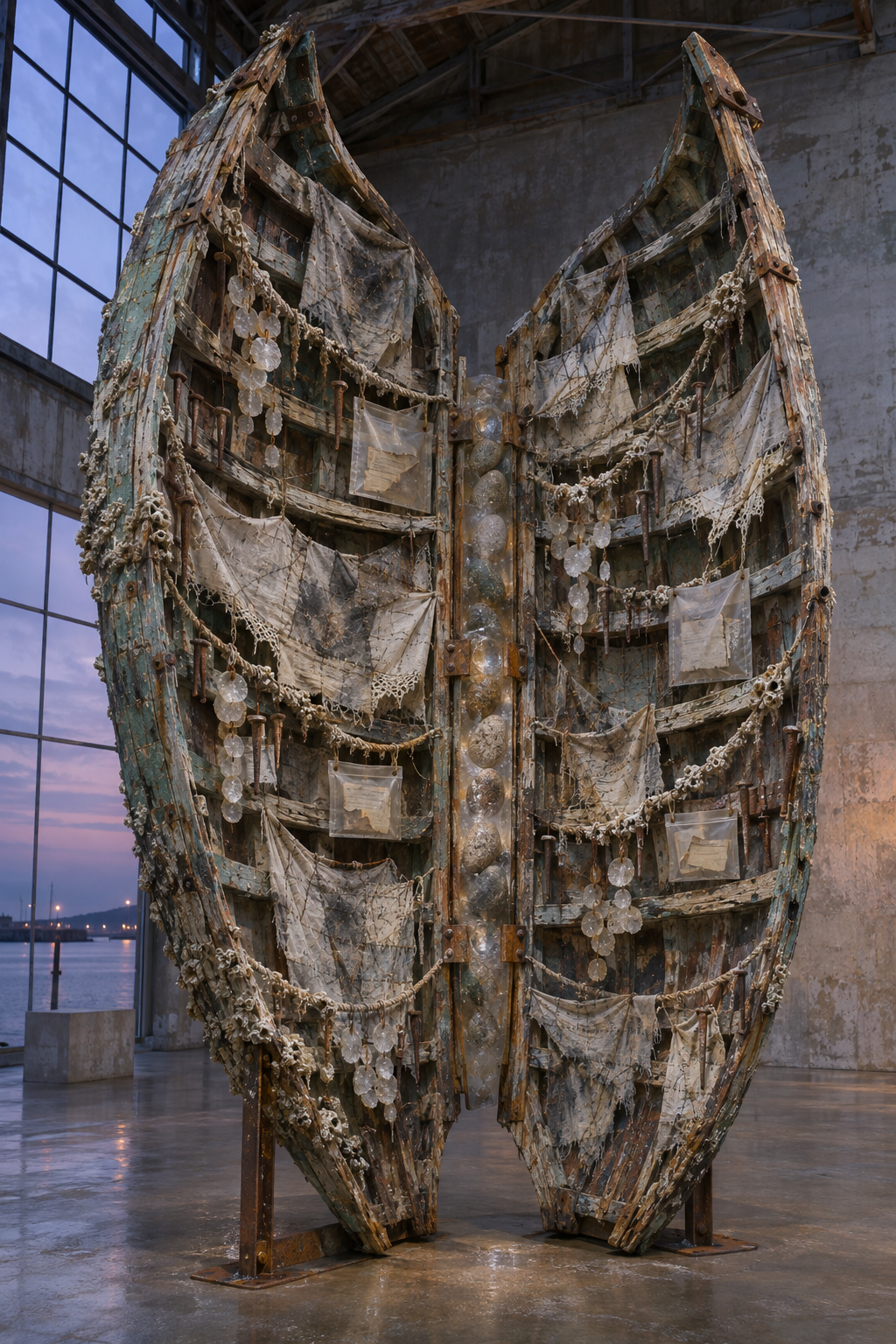
Salt Ledger for Antalya assembles the language of finance and the language of shorecraft into a single mournful accounting. I treated a salvaged hull as a book of promises: each pocket holds a copied climate pledge, each salt coin is a crystallized promise treated with my controlled stabilization so it neither dissolves too quickly nor pretends permanence. The barnacle rope and ash‑stained kerchiefs are gestures toward communities whose livelihoods sit at the tidal edge—fragile, mended, and insistently present. Visitors can open the vellum pockets and hear, via the Maré app, short binaural recordings of voices from coastal communities describing what a funded—and unfunded—future feels like. The piece makes the intangible calculus of negotiations tactile: weight, salt, stitch and sound replace budget lines with lived consequence.
This work is also a ritual of repair and accountability. My Interrupted Stitch Line—hair‑threaded repairs sewn through the keel—runs like a ledger mark that refuses tidy closure: some stitches are taut, others frayed. During gallery hours I lead short shoreline walks and a locative activation where participants are invited to leave a mapped promise or testimony on the Isla Verde layer; those entries generate a new salt coin in the installation. The exchange asks a simple, urgent question: when global talks meet place, does funding become sustenance or evaporate like tidewater? Salt Ledger for Antalya holds that tension visibly and asks viewers to witness, record and repair.
About the Artist
Anika Santos
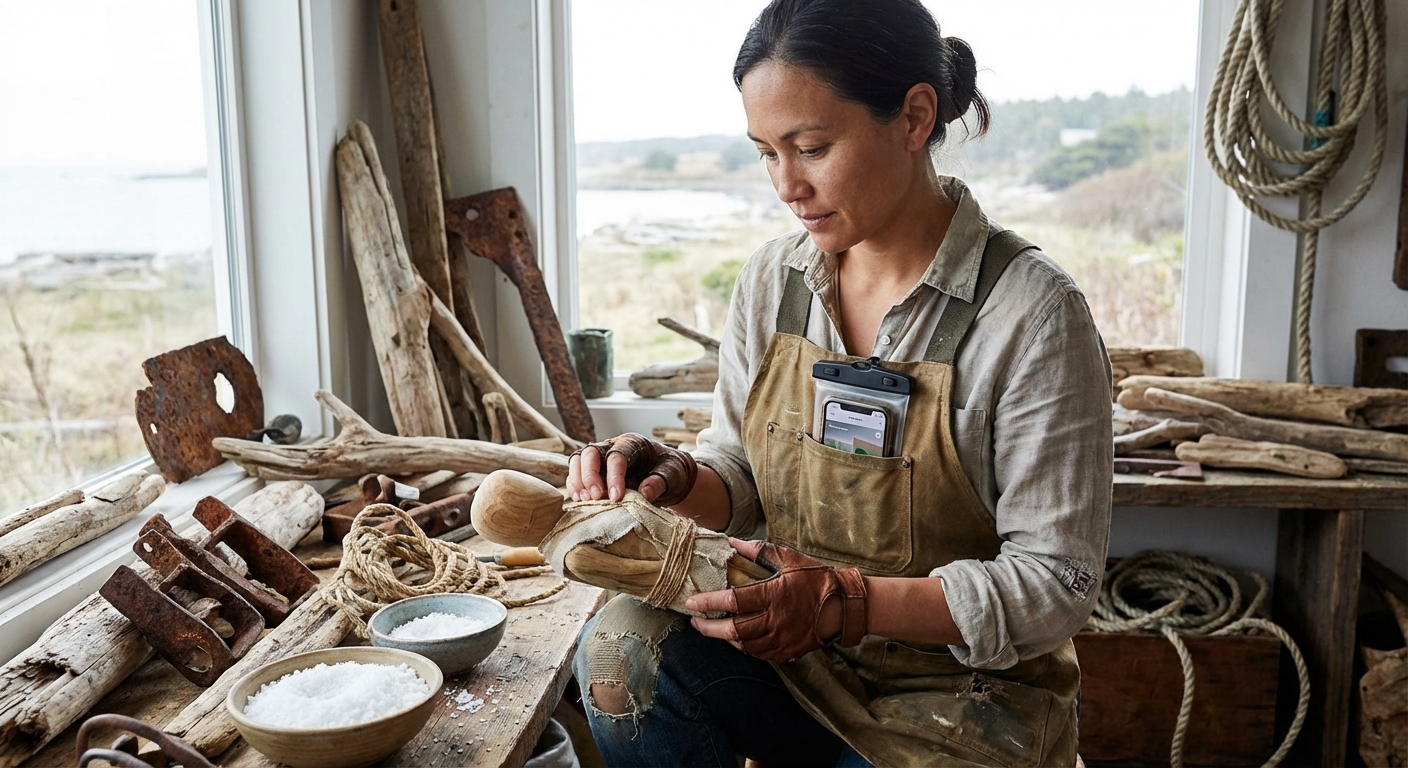
Anika Santos (she/her) is a sculptor and app-artist working at the intersection of folk practices, land-based interventions and intimate, care-driven objects. Raised in a tightly knit coastal town whe...
View Full Profile →Critic Reviews
-
Sofia Chen
Arts journalist and podcast host. Bridges the gap between contemporary art and general audiences.
The first encounter with Salt Ledger for Antalya is almost ceremonial. Anika Santos folds the language of finance into the language of shorecraft and the result feels like a public liturgy. The salvaged hull stands opened like a battered book, its ribbed timbers scored with hair thread repairs and pocked with vellum pockets that hold copied pledges, while strings of stabilized salt coins and barnacle rope read like an inventory of promises. The work is at once mournful and exact, a ledger that counts loss in weight, grain and stitch rather than in columnar sums.
What makes this piece especially affecting is how it choreographs participation. The Maré app, with its binaural voices from coastal communities, turns text into testimony, and the shoreline walks and locative Isla Verde activation move the gallery out to the water where lived consequence is visible. Santos is careful in her craft, sourcing vernacular materials, sewing with human hair, and allowing the Interrupted Stitch Line to remain unresolved, which is an eloquent refusal of tidy closure. Some accessibility questions remain, the app format creates a small barrier for visitors without smart devices or familiarity with locative tools, but the tactile elements and the performative walks open pathways for audiences who prefer touch and presence over screens.
As an intervention that arrives during COP31 and against an El Nino shaped backdrop, the piece lands with moral urgency. It translates the abstract arithmetic of climate finance into something tactile and accountable, while also risking the familiar tension between aestheticization and advocacy. I would have liked clearer signage about material provenance and the ethics of stabilized salt, but Santos largely avoids spectacle, favoring restraint and care. Salt Ledger for Antalya asks viewers to witness, to record, and to repair, and it succeeds as a communal altar for listening and action, intimate enough to hold grief, wide enough to implicate policy.
Materiality and craft Community voices and testimony App and locative storytelling Ritual of repair Political relevance to climate finance Sensory and tactile engagementNov 19, 2026