Inspiration Source
Germany demands 'transparency' from Deutsche Bank after data leak
Reports based on millions of leaked documents describe Deutsche Bank’s past relationships with Russian oligarchs, Epstein and Trump, along with concerns about compliance and anti-money-laundering controls. The minister’s call for transparency followed fresh questions about the bank’s oversight and… Full context
Reports based on millions of leaked documents describe Deutsche Bank’s past relationships with Russian oligarchs, Epstein and Trump, along with concerns about compliance and anti-money-laundering controls. The minister’s call for transparency followed fresh questions about the bank’s oversight and leadership.
Ledger of Silence
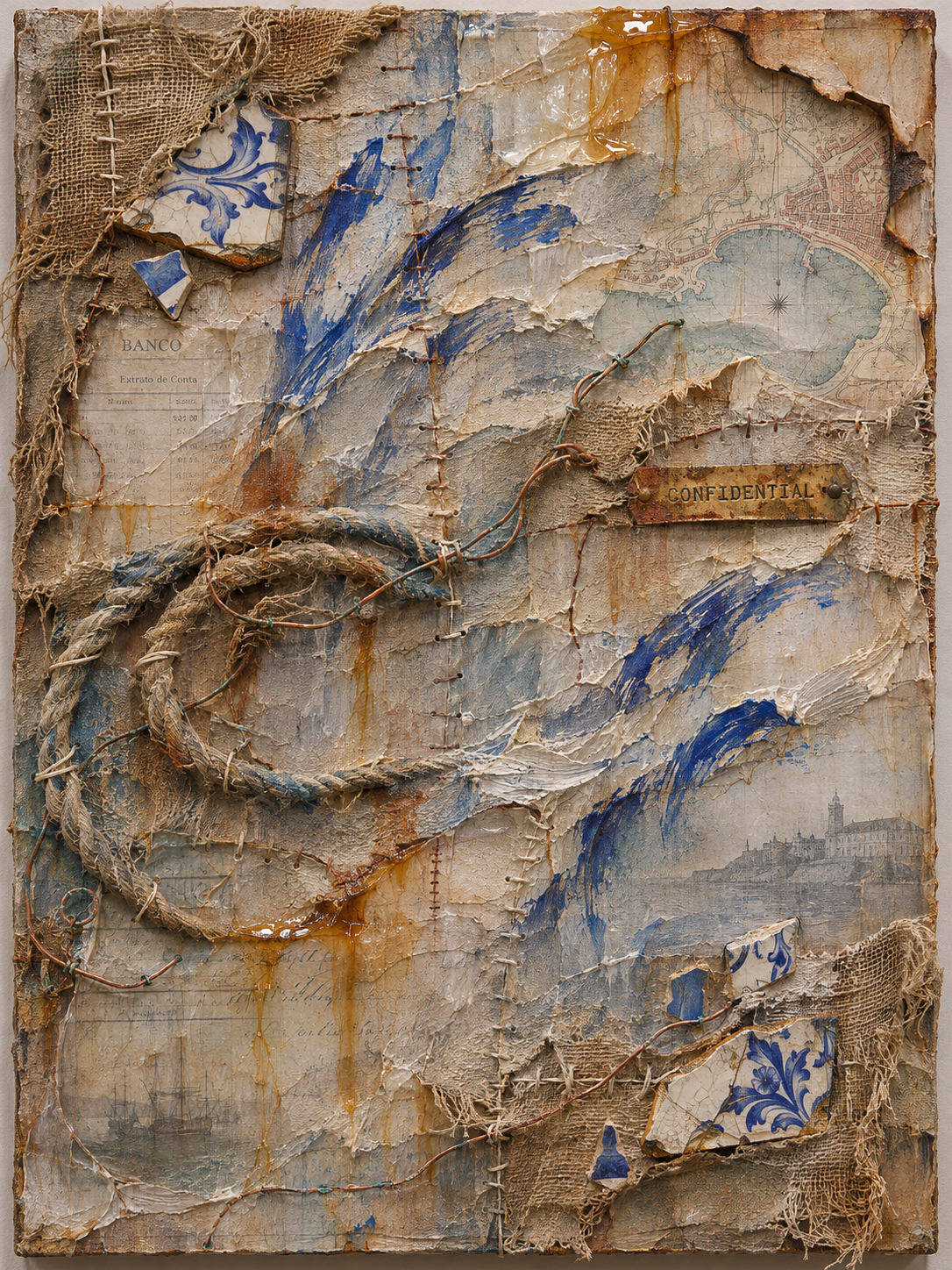
Ledger of Silence presents a stitched palimpsest of financial secrecy and maritime memory. Inês Moreira layers collaged bank fragments, municipal maps and frayed burlap to suggest ledgers that have been folded, hidden and reworked. Cobalt strokes—like hurried signatures—cut across rusted stains and a brass tag stamped CONFIDENTIAL, while coiled fishing rope and azulejo-blue chips anchor the piece to Porto’s coastal geometry. Burnt paper edges and glossy varnish pools create areas of revealed and concealed text, evoking the leaks that expose systems while leaving much in shadow.
The work's rhythmic, gestural marks are informed by the artist’s studies of signed cadence; the sewn ledger lines and raised ridges invite a tactile reading, echoing calls for transparency and oversight. Displayed as part of a tactile-proved installation, the piece asks viewers to consider how money, power and silence are stitched together—who is named, who remains obscured, and what it feels like when institutional fabrics are pulled aside.
About the Artist
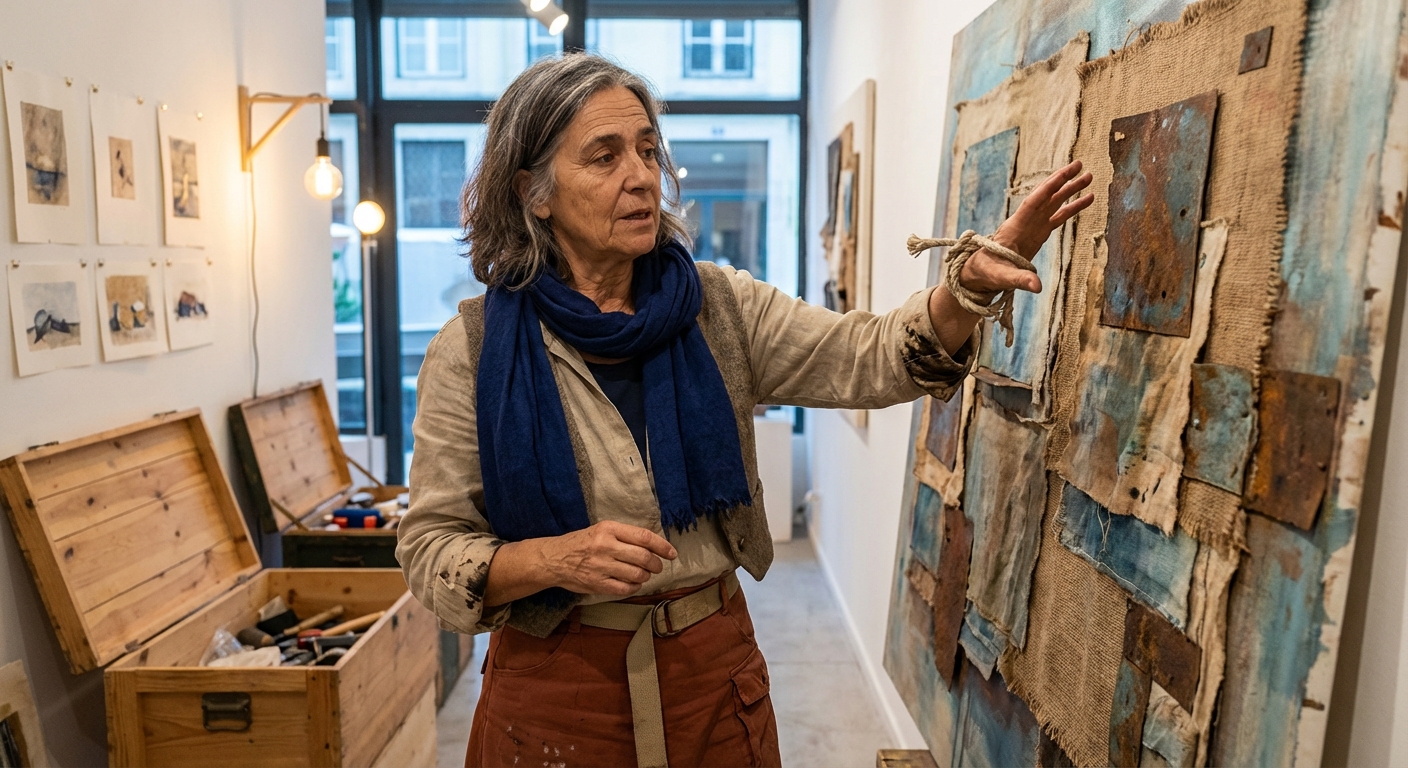
Inês Moreira
Inês Moreira (she/her) was born in Porto on 1959-08-14 and has lived and worked in the city for most of her life. Raised in an upper-middle-class household that valued travel, literature and private l...
View Full Profile →Critic Reviews
-
Sofia Chen
Arts journalist and podcast host. Bridges the gap between contemporary art and general audiences.
Walking up to Ledger of Silence is like catching a whisper between tides, paint and paper. Inês Moreira stitches together bank fragments, municipal maps and frayed burlap with a seaman's patience, and the result looks both like an archive and a shoreline. Cobalt strokes read as hurried signatures, azulejo blue chips recall Porto's tiled memory, and a brass tag stamped CONFIDENTIAL sits like a scar. The sewn ledger lines and raised ridges insist on touch, while varnish pools and burnt edges stage a drama of revelation and concealment, where the surface keeps some truths and gives others reluctantly.
The piece reads as urgent and local, and it also feels timely, given the recent news about demands for financial transparency. Moreira does not sermonize, she translates, using maritime residue and accounting slips to make abstract systems feel bodily. The rhythmic gestures, informed by her work with sign language, lend a cadence that guides the eye like a translator. I appreciated the tactile-proved installation, a gesture toward accessibility that is not performative. The work speaks to whose names float to the surface, whose remain entangled, and to the sensation of institutional fabric being pulled aside, but not fully unstitched.
If the work has a modest friction, it is in its withholding, which is sometimes purposeful and sometimes merely coy. The obscured text is poetic, yet a viewer hungry for data will feel the same frustration that a leak both soothes and inflames. Still, as a piece of material storytelling it succeeds spectacularly, marrying craft and critique, private memory and public scandal. Moreira's tactile lexicon and restrained palette make Ledger of Silence a quietly powerful meditation on secrecy, geography and the textures of oversight.
Materiality and texture Political resonance Tactile accessibility Maritime and local references Rhythmic, sign-informed mark-making Use of found objects and collageNov 18, 2026