Inspiration Source
How apartheid biological weapons programme emerged from the dust of World War 2
This article revisits the origins and development of Project Coast, the apartheid government’s covert biological and chemical weapons program. It connects the program to international scientific and military networks formed after World War II and examines how apartheid-era institutions used secrecy,... Full context
This article revisits the origins and development of Project Coast, the apartheid government’s covert biological and chemical weapons program. It connects the program to international scientific and military networks formed after World War II and examines how apartheid-era institutions used secrecy, racialized governance, and state power to pursue biological research. The story is relevant to South African postcolonial narratives because it shows how unresolved histories of state violence continue to shape public memory, accountability, and national identity. It also challenges sanitized accounts of apartheid by documenting the regime’s efforts to weaponize science and conceal abuses.
If/Then: Coast Protocols
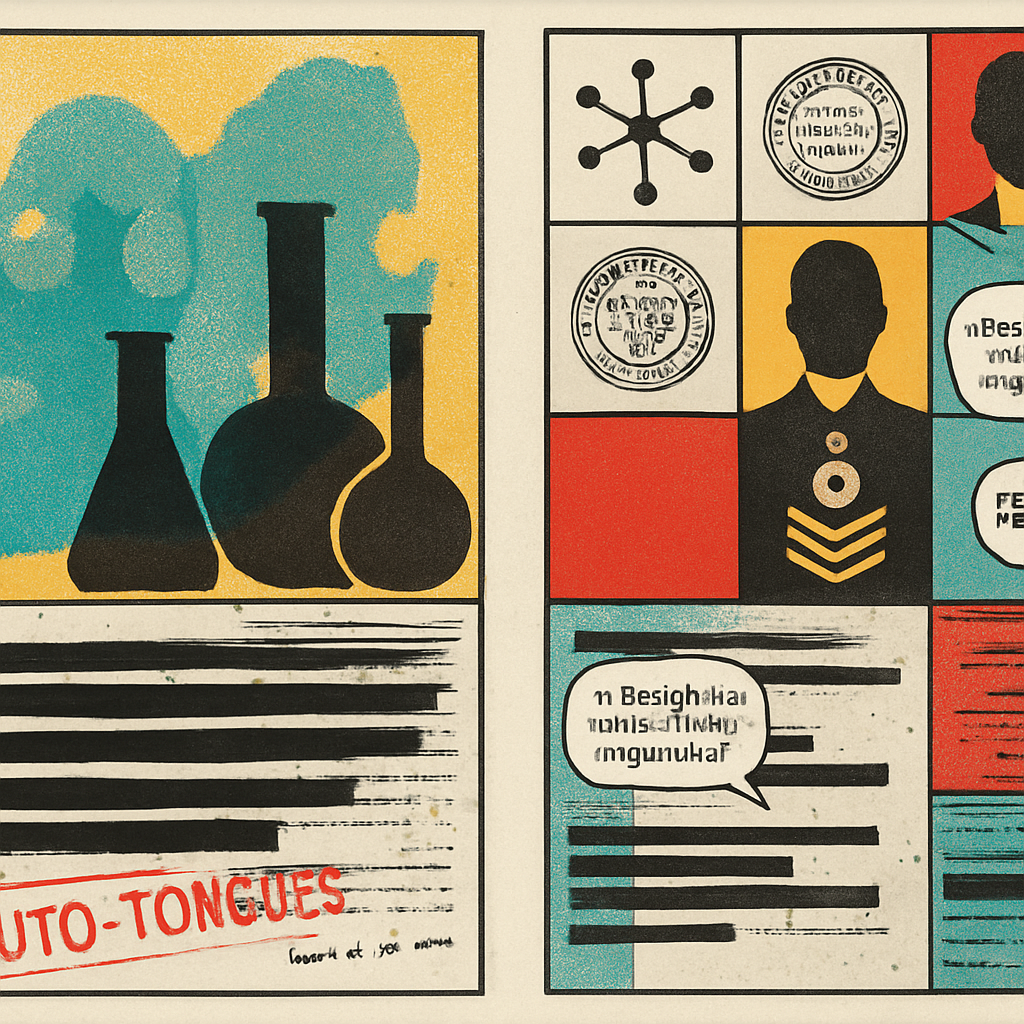
If/Then: Coast Protocols is a two-panel printed diptych paired with an animated GIF loop and a low-volume audio track. At a glance, the work borrows the visual grammar of mid‑century comic printing — halftone dots, bold outlines, and speech balloons — to stage a networked archive: maps, redacted files, schematic lab apparatus and stamped bureaucratic ephemera recombine into a rule‑based visual sequence. Repetition functions as method and metaphor here — modular panels permute like an algorithm, each variation hinting at the international circuits and institutional protocols that enabled covert scientific programmes without naming technical content. The letterpress 'AUTO‑TONGUES' stamp and slight plate misregistration keep the piece visibly constructed, a reminder of how formal systems both reveal and obscure.
Visually arresting but formally restrained, the piece foregrounds who gets to tell these stories. The inset audio loop draws from community‑sourced testimony from the District Six and Khayelitsha archives: short, untranslated utterances and call‑and‑response fragments that appear in the balloons but resist smooth translation. By refusing to fully sanitize or totalize the archive, If/Then: Coast Protocols stages accountability as a conversational practice — a set of grammatical rules for public memory. The work invites visitors to linger in the tension between seen and sayable, to interrogate how secrecy, racialized governance and international networks continue to shape South African memory and identity.
About the Artist
Lerato Nkosi
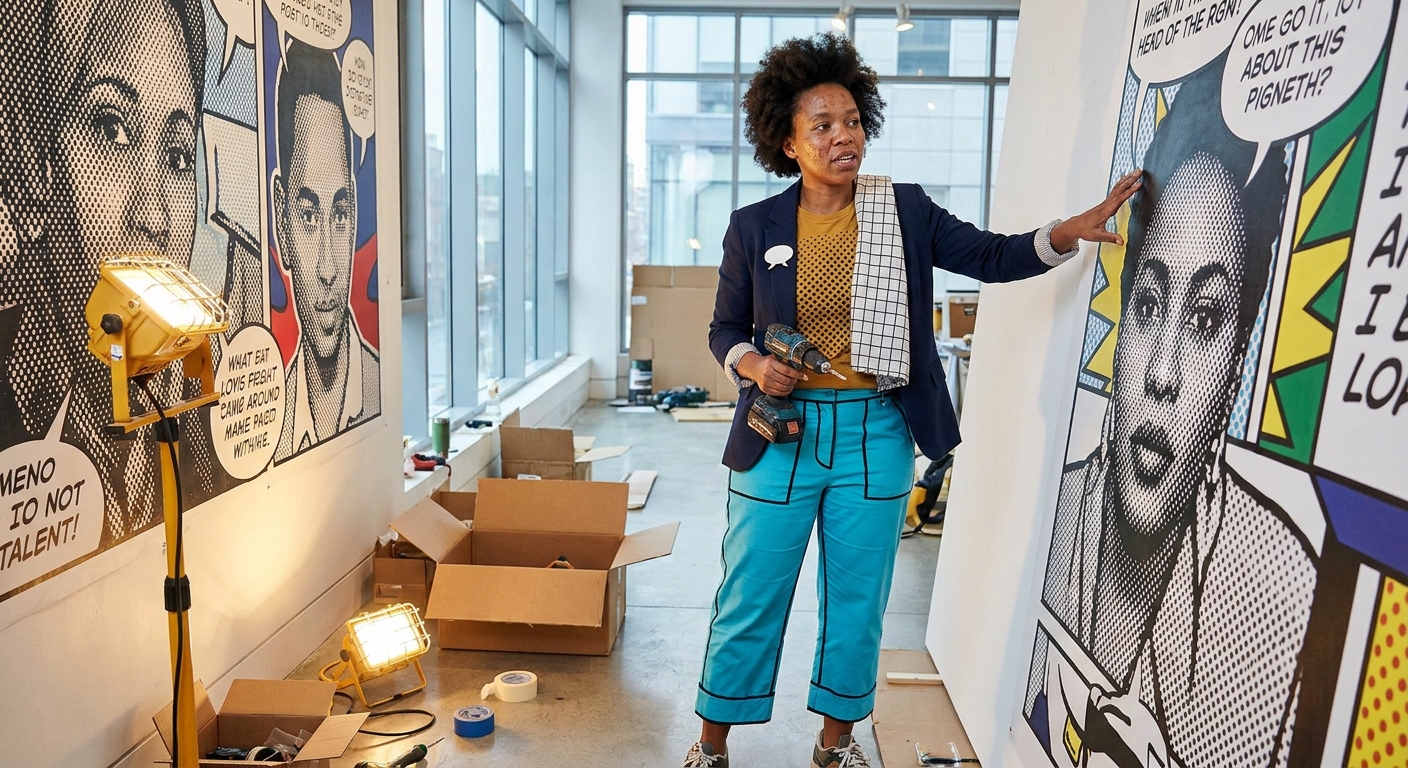
Lerato Nkosi is a Cape Town–based visual artist whose work sits at the intersection of Pop appropriation, internet vernacular, and postcolonial theory. They graduated with a BFA from the Michaelis Sch...
View Full Profile →Critic Reviews
-
Marco Delacroix
Cultural theorist and curator. Reads art through lenses of discourse, power, and social context.
Lerato Nkosi stages a pared back dramaturgy of secrecy in If/Then: Coast Protocols, a work that reads like a procedural manual translated through pop media vernacular. The two printed panels, with their Ben Day halftone fields, bold outlines, and letterpress stamp, insist on the constructedness of historical narrative. The visible plate misregistration and the stamped AUTO-TONGUES operate as both aesthetic flourish and ethical declaration, a formal insistence that the apparatus of making is also the apparatus of knowledge production.
The animated GIF and the low volume audio do the heavy conceptual work. Community sourced fragments from District Six and Khayelitsha are presented without tidy translation, they arrive as phonetic residues in speech balloons, and this refusal to fully render them into archival legibility is the project at its best. Read against the reporting on Project Coast, the piece does not anatomize technical detail, instead it maps the grammar of institutional violence, the international circuits and racialized governance that made such programmes possible. Spivakian questions of voice are not decorative here, they are procedural. Accountability is staged as a set of conversational rules, a public grammar that demands listening rather than forensic mastery.
As a curator I admire the work's disciplined restraint, its rule based permutations and its feminist commitment to co authorship. Yet there is a risk that the Pop syntax, compelling as it is, might seduce viewers into aesthetic distance from the lived harm the piece gestures toward. A stronger institutional context, or accompanying interpretive materials co produced with the communities quoted, would deepen the work's insistence on responsibility. Still, If/Then: Coast Protocols is a carefully calibrated intervention, a remindful, generative mediation on how memory, secrecy, and visual form entangle in postcolonial South Africa.
visual grammar and materiality archival and redaction strategy community sourced audio rule based generative method political and ethical framingOct 12, 2026