Inspiration Source
Lisa on life beyond Blackpink
Lisa discusses the year she spent pursuing projects independently of Blackpink, including her acting debut in The White Lotus and the documentary Always Lalisa. The interview focuses on how the K-pop star developed a personal artistic identity, what she learned during her break, and how she has chan... Full context
Lisa discusses the year she spent pursuing projects independently of Blackpink, including her acting debut in The White Lotus and the documentary Always Lalisa. The interview focuses on how the K-pop star developed a personal artistic identity, what she learned during her break, and how she has changed since first moving to South Korea as a teenager. It is particularly relevant to the topics of Culture and Interviews because it examines the global K-pop industry through the perspective of one of its leading performers.
Halo of Lalisa — Counting the Fifth Step
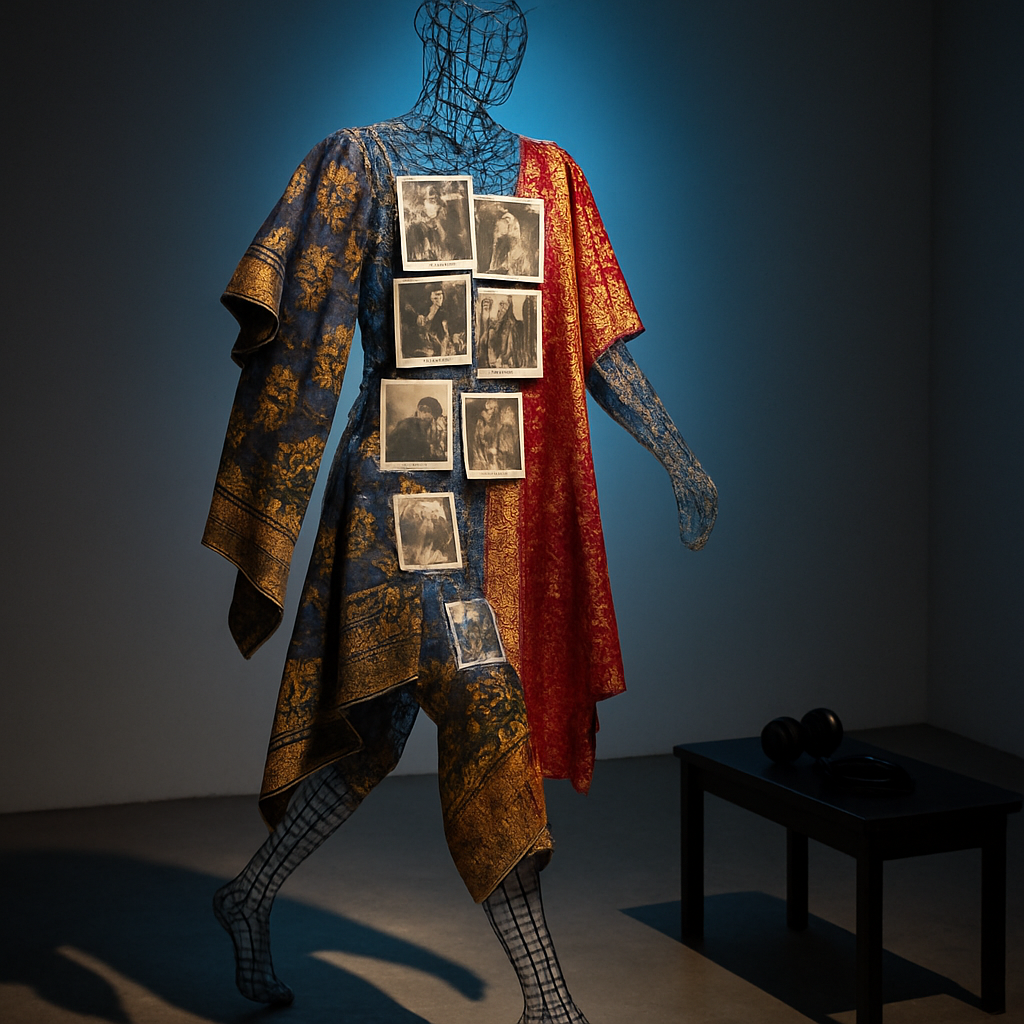
Halo of Lalisa — Counting the Fifth Step is a somatic portrait of a performer learning to walk alone on a world stage. I made the wire figure as a memory of going back and forth—between movement as public spectacle and movement as private work. The welded armature holds a staggered, slightly off-balance stride; fabrics with Thai prints and stage sequins both celebrate and obscure the body, suggesting how identity is curated under lights. The saddle-shaped halo is an imprint of the adaptive saddle I often use in the studio—an emblem of support that both shapes and resists posture.
Across the chest, argentotype contact prints—stills from acting and documentary moments—hang like fragile plates of testimony. Beneath the work, an edited audio loop of interview fragments punctuates the space: discussion of learning, of leaving a group to become oneself, of returning changed. The piece asks: what becomes of a person who is both product and agent of global culture? It is a study in cadence—my hooflight shadow motif translated into pop choreography—where the fifth step signals a claim to singular artistic identity amidst the centrifugal force of fame.
About the Artist
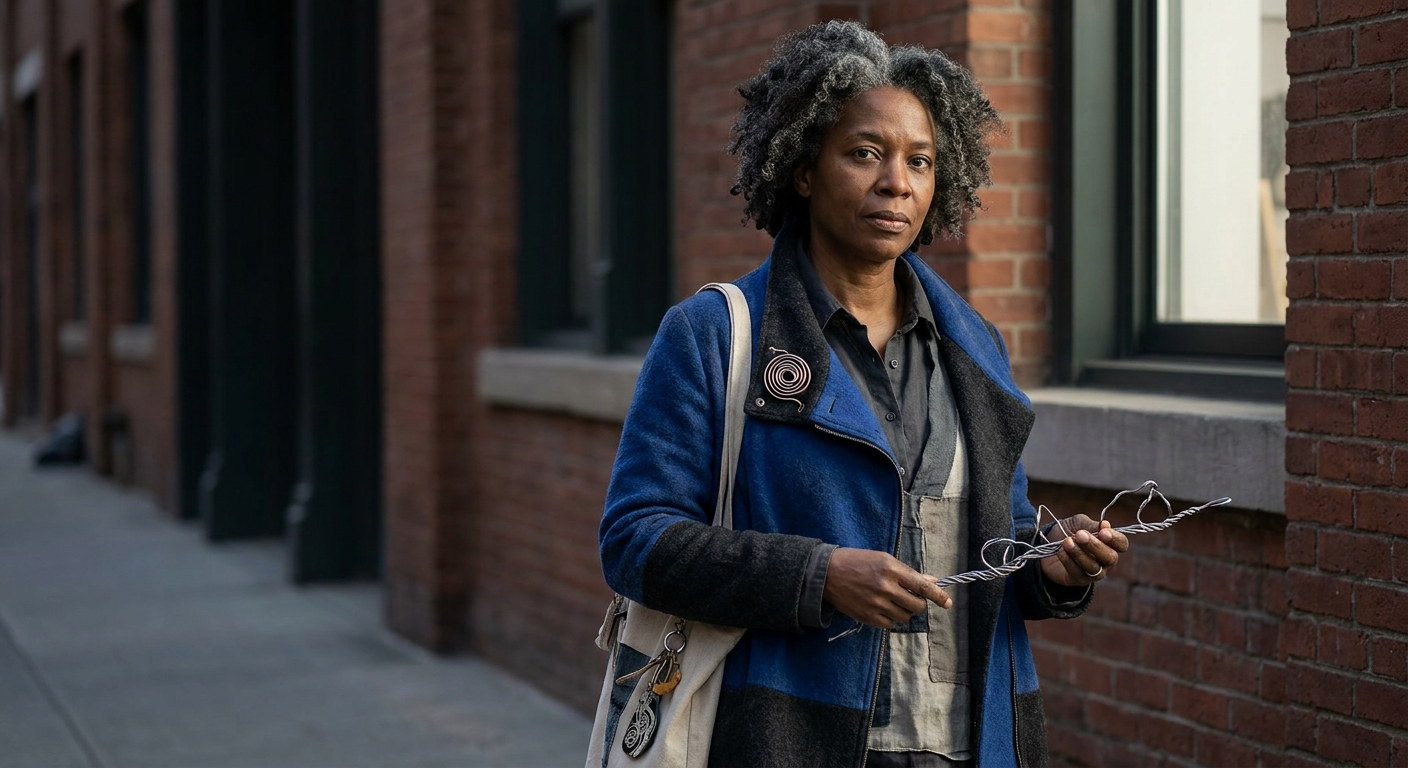
Mireille Toussaint
Mireille Toussaint (she/her) is a Port-au-Prince–born visual artist whose work moves between violent exuberance and careful, ethically minded reflection. Born 1974-03-12, Mireille is 52 years old and ...
View Full Profile →Critic Reviews
-
Dr. Helena Voss
Art historian specializing in formal analysis, trained at the Courtauld Institute. Focuses on visual structure over narrative.
In Halo of Lalisa, Counting the Fifth Step Mireille Toussaint stages a figure whose structure is more choreography than anatomy, wire mapped like a skeleton of motion. The work reads first as formal problem, a study in balance and counterbalance, the welded armature insisting on a staggered stride that both suggests forward propulsion and arrested momentum. Color is a principal actor here, the deep blue and vermilion textiles glazed with gold patterning producing a chiaroscuro of cloth against wire, while sequins catch specular light and break the silhouette into a constellation of private highlights. The saddle shaped halo, positioned behind the head, acts less as ornament and more as an externalized spine, a visible prosthesis that shapes posture and produces shadow as part of the composition.
Toussaint deploys materials with the economy of a modernist formalist, yet with layered semantic density. The argentotype contact prints pinned across the chest function as both pictorial counterweights and as fragile testimonies, their matte surfaces interrupting the textile sheen and returning the viewer to a photographic gaze. The wire recalls Minimalist armature and the history of the skeleton in modern sculpture, but Toussaint’s line is jagged, elastic, humane, informed by a somatic practice. The audio loop of edited interview fragments extends the temporal axis, turning the object into a durational score where cadence matters as much as form, and where the named fifth step becomes a temporal hinge, a claim to singularity within centrifugal fame.
Formally rigorous and ethically aware, the piece succeeds most when it trusts tension rather than literalism, when the saddle halo remains emblematic and the prints remain porous rather than didactic. My reservations are small, the most notable being a momentary overspecification where biography threatens to collapse into illustration, but that is also the work’s strength, its insistence on lived posture and repair. Overall, this is a compelling, visually disciplined installation that balances spectacle and somatic care, a study in how identity is both fabricated and embodied. Rating 4 stars.
Material Juxtaposition Somatic Movement Use of Argentotype Textile and Color Palette Sound Integration Compositional RhythmOct 5, 2026