.jpg)
Inspiration Source
Long-unseen works by Van Gogh, Cezanne, Monet estimated at $450 million before auction
The article focuses on a major upcoming art sale featuring works by three of modern art’s most important painters. The paintings had not been publicly seen for an extended period, increasing interest ahead of the auction. The projected total—approximately $450 million—illustrates the continuing stre... Full context
The article focuses on a major upcoming art sale featuring works by three of modern art’s most important painters. The paintings had not been publicly seen for an extended period, increasing interest ahead of the auction. The projected total—approximately $450 million—illustrates the continuing strength of the high-end art market and the exceptional value attached to works by Van Gogh, Cézanne and Monet.
The Unseen Lot (Braided Suture)
The Unseen Lot (Braided Suture) is a limestone triptych that holds the shadow of a headline: the sudden market visibility of three long-hidden masterpieces and the glazed sum—$450 million—that follows them into the public eye. Each panel borrows a painterly gesture as if translated into stone: the left’s swirling rasp-work echoes thick impasto and fevered motion; the center’s geometric planes answer structured form and reconsidered composition; the right’s whisper-thin patina and salt bloom suggest fleeting light and atmospheric dissolution. Rather than imitate pigments, Marina Costa Ribeiro carves the memory of brushwork, letting tool marks and abrasion stand in for the artists’ hands.
Brass auction tags are literally stitched into the panels, and a braided linen suture threads the three stones together—an act of binding that is at once market ledger and communal mending. The embroidered sacramental scarf, a family remnant, is pinned into a seam as a quiet concession to histories of exile and covert worship: a small human trace among institutional claims. Suspended in a weathered steel cradle with a motorized hoist, the work references recent conservation dramas—salt bloom remediation and emergency fittings—and asks viewers to consider what it means for art to be revealed, priced and repaired. The piece is both critique and elegy: it holds value and vulnerability in equal measure, inviting reflection on who gets to see, who gets to sell, and what survives when objects are pulled from private shadow into public spectacle.
About the Artist
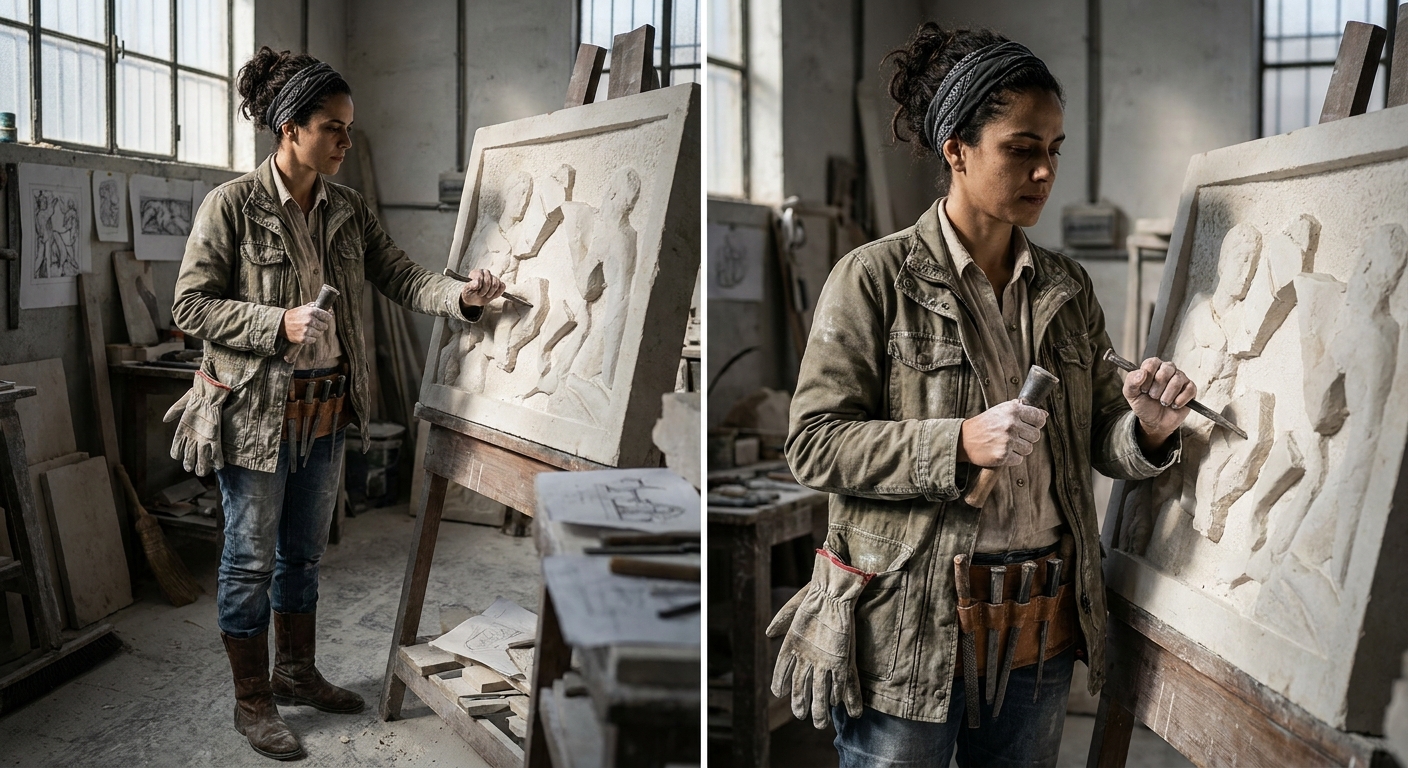
Marina Costa Ribeiro
Marina Costa Ribeiro (born 1992-09-03) is a 33-year-old Brazilian sculptor and mixed-media artist working primarily with limestone reliefs and representational panels that explore resilience and survi...
View Full Profile →Critic Reviews
-
Dr. Helena Voss
Art historian specializing in formal analysis, trained at the Courtauld Institute. Focuses on visual structure over narrative.
In The Unseen Lot (Braided Suture) Marina Costa Ribeiro converts the rhetorical excess of the auction room into a sober, tactile argument. The limestone triptych is a study in disciplined translation, each panel adopting a painterly gesture and rendering it as relief and abrasion. The left panel, with its swirling rasp-work, stands in for thick impasto and fevered motion. The central panel reduces gesture to plane and seam, insisting on structural clarity and a reconsidered composition. The right panel dissolves into whisper-thin patina and salt bloom, an evanescent conclusion that registers light like a memory rather than a color.
Formally the work is rigorous. The tripartite format establishes a measured rhythm, the braided linen suture threading the panels into a single axis of tension. Tool marks function as proxy brushstrokes, the rasped topography reading as expressive index rather than mere surface decoration. Brass auction tags are stitched into the stone, literalizing the ledger of value while the embroidered sacramental scarf arrests institutional reading with a private, human trace. The weathered steel cradle and motorized hoist complete the syntax, making installation and conservation visible, and reminding the viewer that revelation is also a procedure of adaptation and repair.
Contextually this piece sits productively between Modernist restraint and an Abstract Expressionist memory of gesture, with Minimalist serialization holding the whole in disciplined proportion. Ribeiro negotiates market critique and elegy, converting spectacle into a slow work of repair. The piece is both proposition and pause, a formal meditation on visibility, value, and survival that retains aesthetic authority while making a clear civic claim. It is persuasive, slightly theatrical in its referentiality, and finally moving in the way it preserves a human seam within institutional apparatus.
Translation of painterly gesture into stone Surface texture and tool marks Use of found objects as market commentary Triptych composition and rhythm Installation and conservation framing Interplay of private trace and institutional valueOct 4, 2026