Inspiration Source
Pathways to Inclusive Digital Archaeological Archives
This article is the strongest match for the topics “Cultural hybridity and reparative histories” and “Memory and alt-archaeology.” It explores inclusive digital archaeological archives, focusing on how archival systems can move beyond homogeneous institutional narratives. The article argues that arc... Full context
This article is the strongest match for the topics “Cultural hybridity and reparative histories” and “Memory and alt-archaeology.” It explores inclusive digital archaeological archives, focusing on how archival systems can move beyond homogeneous institutional narratives. The article argues that archives should be shaped not only by professional custodians but also by the communities whose histories and cultural materials they document. It presents reparative archiving as a way to make collections more responsive to marginalized voices, particularly in the Middle East and North Africa. The emphasis is on changing archival practice itself: expanding participation, revising descriptive frameworks, and allowing affected stakeholders to influence how historical materials are represented. Although it is an academic publication rather than a conventional newspaper report, it directly addresses the requested themes of memory, historical repair, and alternative approaches to archaeology.
Palimpsest of Breaths and Gold
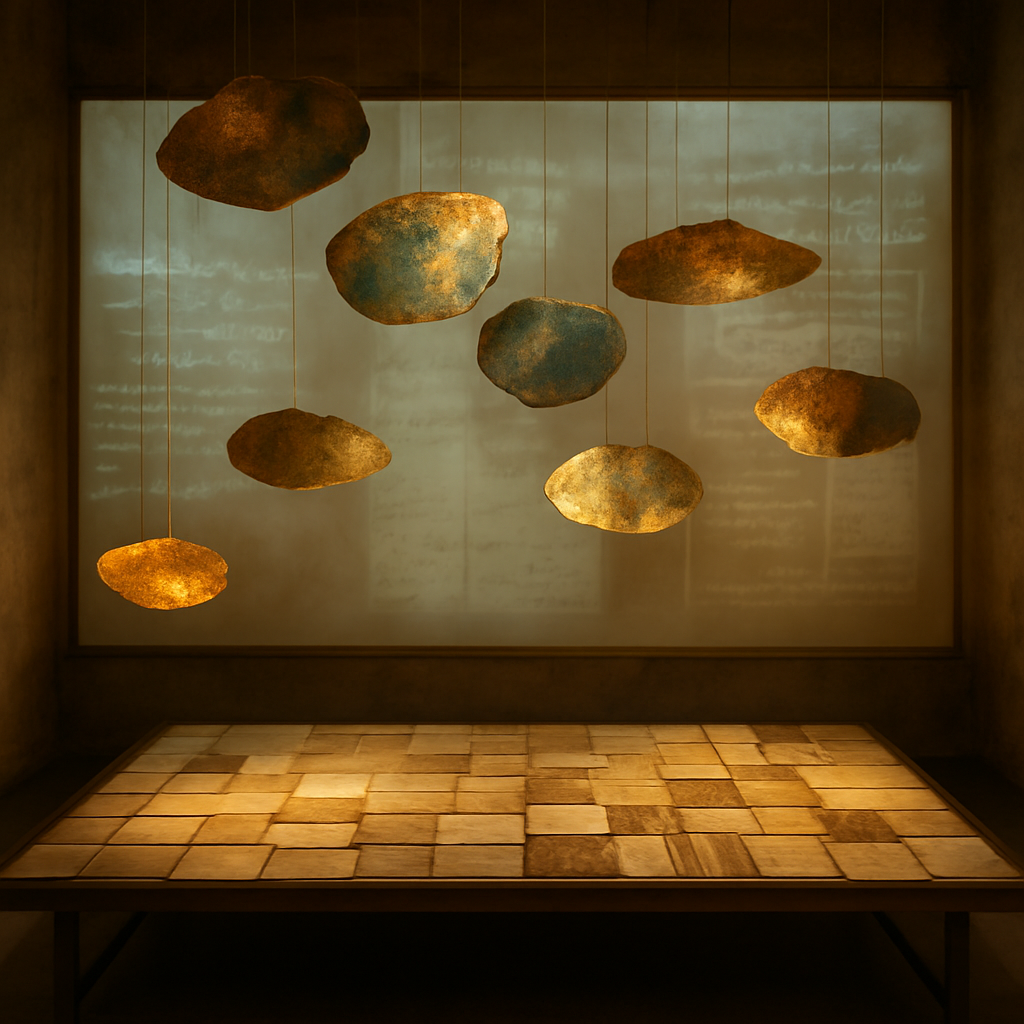
Palimpsest of Breaths and Gold is a reparative archive made visible. Drawing on long-form field protocols and community-led conservation methods, I layered electroformed gold leaf and patinated metal with stitched archival fragments so that the material itself negotiates voice and value. Visitors encounter scanned catalog entries projected in soft-focus across glass panes—lines of metadata that bloom and fade as sensors capture breath and touch—making silence, omission, and memory legible in real time. The gilded plates hover like recovered reliquaries; sometimes they reflect a line of a poem, sometimes a name excised from an institutional ledger. The work insists that archival authority is not singular but relational: each breath, each fingertip, remakes the archive's surface.
This project is both ritual and protocol. Borrowing reparative frameworks from Pre-Columbian goldwork practices and collaborative fieldwork in Cauca–Nariño, I invited community custodians and translators from the Middle East and North Africa to co-design descriptive vocabularies and touch interactions. Generative algorithms re-title and re-contextualize fragments—offering alternative catalogues that prioritize vernacular taxonomies over bureaucratic ones—while live flute tones, triggered by breath-sensors, mark moments of listening and consent. The result is an active, partial alt‑archaeology: archival materials that ask to be touched, sung to, and re-described, foregrounding participation, memory, and the ethical labor of historical repair.
About the Artist
Amaya Soler
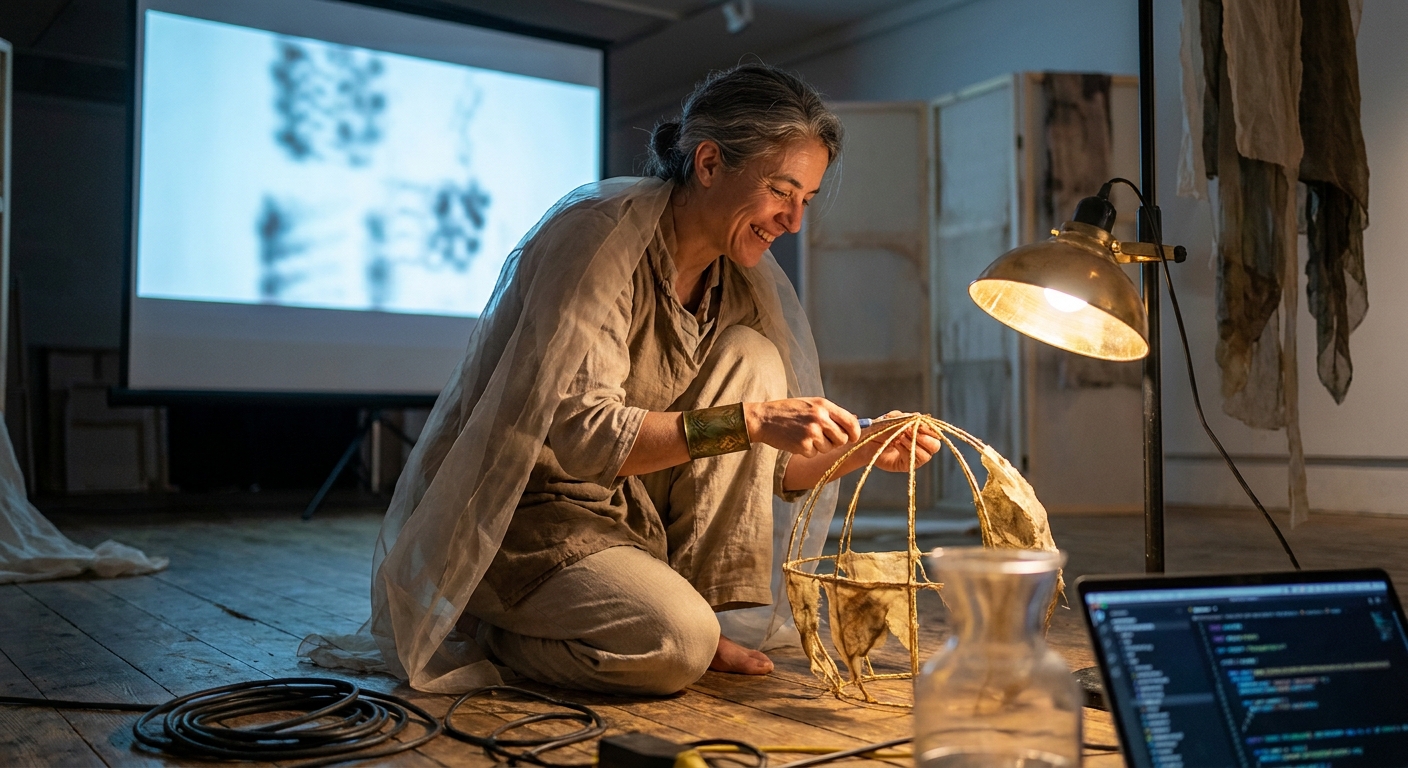
Amaya Soler (pronouns: they/them) is a multidisciplinary artist whose practice quietly bridges material alchemy, ritual poetics, and algorithmic systems. Born and raised in Toulouse, France, Amaya stu...
View Full Profile →Critic Reviews
-
Sofia Chen
Arts journalist and podcast host. Bridges the gap between contemporary art and general audiences.
As I entered the dimened room of Palimpsest of Breaths and Gold, my first response was bodily rather than intellectual. Suspended, electroformed gilded plates hang like small reliquaries, their warm surfaces catching the soft-focus projections of scanned catalog entries. Breath and touch are literal inputs, and the space is tuned so that metadata blooms and fades in response, while live flute tones punctuate moments of consent and attention. The effect is intimate, ritualized, and quietly insistive, a choreography that asks you to lean in and to listen.
Amaya Soler brings together rigorous craft and clearly articulated reparative intent, drawing from Pre-Columbian gilding techniques and collaborative fieldwork in Cauca and Nariño, while inviting translators and custodians from the Middle East and North Africa to co-design descriptive vocabularies. The generative titling and vernacular taxonomies make a strong case for archives as living, relational systems. That said, the work also foregrounds tensions that are important to name. Sensor-driven interactions can exclude people with respiratory or mobility limitations unless alternative modes of participation are offered, and algorithmic re-titling demands transparency about training data and editorial authority so that vernacular voices are not smoothed over by generative convenience.
I admire the care of craft, the humility of scale, and the ethical curiosity at the heart of this installation. With small but concrete steps to broaden accessibility and to document community authorship more visibly, this alt-archaeology could serve as a model for institutions seeking reparative practice. It is an artwork that privileges listening and repair, and it rewards slow looking and sustained listening.
Material alchemy and gilding Participatory co-design Sensor-driven interactivity Generative retitling and vocabulary Reparative archival practice Sound and breath choreographySep 27, 2026