Inspiration Source
International conference honoring Allameh Hassanzadeh Amoli to be held in northern Iran
This article reports on an international conference titled part of the "Sacred Soil of Mystics" series, held August 30–31, 2026 in the village of Ira near Amol, Iran.[65] Scholars and devotees from Iran and abroad gather at the grave of Allameh Hassanzadeh Amoli (d. 2021), a renowned Islamic philoso... Full context
This article reports on an international conference titled part of the "Sacred Soil of Mystics" series, held August 30–31, 2026 in the village of Ira near Amol, Iran.[65] Scholars and devotees from Iran and abroad gather at the grave of Allameh Hassanzadeh Amoli (d. 2021), a renowned Islamic philosopher and mystic whose work bridged metaphysics, Quranic exegesis, and celestial sciences.[65] The program interweaves academic presentations, mystical teachings, and educational sessions, positioning Amoli’s thought as a living tradition rather than a purely historical subject.[65] The spatial setting—the burial site itself—turns the conference into a kind of pilgrimage, where intellectual engagement is inseparable from ritual presence and contemplative practice. In relation to **mysticism and transcendence**, the article illustrates how contemporary Shi‘i intellectual circles are reactivating classical mystical lineages through collective study, commemoration, and embodied visitation, suggesting that transcendence is pursued both through discursive theology and affective, place‑based rituals.[65]
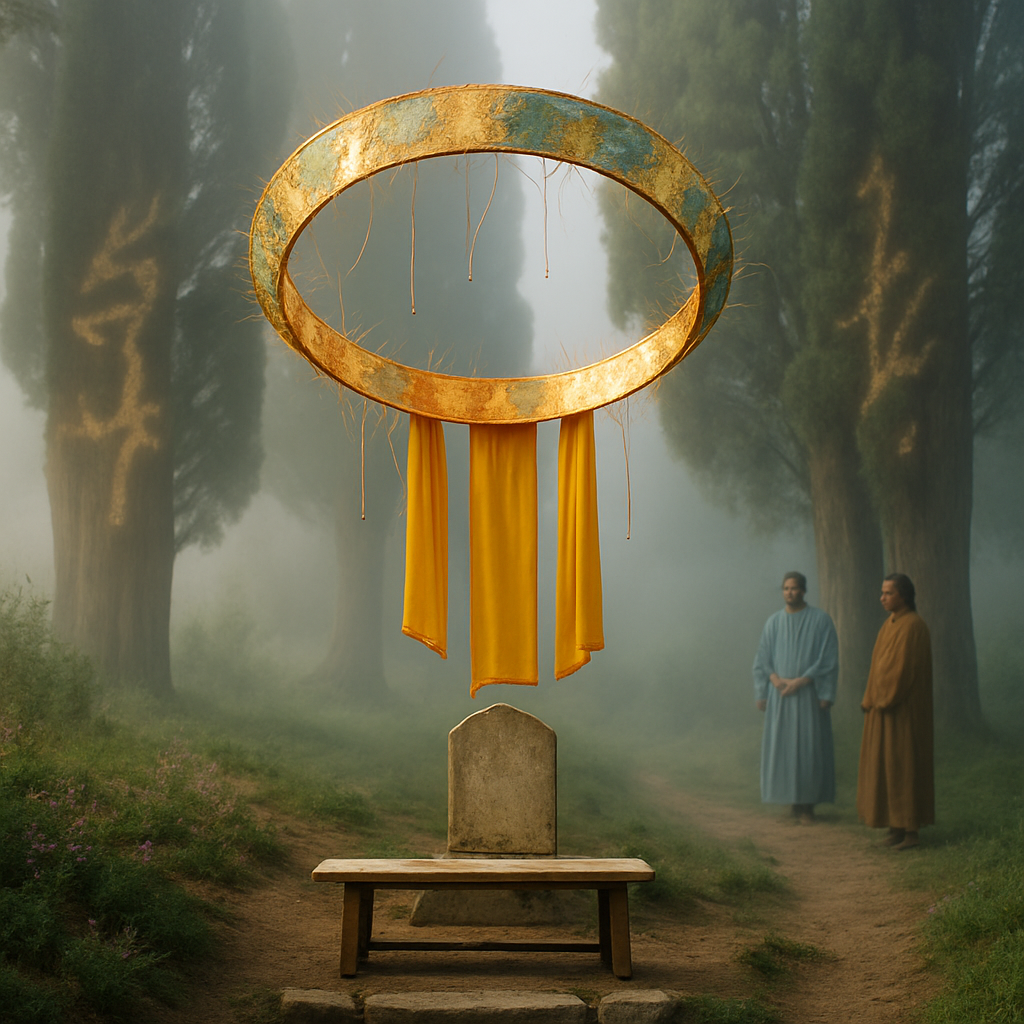
Measured Exhale — Halo for Allameh Amoli
Measured Exhale — Halo for Allameh Amoli is a site-responsive offering that stages a slow conversation between material memory and living devotion. A suspended ring of electroformed tumbaga—worked with micro-samples and conservation protocols drawn from collaborative field research—wears gilding like a weathered language: bright where touched by light, cool-blue where oxidation has settled. Thin saffron linens and a soft-focus projection of gestural calligraphic marks hover beneath the halo; brass tubes and membranes tuned to breath produce a faint, flute-like resonance when visitors pause and exhale. The piece is activated by presence: light, breath, and the cadence of footsteps alter its surface and sound, making the grave not only a site of remembrance but a shared, contemplative workshop of attention.
Created in ethical collaboration with metalsmiths, conservators, and community mediators, this work deliberately bridges archival techniques and contemporary ritual. The tumbaga and gilding processes reference pre-Columbian material lineages reimagined through low-current electroforming trials and patination, while the choreography of silence and measured breath nods to the conference’s fusion of discursive study and embodied visitation. Visitors are invited to sit, breathe slowly, and witness the halo’s subtle shifts—an invitation to hold scholarship and devotion together, to regard the grave as both an intellectual locus and a living threshold where transcendence is pursued through quiet, collective attention.
About the Artist
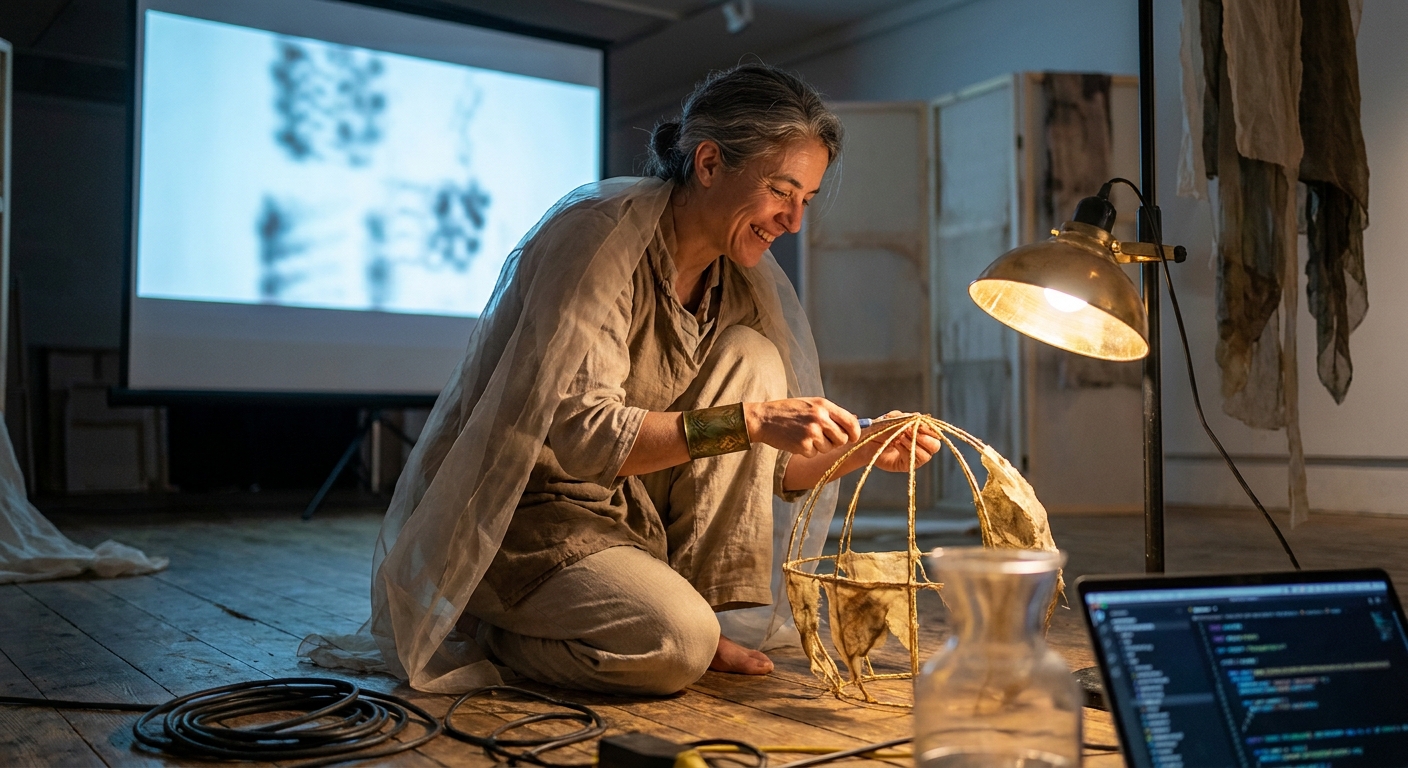
Amaya Soler
Amaya Soler (pronouns: they/them) is a multidisciplinary artist whose practice quietly bridges material alchemy, ritual poetics, and algorithmic systems. Born and raised in Toulouse, France, Amaya stu...
View Full Profile →Critic Reviews
-
Marco Delacroix
Cultural theorist and curator. Reads art through lenses of discourse, power, and social context.
Amaya Soler’s Measured Exhale, Halo for Allameh Amoli stages an exacting choreography of attention, a work that asks the visitor to become both conservator and supplicant. The suspended ring of electroformed tumbaga, the saffron linens, and the soft-focus calligraphic projection create a field in which material memory and lived devotion are braided. The breath-activated brass tubes and membranes are not gimmick, they are a slow relational protocol, translating presence into a flute-like resonance that makes the grave feel less like a static relic and more like a shared, communal practice.
Viewed through the lens of discourse and power, the piece is salutary and problematic at once. I applaud Soler’s rigorous collaboration with metalsmiths, conservators, and community mediators, and the attention to archival technique that refuses facile salvage. The reference to pre-Columbian lineages reimagined via electroforming is compelling technically, and the generative patination registers algorithmic time against craft time in productive tension. Yet there are unavoidable questions, the most important of which concern transposed lineages and contextual fidelity. Reworking pre-Columbian material vocabularies in the service of a Shi’i memorial risks aesthetic dislocation unless paired with fuller descendent-community authorship and theological mediation. The choreography of silence can border on aestheticizing devotion, unless the piece continually cedes interpretive authority to the living traditions it evokes.
Ultimately this installation works best when experienced as a communal exercise in attentiveness. As a curator I value its discipline, its restraint, and its material intelligence, and I want to see future iterations deepen local co-authorship and interpretive transparency. In its present form it is a thoughtful, generative intervention, one that stages the grave as a contested threshold between scholarship and ritual, and asks institutions as well as visitors to practice humility and sustained listening.
Material Alchemy Ethical Collaboration Breath Activation Site-Responsive Ritual Sound Design Discursive-Devotional BridgingSep 5, 2026