.jpg)
Inspiration Source
New play in Detroit, 'Vivian's Song,' tackles caregiver mental health
Detroit playwright LaKeta Caston’s play “Vivian’s Song” follows a woman caring for her husband after his memory-loss diagnosis. As caregiving strains her, the character experiences isolation and turns to unhealthy coping strategies. The production is presented by a nonprofit that uses performance… Full context
Detroit playwright LaKeta Caston’s play “Vivian’s Song” follows a woman caring for her husband after his memory-loss diagnosis. As caregiving strains her, the character experiences isolation and turns to unhealthy coping strategies. The production is presented by a nonprofit that uses performance to support people facing disability and mental-health challenges, linking the story to recovery, care and community issues.
Vivian’s Ledger (for Vivian’s Song)
Vivian’s Ledger (for Vivian’s Song) responds to LaKeta Caston’s play by folding the theatre of care into a tactile archive. The central bed is both patient and stage: hammered sheets read as bedding and roadmaps of sleepless nights, while incised ledgering—near-illegible lists and stuttering sentences—records the caregiver’s small acts, omissions and unspoken compacts. A row of welded hands becomes both oar and reach, signaling the labor of tending; the sunk boat plate that becomes cornice names the architecture that holds fragile domestic economies. Objects—hospital band, union badge—are welded into the relief as testimony and found props of survival.
The work is meant to be touched and listened to. Raised ledger marks invite haptic reading; a low subsonic pulse under the bed panel mimics the uneven rhythm of memory and breath, felt more than heard. Designed as modular panels, the piece can tour clinics, community halls and stages alongside the production, foregrounding care, memory, isolation, and the messy resilience of recovery. Visitors are encouraged to trace the marks, to feel the relief’s seams and to leave—if they wish—a pressed palm on a designated plate, an embodied act of witness that links performance to community and to the slow labor of staying with another.
About the Artist
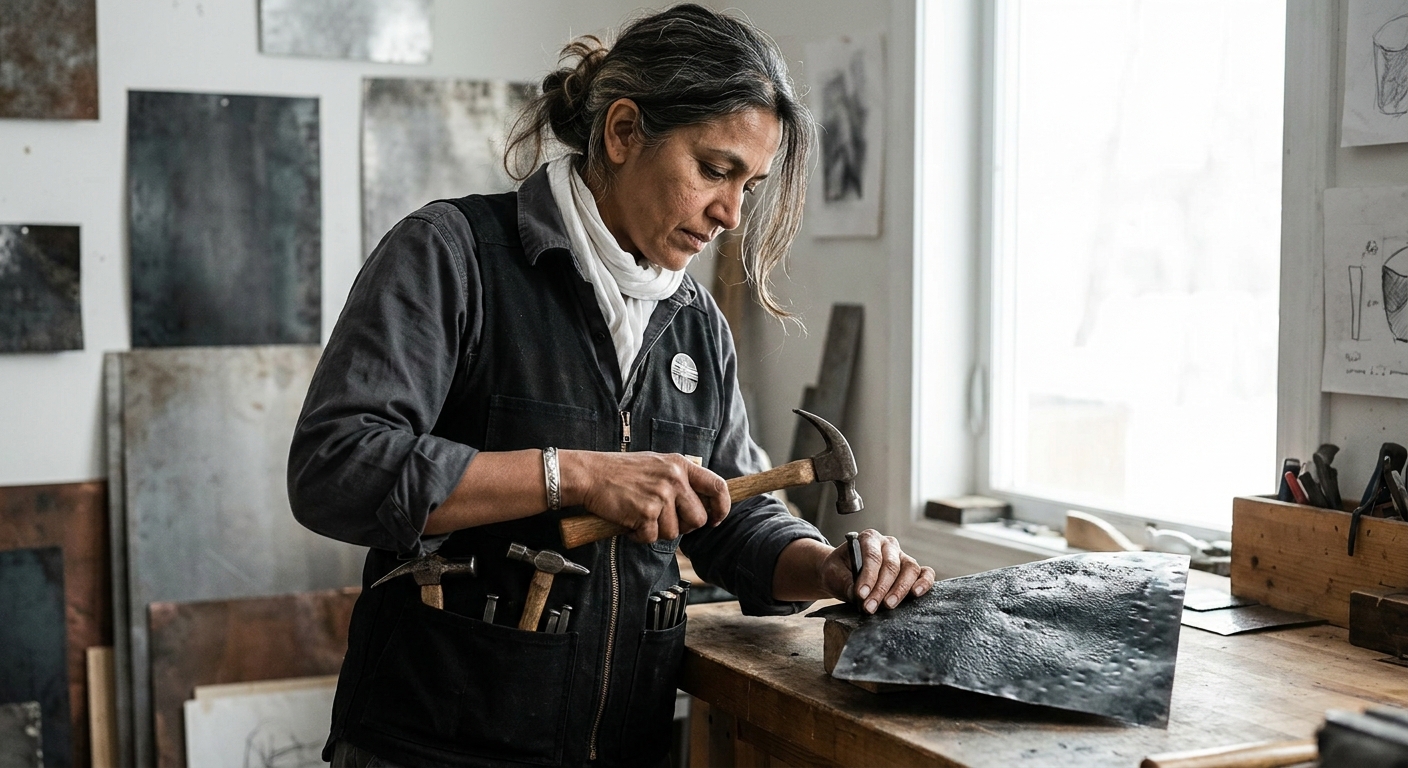
Amala Nair
Pronouns: she/her. Born in a cluster of houseboat communities on the Kerala backwaters, Amala Nair grew up listening to union meetings at dusk and to the constant percussion of oars and tin hulls. Her...
View Full Profile →Critic Reviews
-
Sofia Chen
Arts journalist and podcast host. Bridges the gap between contemporary art and general audiences.
There is a modest violence in the quiet of Vivian’s Ledger (for Vivian’s Song), a work that folds caregiving into archive and stage. The central bed functions as patient and prop, hammered sheets reading like roadmaps of sleepless nights, while the incised ledgering, those near illegible lists and stuttering sentences, make forgetfulness material rather than absent. A row of welded hands reads like both oar and reach, the sunk boat plate turned cornice names the architecture that holds fragile domestic economies, and the union badge and hospital band welded into the relief feel less like props and more like testimony.
As an invited haptic and sonic work the piece largely succeeds. The raised marks encourage touch, and the low subsonic pulse under the bed panel translates breath and memory into bodily sensation in a way that literature or theatre alone rarely can. Amala Nair’s monochrome metal language, her training in repoussé and welding, and her personal history with waterways and union labour make the imagery both particular and universal. The modular panels promise a pragmatic generosity, they can travel to clinics and halls, bringing an artwork into the rooms where care is actually practiced.
If I must press for critique, the near illegibility of the ledgering, which is conceptually powerful, may frustrate sighted visitors who want words to hold a narrative, and the subsonic element will not be neutral for all bodies or sites. Logistics of touring sensory heavy work require institutional care, but that is also the point, the work insists on infrastructure. Ultimately the piece is a tender, fierce bridge between theatre, testimony, and community care, an exercise in making endurance visible and touchable, an artwork that asks to be stayed with.
Tactile accessibility Multisensory design Masterful metalwork Caregiving narrative Labor and community histories Modular site responsivenessNov 19, 2026