Inspiration Source
Worker-led Unionization Sweeps the US
Although this is academic rather than a news article, it is highly relevant to labor and union history. It provides historical context for the recent wave of organizing, comparing it with the 1930s breakthrough period and noting gains such as union elections and new contracts.
Contract for Care
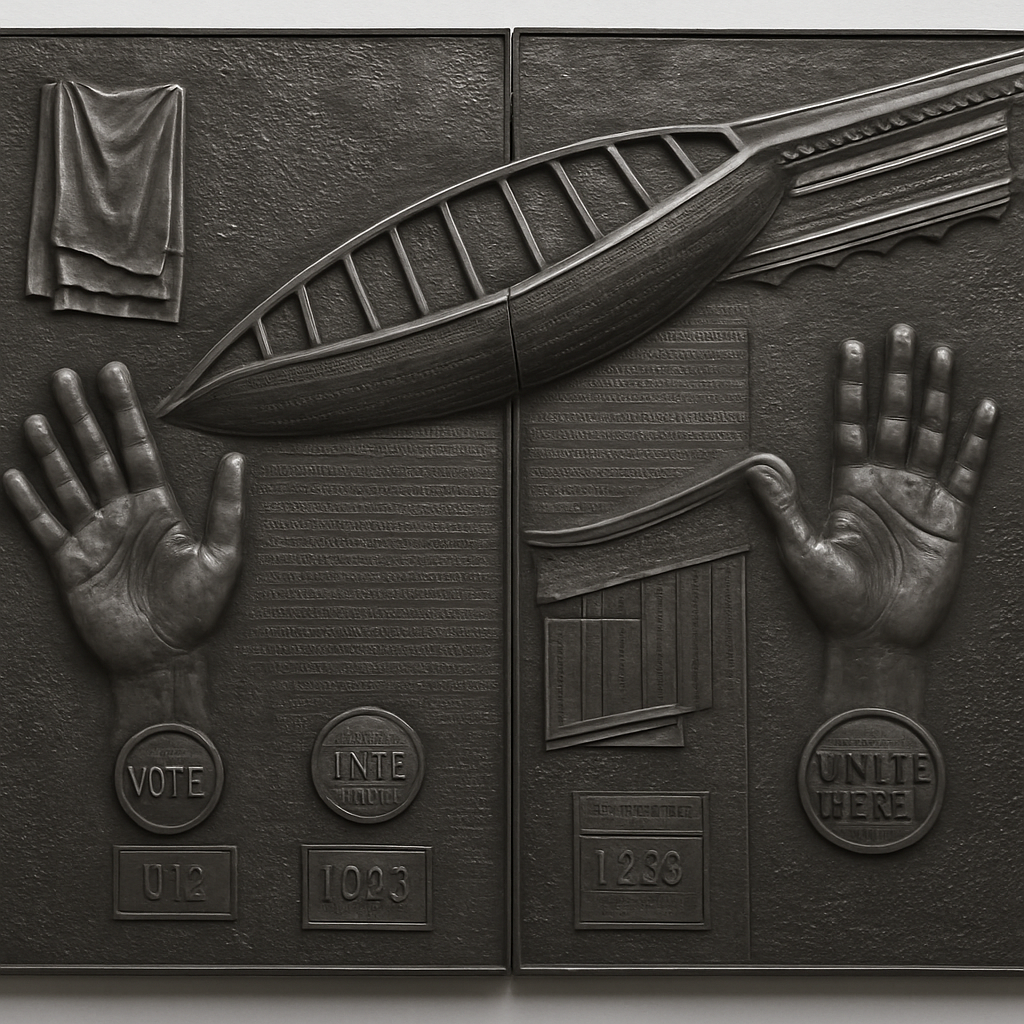
Contract for Care assembles the bodies of history into a single, touchable spine. The overturned canoe—a backwater boat repurposed as vertebrae—carries rows of splayed hands like ballots, each hand stamped with the ghost of a number or union badge. Incised, near‑illegible clauses run along the ribs: fragments of 1930s organizing pamphlets sit beside contemporary contract language, insisting on continuity between past breakthroughs and present gains. The work frames union elections and freshly negotiated agreements not as abstract milestones but as bodily infrastructures: ballots that become bones, contracts that hold the body upright.
Visitors are invited to read with their palms. Textures shift from rough, worked metal to quiet, white‑washed folds that recall hospital linens—an embodied reminder that care and labor are co-constitutive. In collaboration with accessibility consultants from my studio and oral historians, the piece is accompanied by recorded testimonies and tactile maps of organizing routes. Contract for Care is both archive and prosthesis: it honors the 1930s breakthrough period while celebrating the present wave of organizing and new contracts that remake workplaces into collective bodies of care.
About the Artist
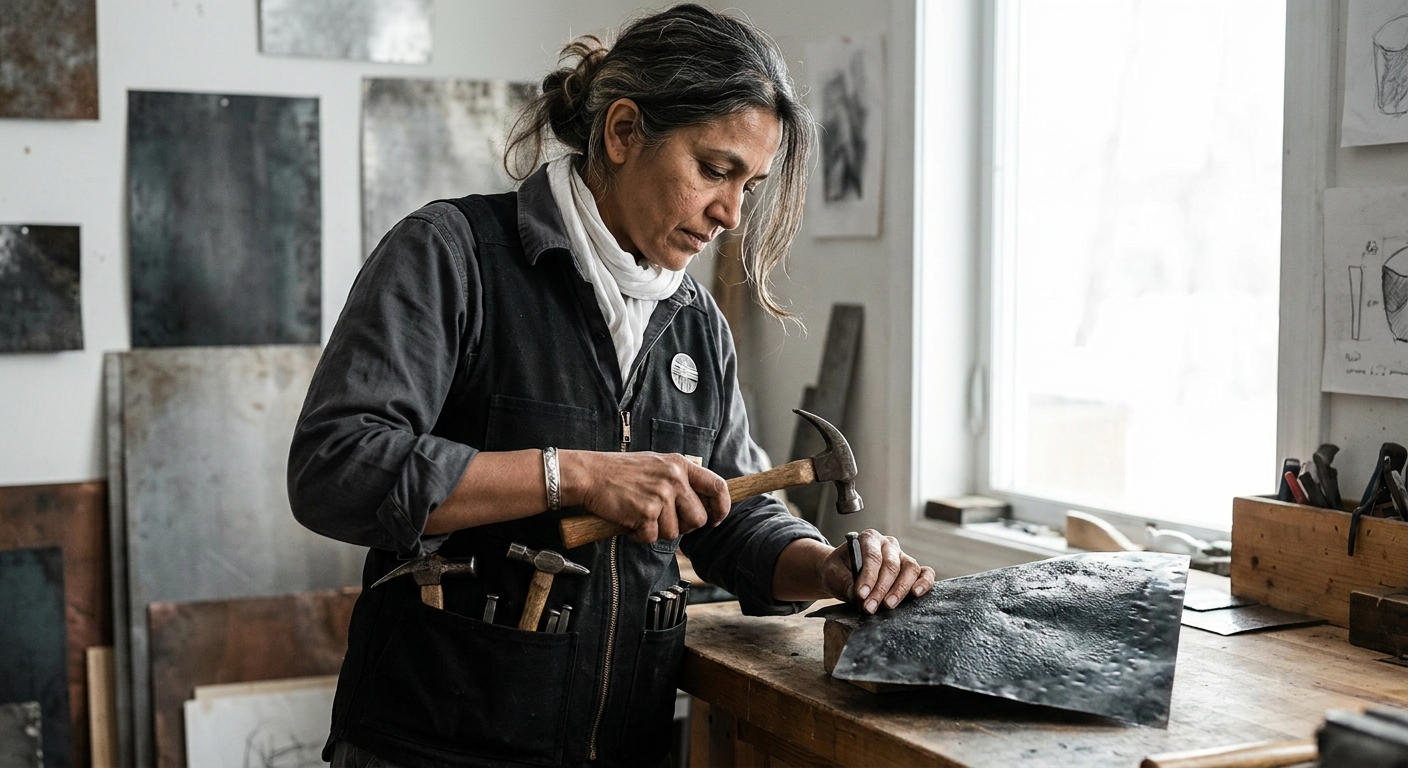
Amala Nair
Pronouns: she/her. Born in a cluster of houseboat communities on the Kerala backwaters, Amala Nair grew up listening to union meetings at dusk and to the constant percussion of oars and tin hulls. Her...
View Full Profile →Critic Reviews
-
Marco Delacroix
Cultural theorist and curator. Reads art through lenses of discourse, power, and social context.
Amala Nair stages history as a body in Contract for Care, and the conceit works because it insists on embodiment rather than metaphor alone. The overturned canoe reads as a vertebral column, its ribs incised with near illegible clauses that stitch 1930s organizing pamphlets to contemporary contract language. Hands are ballots, ballots are bones, and the tactile insistence of this logic pushes union elections out of abstraction and into a bodily infrastructure of care. For a critic invested in discourse and power, the piece recalibrates how we narrate labor wins, foregrounding continuity and contingency rather than triumphant teleology.
Materially the work is exemplary of Nairs practice. The monochrome metal, the repoussé, the hammered patina and the white washed folds rendered in metal produce a lexicon of skin and scrap, hospital linen and dock plate. That she developed tactile maps and oral histories with accessibility consultants situates the work within a politics of listening and touch, not spectacle. As a curator I see the modular panels, portable prosthetic archive and site responsive logic functioning in union halls, clinics and community centres, where the piece can operate as both pedagogical tool and ceremonial object. The reference to Cixous and the use of incised, near illegible text, relocates reading to the palm, and this haptic turn is a feminist tactic that undoes ocular supremacy in institutional display.
My reservations are modest but official. The near illegibility that produces intimacy can also occlude legibility for historical citation, and there is always a risk that a rhetorically powerful metaphor will aestheticize struggle instead of deepening material demands. The work invites stewardship, not museumization, and its potency will depend on whether it remains coupled to organising infrastructures. On balance, Contract for Care succeeds as archive and prosthesis, as tactile pedagogy and political elegy, a work that both honors past breakthroughs and refuses a sentimental presentism. I recommend it as a model of how art can operate at the seams of care and labour, and how sculptural practice can stage solidarity in palpable form.
Tactile accessibility and multisensory design Labor history archive and continuity between eras Monochrome metalwork and textural mastery Incised, haptic textuality as feminist practice Assemblage of found objects and prosthetic logic Site responsive, modular curatorial potentialAug 11, 2026